Beyond VO2 max: the fitness metrics triathletes should work on
VO2 max grabs the headlines. But the physiological qualities that separate good triathletes from great ones run considerably deeper. Here’s what really matters – and when to work on each one.

In early February, Norway’s Kristian Blummenfelt uploaded a post to his Instagram account that left endurance athletes and fans in awe. Blummenfelt, pictured in a lab, rode against a computer screen that displayed a VO2 max score of 101.1ml/kg/min.
Before Blummenfelt’s test, the highest VO2 max recorded was by Norwegian cyclist Oskar Svendsen in 2012. Blummenfelt’s effort seemed to be an unprecedented show of physiological strength, but how does that figure relate to performance? And what other metrics matter when it comes to you becoming a strong, holistic triathlete? Here, we reveal the key areas you must focus on. Not only that, we also show you how and, importantly, when…
VO2 max: the size of your engine

Blummenfelt’s bellows translate to record-breaking performances. As a snapshot, in 2021 he set the Ironman world record of 7:21:12 at Ironman Cozumel. That broke down to 39:41 for the 3.8km swim, 4:02:35 for the 180km bike and a 2:35:24 marathon run. In short, VO2 max matters to both the elite and recreational triathlete. But why?
“VO2 max is the size of your engine. It sets a ceiling on how much oxygen your muscles can consume during exercise, and since aerobic energy production powers any effort lasting longer than a few minutes (often less), that ceiling matters. You simply can sustain an intensity that demands more oxygen than your system can deliver,” says Jonathan Baker, one of the world’s leading exercise physiologists.
Baker is more than aware of the importance of VO2 max. As well as running his own coaching company, Palmares (palmares.co.uk), he’s also data scientist at Mathieu van der Poel’s Alpecin Premier Tech cycling team. Baker’s worked with the Dutch superstar for years and has helped hone his physiology, so that his aerobic system can absorb hours of saddle time before, as the finish line approaches, he shifts up a gear and inevitably rides to victory. But how?
Hit it
“The most reliably effective approach for any endurance athlete is high-intensity interval training with intervals long enough to spend meaningful time near VO2 max,” says Baker.
“The research is fairly consistent that efforts of around 3-5mins, performed at maximal effort with adequate recovery, produce the largest adaptations.
“In my experience, starting a little harder than you think you can maintain is a good strategy because you approach VO2 max sooner, so spend more time there during the session. Another trick is to increase your stroke rate, cadence or strides per minute – depending on discipline – as this has a higher oxygen cost and so, again, means you spend more time at a higher proportion of VO2 max.”
These are demanding efforts but will pay off, albeit Baker caveats that if you’ve trained consistently for years, the gains become smaller. Also, we all have our individual ceilings. “It’s more genetically determined than most people want to hear,” he says.
“Probably the most cited work in this area, the ‘Heritage Family Study’, found roughly half of VO2 max variation is attributable to genetic factors. Trainability is also partly heritable, which explains why some athletes respond dramatically to the same training that barely moves the needle for someone else. That’s not a failure of effort. It’s simple biology.”
Don’t let your DNA dishearten you. Regular training still pays off. You just need to be adaptable. “VO2max tends to plateau after six months or so of structured work, which is why experienced athletes who keep improving usually do so via threshold and economy, not by pushing their ceiling higher.” We’ll come to those shortly…
When to focus on VO2 max work
As a triathlete, you should focus on VO2 max work during the build phase of your training, so after you’ve developed a solid aerobic base during the winter. One to two sessions per week in the six to 10 weeks prior to your peak racing period will raise your aerobic ceiling and improve oxygen utilisation (how proficient you burn oxygen for fuel).
Threshold: the percentage of VO2 max you can sustain

VO2 max is a proxy for good fitness and correlates with longevity, studies showing the higher your VO2 max, the healthier, longer and arguably more enjoyable your life will be. For triathletes, especially the longer form of racing (Ironman), it’s important. But, says Baker, not everything. “Alone, it’s actually a poor predictor of who actually wins. What matters more is the proportion of VO2 max you can sustain during a race.”
This is where threshold comes in. And so does Dr Garry Palmer of Sportstest.
“I’ll show you the importance of threshold,” he says. “One study into top Kenyan and Caucasian runners revealed that their VO2 max scores were near identical but the Kenyan runners’ time to fatigue was around 20% longer than the Caucasians. They could hold a higher intensity of their VO2 max without fatiguing. Their lactate threshold, functional threshold, anaerobic threshold, ventilation threshold, whatever you call it, was higher.”
What is threshold?
Your threshold represents the maximum effort you can maintain before lactate builds up more quickly than your body can remove it, increasing blood acidity and reducing power output. Having a high VO2 max is beneficial, but if you’re only able to use a small portion of it during more demanding parts of a race, you’ll be at a disadvantage compared to a rider with a lower VO2 max but a significantly higher threshold.
Threshold training goes by several names – sweet spot, tempo, lactate threshold intervals – but they all aim to improve your body’s ability to remove lactate and enhance its buffering capacity.
Sessions tend to be short and hard with rest periods in between. Examples include two 20-minute efforts at around 90 to 95% of threshold with five to 10 minutes’ rest in-between. Another is three 12min bursts at zone 4 with equal recovery. Or go for a sweet-spot session of 30 to 60mins at around 88 to 94% threshold.
When to focus on threshold
Similar to VO2 max work, threshold work really pays off during the build phase.
Here’s how a week in the build phase might look.
Monday: easy swim or ride
Tuesday: VO2 max bike intervals
Wednesday: endurance run or swim
Thursday: threshold run or bike
Friday: recovery or technique work
Saturday: long endurance brick
Sunday: optional threshold swim or steady ride
Durability: getting tired slower

Durability is a relatively new scientific term to describe an old concept: stamina. Okay, we’re being slightly reductionist. More specifically, it’s sustaining a good level of performance despite fatigue kicking in. It’s particularly relevant to triathlon and its multi- disciplinary nature.
The concept stemmed from cycling and the work of James Spragg of Tudor Pro Cycling. That’s why, when it comes to your second discipline, kilojoules is an important metric (which you can measure via your power meter). At an empirical level, Spragg showed that while under-23 athletes’ fatigue noticeably kicked in once 1,000 to 2,500kJ of work had been ticked off, the top endurance athletes could keep working hard well beyond 3,000kJ. In other words, they’d developed impressive fatigue resistance.
How can you test your durability?
When it comes to your bike, perform two tests: one when fresh and one when fatigued. Fresh, warm up for 20 to 30mins before unleashing a 20min maximal but sustainable effort. Record your average power output for this 20min effort. On another day, rack up 2000kJ work by riding steadily in zones two to three until your head unit displays 2000kJ. (You can raise or lower this to 1000, 1500, 2500 or even 3000kJ depending on fitness, experience and triathlon race length.) For many good amateur athletes this is after around two-and-a-half to three hours. Spin easy for 5-10mins and then perform the same 20min sprint as before, recording your average power for this period.
You then compare your fresh versus fatigued 20min power scores. A 5% drop is very durable; 5 to 10% is moderate durability; a drop of over 10% between the two shows your durability needs some work.
How do you bolster your durability? Well, there’s evidence that polarised training helps. Broadly, this means training 80% of the time at zone 2 and 20% in higher zones, from four upwards. However, this is the ideal for the athletes who have the luxury of time, i.e. the pros. If you have under 10hrs a week to train, shift this to 70/30 or even 60/40 or you’ll be training too low and won’t adapt. Core to boosting durability in this ‘easy’ zone are long, steady rides of zone 2 to 3 of several hours.
Ways to boost swim durability include long, continuous swims, perhaps adding swim drills at the end of long sets to work on stroke efficiency. Running is the same – long, slow runs – plus bricks.
When to focus on durability
Studies show a strong base lays a great foundation for durability, so long, steady efforts during the winter are essential. However, there’s an argument that following a polarised training (or 80/20, 70/30…) approach is the most effective way to crank up durability, which means it’s an all-year exercise.
Economy: same speed, less energy
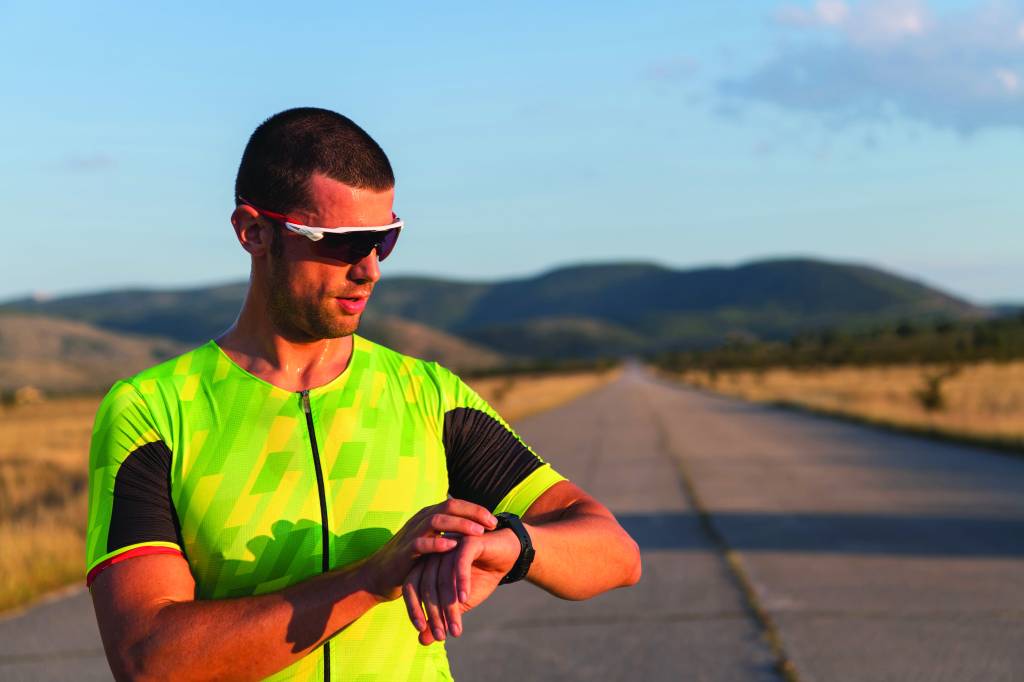
Economy describes the amount of oxygen our bodies burn through when we exercise at a given intensity or speed. Arguably, it’s the metric that’s overlooked because it’s not easily measured, but its impact is significant. To understand, imagine oxygen is the petrol fuelling your car. At different speeds, cars consume different levels of petrol. It’s the same when we exercise – we have varying oxygen needs. The less petrol the car uses, the more economical it is. The same is true when we exercise, meaning that you’ll eventually exercise at a higher intensity for the same oxygen cost as before, or be able to maintain the same speed as before, but for an extended period.
The finest athletes are the most economical. Take Paula Radcliffe. Research shows that despite Radcliffe’s maximal capacity (VO2 max) remaining relatively stable, her running economy improved by 15% over a 10-year period, with the Brit being the most economical in 2003 when set the marathon world record in London in 2:15:25. It begs the question: how do you go about improving your economy? Well, consistent training helps. The more you train, the more you’ll subtly become more efficient. However, there are a few more tangible biomechanical changes that you can work on now…
Swim
As we all know, swimming is a technique-heavy sport. You could be the fittest triathlete in the world but if you’re light on skills, you’re heavy through the water, meaning slowness and exhaustion. Breathing without panicking is one of the most common beginner issues and leads to a cascade of further technical consequences, like sinking legs and tense shoulders. Simply, your head should rotate to breathe, not lift. One ear remains in the water, while your mouth just clears the surface. Think of your head mirroring your body rotation rather than craning upwards independently. A drill to refine your breathing technique and make you more efficient involves pushing off from the wall on your side, with your bottom arm extended and your face down. Kick gently to stay afloat, then simply turn your face to breathe, then look back down. Exhale fully underwater through your nose and mouth; the inhale becomes almost automatic when you rotate. Become comfortable with this before adding the arm stroke. Doing this will help you slow things down and, ultimately, speed you up.
Bike
We’re always banging this drum and here we bang again: you can’t go wrong with a professional bike fit from the likes of Phil Burt in Manchester and The Bike Tailor in Brighton. Inefficiency often stems from poor positioning. If your saddle is too high, your knees may overextend. Too low and your cramped with every revolution. That’s not to mention the myriad injuries that derive from an inefficient bike position. A bike-fitter will assess your current position – on road bike, tri bike or both – and via the human touch and technology, determine whether you need changes at the three main contact points: saddle, bars and pedals. Nail this and you’ll ride faster, stronger and more efficiently, plus your chances of injury drop.
Run
Strength and conditioning work improves running economy due to a positive change in your neuromuscular system, which ultimately reduces the amount of energy used during each stride. In other words, you become more biomechanically efficient. Strength training also helps to prevent injury. Jump squats, jump lunges, bounding and lateral hops are beneficial exercises. A couple sessions a week would be good.
When to focus on economy
Similar to durability, becoming more economical is an all-year challenge. As ever, training consistently is key.
Heart rate variability
Training is clearly an important part of the performance equation. But its impact is neutralised if your body’s failing to absorb the workload; in fact, it can then become your worst enemy as you’ll overtrain and fall ill. That’s where heart rate variability, or HRV, comes in.
“HRV is an indirect measure of our stress response and is the fluctuation in time between heartbeats,” says Marco Altini, HRV guru and the founder of HRV4Training. “As we face a stressor, our autonomic nervous system shows increased sympathetic activity and reduced parasympathetic activity (our ‘recovery system’).”
Altini says that while you can’t measure non-invasively parasympathetic activity, the autonomic nervous system impacts heart rhythm in ways that we can measure. For instance, reduced parasympathetic activity results in reduced HRV, which we can capture with an HRV measurement on a triathlon watch, for example.
How to measure HRV
“There are various ways to do this,” says Altini. “A few wearables can provide reasonably accurate HRV data when collected in the absence of movement, i.e. during the night. This is the case for Oura, Whoop, Garmin and Coros. There are also studies looking at spot checks with Oura and HRV4Training, both using the fingertip and phone camera and paired to a chest strap showing that both systems are accurate (and more accurate than other apps or wearables).”
Altini says HRV’s ideally measured first thing in the morning at rest, though overnight readings are pretty representative of your state of being, too. HRV is sensitive to the environment, so daytime readings – when you’re moving, eating… – are redundant.
Seen through a health lens, HRV can flag up if you’re on the verge of illness. In the context of training, “HRV is useful to make small adjustments to training intensity. HRV can’t replace a training plan, but it can be useful in support of a training plan. Keep in mind that HRV isn’t about what you can do on a given day (i.e. unless you’re sick, you can typically perform well ‘on a low HRV score’), but it’s mostly about what stress you can assimilate and respond positively to.”
“If it’s race day and your HRV is low, there’s nothing to worry about, as you can still perform,” Altini adds. “During a training block, though, exercising hard in a situation of low HRV might not result in the hoped-for adaptations because you’re working in a sub-optimal physiological state. Many HRV-guided studies, in which the group of athletes that performed fewer high-intensity sessions by reducing training intensity on days in which HRV was below their normal range, ended up performing better at the end of the study.”
When to focus on HRV
Meaningful HRV conclusions come from consistent, daily readings, so measure HRV every day. Adapting your training to the needs of your body could be the tool you’ve been looking for to succeed.


 James Witts
Freelance sports writer and author
James Witts
Freelance sports writer and author