Best triathlon training apps for planning, tracking and analysing in 2026
Which app should you use to log your triathlon training and performance? We run through some of the best options and how they help your performance.

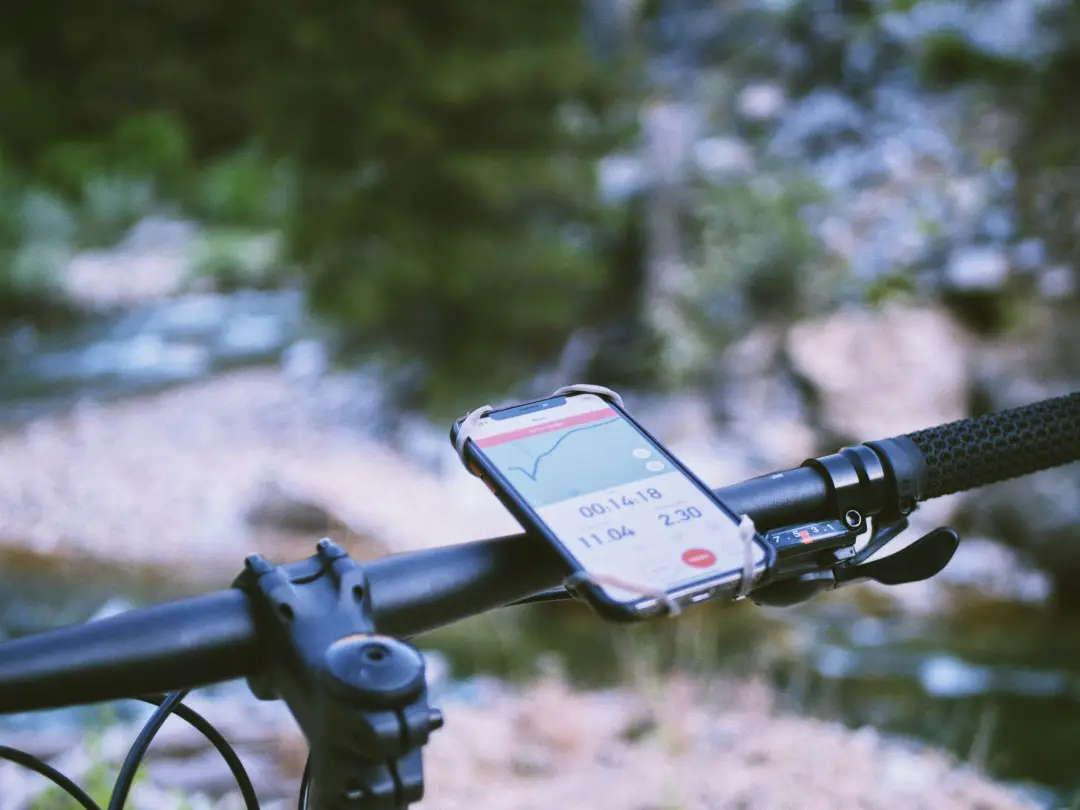
The best triathlon training apps are a guide and digital coach to accompany your tri training. A good training app for triathlon will efficiently log your data and offer performance analyses and advice to help you achieve your goals.
Of course, you still need to put the work in. But a digital training diary all in one app will help you pinpoint your best training environment and racing strategy for race day.
In this article, we go over the key features to look out for in a triathlon training app, and the pros and cons of some of the most popular platforms out there – including Training Peaks, Transition, Tri Dot, Strava, and Zwift.
After our app comparison, don’t forget to head to the end of the article for our advice on what features to look out for in a good triathlon training app.
The best triathlon training apps in 2026

1. Training Peaks
Pros:
- Offers detailed performance analytics
- Is customisable to the athlete and has various training plans
- Integrates seamlessly with various fitness wearables
Cons:
- Some advanced features require premium subscription
- Not all the data necessary for beginners
Training Peaks (TP) is a tried and proved training tracking platform that’s been around for donkeys.
On the platform (accessible on PC or mobile), athletes can plan, track, and analyse workouts across all the disciplines and cross-training activities.
On TP, coaches can also set a training plan for their athletes to then access via the app and mark as complete when done.
The platform offers detailed analytic metrics and is a good line of communication in between coaches for feedback and adjustments.
A Premium subscription now includes Training Peaks Virtual, an indoor cycling app.
Cost: Free version with limited features, $19.95 per month or $134.99 for Premium

2. Strava
Pros:
- Intuitive and explains analytics well
- Access to athlete community and support
- Free version with plenty of features to get started
Cons:
- Doesn’t go into huge data with analytics
- Paywall for certain features like mapping routes
- Some may not like comparing their training to peers
Strava is a very accessible and popular platform for triathletes of all levels. Some view it more as a social media platform for athletes as you can add your friends and give them ‘kudos’ for completing sessions.
Good compatibility with different fitness trackers makes it easy to upload workouts, and add pictures and notes onto the session, either privately or to share with your followers.
Strava has a huge range of sport profiles to choose from, and you can record a session directly on the app using your phone’s GPS. It’s probably one of the more accessible multisport training apps out there as there’s a free model that anyone can download and start tracking with right away.
Linking it up with our multisport smartwatch, we received workout analysis for running including your splits,pace and pace zones, heart rate and zones, power, cadence, and elevation graphs.
Strava then uses these and your past data to give a relative effort score and a fitness index to show any increases or decreases in fitness.
Though recent times have seen Strava start playing around with AI ‘athlete intelligence’ feedback, but it’s still in a very basic, beta stage.
Cost: A free option or £8.99/$11.99 monthly / £54.99/$79.99 annually for Premium
3. Transition
Pros:
- Highly adaptive training plans
- Health and fitness holistic ecosystem
- AI coach chat for any questions
- Strong focus on performance insights and feedback
Cons:
- May feel like a big learning curve with all of the features on offer
- Reliance on AI automation, some athletes may prefer more human nuance
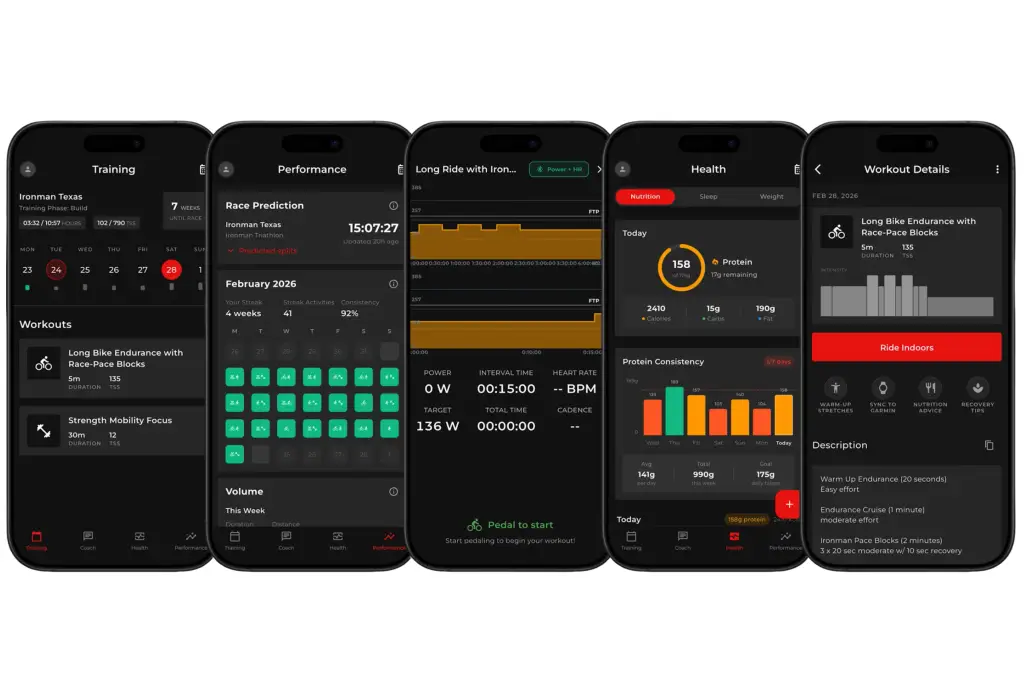
Transition is an AI-powered triathlon training platform designed to act like a digital coach. The app builds and continuously adjusts your swim, bike, run, and strength sessions based on your performance, schedule, and goals. Instead of following a fixed plan with no room for error, the app reacts to missed workouts, fatigue, or life disruptions, while also layering in analytics, nutrition guidance, and recovery support.
The platform is designed to be truly personalised to your fitness, goals, and schedule. Through feedback and video analytics, get advice on how to improve all aspects of your training. Plus, practice transitions and get personal nutrition guidance and tracking.
Cost: $139/year or $19/month

4. TriDot
Pros:
- Super personalised training plans that automatically adjust
- Various subscription levels for different budgets
Cons:
- No free sub level for the platform
- Interface may not bas as intuitive as some
TriDot is an AI-powered triathlon training platform that delivers optimised, personalised training plans by analyzing an athletes’ data, including age, gender, environment, and genetics.
The app aims to provide plans that automatically adjust to balance an athlete’s training stress and recovery needs, leading to fewer injuries. The app can be used with or without a coach.
Cost: $29/£29 per month for Essentials, $89/£89 per month for Complete, $129/£129 per month for Legend, $199/£199 per month for Premium (includes a coach)
The best single-sport training apps

5. Runna
Pros:
- Personalised training plans that aim for your specific race goal
- Option to integrate strength training plan
- Compatible with various running fitness trackers
Cons:
- Subscription necessary after initial trial period
- ‘Personalised’ feedback still quite general
You may have seen running influencers all over Runna recently, but it’s popular for a reason.
Despite Strava buying Runna in 2025, it remains a standalone personalised running coach app. It offers tailored training plans from expert coaches, powered by AI, to help runners achieve their goals.
The app provides structured workouts, integrates strength training, and syncs with fitness devices. It even suggests playlists for different running paces. You can choose from various plans, including custom options for specific race dates and distances ranging from 5km to 50 km.
Cost: £15.99/$19.99 per month or $119.99/£99.99 per year

6. Zwift
Pros:
- Realistic, social indoor riding
- Motivating gamification
- Vast route selection, including real-world simulations
- Best for racing/group rides
- Structured workouts/plans
Cons:
- Gamification can be gimmicky
- Recent price increase
- No outdoor workout syncing
- Less sophisticated training tech than other indoor cycling apps
Zwift reigns supreme in the indoor cycling world, thanks to its engaging, video-game-like interface and thriving community.
Riders enjoy diverse virtual roads, including real-world course simulations, and can participate in group rides and races.
While some find the gamification (earning points and leveling up) less appealing, it fuels the platform’s popularity. Zwift excels at simulating real-world riding dynamics, like drafting and power-to-weight calculations for racing.
Structured workouts and training plans are available, and the platform can now take account of outdoor rides and integrates with TrainerRoad.
Zwift’s vast user base makes it the top choice for interactive indoor cycling. For our full review, take a look at our top indoor cycling apps in 2026.
Cost: $19.99/ £17.99 per month or $199.99/£179.99 per year

7. Wahoo
Pros:
- Integrates cross-training
- Offers diverse workouts, from simple to video-guided
- Uses a more comprehensive power profile than FTP
Cons:
- Lacks immersive experience
- Relatively high cost
- Limited social interaction
Wahoo has is a bike training platform (formely known as Wahoo X and Wahoo Systm) that combines structured training, ride videos, and cross-training. Personalized plans leverage your 4DP profile and suggest daily workouts. Integrated cross-training options include yoga, mobility, and strength training.
A key advantage is the ability to send workouts to Wahoo bike computers for outdoor use. However, Wahoo lacks the social and competitive elements of group rides and racing found in platforms like Zwift.
Cost: £14.99/$14.99 per month or £149.99/$149 per year

8. Rouvy
Pros:
- Simulates real routes and climbs
- Group training and racing
- Offers structured training plans and workouts
Cons:
- Your mates are probably on Zwift
- App isn’t the best
Rouvy enables you to simulate riding real routes in its virtual reality world. Handily for triathletes, real Ironman bike courses are included in its route library. You can also record your own footage of a local route and upload it along with the GPX file.
You can also work with real coaches in this indoor cycling app or follow generic training plans and workouts.
There are races and group rides in Rouvy, but they aren’t are popular or hotly contested as Zwift. The Rouvy app can’t match its rival’s smoothness either.
Cost: $159.99/£159.99 per year / $19.99/£17.99 per month

9. MySwimPro
Pros:
- Personalised plans and progress tracking
- Technique-focused drills
- Structured training options.
Cons:
- Full functionality requires a paid subscription
- Data accuracy depends on smartwatch compatibility
- Limited social features
MySwimPro is a personalized swim training app offering workouts, drills, and plans tailored to your level and goals.
Users input their skill level and desired training frequency, and the app generates customised sets. It tracks your progress, analyzes swim data (if connected to a compatible smartwatch), and provides feedback.
You can follow structured plans for anything from improving technique to training for triathlons.
Cost: Free version (limited features), paid subscriptions from $19 per month / $99 per year

11. MyFitnessPal
Pros:
- Large food database
- Easy logging tools
- Tracks macros and calories
- Integrates with other apps
Cons:
- Can be time-consuming
- Relies on user accuracy, some database entries inaccurate
- Premium features require a subscription
MyFitnessPal is a popular calorie counting and food tracking app. Users log their food intake, and the app calculates calorie and macro intake, comparing it to personal goals.
The app has a massive food database, with compatibility with barcode scanning for easy logging, and recipe integration.
MyFitnessPal also tracks exercise and integrates with other fitness apps and wearables.
While the core features are free, a premium subscription unlocks advanced features like customised macro goals and nutrition insights.
Cost: Free core features, Premium from $19.99 per month / $79.99 per year
What to look out for in a triathlon training app

Personalised training plans
Crucial for tailoring training to your experience level, race distance, and goals. Look for apps that adapt plans based on your progress and feedback. Ideally, it should consider your available training time and equipment. Some will use AI to offer this adaptability.
Multi-sport activity tracking
Look for apps that seamlessly track swim, bike, and run data. Integration with a range of GPS and heart rate monitors is essential for accurate data. Consider if it tracks both outside and indoor activities.
Structured workouts
Some apps offer access to a library of workouts with clear instructions, including sets, reps, intervals, and pacing guidelines. Bonus points for video demonstrations of drills and exercises.
Progress tracking and analytics
Training and tracking apps monitor your performance metrics ( including pace, heart rate, power, etc.) over time and apart training suggestions based on your progression. Analytics can take the form of charts and graphs to can help you identify trends and areas for improvement. Look for apps that offer insights beyond basic data.
Device integration
Compatibility with your smartwatch, bike computer, heart rate monitor, and other fitness platforms is important for a smooth data flow and subsequent analysis.
Community and social features
Some apps offer forums, group challenges, or social media integration to connect with other triathletes for motivation and support. It’s not for everyone, but it can be nice to feel part of something bigger.
Ease of use
A user-friendly interface is essential for staying consistent with your training. The app should be intuitive to navigate and understand, and not be too unnecessarily complicated.
Cost
Triathlon training apps range from free with limited features to subscription-based models. Consider your budget and the value you’ll get from the app’s features.
Now learn more about how indoor training can help set you up for your best season ever.


 Kate Milsom
Freelance sports journalist
Kate Milsom
Freelance sports journalist