How to improve your swim performance in cold water and not sabotage your swim
Does your performance suffer when you're swimming in cold water? Professor Mike Tipton explains what you can do to improve it

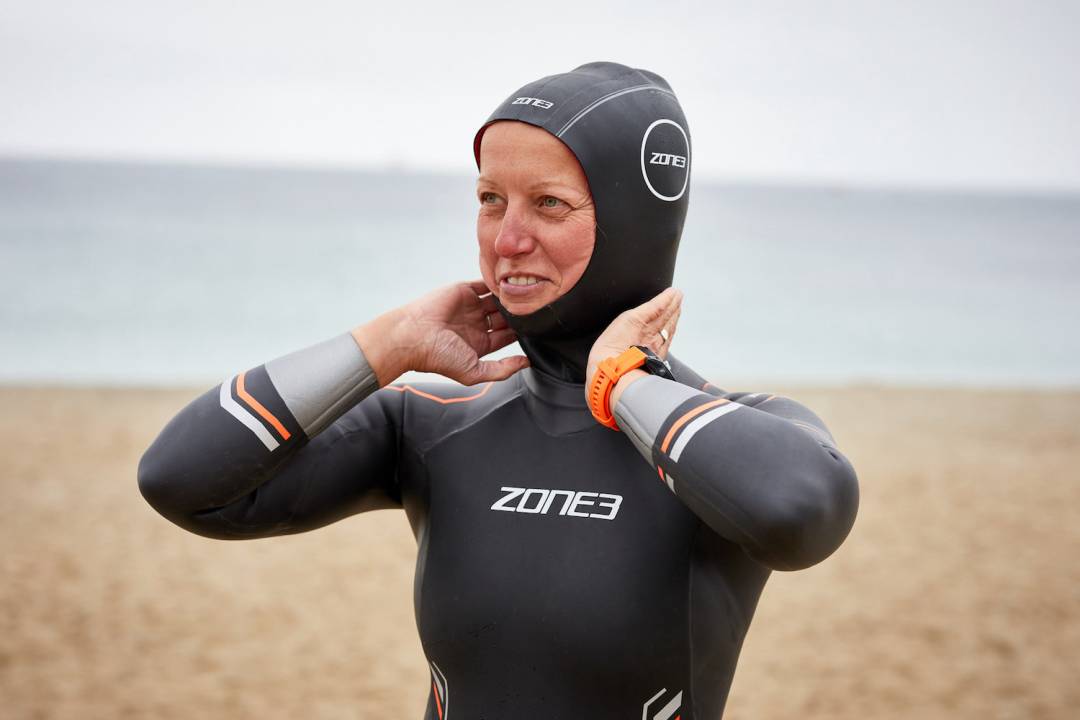
A common problem we have with elite triathletes is that they become dysfunctional in the swim because, in short, they’re mostly designed for running, not for immersion in cold water.
They tend to be thin with long limbs – which is almost the perfect anthropometric and morphological make-up to cool down quickly in water. Not exactly what you want when submerged in chilly waters on race day!
Sometimes the most effective advice you can give, aside from kitting up with the best triathlon wetsuit possible, is to ‘go and put some weight on’, which isn’t great for them. So what else can we do based on what we know about cold-water swimming?
The professor’s tips for performing better in cold water

1. Get used to acclimatisation
Number one is we know that you can habituate to the cold shock response. So it’s smart to get used to the first couple of minutes of an immersion so that when you go charging down or dive into the water on race day, you’re not starting with uncontrollable hyperventilation or increased workload of your heart.
Building on this, repeated and gradual exposure to cold water helps train both the body and the mind to remain calm under stress. The initial gasp reflex and rapid breathing that often occur with cold immersion become less pronounced over time, allowing you to regain control more quickly. This means you can establish a steady breathing rhythm sooner, which is crucial for efficiency and safety, particularly in cold and choppy open-water swims.
Acclimatisation also reduces the strain placed on the cardiovascular system. When the cold shock response is blunted, the sudden spike in heart rate and blood pressure is smaller, lowering the overall workload on the heart. As a result, you begin the swim feeling more composed and physically prepared, rather than tense and reactive, giving you a smoother and more confident start to your race.
2. Insulation where possible is key

Secondly, and this is less commonly known, anything you can do to increase the insulation on the arms and particularly the upper part of the arms will help.
When swimmers fail in cold water, we know that that’s pretty much related to dysfunction in the tricep region of the arm. As the arms are cylinders with low mass and large surface area, they’re the perfect shape to cool.
Also, some studies show that once the water temperature drops below 25°C (so pretty much all our swimming at least in the northern hemisphere), exercise actually makes you cool more quickly in water than if you stayed still, as blood is circulating to perfused muscles from the rest of the body.
This is especially the case in the arms during a triathlon, since they are working hard to keep the legs fresh. So insulation in the arms is an important factor. Look for triathlon wetsuits that have more than 1mm of neoprene thickness in the arms, sometimes lighter and thinner suits aren’t always better!

Working with elite triathletes, we’re finding they have a problem because they get into the water, they cool down quickly. This is because their tissue cools as well as superficial nerves and muscles before deep body cooling and it affects their bike handling in transition by causing loss of dexterity, loss of grip, strength and loss of coordination. In other words, numb fingers make sloppy transitions.
So keeping your arms warm is important if you want to have a speedy T1 and get out with the lead bike pack!
When it comes to training, you can also pack ont he insulation more than in racing and opt for some cold water swimming gloves and cold water swimming socks to allow you to swim for longer and get the most out of your session. just don’t get too used to the extra warmth come race day.


 Professor Mike Tipton
Professor of human and applied physiology
Professor Mike Tipton
Professor of human and applied physiology