I’m a swim coach – and these are the most common wetsuit problems I see

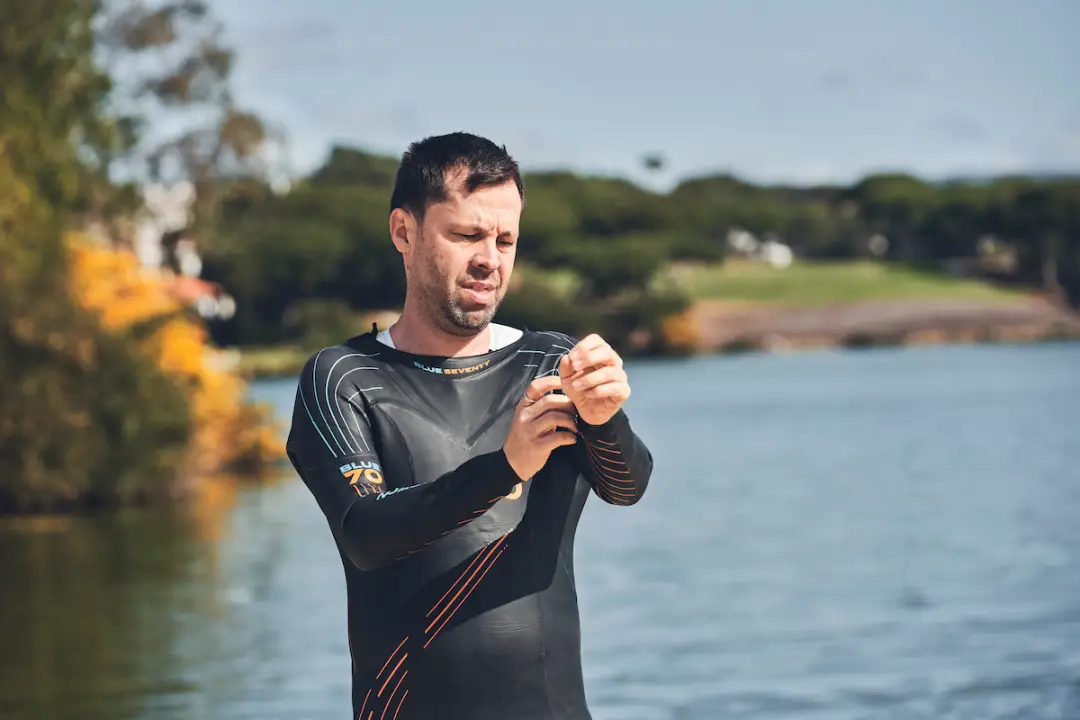
Wetsuits can be a great performance enhancer for open water swimming. Get it wrong though and you can be slower, not faster. Here are the most common problems I see with open-water swimming and triathlon wetsuits and – more crucially – how to fix them.
A wetsuit is a wetsuit, right? Usually black neoprene, few graphics, zip up the back. Simple. Or is it..?
As an open-water swimming coach I’ve helped countless swimmers with their kit, technique and confidence. But if there’s a problem with their wetsuit, I can guarantee it will be one of just a few simple things.
Many problems come down to poor sizing or user error, so if this sounds like you then read on (yes, I’m looking at you, the swimmer with the wetsuit crotch round their knees and the nail marks damaging the neoprene!).
But first, a bit of housekeeping. If you’re new to open-water swimming or triathlon it’s worth explaining that a wetsuit designed for these sports is very different to a surf wetsuit.
Usually made from coated, more flexible neoprene they are designed to make you more hydrodynamic and to aid the freestyle (and/or breaststroke) strokes, as well as keeping you warm. A surf wetsuit is designed more with warmth in mind, so will be cumbersome to try and swim in.
Of course if you’re a beginner there’s no harm in swimming in a surf wetsuit, but I invariably find after a few swims people very quickly get fed up of the tired arms that come with this!
So now we know what we’re dealing with, here are the most common problems I see:

Poorly-fitting wetsuits
If your wetsuit doesn’t fit you, then you’re in for a world of pain before you even begin. Too small and you will struggle to get it on or to get the degree of flexibility needed for swimming effectively. Too big and water will flush through it, weighing you down and making you cold.
To get the correct size, look at manufacturer’s individual sizing charts (usually based on height and weight) and don’t just assume you’ll be a particular size.
Brands vary as well so if in doubt, talk to the brand in question and see if you can try before you buy or at least receive some advice. It’s not that you need to spend a fortune either – there are some great budget suits out there.
Admittedly it can be frustrating. I’ve tested so many wetsuits over the years I have a pretty good idea of which brands suit my shape – but I also know that in some brands I can get away with a small or medium, whereas in other I’ll need at least a large.
The quality of neoprene can make a difference, too. Most swimming wetsuits use Yamamoto and the number (eg 39 or 40) will tell you how high grade it is and also how stretchy. The stretchier the neoprene, the smaller a size you may need in the suit.
I recently awarded the 2025 Zone3 Aspire the highest score a wetsuit on test at 220 has ever received and that’s in part down to the wonderfully soft, supple Yamamoto B-Prene #40.

Putting the wetsuit on in a rush
This one’s a real bug-bear of mine. The amount of triathletes I see who have invested in a spangly top-end wetsuit and then tug it on in a few seconds before their swim never fails to amaze me.
Invariably if you put a wetsuit on in a rush you’ll end up with the crotch area somewhere around mid-thigh, the armpits mid-upper arm and as a result you won’t have enough stretch through the body or the shoulders to actually swim properly.
The result? Frustration, claims that the wetsuit ‘doesn’t fit’ and a very slow swim.
Fixing it is easy. Take. Your. Time. Got that? Yep, putting a swim wetsuit on should take you a few minutes as they are designed to fit closely.
Here’s where it gets personal, but with the legs in first you want to make sure the crotch area is actually at your crotch and not down near your knees before you ease the suit up your body and finally pull the arms in. The ankle cuffs can be higher up on your mid-calf, if need be.
The armpits need to be in your armpits and if that means situating the cuffs slightly higher up then so be it. The important thing is to get that reach up your sides, armpits and shoulders.
A final note – and i know this sound obvious, but – make sure you are putting the suit on correctly. I’ve had swimmers arrive to their lesson with wetsuits on back-to-front and even inside out!
Damaging your wetsuit
Coming alongside point two is point three. Put a wetsuit on in a hurry and you will likely snag it and create nail snags and tears which left unattended, will with time turn into hulking great holes – and holes mean a leaky wetsuit (not to mention it looks a bit rubbish).
Taking your time helps, as does wearing socks (or plastic bags) on your feet to avoid toenail snags. Most suits also come with a little pair of white cotton gloves to help you pull the suit on without damage. Yes you’ll look daft, yes people will think you’re a mime artist, no you won’t damage your wetsuit…
If the worst does happen, then a neoprene glue like Black Witch can be used for repairs in a hurry, but for a decent job get your suit to a company like Techneopro in Cornwall for a professional repair. Here’s more info to help you fix up your suit!
Buying the wrong suit
Here’s where knowing your own swim ability, as well as the suit technology available, pays dividends. Usually the main problem I see is swimmers buying the thickest, most buoyant wetsuit they can find (5mm is the thickest allowed for triathlon competition) and then finding they are too high in the water and/or are getting an achy back.
Unless you have very sinky legs (usually male triathletes, due to muscle density and distribution of body fat) then you may find a thinner, less buoyant suit easier to swim in. You’ll still get a little buoyancy, but you won’t feel like you’re swimming downhill.
A note on breaststroke too – most swimming wetsuits are not designed for breaststroke as they help you achieve a horizontal, more front-crawl, position. There are a couple in the market though, check out the Zone3 Aspect here as an example.

Being unable to find a suit that fits
This is the cause of most frustration amongst the swimmers I work with and I’ll be honest – I completely understand where they are coming from. There’s nothing worse than wanting to buy a wetsuit and finding nothing out there that fits you.
Most brands will offer sizes from around XS to XL or XXL for men and XS to XL for women. Look out for variations within this though to allow for taller or wider athletes. Again, study the size chart and don’t be worried if you need a size different to the one you expected, wetsuits are not high street clothes!
Once you get above the XL or XXL though (which aren’t really that big, in reality), where do you go?
One brand working hard to do better here and that I recommend to many of my swimmers is Lomo. Their Prime and Nuotare wetsuits come in multiple width as well as a traditional size options with the women’s Nuotare catering for up to a size UK32 which is flipping brilliant.
If you are still finding it tricky to find a suit that fits, then custom-made could be an option. Malcolm and his team at Snugg in Cornwall will make you a suit exactly to your measurements.
Whatever you go for though, once you’ve found and bought your suit then make sure you take your time putting it on… And whatever you do, don’t forget the daft gloves!


 Helen Webster
Editor, 220 Triathlon
Helen Webster
Editor, 220 Triathlon