Try not to smile at these 7 feel-good triathlon stories from 2025
Seven triathletes. Seven extraordinary journeys. From world records to remarkable comebacks and racing against the odds, we share some heartwarming triathlon stories from 2025 that won't fail to inspire.

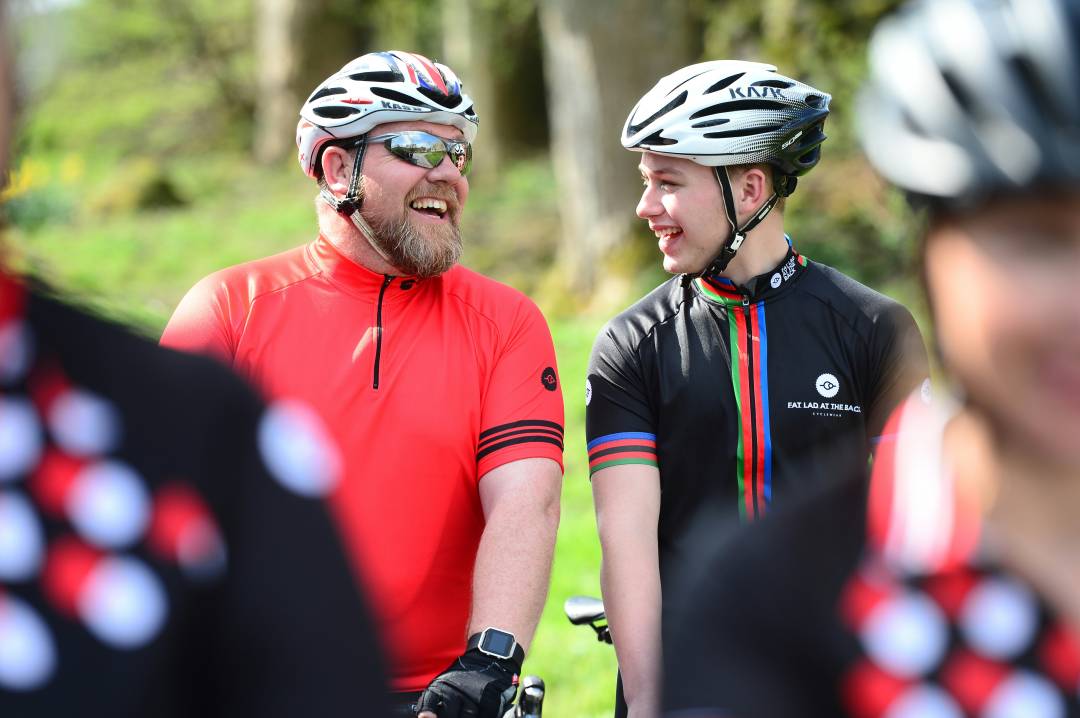
Triathlon has a way of revealing the very best of human spirit, and 2025 delivered that in abundance. From a world-record-breaking endurance feat, to athletes returning to the start line after serious illness or even being shot, some stories go far beyond finish times and podiums.
They remind us that triathlon isn’t just about speed or strength, but about resilience, courage and the determination to keep moving forward when life tries to stop you.
At 220 Triathlon our biggest goal is to champion the everyday triathlete, and in this roundup of uplifting triathlon stories, you’ll meet athletes who refused to let disability or diagnosis define what was possible.
From racing while profoundly deaf, to competing with cerebral palsy, dwarfism, arthritis, or Crohn’s disease, each individual has found empowerment through swim, bike, and run. We have found their journeys utterly humbling and an important reminder of why we do triathlon in the first place.
1. Balancing triathlon and rheumatoid arthritis at 28

With a diagnosis of young-onset rheumatoid arthritis at the early age of 19 – an autoimmune condition which targets joints and causes pain and swelling – now 28-year-old Izzy Lane decided not to let the condition stop her from achieving her goals. Instead, she set out on the life-long vocation of coaching and has become an expert in triathlon, swimming, netball, and rugby coaching.
Izzy completed her first triathlon in 2019 after successfully tackling Couch to 5k. She moved on to the Cotswolds 113 middle-distance triathlon and even delved into marathon running.
Izzy shares: “If I had advice for anyone dealing with an RA diagnosis, it would be to treat yourself kindly.
“It can be frustrating when you feel unable to do the active things you want to, but often you’ll find there are other angles. It’s partly why triathlon is such a great sport.
“Running might be tough at times, but there’s always the bike and the pool to opt for. Most importantly, keep a smile on your face while you’re doing it!”
2.“Being shot three times motivated me to race Ironman”

Being the innocent victim of a drive-by shooting almost cost Canadian Brandon Peacock his life back in 2020. Through his battle back to life, Brandon remained determined not to be beaten and turned to triathlon and Ironman to improve his physical and mental wellbeing.
“On June 29th, 2020 my life changed forever. While walking into my barbershop for a routine haircut, I was shot three times in a drive-by shooting. The night of the shooting I was given a 50/50 shot to make it through the night.”
“My doctors told me I’d never walk or run properly again. A neurologist even said I’d never run a marathon—so I ran a half-marathon right after that appointment. Humans are capable of far more than we give ourselves credit for.
“You can’t control what happens to you, but you can control how you respond. I couldn’t control whether I survived the night I was shot, but I could control my recovery.” Brandon is on a mission to help other trauma survivors through his charity Hit the Ground Running.
3. “I have painful illnesses — swimming in the sea every day makes them bearable”

Rob Starr has Crohn’s disease and arthritis – but also completes sporting challenges most people can only dream of. Rob was diagnosed with Crohn’s disease at age 18, osteoporosis at 25 and arthritis at 30, and it was his discovery of sea swimming that lit a life-long bug for sport. It also inspired him to start the Starr Trust, which has raised hundreds of thousands for charity and led to Rob receiving an MBE in 2025.
“My plan was to run my first marathon, but it proved difficult to train because of frequent arthritic pain. As my training was along the seafront in Brighton I found myself often gazing out to sea in frustration.
“Before starting to sea swim for this event I was on a lot of medication, to control my Crohn’s disease and arthritis. Within just a few months of being in the sea every day I came off all my medication, it was astonishing how well I suddenly felt.
“After my channel swim in 2012 I found I had developed a bug for eventing. The next year I bought a bike and cycled up Mount Ventoux in Provence. The year after that I ran my first marathon, and then triathlon entered my life.” In 2022, Rob completed 52 triathlons in 52 weeks and this year in 2026, he’s aiming to run a 100km ultra.
4. Competing with cerebral palsy

Bailey Matthews’s journey into triathlon began at just eight years old, when he took part in his first Castle Howard junior triathlon event, despite living with cerebral palsy, a condition that affects his mobility.
At that race he swam, cycled and ran with the help of a walking frame, and in the final 20m he discarded the frame then tripped on some turf, got up, then fell again, before crossing the finish line unaided — a moment that went viral and earned him the BBC Sports Personality of the Year Helen Rollason Award.
What makes Bailey’s story inspiring is not just that he completed a demanding event at a young age, but how he has embraced the sport since then, training regularly and using triathlon as motivation to stay active.
Bailey shares, “Training helps in day-to-day life too. My view on cerebral palsy is that I have to stay active to keep it from getting worse. If I don’t train, I’m in more pain than if I do. Traditional physio bores me, but triathlon gives me a goal and a sense of progress. Now, the gym, swimming, cycling and running are my physio.”
5. From illness and grief to breaking a world record

Ariane Luterman’s entry into long-distance triathlon came after a very tough period in her life, which including losing close friends and family, and then being laid low by a year-long illness that kept her bedridden and struggling to even walk down the stairs.
Rather than backing away from sport, Ariane returned to the triathlon world she’d known since childhood with an audacious goal she named: “Go Big Or Go Home!”, a challenge to race six Ironman races on six continents in 12 months to set a new world record.
Before the challenge, Ariane had never run a marathon or completed a half-Ironman, admitting that the first time she “put the distances together was the first event in my record attempt.”
Her story is inspiring because it shows how resilience and purpose can turn setbacks into extraordinary achievements. After illness and self-doubt, Ariane didn’t just set a new record, she completed a gruelling multisport feat and shattered her own limits, guided by the belief that “every time I step on to the start line I know I’m going to meet a new version of myself at the finish.”
6. Becoming an Ironman with a rare form of dwarfism

Zach Josie’s entry into triathlon grew out of a lifelong refusal to be limited by expectations around his body. Born with Ellis Van Creveld Syndrome, a rare form of disproportionate dwarfism, Zach found team sports challenging as he grew up, but he “never let that discourage [him] from trying.”
In his early 20s, Zach discovered running and fitness, progressing from spin classes and 5–10km races to his first triathlon in 2015. What followed was a steady rise through the sport, with more than 15 middle-distance finishes and two Ironman races, despite constant obstacles, including difficulties finding equipment that fit his frame.
Zach’s story combines persistence, self-belief, and a desire to lift others up. After years of discomfort and failed bike setups, custom solutions finally allowed him to race pain-free, helping him achieve standout results, including a 4:47 middle-distance finish – proof, as he says, that “this oddly-shaped body still has some incredible things left in it.”
Zach’s motivation now goes beyond personal performance: “My ultimate goal is to bring others like me into this crazy sport,” using visibility and representation to show what’s possible and push the industry toward greater inclusion.
7. “Deafness isn’t a barrier; it’s a unique perspective”

Oliver Pritchard’s entry into triathlon came from a search for connection and freedom. Profoundly deaf since birth, he grew up loving sport but often feeling isolated, with running becoming his escape. During lockdown, he discovered triathlon almost by chance and “fell in love” with the sport.
Oliver’s first race was far from perfect (he went out too hard and nearly burned out), but racing with “DEAF” on his suit filled him with pride and ignited a passion that would take him all the way to representing Team GB as an age-group athlete.
Racing without sound means relying entirely on vision: watching reactions at the start, reading body language on the bike, and running in near silence. Yet Oliver describes it as “isolating, but also empowering.” Beyond results, his drive is rooted in advocacy: “Deafness isn’t a barrier; it’s a unique perspective,” he says, and his goal is to inspire more deaf athletes, improve accessibility, and create a more inclusive future for triathlon.
“If you’re reading this and have ever felt hesitant about trying triathlon, especially as a deaf or hard-of-hearing individual, my advice is simple: take the leap. You’re not alone, and the possibilities are endless.”
For more triathlon stories, training tips, and gear recommendations, head over to our homepage and get stuck in.


 Kate Milsom
Freelance sports journalist
Kate Milsom
Freelance sports journalist