Bailey Matthews on triathlon with cerebral palsy: “If I don’t train, I’m in more pain than if I do.”
A decade on from his inspiring triathlon finish going viral, Bailey Matthews reflects on that life-changing moment – and where the sport has taken him since.

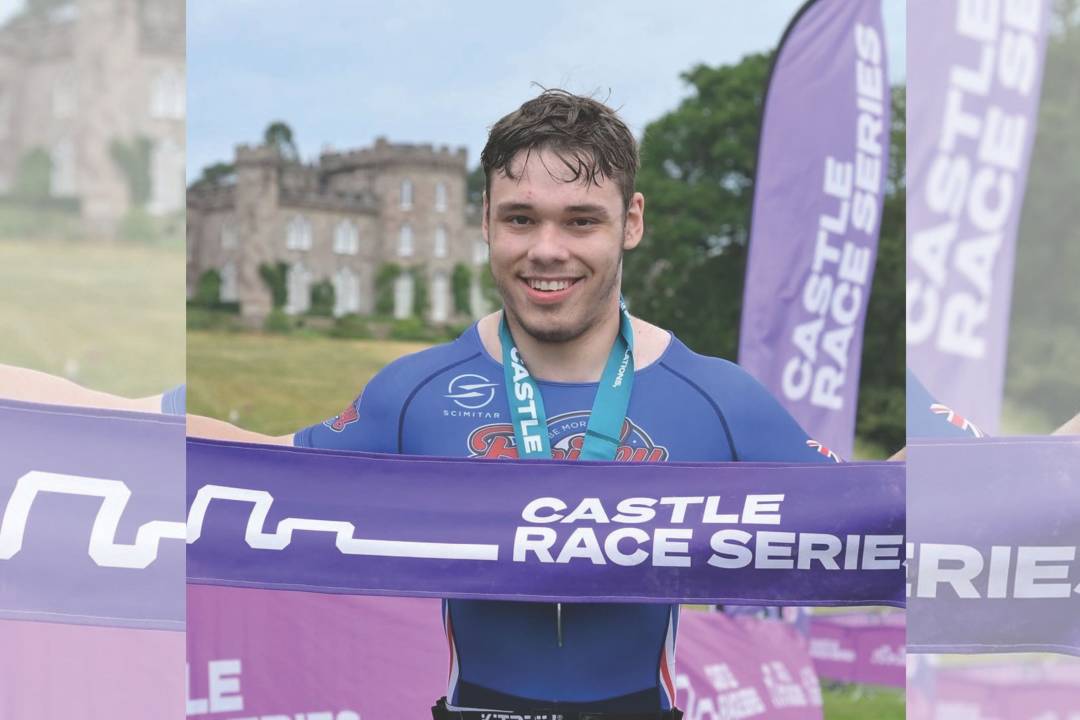
I can’t remember much about the Castle Howard race, but show me some pictures and it comes back! I recall trying to concentrate during the briefing when Brian, who led the team, asked questions to check we understood. I remember the klaxon sounding, going for it, and giving the swim marshal a thumbs-up when they asked if I was okay.
Castle Howard has a long run to transition from the swim, and I found it tough in a wetsuit and barefoot, so Dad had to carry me. The bike was hilly and he pushed me quite a bit. Coming off the bike, my legs were like jelly and I struggled to stand.
On the finishing straight, I heard the announcer say my name and suddenly there was this huge roar. At parkrun, I often let go of my walker, so that part wasn’t new. But here, I tripped on some turf covering the wires, got up, then fell again. I didn’t realise it was being filmed – or that it would mean so much to people.
Even now, I don’t fully grasp the impact of that video. I see it from my point of view, which isn’t the same as everyone else’s. I was on ITV local news, then BBC Breakfast in Salford. At the time, it just felt like I was completing a challenge I’d set myself. Knowing people have found it inspiring is a huge honour.
I’ve kept doing triathlon most years since. At eight, it was just fun, but I’ve taken it more seriously over the past couple of years and now train about four times a week.
I swim in open water, ride on Zwift, and do my local parkrun. Running is still the hardest part, as that’s where I’m most restricted. When I started, Dad pushed me round, but now I complete the full course at Clumber Park on my own.
Training helps in day-to-day life too. My view on cerebral palsy is that I have to stay active to keep it from getting worse. If I don’t train, I’m in more pain than if I do. Traditional physio bores me, but triathlon gives me a goal and a sense of progress. Now, the gym, swimming, cycling and running are my physio.
Because of my condition, race placings don’t change much – but my goal is always to go further. This year, I’ve stepped up to super sprint distance.
I’ll always remember Castle Howard 2022. I was racing in the 15–16 category in torrential rain. My recumbent trike is wide, and the ruts in the course made it hard to steer.

I looked at my watch, pulled over, and for the first time ever, I thought about stopping. I cried for a bit, but I finished. I can’t imagine stopping tri now – it’s such a big part of my life.
I’ve had loads of support from my mum and dad, uncle, brother and grandparents. The Castle Triathlon Series crew have also been amazing – they’ve always made me feel welcome and encouraged me to do well. Without their warmth and kindness, I’m not sure I’d still be doing triathlon.
In 2017, we launched the Be More Bailey Charitable Foundation to support other disabled young people. It gives out small grants to help them access triathlon or take part in swimming, cycling or running.
There were a couple of years where I didn’t train as much as I should have – and I paid for it, both in sport and in everyday life. So my advice to anyone thinking about giving tri a go is simple: stick with it!
Meet Bailey Matthews
In 2015, Bailey Matthews (then aged 8) from Worksop, Nottinghamshire, who has cerebral palsy, completed a junior triathlon in North Yorkshire. A video of him discarding his walking frame and finishing the race unaided went viral, reportedly viewed over 30 million times. The moment earned him the BBC Sports Personality of the Year Helen Rollason Award.


 220 Triathlon Team
Journalists, reviewers, coaches and athletes
220 Triathlon Team
Journalists, reviewers, coaches and athletes