The triathlete’s guide to building a bullet-proof core for swim , bike, and run
Rehab physio Eddie Smith explains all you need to know about your core, and shares key core exercises that all triathletes should follow.


As a triathlete, core training is crucial to power-up your performance, as well as reinforce the body against injury.
News flash, your six-pack has little to do with true core strength. Your core muscles aren’t just your abdominals, think chest to knees: your torso, abdominal muscles, lower back, and hip complex all come into the mix.
We’ve teamed up with consultant physiotherapist, Eddie Smith, to uncover the best core exercises for triathletes.
A stronger core improves efficiency of effort, helping you produce more power and to better control the load on your extremities.
A training plan with core strength conditioning incorporated is the best place to start.
What core exercises should triathletes do?

Good core training is context specific. Don’t fall into the trap of thinking that doing lots of sit-up crunches will get you a six-pack, this won’t help your endurance training efforts.
Planks have become the pin-up core exercise for many. But doing lots of long static holds isn’t likely to be enough on its own to boost your triathlon training or safeguard against those annoying overload injuries.
Core training for endurance athletes should lean on a training principle known as specificity.
Be functional
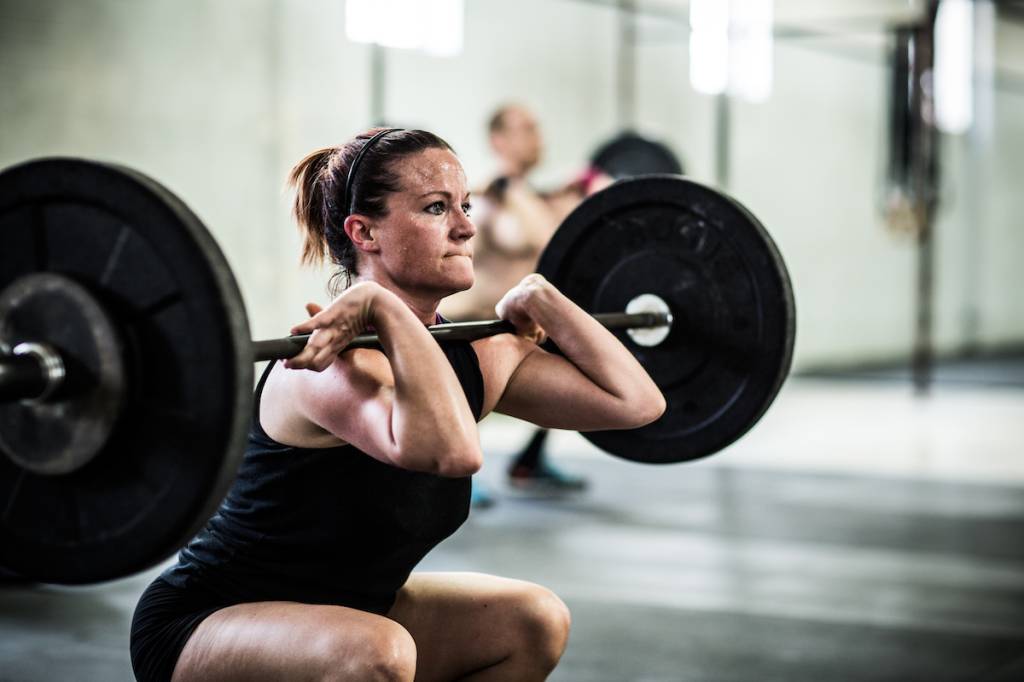
People also talk about functional training and for argument’s sake, we can think of these terms as the same. The idea is simple: your body adapts to what you regularly ask it to do.
In a triathlon context, this means training in ways that closely mimic the physical and neurological patterns you use when swimming, cycling, and running.
Instead of isolating muscles on machines, functional training focuses on movement patterns, stability, coordination, and strength that directly improve your performance in the three disciplines.
If you want to be better at triathlon, your training should reflect triathlon movements, this is the principle of specific adaptation to imposed demands (SAID).
What that looks like for you may vary. But it’s best to integrate exercises that challenge your core stability, balance, and power transfer into your training, helping you move more efficiently and handle the load of long training sessions and races.
Ultimately, if you are training for an endurance event such as a triathlon, marathon, or ultra, then the work that you do in training should support that goal.
Thinking about the core-specific demands of those events, your core exercises should replicate it.
Here are some of my suggestions as a physiotherapist:
Strengthen the core for swimming

With swimming in mind, you might want to sub out crunches for side plank rotations, which better mimic the rotational control needed during each stroke.
It’s also worth stepping up your plank holds by adding alternating arm and leg lifts (also called Superman planks) to challenge your stability in a way that mirrors how your core has to resist rotation and extension in the water.
Russian twists are also recommended for swimmers and cyclists. They’ll make you more stable through your torso, so you can pull with your arms and kick with your legs, or pedal as hard as you need.
These variations build not just strength, but endurance and balance through your midsection, helping you hold better body alignment and conserve energy across long swims.
Core exercises for cycling
For cyclists, some jackknifes and pikes can be more helpful than the classic bicycle crunch.
These movements strengthen the deep core muscles that stabilize your pelvis and spine, allowing for smoother, more efficient power transfer through the pedals.
A strong and stable core also reduces unnecessary upper body movement, meaning more of your energy goes directly into forward motion.
Over time, this translates to improved posture on the bike, less lower-back fatigue, and better control on climbs and descents.
Running strong comes from the core

Start doing more straight-line single-leg exercises like a single-leg Romanian deadlift, single-leg (pistol) squat, and Bulgarian split squat.
Consider adding single-leg calf raises too. These target an area which is often weak in runners and can cause Achilles issues.
These movements challenge your balance, coordination, and hip stability, all of which are key components of efficient running form.
Your cycling will also benefit from these exercises. Being single-sided they mirror the dynamics of your pedalling. By developing your glutes and hamstrings, they’ll enable you to exert force throughout more of the pedal stroke.
Another benefit of single-sided work is that it can identify and reduce strength discrepancies between legs.
A strong core keeps your pelvis steady and prevents side-to-side sway, improving stride mechanics and reducing the risk of injury down the kinetic chain.
The payoff is a smoother, more controlled run that lets you maintain good posture even when fatigue sets in.
Core work doesn’t need to be an everyday thing. But there’s a balance to be struck.
Certainly adding some specific core work into your training regime doesn’t require much effort. It’s likely to help reduce overload and overuse injuries.
Eddie Smith is a Rehab Physio at Six Physio Monument. He has a special interest in the rehabilitation of sports injuries and has worked with athletes of all levels from elite to weekend warrior


 Eddie Smith
Consultant physiotherapist
Eddie Smith
Consultant physiotherapist