Going on a triathlon training camp? Follow these 10 tips I learnt from experience
What are the things you learn on a tri training camp that can really make a difference? I spent a week training in the Alps with Treacle Velo to find out

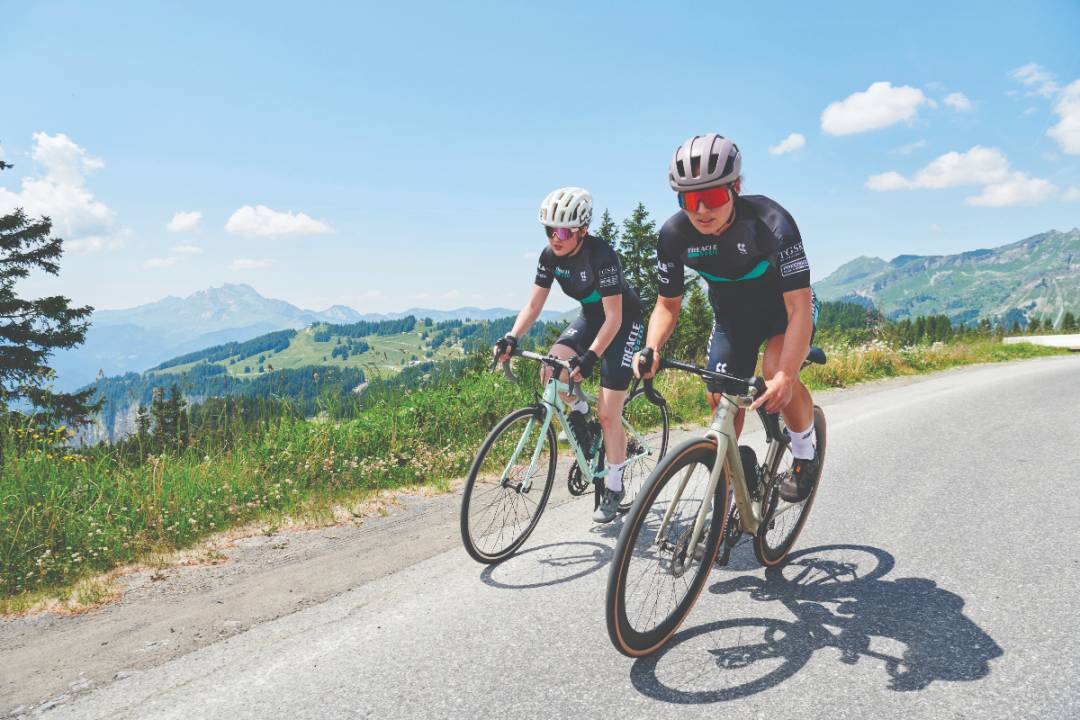
I’ll admit it: the thought of Morzine in the summer conjured up more images of melting cheese and mountain air than threshold sessions and brick runs, writes Michelle Farrow.
But that’s exactly what brought me here – six days in the French Alps with Treacle Velo, a triathlon training camp I’ve grown to trust for support, and no-BS training.
With Ironman Leeds looming, this wasn’t a holiday. It was a calculated assault on complacency. Morzine doesn’t ease you in.
Michelle Farrow
Michelle Farrow is an endurance athlete balancing training with a demanding career in veterinary. The Morzine camp formed part of her prep for Ironman Leeds, her first full-distance triathlon. She is passionate about sharing the raw, real moments that define the Ironman journey – and hopes to inspire others (women!) to chase big goals, no matter how chaotic life gets.
On arrival, you’re greeted by winding cols, cold rivers, and gradients that don’t care how fit you were last season.
But that’s the beauty of it. It strips things back. No hiding behind familiar routes or training ‘when it suits’.
You get up, you train, you eat, you sleep… and you do it again with purpose.
The camp is based out of a central chalet, complete with secure bike storage, communal meals, and a layout that encourages recovery (read: flat-out napping between sessions).
From the moment you unzip your bike bag to the final lung-busting hill rep, the entire camp is catered to you.
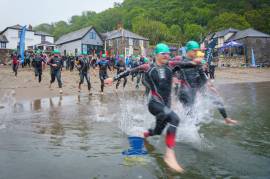
There is the opportunity for swim sessions in the fresh Lac Montriond, rides into Avoriaz and beyond, and even optional trail runs along ski pistes that remind you exactly how high up you are.
What makes it a success isn’t just the scenery or the schedule – it’s the people.
Treacle Velo have mastered the art of combining camaraderie with accountability. You’re pushed, but you’re not punished.
The hosts are present, the advice is specific, allowing you to make each session feel like it has a reason.
No filler, just focused effort.
By day three, I’d already changed how I approached fuelling, pacing, and even descending (turns out braking is optional if your head’s right).
And by the end I knew where my weaknesses were and had a plan to fix them before race day.
Whether you’re a first-time Ironman hopeful or chasing a spot at Kona, training camps can be a shot in the arm.
They recalibrate your expectations, strip away distractions, and – crucially – remind you why you signed up in the first place.
Without further ado, here are the 10 key lessons I took away that you can use in your long-distance training…
1. Use long climbs to perfect pacing

The endless alpine climbs around Morzine aren’t just beautiful – they’re brutally honest. Unlike rolling terrain, there’s no coasting and nowhere to hide.
You quickly learn how to manage your effort over 30, 60, even 90 plus minutes of continuous uphill.
Pacing becomes about feel, breathing, and sustainable output – not just numbers.
I learned to settle into a rhythm and avoid the temptation to surge, which will pay dividends in Ironman Leeds where controlled effort over long durations is key.
The climbs taught me where my red line is – and how not to cross it too early on race day.
2. Practise long descents

Before Morzine, I treated descents as a recovery window – something to survive, not master.
But the technical downhills here taught me that efficient descending is a skill that can save serious time and energy.
By focusing on body position, vision, and brake modulation, I started flowing rather than fighting the road.
Practising this every day gave me confidence to stay aero longer, brake later, and descend with intent.
These lessons will help on the fast sections of Ironman Leeds, where staying relaxed at speed will be crucial after big climbs.
3. Fuel early, fuel often
One of the biggest revelations was just how much fuelling affects your ability to train let alone race.
On our 5-6 hour rides, getting behind on calories was a one-way ticket to blowing up.
I experimented with timing, products, and quantities, and found a groove that kept me feeling strong throughout.
Eating early – even if you’re not hungry – and staying on a regular 20-minute fuelling schedule made a huge difference.
It’s not just about energy, it’s about gut training too. I now know what my body tolerates and when it needs it.
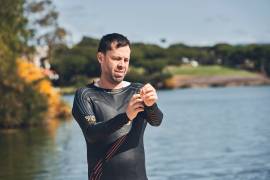
Riding with fellow campmate, Alix Popham (ex-Welsh rugby pro) was an excellent lesson in preparation – he showed me how to use my bike computer to set up hydration and nutrition reminders, a game-changing habit I’ll be using right through to race day – that and his constant nagging to hydrate & fuel which is now drummed into me!
4. Run tired, then recover

Running off the bike is never easy, but doing it every day on tired legs taught me how to manage fatigue and still find rhythm.
It helped me mentally adjust to the transition and physically get used to the shuffle-then-flow pattern.
But equally, the importance of recovery between sessions became clear – stretching, compression, nutrition, and even just lying down mattered more than ever.
These short, purposeful brick runs helped me build confidence that I’ll still be able to run, even when the tank feels empty.
5. Be mindful of training volume

It’s tempting to treat a training camp like a badge of honour – more hours, more effort, more gains.
But if you’re used to 8-10 hours a week at home, jumping to 25-30 on camp can be counterproductive.
Your body will likely hit a wall, and the fatigue may not only reduce the effectiveness of later sessions but also compromise recovery for weeks afterward.
I learned to be selective: skip the optional extras when I needed to, focus on key sessions, and trust that consistency beats overload.
Training smart beats training hard, especially in the long build to an Ironman.
6. Sleep like it’s your job
Quality sleep made the biggest difference to how I performed each day.
After back-to-back sessions in altitude and heat, my body craved recovery more than protein shakes. I prioritised 9-hour nights,power naps, and even turned off my phone in the evenings.
This gave my body space to repair and reset. It’s easy to undervalue sleep when life gets busy, but here it was non-negotiable.
My recovery scores improved, my mood lifted, and I was ready to push again the next morning.
Sleep is not a luxury – it’s your secret weapon.
7. Refine your kit

With long rides, open water swims, and multi-terrain runs, I had the perfect lab to test kit.
I experimented with saddle choices, sock types, chamois creams, and even bottle cage positions.
Some gear got the boot; some became firm favourites.
Discovering what causes chafing, what dries quickly, and what feels right after six hours was invaluable.
You don’t want any kit surprises on race day, especially at Ironman distance.
By the end of the week, I knew exactly what I’d be racing in, right down to the base layer.
A highlight of the week was catching up with the team from Kalas, whose insights into performance kit design gave me a fresh perspective on finding comfort in my clothes — something that’s just as important as speed.
8. Eat with intent
Chalet food was excellent, but I still had to think strategically.
With multiple hard sessions a day, I couldn’t just eat for hunger — I had to eat for tomorrow.
I focused on carbs around workouts, protein in every meal, and fats later in the day for recovery.
I also trialled race nutrition at breakfast to make sure it sat well.
By logging intake briefly each day, I learned what worked and where I was lacking.
Intentional eating helped me avoid bonking, supported adaptation, and kept me firing on all cylinders.
Thanks to guidance from Total Endurance Nutrition, I’ve now developed, tested, and refined a race-day fuelling plan that I can routinely incorporate into training sessions.
9. Ask coaches and campmates stupid questions

Having access to knowledgeable, approachable athletes and coaches was one of the biggest advantages of the camp.
I asked things I wouldn’t Google, like how to stay aero on a descent, whether my glute pain was a fit issue, and why my swim stroke always drifted left.
Every answer helped me refine something. Don’t wait until you’re injured or frustrated to seek guidance.
The best time to ask is when someone can watch you, respond in real-time, and explain in plain English.
I made the most of conversations with fellow campmates and experienced triathletes Mark and Caroline Livesey.
Their deep well of knowledge and real-world experience offered perspectives that simply can’t be found in a textbook.
10. Be strategic with your week
While it’s great to be flexible, having a personal focus – whether it’s swim technique, hill running, or bike pacing – gives structure to the week.
I sketched out my priorities before arriving, building in key sessions and recovery slots to avoid burnout.
It also helped me decide when to push and when to pull back.
And, crucially, I learned never to miss afternoon tea.
New research (or perhaps pure instinct) confirms the performance-enhancing value of cake. Plan wisely… and always show up for the sponge
Michelle spent a week training with Treacle Velo Training Camps which is located in Morzine, in the French Alps. Their training season runs from June-September with a focus on triathlon endurance and Ironman-specific training. All levels are welcome, from beginners to Kona hopefuls. Find out more: Website: www.treaclevelo.cc Email: [email protected] and Instagram: @treaclevelo


 220 Triathlon Team
Journalists, reviewers, coaches and athletes
220 Triathlon Team
Journalists, reviewers, coaches and athletes