Four coaches explain how to escape a triathlon racing rut
How was last year’s racing for you? Chances are there are some areas you’d like to improve and even more likely – you’re not alone! Here are our expert solutions to the most common performance barriers

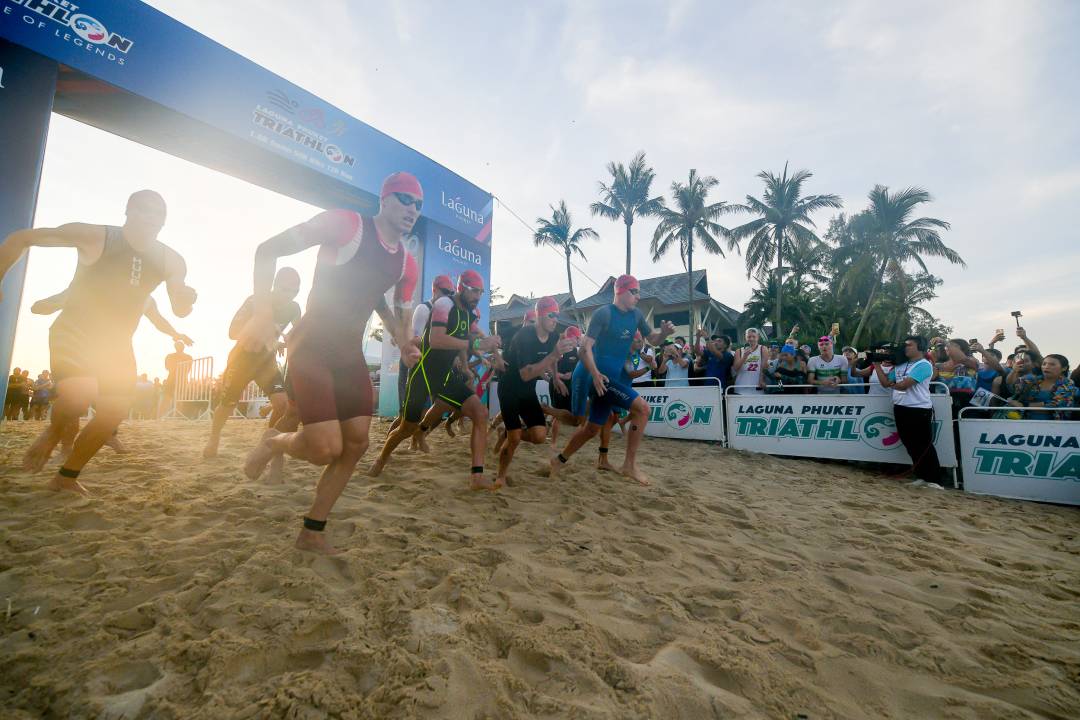
Despite your New Year’s resolutions, if you’ve plateaued and want to know how to escape a triathlon racing rut, then this is the time to start addressing where you want to be in the year ahead.
Here, we pin down four common ‘plateau’ scenarios and show you how to overcome them. These are aimed at relative newcomers to seasoned long-course athletes and the full spectrum in-between.
That said, if the scenarios don’t resonate with your own plateau, fear not: there’ll be takeaways that are relevant and can be applied to your own performance.
Right, over to our four world-class coaches to help you smash through your barriers.

1. Swim stagnation
- Coaching advice Dan Bullock, Swim For Tri
This is a common one. You work hard on your swimming but don’t feel like you’re getting any faster or more economical.
There are several key areas to focus on here.
First, swim more than you are!
Two swims per week is plateau territory; three to four will help massively.
Next, have a plan. Swimming laps is better than not swimming but, ultimately, you’re just practising swimming laps.
Speed, endurance, fitness and technique should feature at the appropriate times. Mobility practised on dry land might also be needed to speed things along.
You then need to decide how much quicker you want to be. It’s possible that some swim improvements might come at the expense of your running.
The highly mobile ankles of a ‘pure swimmer’ usually leaves them quite ungainly on the run.
Your run fitness arguably might lead to frustration; I’ve helped several elite runners become pro Ironman athletes but often heard, ‘Why aren’t I faster if I can run a sub- 2:45hr marathon?!’
Often, bike improvements come quickly, compounding the issue.
Some of the key physical issues I’ve helped many runners deal with include: ankle flexibility (add fins to help mobilise); bent knee when kicking (try the glute kick drill – sessioninabottle.com/swim-videos); and big scissors kick (feel the big toes lightly brushing against each other to a fast rhythm to prevent the legs straying so far apart).
An inability to relax, leading to tension, breathing issues and heavy muscular legs, also feature. More technique work will address all of these.
I often hear swim coaches shouting ‘relax’ to swimmers in the water but, until your technique improves, this is hard. Technique leads to a more controlled stroke when you breathe.
Too often, poor technique dictates when you breathe, so relaxing is hard until you achieve a certain swim ability.
A simple test I employ to convince swimmers that it’s worth pursuing technical work is to gauge if you’re faster swimming with a pull buoy between the thighs than without.
If you can pull faster than you can swim, you might break through your current plateau by addressing your leg kick.
Runners often struggle with the small leg kick movements needed for an efficient swim, but a strong two-way bend at the knee rather than a straighter movement from the hips will keep you swimming uphill.
Tight ankles could also be contributing to drag as you swim with toes pointing to the bottom of the pool. But again, this can be beaten with drills and commitment.

2. Ironman speed stall
- Coaching advice: Celia Boothman, Ltr Coaching
Once you have a few long-distance races under your belt it can be common to become disillusioned by your lack of progress with finish times.
Firstly though, congratulations on your finishes. And rest assured it’s quite common for athletes to hit a wall.
Thankfully, there are a few things you can look into… Have a look at your results position in each discipline.
Do you consistently drop places in the swim, bike or run? Focus on that area.
If it’s swimming, it could be that a few video-analysis sessions would make a difference.
If it’s bike or run, then including some speed and strength work would improve your efficiency.
Set goals
Reflect on your goals, making them as specific and measurable as you can.
It could be increasing your FTP (Functional Threshold Power) on the bike by 10 watts by the end of June, running a sub-1:50hr half marathon by the middle of May or swimming 2km in under 36mins by the start of July.
You could set a goal for each or just for the discipline that you need to improve in the most.
Improving each sport by 1% adds up to a lot of time over an Ironman. Prepare for the counter- intuitive.
In other words, while you need to include volume to complete a long-course event, you need to work at higher intensities, too, especially if you’ve hit a plateau.
There’s plenty of evidence to show that working at a higher intensity improves endurance, plus efficiency.
If you always train at the same intensity, you’re missing out on valuable benefits to your training.
Strength training’s another area to work on. But it’s something that even experienced long-course finishers avoid, which is a shame as numerous studies show improved performance when athletes supplement their training with strength sessions.
Periodise
Your movement patterns improve, which leads to greater efficiency and power output. If you’re training the same way all-year round then you’ll inevitably hit a plateau.
Training should progress and you should have scheduled downtime. If you don’t have a season break, then mentally and physically it can be very draining.
Just as the seasons change, your training focus should change throughout the year. Have you become stale in the structure of your season?
Could you try some different types of events to complement your goals?
You could include a swimrun event, time trial, run event or shorter-distance triathlons/duathlons.
You might learn something from doing these events that’ll help you to progress in long course.
Dial in fit and fuelling

Nutrition is key. Is there anything you can do to improve your nutrition, both in and out of training? What you eat supports your recovery and ability to perform.
You should make sure you go into sessions properly fuelled, fuel well during longer/intense sessions, and fuel after to promote muscle protein synthesis.
Practise your race-day nutrition because this can have a huge impact on your race-day performance.
Have you had a bike fit? Improving your position on the bike offers the most aero gains, so getting a professional bike fit is one of the best investments you can make to improve both comfort and speed.
If you don’t use clip-on aerobars or a triathlon bike, then this is also worth looking into.
A complete aero set-up also means a streamlined tri-suit, switching from a road bike helmet to an aero road helmet, and bagging yourself a pair of triathlon bike wheels.
Five quick ways to boost your performance
1. It’s common to endure a mid-season rut as that’s often when your goal race will be. So pencil in a late-season effort or two to keep you motivated until autumn beckons.
2. It’s natural to ride and run the same routes, but while this is good for measuring progress it’s the green light to boredom. Mix it up and even head off-road to keep the synapses stimulated.
3. You can’t beat a warm- weather training camp to revive your flagging ambitions. If a week away in Lanzarote is beyond your budget, no worries: simply organise a UK-based DIY weekend with your mates.
4. Hitting the metaphorical wall is often down to lack of rest, so take a recovery week every fourth week, focus on good-quality sleep, and make sure you’re consuming sufficient protein.
5. Lack of oomph is common during a session, especially a long bike ride, so try self-talk. Verbalising or internalising positive statements like ‘I’m feeling strong’ are proven to give you a hormonal and, subsequently, performance lift.

3. Loss of motivation
- Coaching advice: Kate Offord, Smiling Tri Coach
1.Join a club
Joining a club may seem like a big step but it’s worth taking as coached sessions make you accountable.
Plus, seeing the same people each week will ensure that training becomes part of your routine. If joining a club’s a step too far right now, find yourself a training buddy.
Knowing that someone else will be waiting at your 6am swim or your 8pm run is a great motivator for helping you out of the door.
2) Be realistic about what you can achieve
Be honest about how much time you have to train.
If you take a standard week and then remove the times you’re sleeping, working, commuting, spending time with family and friends… you’ll realise you have less time to train than you think.
You should also factor in a recovery day. And be realistic with when you can train.
If you know you’re not a morning person, for example, don’t expect that you’ll be able to spring out of bed every day at 5am.
Play to your strengths and schedule training at the times when you’re most receptive. Set yourself up to succeed, not to fail!
3) Enter an event to keep you motivated
If your race goal is quite far away, consider entering interim events to keep you focused.
Sign up for that early-season duathlon to test out your legs and sign up to a shorter triathlon to practise transitions or fuelling.
Racing regularly will keep you fired up and also help you manage your nerves when the big race day comes along.
4) Banish the tech
While technology and data have become a huge part of triathlon performance, constantly measuring yourself can cause a dip in mojo for some.
So don’t be afraid to train without your multisport watch or bike computer occasionally, so that you can enjoy the session for what it is without beating yourself up about pacing, heart rate or power.
Getting to know how your body feels is also an important part of growing as a triathlete.
5) Promise yourself a treat
Plan some achievable milestones and promise yourself a treat if you achieve them.
It might be a new training swimsuit or new bike toys. Or a day off with the family, or even a big piece of cake!
6) Slow down to speed up
Many struggle with training motivation because they’re training too hard or they train too much too quickly.
Research suggests that most athletes will see great progress with at least 80% of their training being at a low intensity.
This low-intensity training builds the engine (your cardiovascular system) without putting too much strain on the body, so you don’t build too much fatigue and are ready to train again the next day.
If in doubt, slow down a bit, enjoy each session and be ready to train again tomorrow.
7) Don’t feel guilty
Juggling a busy life alongside a triathlon training plan will always mean that some sessions will be missed. And that’s okay.
Triathlon training is about consistency and not ‘hero weeks’, so achieving 80% of your sessions over a period of a year is a much more efficient way to train than banking a couple of hero weeks and then falling off the wagon.
So, next time life gets in the way, don’t worry about it. Just move onto the next session without a backwards glance. And don’t forget to smile.

4. Inconsistency
- Coaching advice: Joe Friel, Joe Friel Training
Spread out your training time as: swim 20%, bike 50% and run 30%.
If you’re very strong in one sport and very weak in another, then shift the load slightly from the strong one to enjoy more time in the weaker sport.
Train once daily. Work out six days per week with one day off. Make two of those days ‘hard’, meaning six to seven out of 10 on the rate of perceived exertion scale. A longish interval is an example.
The other four days should be easy and your longest workouts. Separate the easy days by two to three days.
On the two hard days in the last eight weeks before your race, do ‘brick’ (bike-to-run) workouts.
Once weekly warm up for 20mins and then do a hard (six to seven effort) 20mins on the bike followed by an easy run for 15mins.
On the other hard day, do an easy 1hr ride followed by a 15min run at race effort. Specificity is key to maximise your training time.
One of the most explicit examples of this is on the bike. Too many triathletes train on their road bike but race on their triathlon bike.
That’s a mistake – if you want to race well on a TT bike, you need to train on it regularly.
Different muscles are used in an extreme aero position than upon a road bike, even on the drops.
Weekly muscular-endurance intervals on the TT bike are perfect.
Recovery workouts are essential to progress. So take it easy. That means you’re better off recovering on a bike or in the pool, for example, than doing an easy run.
If you’re going to develop an overuse injury, it’ll most likely be on the run.
I want high-performing triathletes I coach to run a minimum three times a week, but one of those might be to improve technique or a short run off a key bike ride.
In any case, make sure you’re training in a pair of the best running shoes.


 James Witts
Freelance sports writer and author
James Witts
Freelance sports writer and author