What are the best running shoes? We test the best kicks for speed, comfort, and stability in 2026
Baffled by the search for running shoes and want to find the best ? Here are our 10 favourite all-rounder running shoes tested by experts.


The best running shoes combine performance, comfort and support, but they won’t have universal appeal: you have to find a pair that suit your mileage, gait, cushioning preferences, budget and more besides. As the running shoe market has diversified, this has become an increasingly complicated task.
So here, we’re going to explain how to choose the right running shoes for you. In this article, you’ll find a list of the best running shoes, as reviewed by our test team over the past couple of years. At 220 Triathlon, we rigorously test and review all kinds of running shoes for both men and women — putting dozens of pairs through their paces each year.
Why you can trust 220 Triathlon
Our team of experts rigorously test each product and provide honest, unbiased reviews to help you make informed decisions. For more detail, see how we rate and test products.
Best run shoes at a glance
A propulsive and light performance running shoe that suits fast training miles and racing, the Asics Metablast (buy now) is seriously impressive.
Despite not having a carbon plate, the Saucony Endorphin Speed 5 (buy) delivers the sensation of pace at a lower cost than most race trainers.
One of the best race shoes around, the New Balance Fuelcell SuperComp Elite v4 (buy now) is a carbon-plated supershoe and popular race shoe among the elites.
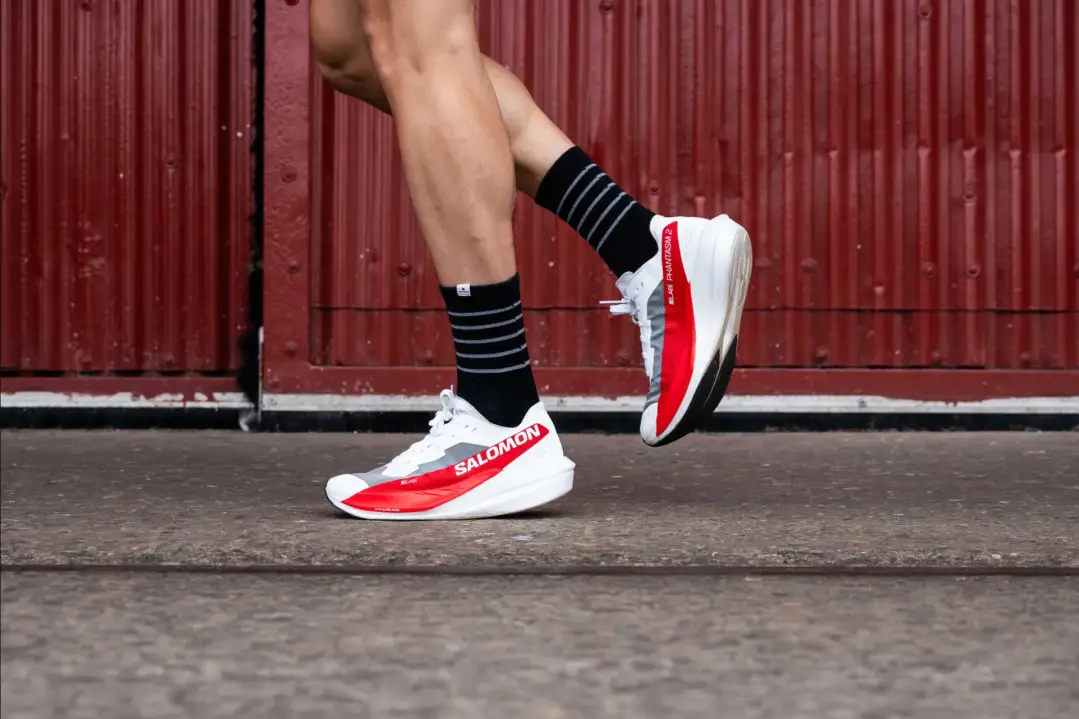
The Salomon S/Lab Phantasm 2 (buy now) is a classy race-day run shoe that’s both fast and comfortable.
The Asics Gel-Nimbus 26 (buy now) is the ideal, cushioned running shoe option for long, hard miles on the road.
The Inov-8 Trailtalon GTX (buy now) is a fully winter-proof trail shoe, with excellent grip and comfort.
The Salomon S/Lab Spectur (buy) is more accomodating to non-elites than most carbon race shoes, thanks to its more forgiving and stable ride.
Ample grip on loose surfaces and a solid toe bumper means the Arc’Teryx Norvan LD4 (buy) excels on gnarlier trails.
Being suitable for fast training miles and racing, the Brooks Hyperion Max 2 (buy) could do double duties.
By encouraging you to land on your midfoot or toe, the carbon-plated Mizuno Wave Rebellion Wave Pro 3 (buy) can feel very propulsive if they suit your gait.
Best running shoes in 2026 tested and reviewed
Best overall running shoe

1. Asics Megablast
220 Triathlon Verdict
High performance running shoes for intervals, long runs and possibly race-day itself. Score: 96%
Pros
- Fast-feeling and svelte
- Dual use
- Excellent laces
- Well ventilated
- Great bounce
Cons
- No wide fit varient
| Specifications | Asics Megablast |
|---|---|
| Weight | 7.8oz/223g |
| Sizing | US: women's 5-15.5; men's 3.5-14 UK: Unisex 2.5-13 |
| Features | Woven upper, FF turbo squared foam, gusseted tongue wing fit system |
| Stack | 45mm/37mm |
| Drop | 8mm |
The Asics Megablast lives up to its name, delivering a powerful and exhilarating running experience from the first stride. Designed for both training and workouts, these shoes feel fast, light, and remarkably fun, with a strong sense of bounce. The key lies in the FF Turbo Squared midsole, which provides exceptional energy return, paired with a 45mm heel stack and 8mm drop for a highly propulsive ride—especially noticeable on downhills and flats.
The breathable woven upper minimizes weight, while the lightly padded tongue ensures comfort without bulk. Serrated laces enhance security and prevent loosening. Available in white/Piedmont grey and Edo purple/black, the Megablast looks sleek, though the fit may be snug for wider feet.
Though marketed as an all-round training shoe, the Megablast is easily capable of handling races due to its lively, responsive design. At $225 / £210, it’s a premium choice best reserved for key workouts, fast training sessions, or “B” races.
- Read my full Asics Megablast review
Best nylon-plate running shoe for PBs

2. Saucony Endorphin Speed 5
220 Triathlon Verdict
A nippy and supportive nylon-plate shoe for intervals and racing. Score: 95%
Pros
- All-round speed
- Responsive nylon plate
- Good support and fit
- Multiple colours
Cons
- Raciest and cheaper options available
| Specifications | Saucony Endorphin Speed 5 |
|---|---|
| Weight | 8.4oz/237g |
| Sizing | 6-14 (UK men's), 3-10 (UK women's) |
| Features | PWRRUN foam, winged nylon plate |
| Stack height | 36mm/28mm |
| Drop | 8mm |
I loved wearing the Saucony Endorphin Speed 5 for tempo and interval workouts. Their looks, comfort, support and sensation of speed make them suitable for a multitude of runs. The nylon plate, surrounded by two layers of foam, gives away a bit of responsiveness to carbon, but seems less harsh and reduces cost.

3.Mizuno Wave Rebellion Pro 3
220 Triathlon Verdict
Boldy designed and racy shoes promoting toe and midsole striking. Score: 90%
Pros
- Very quick feeling
- High energy return
- Well fitting and comfy
Cons
- Not that stable in turns
- Limited versatility
| Specifications | Mizuno Wave Rebellion Pro 3 |
|---|---|
| Weight | 7.8oz / 225g |
| Sizing | Unisex: UK 4-12 ; 5M-13 / 6-13W |
| Features | Carbon plate, PEBAX foam |
| Stack | 61mm/57mm |
| Drop | 4mm |
The Mizuno Wave Rebellion Pro 3 are fast-feeling running shoes aimed directly at racing. Energy return from the carbon plate seems high, which should propel you forward off the ground, weight is pretty low and the soles are grippy. However, if you pronate or heel strike, bear in mind their lack of support and that they encourage a fore-foot landing.
Best carbon-plate running shoe for amateurs

4. Salomon S/Lab Spectur
220 Triathlon Verdict
A carbon super shoe that’s more manageable for everyday runners. Score: 89%
Pros
- Stable yet springy and comfy
- Suits an amateur running gait
- Easy to adjust to
Cons
- Don’t seem the fastest
- Still pricey
| Specifications | Salomon S/Lab Spectur |
|---|---|
| Weight | 8.1oz / 230g |
| Sizing | Unisex: UK 3.5-13.5; US Men 4-15 / Women 5-16 |
| Features | Carbon plate |
| Stack | 38mm/30mm |
| Drop | 8mm |
Salomon has successfully designed the S/Lab Spectur as an accessible carbon-plate running shoe. Being less propulsive and stiff, and more stable than elite racing shoes, the S/Lab Spectur could still help lower runners to a PB in good comfort. Nonetheless, the price is still high for a shoe that isn’t at the pinnacle of performance.
- Ready my full Salomon S/Lab Spectur review
Best cushioned running shoe

5. Asics Gel-Nimbus 26
220 Triathlon verdict
A good, robust shoe for easy road miles offering max cushioning and stability at a price. Score: 85%
Pros
- Good traction and stability
- Comfortable and true to size
Cons
- On the heavy side
| Specifications | Asics Gel-Nimbus 26 |
|---|---|
| Weight | 9oz / 256g, (women's UK5.5) |
| Sizing | Men's: US 6-16 / UK 5-15 Women's: US 5-13 / UK 3-11 |
| Features | FF BLAST PLUS ECO foam |
| Stack | 42mm/33mm |
| Drop | 8mm |
The Gel-Nimbus 26 builds on the major updates introduced in its predecessor, focusing on refined tweaks to cushioning materials, the outsole, and lacing system. Available in eight colors and two width options, it offers versatility to suit a variety of runners.
With 41mm of cushioning at the heel and 33mm at the midsole, the Gel-Nimbus 26 firmly sits in the max-cushioned category of road running shoes. It also boasts the thickest sole among the women’s shoes tested. Notably, that 41mm stack height exceeds the World Athletics limit for racing by 1mm. The Gel-Nimbus 26 is an excellent everyday trainer, perfect for logging those long training miles in comfort.
“The Gel-Nimbus 26 gave me a smooth ride and the rocker shape allowed my feet to roll pretty effortlessly from landing to toe off without too much thought… There’s more good news, too, as a wide base gives a good feeling of stability on the run”. – 220 Triathlon tester, Jude Palmer
Best triathlon race shoe

6. Salomon S/Lab Phantasm 2
220 Triathlon verdict
Salomon delivers a classy looking race-day shoe that has a competitive weight and is both fast and comfortable. Score: 89%
Pros
- Light-weight and fast ride
- Great stability
Cons
- Not cheap to buy
- Can feel a bit firm
| Specifications | Salomon S/Lab Phantasm 2 |
|---|---|
| Weight | 7oz/200g (UK 7) |
| Sizes | US: M4/W5 – M14/W15 UK Unisex: 3.5-13.5 |
| Features | Energy Blade and a superlight bouncy foam |
| Stack | 37.5mm/28.5mm |
| Drop | 9mm |
The S/Lab Phantasm 2s is a great-looking shoe that feels incredibly light, with the men’s UK7 (US9) weighing just 7oz/200g. The shoe has a well constructed upper with a semi rigid heel counter and substantial padding. The shoe is lined with a suede-like material which made it comfortable for wearing while sockless.
Thanks to the combination of the neat upper fit and wider, flared out midsole and forefoot platform, this is a solid race-day shoe. “The combination of the upper fit with a wider, flared out midsole and a wider forefoot platform gives a surprisingly stable race-day shoe. In fact, this is one of the most stable racing shoes I’ve tested.” – 220 Triathlon tester, Tomos Whitmarsh-Knight
- Read my full review of the Salomon S/Lab Phantasm 2

7. Brooks Hyperion Max 2
220 Triathlon verdict
A great training contender at a relatively decent price. And these can handle racing too. Score: 84%
Pros
- Decent value for money
- High levels of comfort
Cons
- Can feel a little firm
- Not the lightest
| Specifications | Brooks Hyperion Max 2 |
|---|---|
| Weight | 9.31oz/264g (UK 8) |
| Sizing | Men's: US 7-15 / UK6-14 Women's: US 5-12 / UK 4-8.5 |
| Features | PEBAX SpeedVault plate |
| Stack | 36mm/30mm |
| Drop | 6mm |
Brooks Hyperion Max 2’s are ideal for faster-paced training efforts, thanks to the shoe’s innovative SpeedVault plate. The shoe also offers enough support and stability for mid tempo efforts. However, our tester found the shoe quite firm which combined with a 36mm heel height, means this wouldn’t be our pick for recovery runs
Ultimately, the Hyperion Max 2 is fantastic neutral shoe suited to both training and racing and a great innovation from Brooks. In my full review I say: “The Hyperion Max 2 shine on fast-paced training efforts, with that SpeedVault plate offering the pop strangely absent in the Hyperion Elite 3, but with enough support and stability for mid-tempo efforts. “
- Read my full review of Brooks Hyperion Max 2
- The best budget road running and trail running shoes for 2026
Best trail running shoe

8. Inov-8 Trailtalon GTX
220 Triathlon Verdict
Not the lightest trail shoe but will defy most winter days. Score: 81%
Pros
- Winter-proof
- Excellent grip
- Well cushioned
Cons
- Dull colourways
- A bit heavy
| Specifications | Inov-8 Trailtalon GTX |
|---|---|
| Weight | 11.78oz/334g |
| Sizing | Men's: US 7-15 / UK 6-14 Women's: US 5.5-11 / UK 3-8.5 Standard or wide fit |
| Features | POWERFLOW PRO foam, 6mm-deep lugs |
| Stack | 18mm/12mm |
| Drop | 6mm |
The Inov-8 Trailtalon GTX performs impressively on wintry trail runs. Thanks to the Gore-Tex lining, feet stay dry and protected from mud and moisture, while still allowing airflow for breathability. The outsole, enhanced with graphene, delivers excellent traction—even on slick, steep terrain.
Unlike some of Inov-8’s other models that come in three width options, the Trailtalon is available in just two. That said, the wide version (UK11, 102mm) provided a secure and pleasant fit for me. A more vibrant colorway would be a nice alternative to the tested grey model.
While these aren’t the most heavily cushioned trail running shoes out there, they offer a good balance—giving you a solid sense of the trail without compromising on comfort.
Best running shoe for rough terrain

9. Arc’Teryx Norvan LD4
220 Triathlon Verdict
A versatile and reliable long-distance trail shoe that performs over all terrains. Score: 90%
Pros
- Durable and trail-ready
- Grippy across a range of non-technical terrain
- Comfortable for trail and road
Cons
- Sock tongue a bit of a faff
- Lacks heaps of propulsion
| Specifications | Arc’Teryx Norvan LD4 |
|---|---|
| Weight | 233g / 8.22oz (UK5.5) |
| Sizing | Women: US 5-10 / UK 3.5-8.5 Men: US 7-13 / UK 6.5-12.5 |
| Features | Dual-density foam, grippy outsole, 4mm-deep lugs |
| Stack | 25mm/19mm |
| Drop | 6mm |
The Arc’Teryx Norvan LD4 is the brand’s long-distance trail shoe which impresses on adventurous, big days out. Its 4mm multidirectional lugs that bite into wet mud and shed claggy mud. Equally, they offer traction and constrol on dry, hard-packed trails.
Protection is where the LD4 really shines. The tight knit PFAS-free upper is tough and abrasion-resistant, flowing down into a rubber overlay up the sides for additional coverage. While a rigid toe-bumper has saved me from a few black nails on the trail and roomy toe-box allows space for toes to splay and swell during longer runs.
The LD4’s sock-like tongue is super soft and moulds well to the foot, but its flexibility makes it slow to pull on. Once in though, the fit is dialled, and the subtle lace pocket works well.Underfoot, the Vibram Megagrip Litebase outsole is stiff and stable in the heel for rock protection, with some flex in the forefoot for a solid toe-off. Cushioning hits a sweet spot for long-distance efforts.
I personally like the sleek monotone colour ways, with plenty of options including orange, pink, beige, and yellow, plus blue for men. There’s an absence of propulsion, but then LD4 is not built for speed.
- Read my full review of the Arc’Teryx Norvan LD4
Best fast running shoe

10. New Balance FuelCell SuperComp Elite v4
220 Triathlon verdict
A pricey sequel but not far off being one of the best race shoes around. Score: 90%
Pros
- Good stability
- Propulsive ride
Cons
- Felt heavy
- A costly purchase
| Specifications | New Balance FuelCell SuperComp Elite v4 |
|---|---|
| Weight | 8oz/227g (UK 7) |
| Sizing | Men's: US 7.5-13.5 / UK 6.5-12.5 Women's: US 5-10 / UK 3-8 |
| Features | PEBAX foam |
| Stack | 40mm/36mm |
| Drop | 4mm |
New Balance’s FuelCell SuperComp Elite v4 contains a midsole made with 100% PEBAX foam, which makes it a propulsive ride. It has a chunky 40mm stack height (the maximum allowed by governing body World Athletics) and the shoes felt cushioned, but also stable for such a maximal shoe. The 4mm heel-to-toe drop and new, thinner and arched carbon plate make it suited on race-day use for a range of distances and paces.
With a price tag of $249.99 (£260) and weight of 8oz/227g (US8), they are more expensive and heavier than the previous editions, making the shoe feel slower compared to the sub-200g club of the Asics Metaspeed Edge+ and Nike Zoomx Vaporfly 3, for example.
In my full review, I concluded that “they feel cushioned but not too cushioned, but also stable for such a maximal shoe, and I’d feel confident in these on moderately twisty tri run courses.” Read my full review of New Balance FuelCell SuperComp Elite v4.
Best value running shoes
What should I look for in running shoes?
- Cushioning: Different shoes offer varying levels of cushioning, ranging from minimal to maximum. Choose a cushioning level that suits your running style and preferences.
- Stability and support: Consider the shoe’s stability features to support your foot and prevent excessive inward rolling (overpronation) or outward rolling (underpronation/supination). The right level of stability will depend on your foot mechanics and gait pattern.
- Breathability: Look for shoes made with breathable materials that allow air circulation to keep your feet cool and dry during runs. This can help to prevent discomfort and reduces the likelihood of blisters or fungal infections.
- Traction: Consider the outsole’s grip and traction capabilities. If you’re likely to be heading off-road, consider trail running shoes for better traction and protection.
- Weight: Lighter shoes are generally preferred for faster running, while slightly heavier shoes may provide more cushioning and support for longer runs.
- Durability: Assess the durability of the materials and construction to ensure the shoes can withstand regular use and offer long-lasting performance.
- Heel drop or offset: This refers to the difference in height between the heel and forefoot of the shoe. It can affect your running mechanics and foot strike pattern. Higher heel drops are associated with more traditional cushioned running shoes, while lower heel drops often signal a more minimalist or barefoot-style running shoe.
What are the different kinds of running shoes?
Road running shoes
Road running shoes are designed for runs on pavement, concrete, and other hard, even surfaces. They usually feature lightweight materials and responsive cushioning for shock absorption. Their outsoles have minimal tread to provide smooth transitions and grip on flat terrain. These shoes are ideal for everyday training, races, and long-distance runs on the road.
Trail running shoes
Trail running shoes are built for uneven, off-road terrain like dirt paths, rocky trails, and muddy routes. They typically have aggressive lugs for traction and reinforced uppers and toe bumpers for protection against debris. Many trail running shoes offer rock plates and additional ankle structure for stability on technical trails. They often include water-resistant GORE-TEX for waterproof run shoes, or quick-drying materials for off-road adventures.
Triathlon running shoes
Triathlon run shoes are optimised for fast transitions and performance in triathlons. They typically feature seamless, breathable uppers for sockless wear and quick drainage. Quick-lacing or pull-tab systems allow for speedy on-and-off during races. Lightweight construction and ventilation are prioritised to keep feet cool and blister-free.
Cushioned running shoes
Cushioned run shoes focus on maximum comfort and impact absorption, often using plush midsoles. They are ideal for long-distance runners, beginners, or those recovering from injury. These shoes provide a softer, more forgiving ride that reduces strain on joints. While not always the fastest or lightest, they can offer great support for extended use.
Carbon-plated running shoes
Carbon-plated run shoes feature a stiff carbon fiber plate embedded in the midsole for propulsion. They are engineered for speed, often paired with lightweight foam for energy return and thin, breathable uppers. Popular among elite runners, they enhance performance in races from 5km to marathons. Due to their rigidity and typically steep price, they are best reserved for race day, not daily training.
Minimalist running shoes
Minimalist run shoes aim to mimic barefoot running with minimal cushioning and structure. They have low or zero heel-to-toe drop, thin soles, and lightweight uppers for natural movement. These shoes promote foot strength and proprioception, but require a gradual transition to avoid injury. They’re best suited for experienced runners with strong biomechanics.
Stability running shoes
Stability shoes are designed to reduce overpronation by offering additional support through medial posts or guide rails. They help align the foot and ankle for a more neutral gait. Stability shoes are best suited to runners with low arches or those prone to inward rolling of the foot (overpronation); they balance cushioning with motion control for a smoother ride.
Neutral running shoes
Neutral running shoes are designed for runners with a neutral gait and little to no pronation issues. They emphasise cushioning and flexibility over corrective features and as such, are ideal for biomechanically efficient runners who don’t need added support.
| Specifications | Asics Megablast | Saucony Endorphin Speed 5 | Mizuno Wave Rebellion Pro 3 | Salomon S/Lab Spectur | Asics Gel-Nimbus 26 | Salomon S/Lab Phantasm 2 | Brooks Hyperion Max 2 | Inov-8 Trailtalon GTX | Arc'Teryx Norvan LD4 | New Balance FuelCell SuperComp Elite v4Product 11 |
|---|---|---|---|---|---|---|---|---|---|---|
| Weight | 7.8oz/223g | 8.4oz/237g | 7.8oz / 225g | 8.1oz / 230g | 9oz / 256g, (women's UK5.5) | 7oz/200g (UK 7) | 9.31oz/264g (UK 8) | 11.78oz/334g | 233g / 8.22oz (UK5.5) | 8oz/227g (UK 7) |
| Sizing | US: women's 5-15.5; men's 3.5-14 UK: Unisex 2.5-13 | 6-14 (UK men's), 3-10 (UK women's) | Unisex: UK 4-12 ; 5M-13 / 6-13W | Unisex: UK 3.5-13.5; US Men 4-15 / Women 5-16 | Men's: US 6-16 / UK 5-15 Women's: US 5-13 / UK 3-11 | US: M4/W5 – M14/W15 UK Unisex: 3.5-13.5 | Men's: US 7-15 / UK6-14 Women's: US 5-12 / UK 4-8.5 | Men's: US 7-15 / UK 6-14 Women's: US 5.5-11 / UK 3-8.5 Standard or wide fit | Women: US 5-10 / UK 3.5-8.5 Men: US 7-13 / UK 6.5-12.5 | Men's: US 7.5-13.5 / UK 6.5-12.5 Women's: US 5-10 / UK 3-8 |
| Features | Woven upper, FF turbo squared foam, gusseted tongue wing fit system | PWRRUN foam, winged nylon plate | Carbon plate, PEBAX foam | Carbon plate | FF BLAST PLUS ECO foam | Energy Blade and a superlight bouncy foam | PEBAX SpeedVault plate | POWERFLOW PRO foam, 6mm-deep lugs | Dual-density foam, grippy outsole, 4mm-deep lugs | PEBAX foam |
| Stack | 45mm/37mm | 36mm/28mm | 61mm/57mm | 38mm/30mm | 42mm/33mm | 37.5mm/28.5mm | 36mm/30mm | 18mm/12mm | 25mm/19mm | 40mm/36mm |
| Drop | 8mm | 8mm | 4mm | 8mm | 8mm | 9mm | 6mm | 6mm | 6mm | 4mm |
| Star rating |
★★★★★
|
★★★★★
|
★★★★★
|
★★★★★
|
★★★★★
|
★★★★★
|
★★★★★
|
★★★★★
|
★★★★★
|
★★★★★
|
Frequently asked questions about running shoes
The Kiprun KS900’s comfort, cushioning and competitive price makes it an ideal beginner’s running shoe.
The Asics Gel-Nimbus 26 is a plush running shoe which our tester found smooth and stable.
No. Carbon-plated running shoes offer a small performance benefit at a high cost and can feel firm, verging on harsh under foot. When you’re starting out in running, you don’t want or need any of these things.
It depends: race shoes can wear out quickly while training shoe can prove much more durable. Ignore generic replacement intervals and replace your running shoes when you feel that their cushioning and support are deteriorating.
Elite triathletes rely on advanced super shoes, lightweight, carbon‑plated racers designed to boost efficiency, energy return, and speed. Shoe sponsors often influence choice, but selection is ultimately based on course profile, biomechanics, cushioning preferences, and race distance. For instance, Alex Yee (GBR) is sponsored by New Balance and races in the SuperComp Elite v4, praised for its agility, stability, and propulsive ride. Meanwhile, Olympic champion Cassandre Beaugrand (FRA), 2024 Olympic champion, wore the Adidas Adizero Adios Pro 4 when setting the French 5km record (14 min 53 s). The lightweight, carbon‑plated Adios model is noted for its strong traction and rocker design. Read more on the race shoes making triathlon history here.
How we tested run shoes
At 220 Triathlon, every shoe we review undergoes a thorough and consistent testing process, designed to mirror the real-world demands of both triathletes and runners. Over a period of several weeks or months, each pair is put through a variety of sessions, covering everything from easy-paced long runs to high-intensity interval workouts and tempo efforts. We run in these shoes across different surfaces, in all kinds of conditions, to assess how they hold up when it really counts.
Our test team includes triathletes and experienced runners with a range of training styles, foot shapes, and performance goals. This diversity allows us to evaluate how a shoe performs not just on paper, but in the unpredictable rhythm of daily training. We look closely at multiple performance factors: comfort over time, breathability in different weather, stability during fatigue, overall ride quality, energy return, and of course, value for money.
Meet our testers
Jude Palmer is a qualified England Athletics trail / fell running coach, marathon runner and regular running kit tester for 220.
Kate Milsom is 220 Triathlon‘s former staff writer, a dedicated endurance athlete having run marathons and an experienced multisport kit reviewer.
Former 220 Triathlon magazine editor James Witts has written four books on the science of endurance sport and dozens of gear reviews for 220 Triathlon and other publications.
Matt Baird is also an endurance sport author and former 220 Triathlon staffer, who edited Cycling Plus magazine before joining BBC Countryfile Magazine. Matt has completed every kind of triathlon imaginable and is a prolific running kit tester.
Sub-three hour marathon runner Tomos Whitmarsh-Knight has penned several running shoe reviews for 220 and knows what to look for in a training or race shoe.
Rob Slade tests running shoes during his triathlon training or while scaling British peaks. 220 Triathlon‘s former content editor is now deputy editor of Live for the Outdoors website.
Cycling author and editor Ed Pickering is more of a runner himself and has raced distances from one mile up to a full marathon.
Recent updates
- December 2025: We added shortened versions of our reviews of the Mizuno Wave Rebellion Pro 3, the Salomon S/Lab Spectur and Saucony Endorphin Speed 5.
- January 2026: We checked all products were in stock and updated affiliate links where necessary.
- March 2026: We checked all products were in stock, removed shoes no longer on sale and updated affiliate links as required.
- April 2026: We updated all of our reviews and did a complete overhaul of our article format.
- June 2026: We updated all specs, article formatting, and product links.


 Matt Baird
Editor of Cycling Plus magazine
Matt Baird
Editor of Cycling Plus magazine With contributions from