I hated swimming with waterproof headphones – until I discovered music was the training hack I really needed

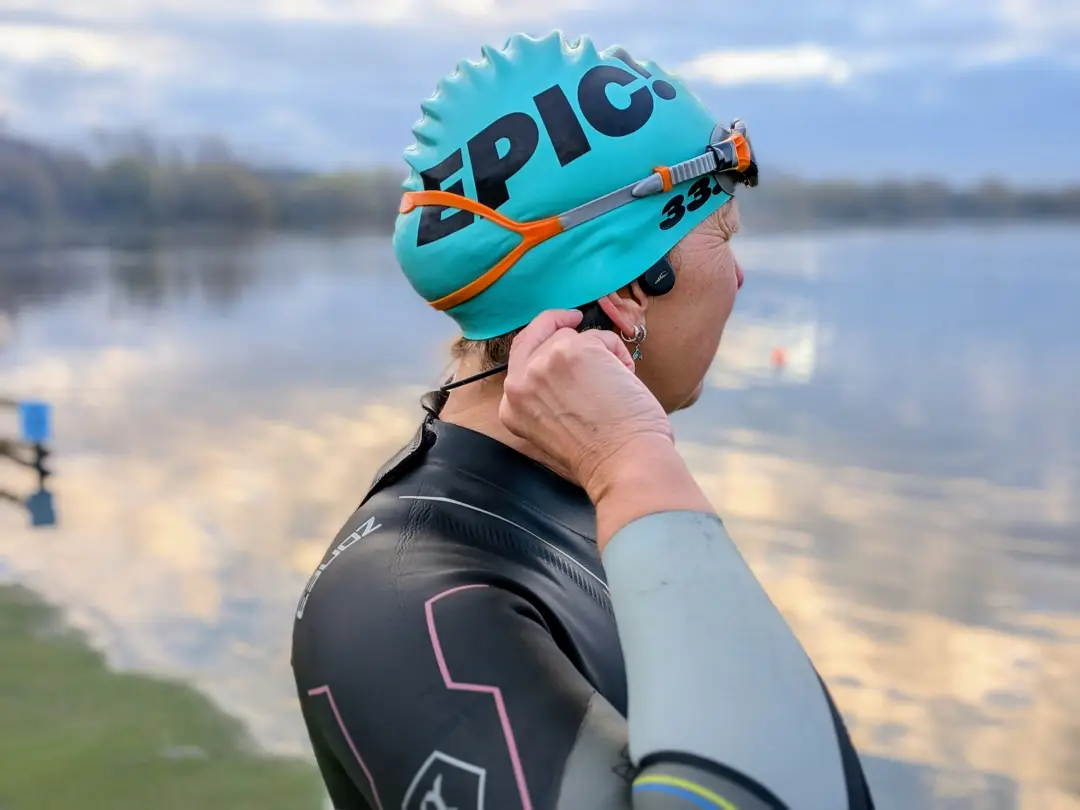
Increasing number of swimmers are using waterproof headphones as they swim. I didn’t like them until I realised they were the extra training tool I needed to get faster and swim for longer, says open water swim coach Helen Webster.
Recent years have seen the quality and number of waterproof headphones for swimming explode as technology improve. More people are starting to enjoy listening to playlists and audiobooks as a way of beating the monotony of endless lengths in the pool.
I have to be honest though. As an open water swim coach and writer for 220 Triathlon, I’m lucky enough to try most bits of new kit that come out, but waterproof headphones were never something that appealed to me.
Let me explain. For me, the beauty of swimming is the immersion in a different world. I love slipping under water and hearing the splash of my arms as I move, the sound of bubbles as I breathe.
I can be competitive and I have taken part in most of the big open-water events available over the years including triathlons (of course!) as well as swimming Coniston and Ullswater end-to-end and taking part in an Ultraswim 33.3 last year.
For me, the water has always been enough in itself to enjoy training though. It’s time in nature, time immersed in the world around me and also time for my busy brain to decompress and process all the nonsense of my day. So training with music? That would take my swimming to a different place – a place where I’m zoning out, not tuning in to my body or environment.
Music for training
All this isn’t to say I don’t love music though. Thanks to growing up in a household filled with vinyl records I’ve always enjoyed a wide range of artists from the rock and blues of favourites like Rory Gallagher, Canned Heat and Fleetwood Mac, to upbeat tracks from Blondie and Taylor Swift.
I’ve always listened to music while running and on the turbo too, so I’m not immune to the boost a good beat can give you. When I was training for an ultra-marathon back in the day I spent hours putting together complex playlists and downloading them to my iPod shuffle (remember those?!).
Swimming though, has always been the outlier. I’ve watched other swimmers faffing around with complicated devices attached to their swim goggle straps and wondered why they don’t enjoy the pure joy of swimming in the same way I do.
You know what’s coming next – the flip turn (pun intended) on this topic, as I realise that actually I was wrong all along.
Well, not wrong exactly. I think I just realised that music can have a place in my swim training. It’s a tool, much like my hand paddles or pull buoy, or the Form goggles that I use as and when I need to focus on something specific in my training.
I think partly too, the change came with the wide range of waterproof headphones on the market and how much better the technology and sound quality is.
I’m not great with tech and the complexities of downloading music onto some earlier swimming MP3 players was just too frustrating. Plus the methods of attaching and using them could be a bit clunky, too.
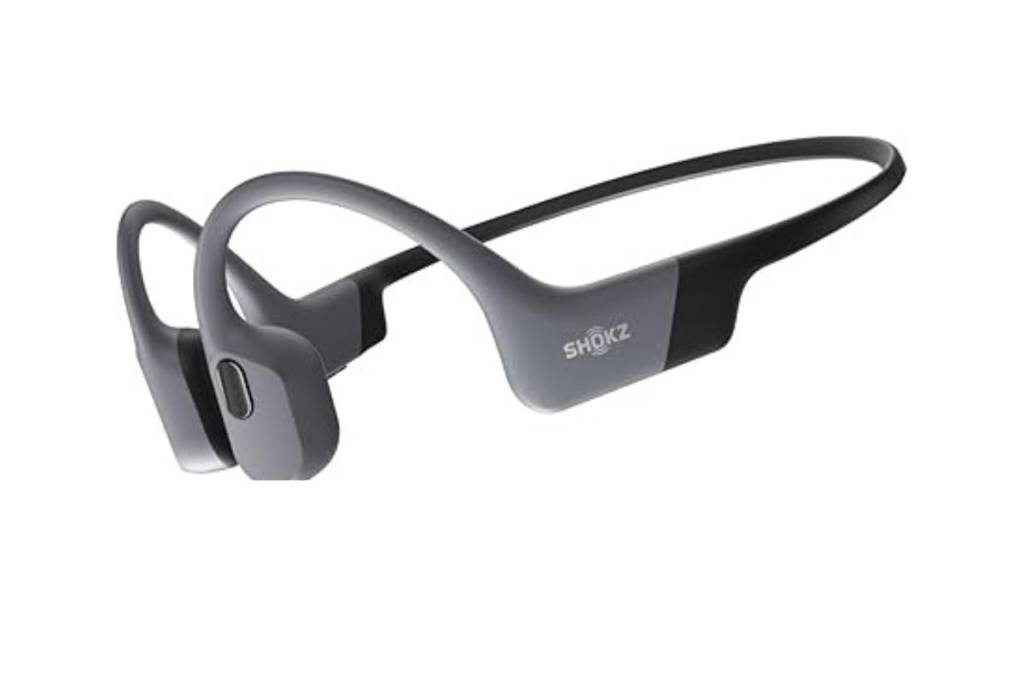
Shaking up the market have to be the bone conduction headphones from the likes of Shokz. These hook around your ears and sit on the side of your face alongside your ears (so around the area between the top of your cheek bones and your ears) and transmit the sound through your skull. Worn with earplugs, this means the sound quality is superb.
As other brands have followed, there’s now a wide range of available headsets which offer pretty decent sound quality and are easy to use at a range of price points.
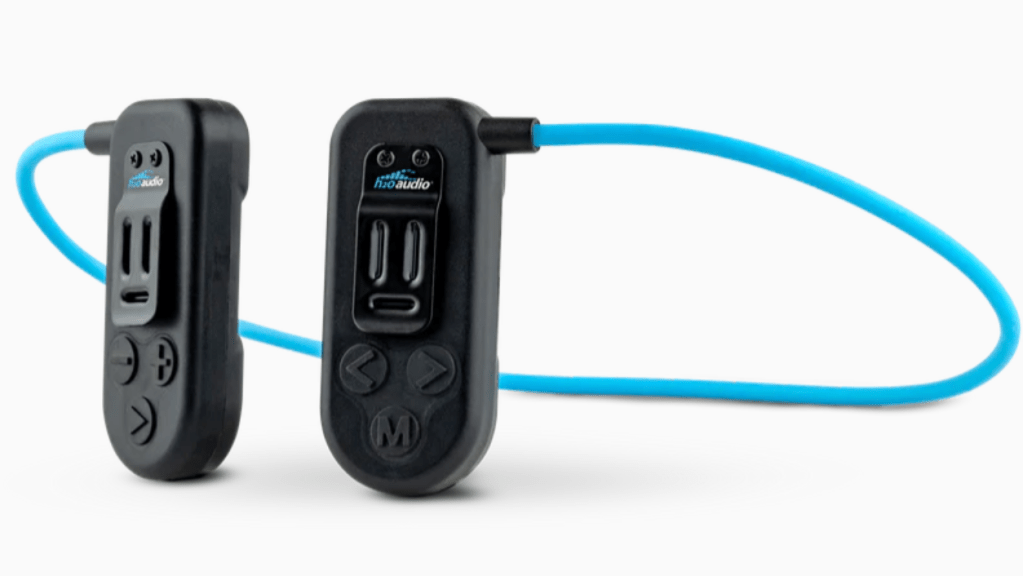
Also, there are numerous ways to download music on to your headphones from different brands. Some need MP3 files downloading, others such as H20 Audio will ‘listen’ to your music and record it much like recording music off the radio when you were a kid.
There are additional bits of tech you can get, too. For an additional £38 H20 Audio offer a case to keep the Tri or Tri 2 Pro headphones in, which you can charge them from – thereby getting an additional full charge out in the wild. Handy if, like me, you are away in a camper a lot or have a habit of forgetting to charge things.

On the topic of battery life this is one thing to consider too. My Tri 2 Pro headphones can do six hours in memory mode, which is about long enough for my longest training swims but will be more than ample if you’re training for a 3.8km Ironman swim or under.
The Shokz OpenSwim Pro likewise has six hours in memory mode and a quick 10 minute charge can give three hours of listening time. So if you’re really keen, you could pop out of the water for a pit stop, charge them up and go again.
The beauty of the bone conduction headphones on a central strap is that you can also use them for running or cycling on the turbo (I’d never recommend cycling on the road with music on, even if on bone condition not in-ear). If you prefer a set that clip on to your swimming goggle straps though, then H20 Audio’s Sonar 2 Pro could be a good option.
One thing I did like about these is the lack of need to hook over your ears. On my long swims, I did find the ear hook on the single units could be a bit uncomfortable (albeit I swim for longer than many!).
Breaking up training
So, back to my training. Last year I found myself training to swim the Triple Crown with Chill Swim, which means swimming Coniston, Ullswater and Windermere in the same year.
Weekends became all about long swims of up to six hours and much I love swimming, I found a niggling voice appearing in my brain telling me I was tired, that I’d done enough, that actually maybe a four hour swim would be enough for today.
As a coach, I understand the importance of sticking to a training plan and that your brain will usually tell you to stop before you have emptied the tank. With no illness or injury a factor it was all about pushing through and getting it done.
About the same time a couple of new waterproof music players showed up needing testing for this website. Given the amount of time I was spending in water, it was no problem to fill them up with tunes and fire them up on my long swims.
Here’s where the revelation occurred. One day I had a six-hour swim to do and decided to ‘chunk’ it as I really wasn’t feeling it. My body was tired, my head said no and my swim buddies were all doing an hour and then going for coffee and cake. Mental demons were demon-ing and telling me to stop.

I did the first three hours without music, then got out for a cuppa and a refuel. Tired and not in the right headspace, I pulled on the headphones for the second round. As the strains of Wild Honey by the Beach Boys filtered through the rhythmic splashing sounds, I felt something in my mind start to lift. If you could smile and breathe in front crawl at the same time (is that possible?!) I was doing it.
There was something about the cheerful beachy vibes of the ’60s classic that worked perfectly with the sunny day and being in the water. As I swam through classics like I Get Around, Surfin’ USA and Good Vibrations my brain started to go to a different place.
Music trivia started to niggle at me instead of the pain of another lap of the lake. Which one of the Beach Boys could actually surf? (Spoiler: it was Dennis). How many Wilson brothers were in the band? Which one dated one of Fleetwood Mac? Do I know all the words to Little Deuce Coupe?!
Before I knew it I’d completed another hour and a glance at my Garmin swim watch showed I’d actually started to hit my normal 100m pace again. Sometimes, tuning out from what your body is doing seems to actually help you do it well again.
Over the next few weeks of training I still did my shorter swims without the headphones on, enjoying the splash of the water and the focus on my environment and swimming.
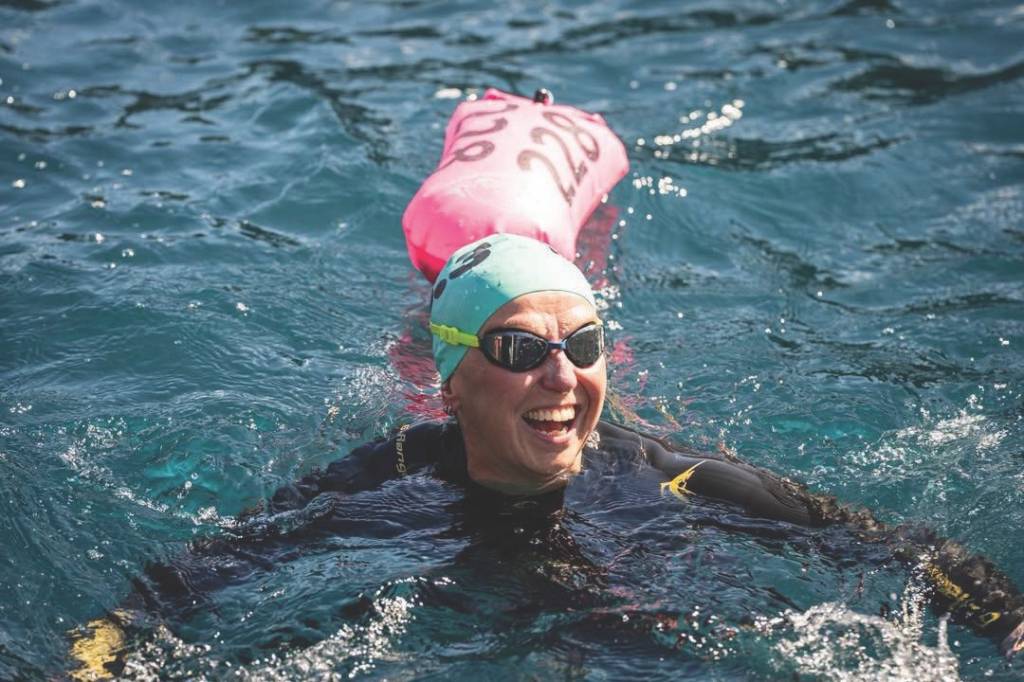
For longer swims though, I started using music more as a way to kick myself up a gear, to distract myself from the seemingly-endless hours and to give myself something to think about when all my brain wants to tell me to do is stop.
Obviously you can’t use music in actual events for safety reasons, but race day is a different beast without the urge to stop being a factor (well for me, anyway!) plus I like being fully ‘in’ the experience of the event. For the training though, those hours with music were a revelation.
Back in the pool
Now we’re in the off-season again I’m still using music when I swim, but slightly differently. The lake I swim at is around 10°C (32°F) now which means my swims are shorter so I’m keeping them fully mindful, enjoying the chill on my face, the crystal clear water and the distant smell of the warming bonfire in the distance.
Conversely I’m now doing longer swims in the pool and if anything needs a little help with motivation, it’s two hour swims in a 25m pool. I have no hesitation reaching for the headphones and understanding that much like a set of hand paddles, they’re a valuable asset and training tool.
If you’re tempted to try a set here are our latest reviews, plus below are my top five tips for training with music:
1. Choose a set with a way to upload music that works for you (ie the ‘record’ function may work better if you pay to stream music rather than downloading it).
2. Pick tracks with a solid beat at a bpm that will work with your swimming. I also found pop better than anything too subtle, the sound quality is still a little muffled underwater.
3. I found 10-minute tracks a handy thing to use, as after you’ve listened to them you know you’ve swum a good distance (about 500m for me, so two tracks will be a whole kilometre)! I included Freebird (Lynyrd Skynyrd), A Million Miles Away (Rory Gallagher) and All Too Well (10 minute version, Taylor Swift). Never say my music tastes are not eclectic…
4. Remember to charge before swims! I try not to be over-reliant on tech, but there’s nothing worse than pressing play to get some motivation and finding there‘s no battery left. An already low motivation swim will tank even further.
5. Don’t try to sing and swim. I’m not joking, you will swallow water and you will feel very stupid.


 Helen Webster
Editor, 220 Triathlon
Helen Webster
Editor, 220 Triathlon