What are the best triathlon watches? We share our top 10 models for pros and beginners
A triathlon smartwatch can revolutionise your tri training and racing. But with so many on the market, which are worth the spend? Our experts test 10 of the best...


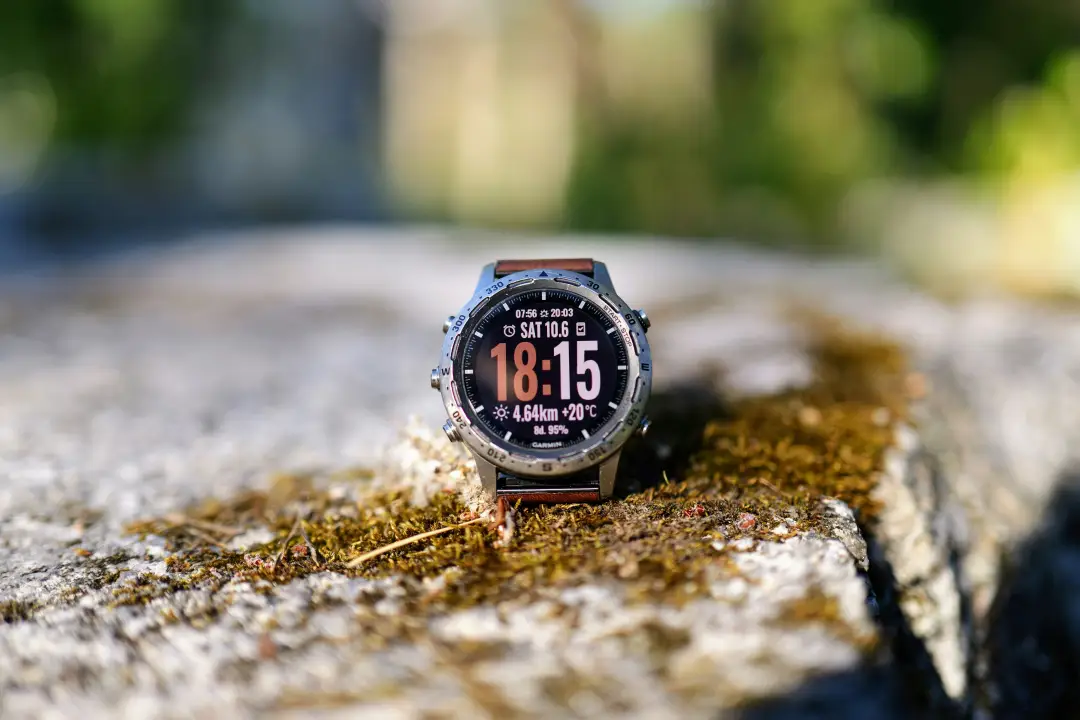
Choosing the right triathlon watch can make a significant difference in triathlon training and racing. Whether you’re a seasoned Ironman or just starting out, a reliable and easy-to-use watch can make or break your performance.
In this article, we review the best triathlon watches on the market for all levels, including top models from Garmin, Apple, Polar, Suunto, and Coros. To help you make the right choice, we compare the accuracy of activity tracking, key performance analytics, and the quality of construction for each contender.
A good triathlon watch goes above and beyond your typical fitness watch. A smartwatch provides constantly adapting training guidance and advice that is calculated from your personal performance results and biometric health data. From high-end models with cutting-edge metrics to budget-friendly options that still deliver essential functions – here are the watches to pay attention to in 2026 and the best deals available today.
Why you can trust 220 Triathlon
Our team of experts rigorously tests each product and provides honest, unbiased reviews to help you make informed decisions. For more details, see how we rate and test products.
Best triathlon watches at a glance
Price aside, the Garmin Fenix 8 (buy) is a triathlon watch that ticks all the boxes and some when it comes to quality, clarity, biodata and performance analysis.
The Coros Pace 3 (buy) boasts quick an accurate GPS, a huge battery life, and a slimline build, not to mention the even slimmer price tag.
Undoubtedly Suunto’s best watch for both runners and triathletes, the Suunto Race (buy) is packed with training features, decent mapping, and of course an impressive app to go with it.
The Coros Pace Pro (buy) is a great value triathlon watch that also performs well over the single disciplines, offering both pool and open-water swim functionality.
The Garmin Forerunner 970 (buy) is the newest 900-series flagship Garmin model, with all the bells and whistles needed in a tri watch, along with advanced training metrics and analytics and useful hardware features.
The Suunto Vertical 2 (buy) is an impressive triathlon training tool with an impressive battery life. There are useful training features and analytics, along with a crisp screen and easy navigation.
The impressive Garmin Forerunner 965 (buy) sports an incredibly clear and tactile AMOLED screen and brilliant range of training metrics.
The Garmin Fenix 7 Solar (buy) is arguably one of the best triathlon watches in the biz. It also boasts 18 days of battery life in smartwatch mode and 22 when adding solar.
You’ll question the need to spend more after using the Polar Vantage M3 (buy), which still impresses with its easy-to-read screen and competitive GPS.
Heading out on an adventure? The Garmin Enduro 3 (buy) has the mapping prowess and battery life for big trips.
Best triathlon watches tried and tested by our experts
Best triathlon watch overall

1. Garmin Fenix 8
220 Triathlon verdict
Not cheap, I admit, but by god this watch ticks all the training boxes!
Pros
- Marvellously bright and clear screen
- All the data you’d want
- Clever voice-activated functions
Cons
- High price
- Little else
| Specifications | Garmin Fenix 8 |
|---|---|
| Weight | 2.1oz / 60g (Titanium) |
| Battery life | Up to 10 days smartwatch with 'Gesture' / 28 hours GPS mode |
| Display | 1.7in/43mm, 1.9in/47mm and 2in/51mm options, AMOLED |
Like many triathletes, the Fenix range has been my favourite triathlon watch overall for several years now, thanks to its mix of chunky reliability, long battery life and superb range of widgets and tracking. Until recently, that is, when the launch of the AMOLED screens across other models including the Epix and Forerunner turned my head. With unbeaten brightness and clarity making reading my watch at a glance so easy, even underwater, I couldn’t go back so the Fenix took a back seat for me – until now.
The launch of the Garmin Fenix 8 is arguably the one we’ve been waiting for, as it brings that AMOLED screen to the range, creating a do-it-all watch with nothing missing (in this tester’s opinion) that not only makes the Epix redundant, but gives triathletes the full package. These are still chunky watches compared to the Forerunners so pick your size wisely if you have small wrists (or want it to fit under a wetsuit).
It’s available in 43mm, 47mm and 51mm and I tried the 43mm Sapphire version which was plenty big enough and has the (admittedly high!) $1,199.99/£949.99 price point here. The cheapest is the 43mm without Sapphire screen (which is scratch-resistant though, so consider carefully) at $999.99/£869.99. There are also new voice-activated features. A built-in speaker and microphone mean you can make and take phone calls from the watch.
Read my Fenix 8 first impressions here and our review of the Garmin Fenix 8 Pro here
Best budget triathlon watch

2. Coros Pace 3
220 Triathlon verdict
Coros does it again – another budget masterpiece.
Pros
- Exceptional value for money
- Decent battery life
Cons
- No mapping
- Screen may be too small for some
| Specifications | Coros Pace 3 |
|---|---|
| Weight | 1oz / 30g |
| Battery life | Up to 30 days smartwatch mode / 38h GPS mode |
| Display | 1.2in/30.5mm, 240 x 240 pixels, LCD |
The Coros Pace 3 is another impressive launch and is the best budget triathlon watch because it shows you don’t have to splash several hundred dollars. Version three retains the same single button and dial, but also adds a touchscreen, which is a nice feature.
The 30g weight and small form factor (1.2in display) ensures it’s hardly noticeable on the wrist, too. The LCD screen is decent enough, while a battery life of 38 hours in GPS mode or 30 days in standard mode is pretty damn impressive.
There are no maps, but you do get turn-by-turn instructions and a breadcrumb trail when navigating. I did find it a bit of a struggle to create routes in the Coros app, though. There are 20 activity profiles to choose from, including triathlon and a mix of swim, bike and run options, and you even get 4GB of onboard storage for music. The new Coros Pace 4 is now available, with AMOLED screen, extra ‘action’ button and built-in mic, but we still highly recommend its predecessor, which is now slashed in price.
Read my full Coros Pace 3 review for more.
Best running watch

3. Suunto Race
220 Triathlon verdict
This is undoubtedly Suunto’s best watch yet for athletes.
Pros
- Full gamut of training featues
- Decent mapping and onboard storage
- Impressive app
Cons
- Only pairs with one sensor at a time
- Little else to fault
| Specifications | Suunto Race |
|---|---|
| Weight | 2.9oz / 83g |
| Battery life | Up to 16 days smartwatch mode / 40h GPS mode |
| Display | 1.8in/45mm or 1.9in/49mm, 466 x 466 pixels, AMOLED |
With a lot going for it, the Suunto Race is the brand’s best watch to date for triathletes as well as the superior non-Garmin option. It’s usable, thanks to the combination of a touchscreen and three buttons, and has an impressive feature list.
Among them you’ll find heart rate variability, a useful metric that also steers many other training features on triathlon watches such as sleep quality, training stress score and training load. There’s also mapping, which is complemented by 16GB storage on the steel version or 32GB on the titanium version, and these are downloaded via the intuitive Suunto app.
As you’d expect, you get a whole host of sport profiles to track, plus support for power meters. Battery life is impressive, too, at 40 hours in GPS mode, which kept me going through multiple lengthy sessions and would easily deal with a full Ironman.
Read my full Suunto Race review for more.
Best Polar triathlon watch

4. Polar Vantage M3
220 Triathlon verdict
You’ll question the need to spend more after using this watch.
Pros
- Undercuts similar models on price
- Easy-to-read screen
- Good GPS
Cons
- Polar’s app is poor
- Battery life isn’t the longest
| Specifications | Polar Vantage M3 |
|---|---|
| Weight | 1.9oz / 53g |
| Battery life | Up to 7 days smartwatch mode / 30h GPS mode |
| Display | 1.3in, AMOLED |
The Polar Vantage M3 incorporates much of the tech of its pricier siblings, the Vantage V3 and Grit X2 Pro, while setting you back a lot less. You don’t lose out on much besides battery life (30 hours claimed versus 43 hours for the other two) and build quality. The Vantage M3 consists of more plastic, but this does make it lighter at 53g.
The 1.28in AMOLED display is marginally smaller while remaining large enough to read data from at a glance. Upgrades on the Vantage M2 include this very clear display, dual-band GPS for more accurate navigation and a blood oxygen sensor.
This technology is said to measure your adaptation to altitude but don’t expect lab-standard accuracy. The Vantage M3 offers all the multisport modes you’ll need for triathlon training. There are swimming metrics, HRV measurement and a wrist-based running power recorder. A basic and outdated companion app (Polar Flow) is a bit of a let down.
Read my full Polar Vantage M3 review for more.
Best lightweight triathlon watch
5. Garmin Forerunner 965
220 Triathlon verdict
Expensive, but incredibly impressive.
Pros
- Incredible AMOLED screen
- Exceptional range of training metrics
Cons
- Not budget friendly
- Battery suffers with the screen in ‘always on’ mode
| Specifications | Garmin Forerunner 965 |
|---|---|
| Weight | 1.9oz / 53g |
| Battery life | Up to 20 days smartwatch mode / 28h GPS mode |
| Display | 1.4in/35mm, 454 x 454 pixels, AMOLED |
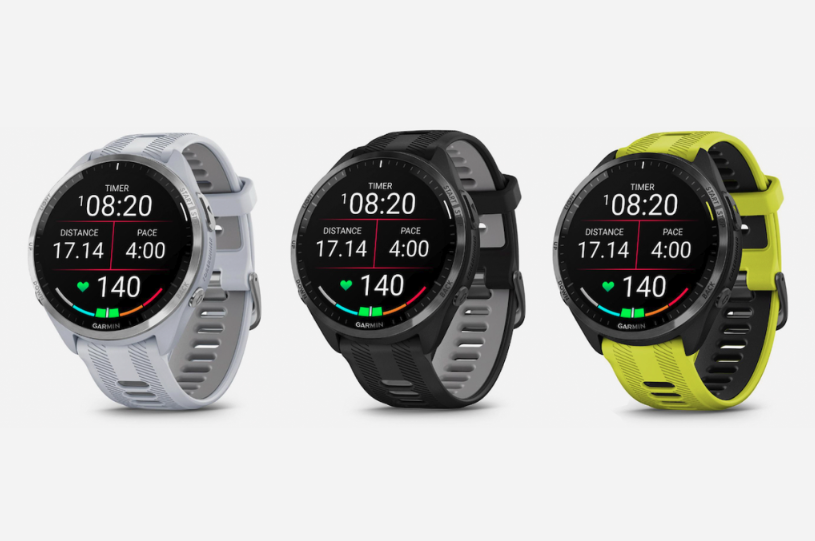
The Forerunner 965 builds on the winning formula of the Forerunner 955 and brings several exciting updates that make it the best lightweight triathlon watch on the market. Most notable is a new AMOLED screen, which is vibrant and easily readable, though it does have a knock-on effect on battery life.
To keep that impressive display always-on, you’re looking at up to a week of battery life (with around 6-7h of GPS use). If you use it in the alternative mode, where it wakes up when it senses by movement, you’re looking at around 23 days of life in smartwatch mode. Other updates include the Training Status feature being improved, plus additional running metrics.
Admittedly, the stupendously good screen would be the main reason you’d upgrade, but if your triathlon watch is a few years out of date, this would be a fantastic replacement. Garmin has also since brought out the 970 with further updates, but we still really rate the 965 as a feature-packed, lightweight option.
See my full Garmin Forerunner 965 review for more.
Best non-Garmin triathlon watch

6. Suunto Vertical 2
220 Triathlon Verdict
Impressive training tool with an impressive battery life. On the smaller size and no music storage.
Pros
- Crisp AMOLED screen and easy navigation
- Good battery life despite bright screen
- Useful hardware upgrades like flashlight
Cons
- Small screen
- No music storage an issue for some
| Specifications | Suunto Vertical 2 |
|---|---|
| Weight | 3oz / 87g (steel version) |
| Battery life | Up to 20 days smartwatch mode, 65h GPS only |
| Display | 1.5in, 466 x 466 pixels |
Chapeau to Suunto, because the Vertical 2 continues the brand’s excellent recent form. Software-wise, it mirrors the Race 2, so the real updates come in the hardware. For the first time, Suunto has added a flashlight, which is genuinely useful on dark trails, even if it’s a little clunky to switch off.
The move to an AMOLED screen brings the expected clarity and pop, but impressively without the usual battery sacrifice: up to 65 hours in its most accurate GPS mode and 20 days as a smartwatch is seriously strong. Accuracy is improved thanks to a new optical heart-rate sensor, while navigation is clear and enhanced by cable-free map downloads and helpful climb guidance.
There’s a deep suite of training metrics across swim, bike and run, seamless Bluetooth pairing, and slick usability. The only real downsides are the relatively small screen and lack of music storage, which may matter to some.
Best watch for swimming

7. Coros Pace Pro
220 Triathlon verdict
Another very good value multisport watch from Coros, with good capabilities for swim, bike and run.
Pros
- Keenly priced
- Great, AMOLED screen
- Lots of tri-specific modes
- More storage for routes
Cons
- Strap feels low quality
- Not the longest battery life
| Specifications | Coros Pace Pro |
|---|---|
| Weight | 1.7oz / 49g |
| Battery life | 20 days smartwatch mode / 31h GPS mode |
| Display | 1.3in, AMOLED |
The Coros Pace Pro becomes the brand’s first multisport watch to receive an AMOLED screen, which makes the display significantly brighter and clearer than the Pace 3’s. Storage also increases, but battery life dips slightly to a claimed 31 hours in GPS mode and 20 days of daily use.
A vast range of sports modes caters well for triathletes: along with pool and open-water swimming, cycling and running, there’s a strength training mode. Because the Coros Pace Pro doesn’t support streaming apps like Spotify, you have to upload MP3 files to listen to music. The strap isn’t the most luxurious, but that’s understandable at this competitive price.
Read my full Coros Pace Pro review for more
Newest Garmin triathlon watch

8. Garmin Forerunner 970
220 Triathlon Verdict
High-end features command a premium price on this very good smart watch.
Pros
- Better optical HR measurement
- Great maps
- Insightful running metrics
- Bright torch
Cons
- Oversophisticated for some
- Battery life drops due to screen
| Specifications | Garmin Forerunner 970 |
|---|---|
| Weight | 1.98oz / 56g |
| Battery life | Up to 15 days smartwatch mode / 26h GPS mode |
| Display | 1.4in / 35.3mm, 454 x 454 pixels, AMOLED |
| Tech | Flashlight, ECG mode, multi-band GPS, AI coaching |
I’m old enough to remember the launch of the first Forerunner in 2003, a transformational product that laid the foundation for modern multisport watches, like the Forerunner 970. These days improvements are incremental, but price increases often aren’t – the new watch is $150 / £130 dearer than the outgoing 965.
Its optical heart-rate measurement has come on both during exercise and rest. This means the watch’s ECG mode produces a more valid approximation of your health. The 35mm AMOLED screen, turn-by-turn navigation and offline routing are also strengths, but battery life suffers.
A flashlight comes to the Forerunner range for the first time on the 970 – and it’s good enough to brighten up shadowy running routes. The AI-informed triathlon training plans seemed sensible to me and the 970 also records your running economy, but you’ll need to use the brand’s own HRM 600 HR strap. To answer phone calls and issue voice commands to apps, there’s a speaker and microphone, which you’ll have to have your phone on you to use.
Read my full Garmin Forerunner 970 review.
Best watch for battery life

9. Garmin Fenix 7 Solar
220 Triathlon verdict
Arguably the rating should be even higher, but you can’t ignore this is one hefty outlay.
Pros
- Battery life
- Training features
Cons
- It’s far from cheap
- May be too bulky for some
| Specifications | Garmin Fenix 7 Solar |
|---|---|
| Weight | 2.2oz / 63g |
| Battery life | Up to 18 days smartwatch mode and 22 with solar / 57h GPS mode, 73 with solar |
| Display | 1.7in/42mm, 240×240 pixels, AMOLED |
In many ways, the Garmin Fenix 7 Solar is the crème de la crème of multisport watches. Yes, it commands a high price, but it also packages up every feature you could want into a solid and robust package. Battery life, boosted by the solar technology used here, is an impressive 22 days with sun and 18 without when in smartwatch mode, or hefty 57 hours in GPS mode (73 hours with sun).
The standout addition over past iterations is the Real-Time Stamina feature, which aims to tell you how much energy you have left at your disposal. It’s designed to help you pace better and I found it pretty accurate in testing.
You’ll also find a touchscreen that offers a responsive user-friendly experience, though you can turn it off and stick to buttons if you’d prefer. Additional features include all the activity tracking and metrics you’d ever need, plus accurate GPS and heart rate tracking.
You can read our full review of the Fenix 7 Solar here.
Best triathlon watch for navigation

10. Garmin Enduro 3
220 Triathlon verdict
An excellent multisport watch worth the hefty price tag.
Pros
- Huge battery life
- Easier to operate than previous versions
- Heaps of tech
- Superb navigation
Cons
- Still expensive
- No AMOLED screen
| Specifications | Garmin Enduro 3 |
|---|---|
| Weight | 2.2oz / 63g (Titanium) |
| Battery life | 320h (claimed) |
| Display | 1.4in, 280 x 280 pixels |
The Garmin Enduro 3’s high-precision GPS and long run time will keep you on track better than any other multisport watch. It represents an upgrade in performance over the previous model, the Enduro 2, at a lower but still high cost.
Tremendous battery life (Garmin claims a run time of up to 320 hours) stems from newly added solar charging and the watch’s energy-saving screen. This isn’t AMOLED but it’s clear enough to read the abundant data the Enduro 3 records.
Owing to the Enduro 3’s multi-band GPS, navigation is excellent. The Enduro 3 will suggest nearby routes suitable for the time you have available to train, which I found really useful. The Enduro 3 doesn’t include a diving mode or a microphone for phone calls like the latest Fenix models. But you do get Garmin Pay, music downloads, ClimbPro for pacing climbs, and swimming analysis tools.
Read the full Garmin Enduro 3 review for more. The outgoing Enduro 2 is still on sale if you want similar tech for a lower price.
Other Garmin triathlon watches we tested
- Garmin Fenix 8 Pro: Undoubtedly a superb watch (full review here) with outstanding depth of features, excellent usability and accuracy. But there are cheaper, more appropriate watches around for high-level triathletes.
- Garmin Forerunner 165: A feature-packed running watch that impresses for its price. With a bright AMOLED 1.2″ touchscreen and coming in at 1.4oz / 39g, it’s a sleek fitness watch with tri-friendly features like breadcrumb navigation, wrist-based cadence, and incident detection.
- Garmin Forerunner 255S: Has many of Garmin’s most impressive features wrapped in one of Garmin’s cheapest true triathlon watch packages. It’s a light and unobtrusive 1.4oz / 39g on the wrist. The 255S (full review) has plenty of activity tracking across the disciplines, including a multisport setting, plus a race predictor for running times, suggested workouts and heart rate variability.
- Garmin Forerunner 955 Solar: Has an incredible range of features perfect for triathletes, plus touchscreen and buttons deliver impressive usability. The 955 (full review) is cheaper and lighter than the Fenix 7 Solar, too, though not quite as premium.
- Garmin Instinct 3: It may not be the highest spec, but our tester simply loved this watch – comfortable, fun and with elevated screen and features.
Best triathlon watches compared
| Specifications | Garmin Fenix 8 | Coros Pace 3 | Suunto Race | Polar Vantage M3 | Garmin Forerunner 965 | Suunto Vertical 2 | Coros Pace Pro | Garmin Forerunner 970 | Garmin Fenix 7 Solar | Garmin Enduro 3 |
|---|---|---|---|---|---|---|---|---|---|---|
| Star rating |
★★★★★
|
★★★★★
|
★★★★★
|
★★★★★
|
★★★★★
|
★★★★★
|
★★★★★
|
★★★★★
|
★★★★★
|
★★★★★
|
| Weight | 2.1oz / 60g (Titanium) | 1oz / 30g | 2.9oz / 83g | 1.9oz / 53g | 1.9oz / 53g | 3oz / 87g (steel version) | 1.7oz / 49g | 1.98oz / 56g | 2.2oz / 63g | 2.2oz / 63g (Titanium) |
| Battery life | Up to 10 days smartwatch with 'Gesture' / 28 hours GPS mode | Up to 30 days smartwatch mode / 38h GPS mode | Up to 16 days smartwatch mode / 40h GPS mode | Up to 7 days smartwatch mode / 30h GPS mode | Up to 20 days smartwatch mode / 28h GPS mode | Up to 20 days smartwatch mode, 65h GPS only | 20 days smartwatch mode / 31h GPS mode | Up to 15 days smartwatch mode / 26h GPS mode | Up to 18 days smartwatch mode and 22 with solar / 57h GPS mode, 73 with solar | 320h (claimed) |
| Display | 1.7in/43mm, 1.9in/47mm and 2in/51mm options, AMOLED | Up to 30 days smartwatch mode / 38h GPS mode | 1.8in/45mm or 1.9in/49mm, 466 x 466 pixels, AMOLED | 1.3in, AMOLED | 1.4in/35mm, 454 x 454 pixels, AMOLED | 1.5in, 466 x 466 pixels | 1.3in, AMOLED | 1.4in / 35.3mm, 454 x 454 pixels, AMOLED | 1.7in/42mm, 240×240 pixels, AMOLED | 1.4in, 280 x 280 pixels |
| Buy Now |
What features should you look for in a triathlon watch?
Activity tracking
Ultimately, this is the most important aspect of any multisport watch because, well, it’s what makes your watch a multisport watch and not a fitness band. Metrics for swim, bike and run are, of course, essential. When it comes to the swim, the ideal is a watch that measures pace, type of stroke, stroke rate, speed, and distance covered indoors and outdoors.
The bike should include the basics of speed and distance plus, ideally, offer cadence and power-meter connectivity. As for the run, pace per kilometre or per mile is a useful one. There are also many advanced run metrics that are becoming commonplace, like stride rate, ground contact time, and even how much your body moves (oscillation). How important this next-level analysis is to you depends on your goals and lifestyle.
Performance analytics
Depending on the manufacturer, some watches also come with performance features that are designed to help you reach your goals while avoiding overtraining. This can include things such as your training status, your training load, readiness to train, remaining stamina and recovery time. Many watches now also come with suggested workouts.
Sleep tracking
Sleep is arguably the go-to health-tracking feature of a multisport watch but be aware that their accuracy is not scientifically proven. For many, sleeping with a wrist strap on isn’t the most sleep-inducing experience, either. But done well, sleep tracking can provide valuable insight on your latency (how long it takes to fall asleep) and your quantity of light, deep, and REM (rapid eye movement) sleep, all of which are key for rest and recovery.
GPS
A built-in GPS (Global Positioning System), instead of an accelerometer that measures movement, will give more accurate real-time tracking information, with many GPS units informing you of the direction and distance back to your starting position. Not all watches come with the same level of GPS accuracy, though. Watches that come with GLONASS (Russian-operated satellite system) or GALILEO (European Union satellite system) will burn through battery life quicker than standard GPS, but they’ll also provide access to more satellites, meaning greater accuracy and quicker pickup.
Heart rate monitor
A heart rate monitor will allow you to establish your own training zones to perform at your own best pace. A chest strap is more accurate than the wrist-based optical heart rate (OHR), but many athletes prefer the comfort and simplicity of OHR.
Connectivity and syncing
We can’t think of a quality multisport watch on the market that doesn’t offer the option to sync to its own app; in fact, most advise you to download the app on watch set-up as it’s easier to set the time, customise the watch face and much more. Every app will be a place to analyse your sessions and track progress, with usability and level of detail varying across the board. Many also offer the ability to import workouts to popular third-party apps like Strava and TrainingPeaks. Syncing tends to be via Bluetooth, though some offer ANT+.
Usability
Multisport watches offer button and/or touch screen usability to scroll through the watch’s main features. Check that the touchscreen doesn’t have a history of losing contact when scrolled with sweaty fingers or in the rain, that it can be switched off if you want to stick to buttons and that data is displayed as clearly as possible. Larger watch faces and bright AMOLED screens can help boost visibility, but also push up the price and bulkiness of the watch.
Battery life
Most models require USB charging via a charger bespoke to that manufacturer, usually clipping onto the side or back of the unit. Battery life while tracking an activity can range from 5hrs to 20+ depending on how many features (i.e. GPS) you’re using. If you’re only racing over shorter distances, you may not need a chunky watch that offers the best-in-class battery life.
Frequently Asked Questions about triathlon watches
Be honest with what you want out of a watch. Just distance, pace, heart rate and time? Go budget or mid-level. Advanced training information? Go mid-level or advanced. Just remember that a long feature list inevitably results in a higher price. Don’t be blinded by a feature set that you won’t use.
A triathlon watch and a running watch may seem similar, but they serve different purposes. A running watch is designed primarily for tracking pace, distance, and heart rate during runs, often with features like GPS and interval training modes. They will also provide a range of metrics, depending on how high-end your choice of watch is, which can help inform your training.
In contrast, a triathlon watch is built for multisport athletes, the best triathlon watches offer seamless transition tracking between swimming, cycling, and running. A triathlon watch typically has waterproofing for open-water swims, cycling power meter compatibility (sometimes), and a dedicated triathlon mode to record all three disciplines in a single activity. If you’re solely a runner, a running watch may be sufficient, but triathletes will definitely benefit from a specialised multisport watch and all the additional functionality they provide.
Battery life when you’re using many draining modes, including GPS and heart rate, is vital and must cover at least up to the 17hr Ironman cut-off. The higher the battery life when using GPS, the better. A watch that connects to a power meter is a fine idea, too. Good options include: Garmin’s Fenix and Enduro ranges, the Forerunner 965 and newer 970, Suunto’s 9 Peak Pro, Polar’s Grit X Pro, and Coros’ Pace.
Wrist-worn heart rate monitors shine a green pulsing light into your blood vessels. The LED light penetrates your skin and reflects off your blood. The greater blood flow in your wrist causes more light to be absorbed, rather than reflected, from the LED light. Studies have shown that while these are fairly accurate at steady speeds, as workout intensity increases they can begin to suffer. This is simply due to the movement of the device against the skin. Moisture doesn’t help, either, which is why they’re not great in water. But they do have their place and, as technology improves, so hopefully will the accuracy of those readings in these data-detrimental situations. Training to heart rate remains a great tool to structure a plan.
How we tested triathlon watches
The watches featured here have been tested by 220 Triathlon‘s expert gear testers. Between them, they have a combined 50 years of experience testing triathlon, sport and outdoor kit. Each watch has been tested over a period of at least a month, with many being worn and used for much longer than that.
During the test period, we’ve taken the watches for multiple swims (in the pool and open water), bike rides and runs, varying intensity across sessions to judge how the products coped with changes in heart rate. Tests have taken place in built-up urban areas, open countryside and on forest trails to thoroughly test GPS pickup and accuracy, with tracks compared to other watches and scrutinised afterwards on a map.
Meanwhile, heart rate accuracy has been tested against a baseline provided by our regular chest-based heart rate monitor. Throughout the test period, we’ve also analysed battery life, usability, how good the accompanying app is, additional fitness features and how well the watch fits into everyday life.
Meet our testers
As an open-water swim coach, 220 Triathlon editor Helen Webster is well qualified to assess the swimming performance of triathlon watches. She is an experienced runner too, having taken on marathons and swimruns.
Former 220 Triathlon magazine editor James Witts has written four books on the science of endurance sport and dozens of gear reviews for 220 Triathlon and other publications.
Matt Baird is also an endurance sport author and former 220 Triathlon staffer, who edited Cycling Plus magazine before joining BBC Countryfile Magazine. Matt has completed every kind of triathlon imaginable and is a prolific gear tester.
Former 220 Triathlon content editor Rob Slade has been testing outdoor kit for a decade. He still competes in triathlon and contributes to 220, bringing his forensic eye to multisport gear reviewing.
Don’t need a fancy watch capable of recording all three triathlon sports? Check out our selection of the best budget running watches.
Recent updates
- 27 October 2025: we added shortened versions of reviews of the Garmin Forerunner 970, Coros Nomad, Polar X2 and Suunto Race.
- 28 December 2025: we refreshed all of the product links and took out mentions of the Black Friday sale deals.
- 29 January 2026: we added fresh watch reviews of the new Garmin Fenix 8 Pro and Suunto Vertical 2 watches to our roundup.
- 03 March 2026: we took out our review of the Coros Vertix 2, which is now replaced by the Vertix 2S. We also refreshed the header image, strap, title, and all of our product links.
- 20 March 2026: we cut down our number of reviews to the models that are the top tri watches in the industry today, plus updated our article structure.
- April 2026: we added schema tables for our specs data.
- June 2026: we added a comparison table to better compare triathlon watch features.
- July 2026: we included mentions of newer version of the Coros Pace 3, which has not yet been reviewed. We also removed percentage score and updated affiliate links.


 James Witts
Freelance sports writer and author
James Witts
Freelance sports writer and author With contributions from