“Getting back into swimming and really pushing that fast-tracked my recovery”. Lucy Charles-Barclay on recovering from surgery and winning Ironman Lanzarote

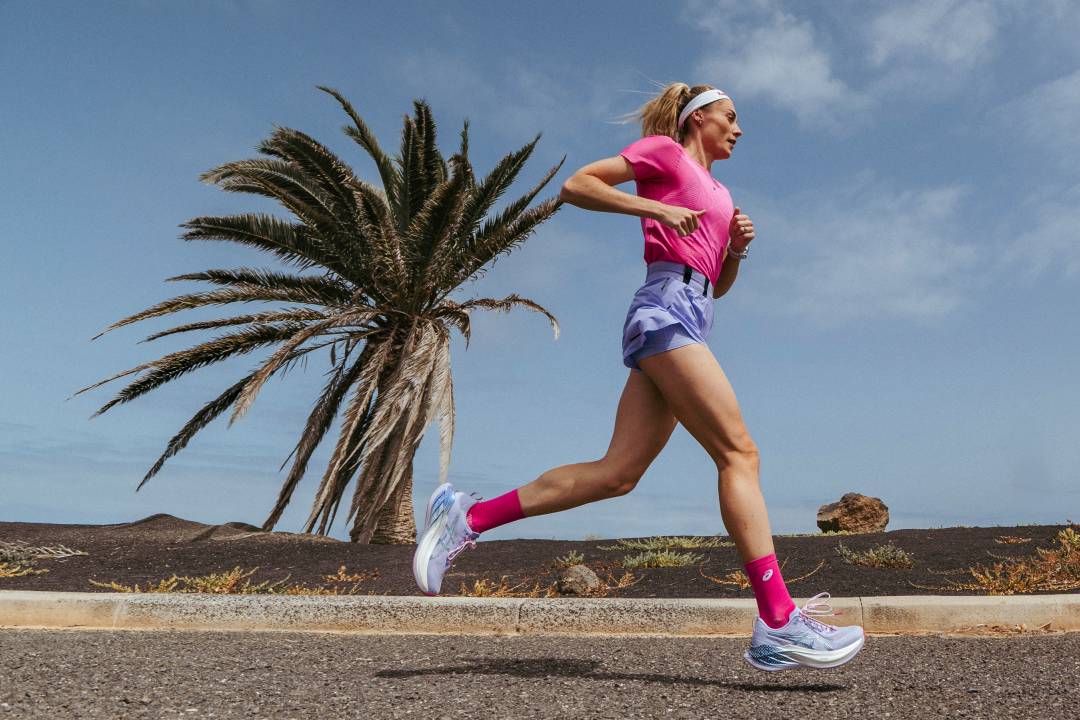
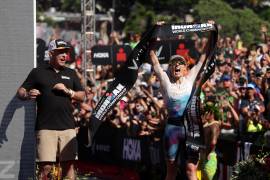
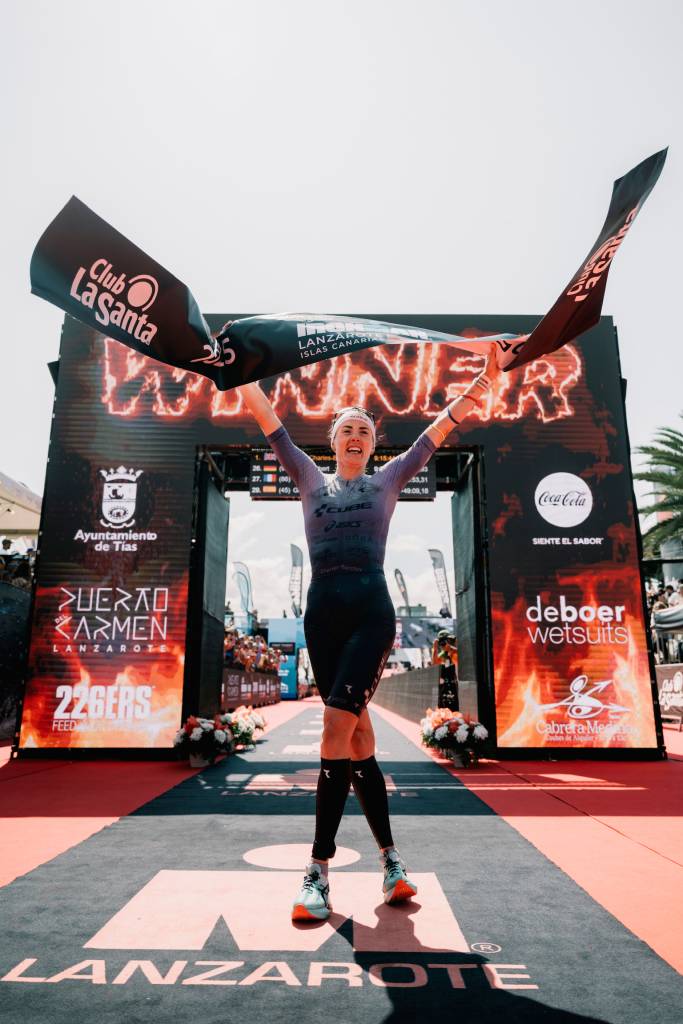
Taking the win at Ironman Lanzarote was the perfect return to sport for Lucy Charles-Barclay after surgery to repair an injured tendon. Post-race we caught up with the champ to chat recovery, staying positive, Hawaii and what’s next.
Lucy Charles-Barclay has made Lanzarote a second home. Whether as a warm-weather training base through the British winter or the best way to simulate the conditions of the Big Island of Hawaii, the 32-year-old has been visiting the Island of Eternal Spring even before turning professional in triathlon a decade ago.
The venue for her first professional race in 2016, and first Ironman win the following year, LCB returned to reclaim the full-distance crown last year and, following a four-month layoff to recover from tendon surgery at the start of this year, earmarked it for her first race back in May.
A huge margin of victory, beating last year’s time by 2mins and emerging healthy – except for some horrifying blisters on her feet due to the ground temperature in transition – made it the perfect way to get the season up and running.
We caught up with Charles-Barclay to find out where her affinity with Lanzarote comes from, the lessons learned for racing in the heat after the Hawaii meltdown last October, how she mentally handled the long layoff, what’s next – and, of course, her view on those blisters.
Q&A with Lucy Charles-Barclay
220: Congratulations on another fine win in Lanzarote, did it go as perfectly to plan as the result suggests?
I think so. All I wanted to do was finish and validate for Kona, so that was the objective as well as finishing healthy and in one piece. I pretty much did that aside from some burnt feet!
Having had surgery at the end of January and been able to get my body up for an Ironman, to validate for Kona and win the race by 26 minutes is an added bonus. I didn’t really expect that, but yes, definitely happy.
As it’s Ironman there are always going to be tough bits. What were the tough bits?
There’s always tough moments in Ironman. I think it’s such a long day and Lanzarote is an extra-long day. I knew what I signed up for. I’ve done it three times before and even if you’re not in a tight battle in the race, you’re always battling the elements.
Whilst it wasn’t the windiest day I’ve experienced in Lanzarote, I think it was the hottest day, so the main factor was making sure I managed the heat as best as possible.
Obviously, in my last Ironman in Kona, it didn’t go so well in the heat, but because when training in Lanzarote it hasn’t been as hot as it was on race day, we hadn’t really factored that in too much.
What techniques did you use to stay cool?
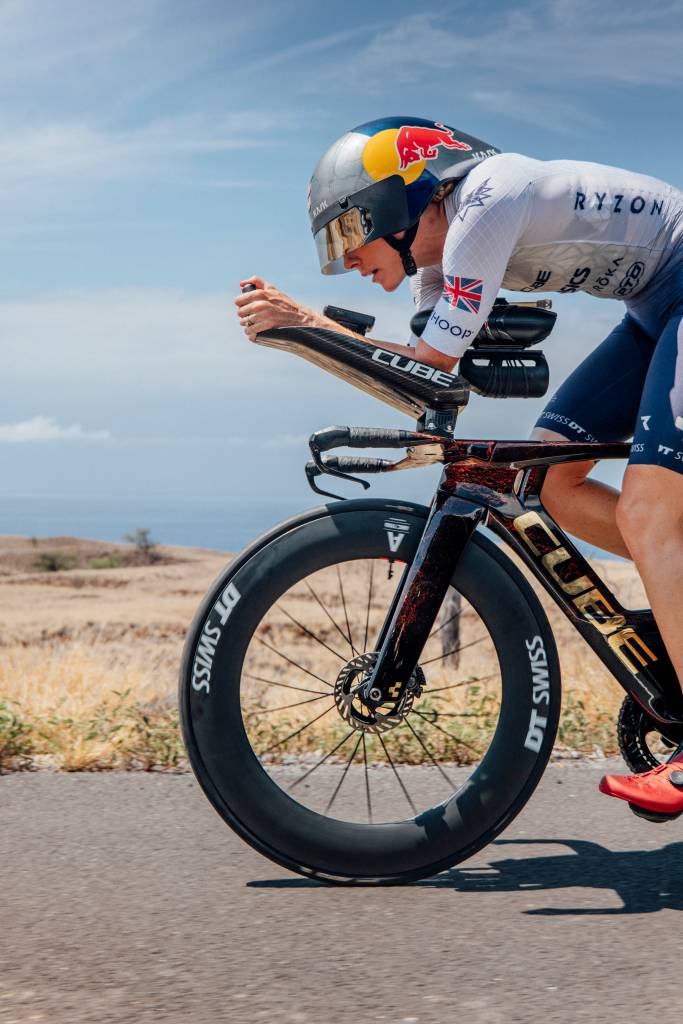
On the bike it felt quite warm, so even if I didn’t need anything from the aid stations, I just poured cold water over myself. I have special cooling technology in my Ryson suit, so when cold water or ice hits it, it transmits over the whole body.
It felt like it worked in this race and they were giving out ice as well, which I put in my suit and just made sure I was getting enough fluid on board on the run.
[Lucy also used an Omius headband as an additional cooling mechanism.]
You also adjusted your race nutrition plan to suit, I understand?
The bike’s pretty much an hour longer than most Ironman races, so it’s about making sure you’re getting your nutrition on board for that extra hour, so you get to the run and you’re not completely cooked.
I fuelled on the lower side because [coach] Dan [Lorang] and [husband and coach] Reece had set me a plan for the race, and I was allowed to race around 80% of my normal race effort.
My normal fuelling strategy felt a little bit too much. It’s usually about 80 grams an hour. I don’t think I’ve ever done more than 100. I don’t really need more than that. I ended up lowering it to about 50 grams an hour, which is probably a little bit too low.
Fortunately, I survived despite doing that and made sure I didn’t lower it on the run. I ran most of it with a handheld bottle, which I was putting more water and electrolytes in throughout, which again I wouldn’t normally do, but I had to make sure I finished.
When did you start training and racing on that island and what brings you back time and again?
The first time I went to Lanzarote I was a kid on holiday when I was very young, but in 2013 I went with Reece as a swimmer to get some warm-weather training. I don’t think we did anything other than swim, but I returned a year later for a training camp and the Ironman was on.
The idea to do one was born there, and training there I didn’t know if I could do it – it was such a big challenge. Then age-group racing happened quickly and I decided I wanted it to be my first pro race in 2016.
It makes you a very tough athlete. I enjoy training there because it’s never easy, whether it’s the heat or the wind. Over the years, the road conditions have massively improved, but when I first raced a big proportion of the road surface was bad, so it made it even slower.
Now there are only tiny sections that don’t have good tarmac, so the appeal to train there has increased because the road surface is a lot better. Going out there and getting confident riding in the wind has paid off many times in racing.
I’ve been all around the world training, and I’ve never found anything that really matches the ease of training as the setup at Club La Santa.
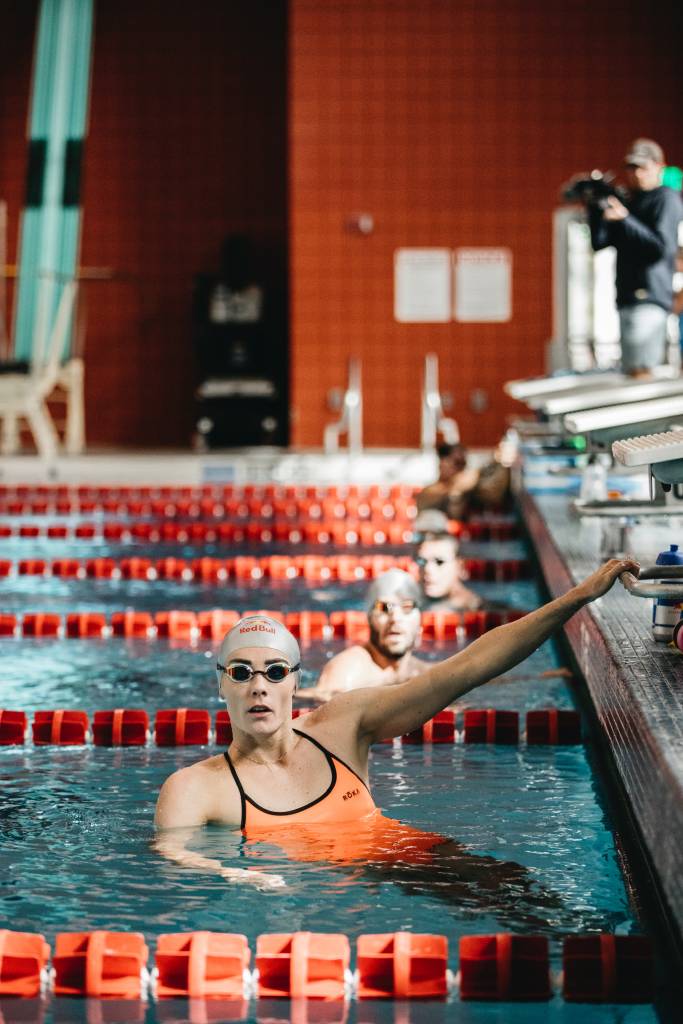
Three Olympic-size swimming pools, running track and gym all in one place. It is just second to none and with food provided, it’s just so easy. That’s why I’ve kept going back.
Can you compare the Ironman course against others you’ve raced?
It’s a very challenging course and hard to prepare for if you’ve never ridden it. There are so many different bits to break it down in terms of climbing, descending, cross winds, and a few dead turns on the course now as well.
It has changed a little bit over the years, but when you’re climbing into the wind it’s extra slow and when you’re descending into wind, you still have to pedal hard. After the first hour last year I remember thinking it would take me six hours at the speed I was moving.
I’d say it’s tougher than Kona just because it’s more climbing, and if you’ve got really strong winds it can be the most horrendous day. It’s arguably a bit more interesting too because it’s one big lap of the island and you’re not just out on the highway and back.
What advice would you give to people heading to Lanzarote to race?
I’d definitely recommend going out to train and seeing some of the course because it’s pretty iconic, but it is tough. I spoke to an age-grouper after the race and he said he was entered into the race, but when he trained out there he withdrew his entry because it was so windy.
There are times when I’ve gone there, usually in January, and it’s so windy I’ve gone out on a mountain bike because it’s the only way I could cycle without being blown off my bike, so it can be extreme.
I’d definitely say go out there, but maybe at different times throughout the year. The race usually takes place in May, so May is a good time because it’ll be similar conditions, but it can be brutal, so not always a good confidence boost if you’re there on a bad day.
What happened with the blisters and could it have been avoided with better organisation? [The surface used in transition became too hot, causing burns to athletes feet]
It’s one of those things. I wasn’t aware that apparently it has happened before, but this was my fourth time racing there and I’ve never known that to happen.
They’ve had different transition setups over the years and they’ve moved it from the road to the beach, which creates a better atmosphere for the run, but the white plastic flooring was able to heat up in the sun, making it almost like the floor was lava.
It was such a long transition. We had to run up one end, back down the other and around the perimeter and into the tent. I knew quickly that my feet were in trouble, and there wasn’t a lot I could do about it.
I believe the situation was rectified after some of the fast age-group men suffered [dismounting in T2], and once the referee tried to touch the floor with his own hand, they realised they had a bad situation.
I think they started putting matting down for the age-groupers, but we were very unlucky. There must have been a window of time where that floor was particularly hot because speaking to Sam Laidlow [who won the men’s pro race], he was OK because he reached T2 early enough. Then it would have started to cool again for the age-groupers coming in later.
I would have said it was unforeseeable circumstances, but I’ve heard since that it has happened before and when athletes’ livelihoods are on the line and they don’t finish the race because of it, it’s a real shame. [British professional Steph Clutterbuck pulled out, revealing she had second and third degree burns.]
I feel like I’m healing up well, but it could have been quite bad. I’m not racing [Ironman] Hamburg in two weeks’ time, but had I planned to, it would have been an issue.
Also, had I known it was going to be like that I would probably have put socks on in T1, but the problem is because you’re on the beach, your feet are so sandy, and even when mounting my bike, my feet were covered in sand, so I would have been sandy feet in socks.
You’ve recently come back from surgery. [Early in the year, Lucy had a plantaris tendon removed as it was irritating the Achilles and was forced into a moonboot]. How do you deal with it when you have enforced downtime and do you ever reach a point where you think: ‘I’ve had enough! I’ll do something else’?
I’ve had my fair share of injuries now, and every time I recover from one, I’m like the next one I’m done. I can’t deal with this anymore. And then the next one comes and I’m, like: ‘Well, I’m not stopping now. I need to fix this one and keep going.’
This one was a bit different to anything I’ve had before because I chose to have the surgery, but it was still a challenge and was it actually going to work? I was told it’s usually a successful surgery, but there’s always a risk of it not quite going to plan.
I’m very lucky. I have a fantastic medical team at Fortius. I’ve been under that clinic since my stress fracture in 2022, so I work with the same sports doctor who knows my medical history really well.
When he recommended this particular surgeon, who is the best in the country at this kind of thing, I felt like I’m in good hands and they set me a timeline, which I pushed to the absolute max and was back way ahead of schedule.
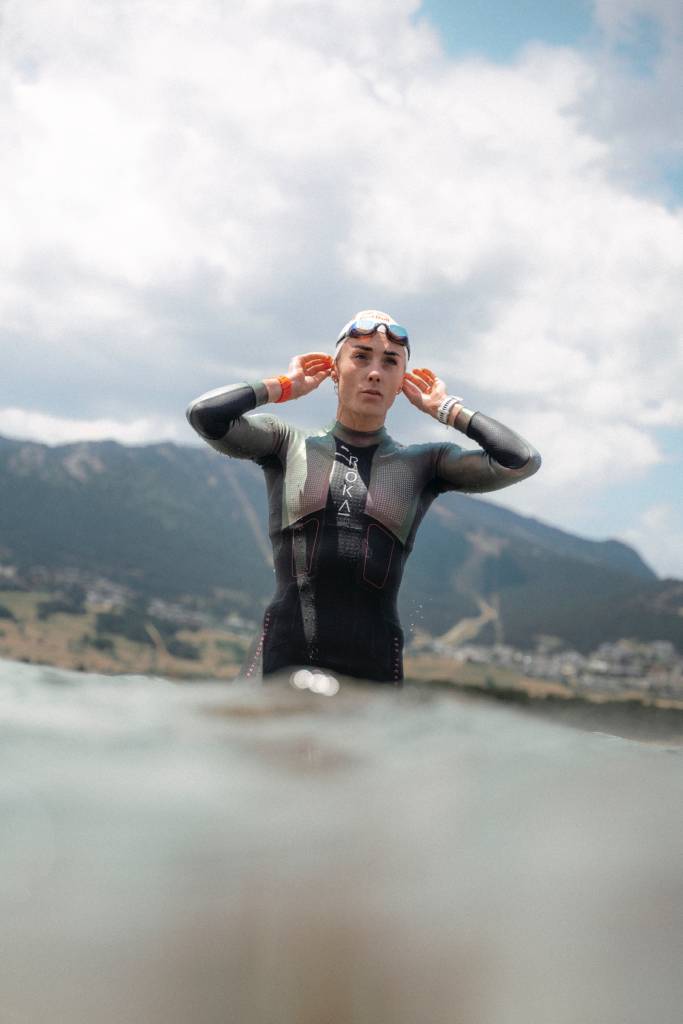
I think it was getting back into swimming and really pushing that fast-tracked my recovery. I’m a swimmer anyway, so my ankles are mobile, but being able to get back in the water seemed to fast-track everything. But I still didn’t think Ironman Lanzarote would be possible.
On the mental side, whenever I’ve had an injury or setback and getting back into it, I’m in a good headspace initially, because there are chunks of progress. Then when you get back to something that I would say resembles real triathlon training, it hits you how far off you are compared to where you used to be.
I didn’t realise that until I arrived in Lanzarote, and was comparing everything to May last year where I was in great shape, and in August, when I was in peak shape for Kona. It was challenging to mentally deal with knowing that at the end of this block I’m hoping to do an Ironman and everything feels terrible apart from swimming.
Which setback has been the toughest to deal with?
I don’t think one’s been tougher than another, it’s more the compounding
However, usually the stress fractures are the worst because you’re always waiting to get to the next scan to see if it’s healing. With the hip stress fracture [in 2022], when I first got the scan, they didn’t find the fracture. They said there was a lot of oedema and there might be a stress fracture, but there’s nothing showing at the moment because it’s so early.
So it was uncertain at that point, and then having to wait another three weeks before the next scan, when I felt I’m going to be healing and getting better, but that scan then showed the fracture.
It felt like I’d lost three weeks and it was getting worse, but that wasn’t really the case and there’s always a bit of a delay with MRI scans. I feel like I’ve had so many MRI scans that every time I end up back up in the scanner, I just want to cry.
Do all roads lead to Kona?
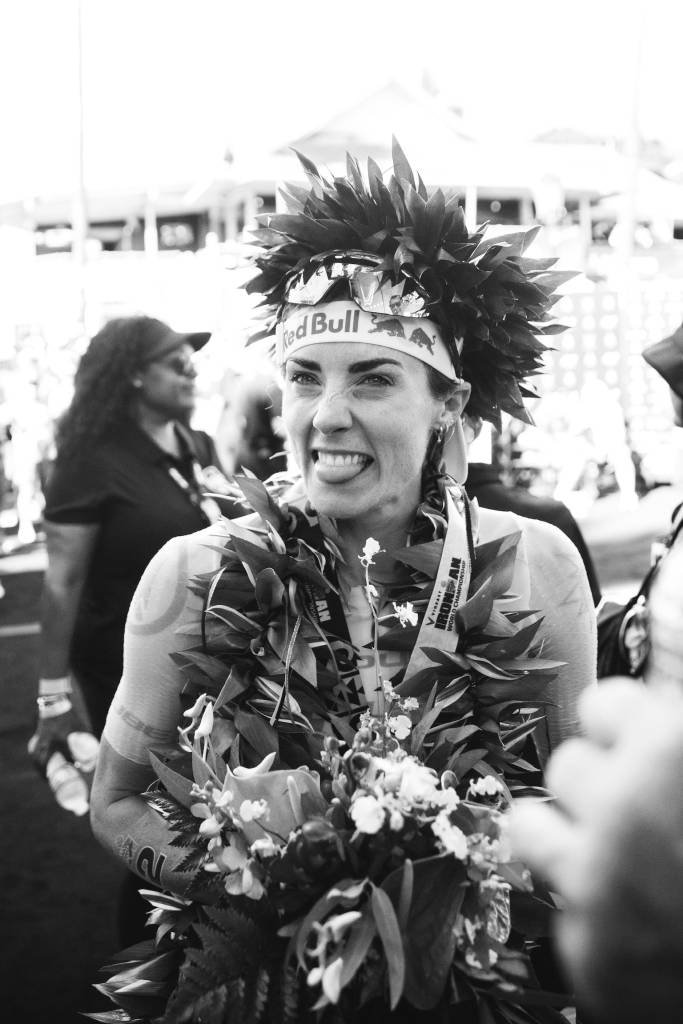
Yes, it’s always been the case for me. It’s what I’ve always geared my seasons around. Last year, I had a fantastic season with so many great results, but in everyone’s eyes, it was still the biggest race.
So even though there’s so many great things going on within the sport, that’s still the pinnacle of long-distance racing, and I don’t see that changing anytime soon.
So that’s where all my motivation and energy is geared towards.
Last year, I think you were public. There wasn’t a heat incident, per se, but hypernatraemia (a high level of sodium (salt) in the blood). Is there anything you have changed since?
Yeah, the main thing we changed for this race was I didn’t excessively carb load going in, so I wasn’t making my body have a real shift in what’s normal. Yes, I upped the carbohydrate, but not to a degree that’s obsessively force-feeding rice to get the body ready and not preloading too much on salt. I kept on top of hydration, but wasn’t excessive on the amount of electrolytes.
It was my own fault in Kona. I overdosed on the salts and then needed excess fluid to try and claw it back, and that wouldn’t work. So, in Lanzarote, where I would normally put a whole electrolyte tablet in every hour, but I only had half a tablet at a time. So, even if I got it wrong, I couldn’t overdose.
But it’s a little bit of an unfair test because the effort level for this race was a bit lower, so I was probably in a much safer zone anyway, and Kona will be hotter than Lanzarote was.
Where are you headed next to race?
We think I’m going to head to the 70.3 in Nice in June, which, as far as we’re aware, is the same course as the world championship course. It’s just a bit of a recce, with no pressure, and if I enjoy it, I’ll put some attention on that for 70.3 Worlds.
If I hate it, then who knows, maybe I’ll just focus on Kona or throw in a different race. But at the moment, the goal is to go there and see what it’s about.
Images supplied thanks to Dawbell


 Tim Heming
Freelance triathlon journalist
Tim Heming
Freelance triathlon journalist