We test the new Giant Revolt Advanced 0 gravel bike for comfort, speed, and versatility for triathlon
Previous iterations of the acclaimed Giant Revolt gravel range have delivered speed, stability and versatility, making it a compelling year-round training and adventure option for performance-driven triathletes. But what about the 2026 version of the Advanced O? We got down and dirty to find out…

220 Triathlon Verdict
Comfortable, fast and stable – what more can you ask from a gravel bike? Score: 85%
Pros
- Comfortable and stable
- Compliant D-Fuse design
- Reliable GRX 2x gearing
- Fast and versatile for tri
Cons
- Very little to fault
- Lacks XPLR replacement
In 2013, bike behemoths Giant introduced the purpose-built gravel Revolt range, in the days when gravel as its own category was in its infancy. At the time, many who sought an off-road ride with drop handlebars modified either their road or cyclocross bike.
Then along came the likes of Giant and the Revolt, with its sloping geometry, disc brakes and compliance-focused geometry, that laid the foundations for a genre of cycling that continues to evolve and grow to this day. But does the 2026 Revolt range? I hopped on the new Revolt Advanced 0 to find out…
Why buy a gravel bike?
Unless you’re a beginner to road riding, you’d be aware of gravel’s meteoric ascent. But old or new, you might ask why would a triathlete buy a gravel bike? Well, it could be for racing gravel-style multisport events, including The Restless Xtreme Gravel Triathlon in Scotland’s Arrochar Alps (22 August 2026) and the Outlaw Holkham Gravel Sprint, held in Norfolk on 4th July 2026. Gravel events are on the rise, albeit they’re still nominal and clearly not as prevalent as road triathlons.
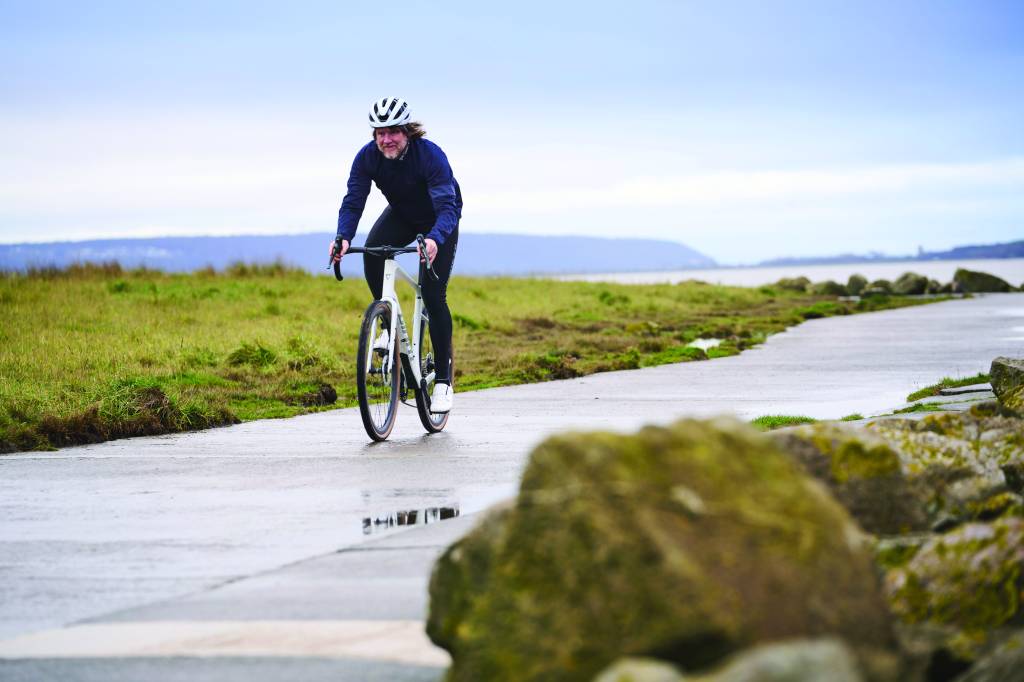
Does that mean you should simply gloss our advice if a gravel triathlon remains off your 2026 calendar? Not a bit of it – gravel bikes are a great choice for training, especially in the winter when elements are harsher. You see, wider tyres equal improved grip and stability, reducing the chances of crashing on wet, icy or debris-covered roads. That makes it an ideal choice for those who prefer early morning rides before the sun’s risen and melted the precarious sheen.
Yes, you’ll sacrifice a little speed over your dedicated road bike – depending on tyre width, of course – but that’s insignificant in the off-season. What matters is the watts and workload. A gravel bike also opens up your riding where access and terrain allow.
And it’s a great option for commuting, too. Why is twofold. Firstly, they’re a little more robust than uber-lightweight road bikes. Secondly, most gravel bikes feature numerous mounting points if you’re seeking stowage for your work attire and laptop. So, on to the bike!
The advanced offering
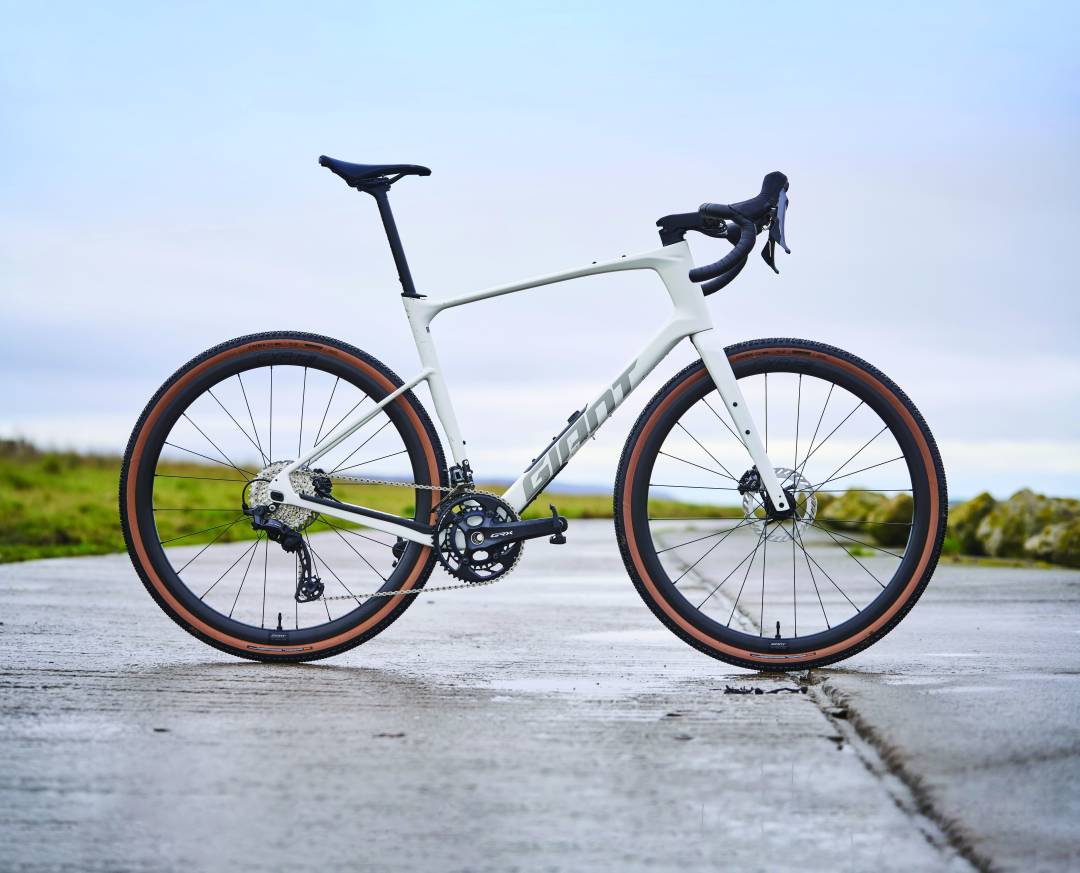
Firstly, changes from the 2025 model are physically minor but fiscally major, as it comes in £500 lower at £3,299 compared to £3,799. The Advanced 0 comes in five sizes, from S to XL, so will cater for the majority of male and female triathletes. It’s white only – more specifically, snow white – and employs a composite frame and fork that’s seen across the entire 2026 Revolt range.
This ‘advanced-grade’ carbon material, says Giant, sheers off 160g compared to the previous model, which is one for the weigh weenies amongst you. Its integrated cabling throughout, resulting in a slick-looking bike, while the geometry’s enjoyed a gentle evolution with a lower bottom bracket, longer reach and steeper headtube angle in search of improved acceleration and climbing speed.
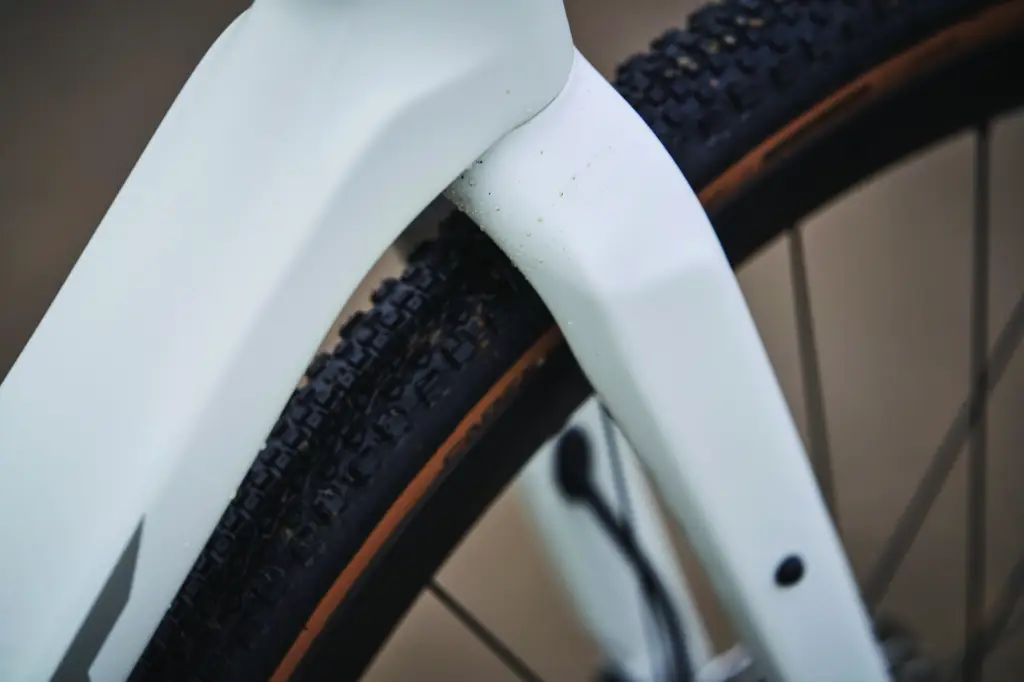
The geometry’s also adaptable, as it retains the flip-chip rear dropout from before. This has two settings. The ‘long’ position leads to a longer wheelbase for a more relaxed ride. In this setting, it can also accommodate up to 53mm-wide tyres. The ‘short’ setting equals a shorter wheelbase for a more nimble and agile ride, albeit tyre clearance then decreases to a maximum 45mm, albeit that is up from 42mm for the previous carnation.
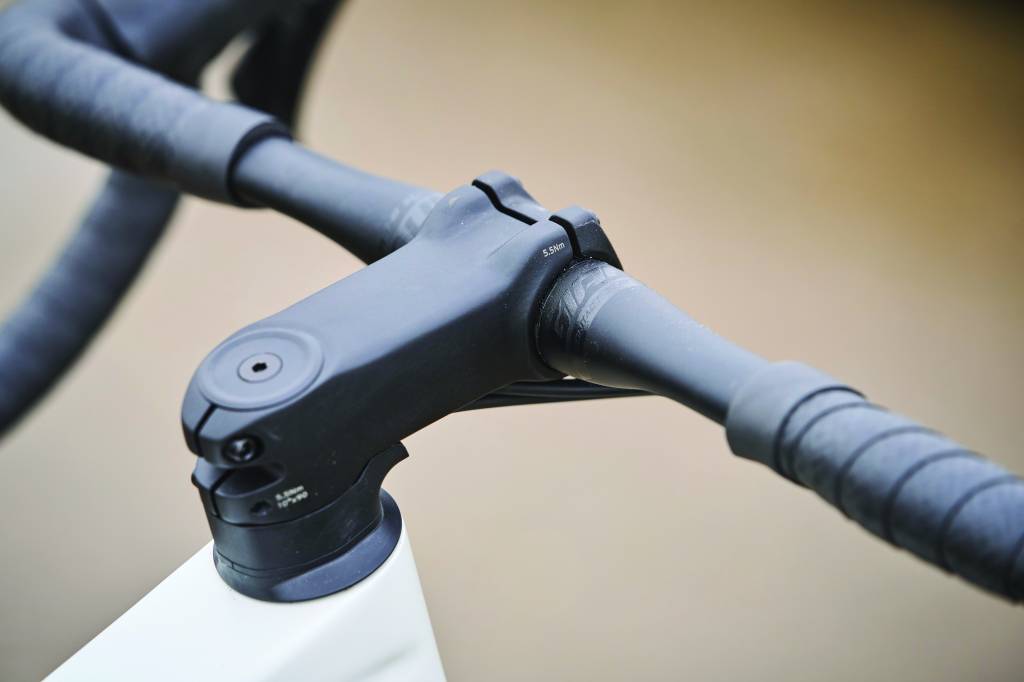
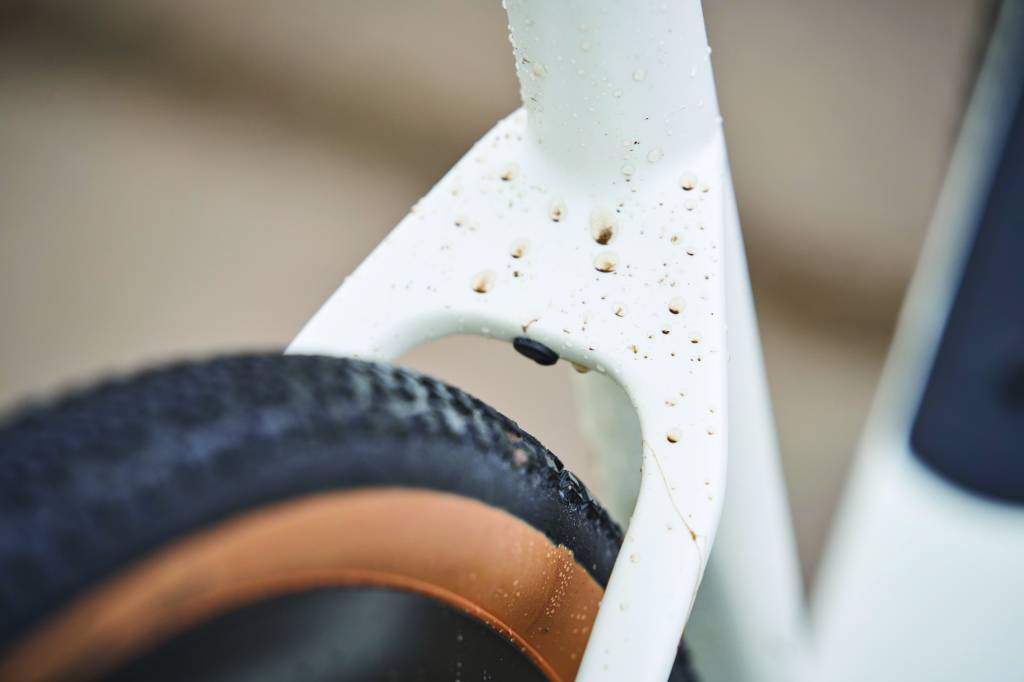
The D-Fuse technology is also seen here. Giant proponents will be well aware of this seatpost as it was first introduced in 2014. The idea is that the distinctive D-shaped tubing with a round front and flattened rear section absorbs bumps and vibrations for a smoother ride. Over the years, that D-shape stretched to the handlebars, which aims to add further compliance and comfort.
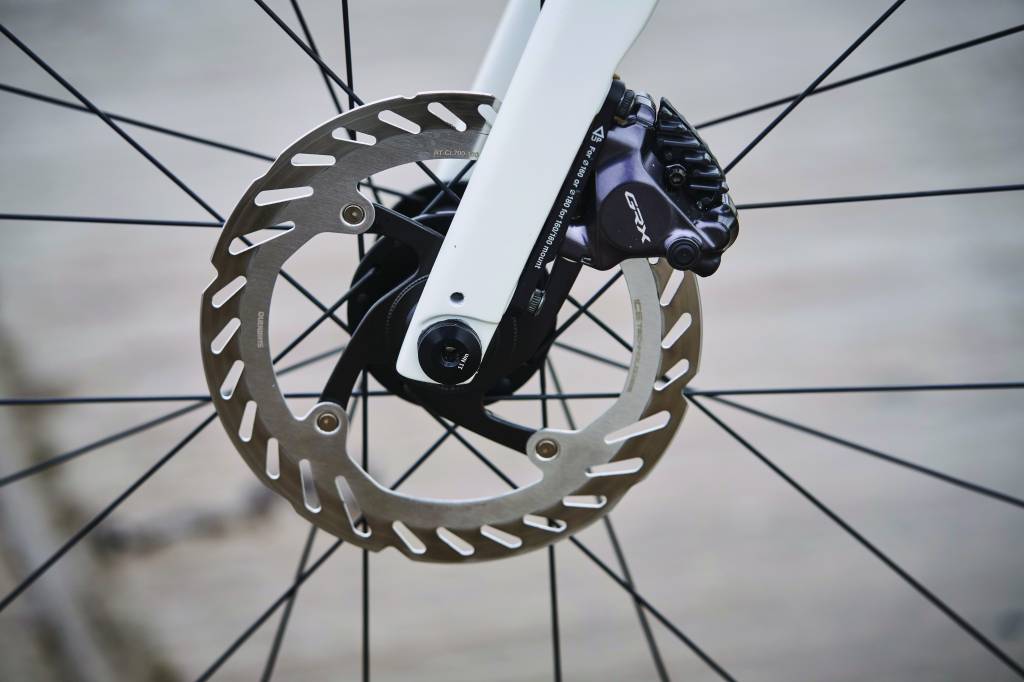
Shimano’s GRX RX820 2 x 12-speed takes care of shifting duties. This is Shimano’s top-tier mechanical gravel groupset that sits one down from the top-table GRX electric Di2 option.
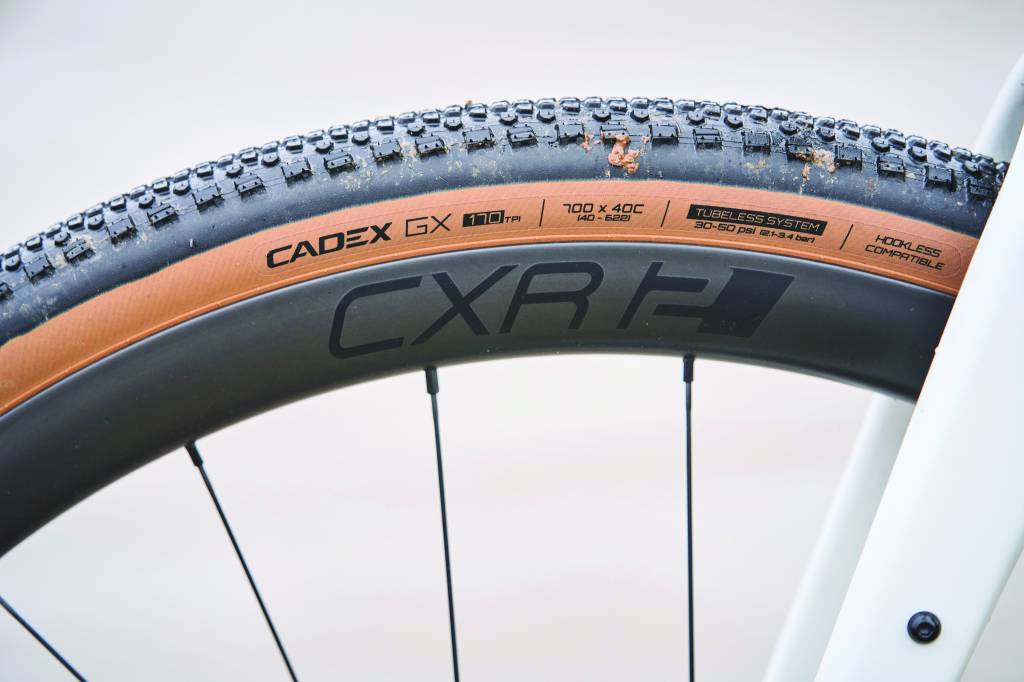
As you’d expect from one of the biggest bike brands in the world, Giant tap into their huge range of components for the Advanced O, including the CXR 2 wheel system. These lightweight carbon hoops feature a 35mm rim profile and flow into Cadex GX tyres. Cadex is Giant’s tyre brand. A Giant Grit saddle and Giant stem complete the Giant offering.
An advanced ride?
It’s an impressive feature and spec list, and one born from experience. When you’re celebrating your 13th birthday, you must be doing something right. Thankfully, where it counts – off-road plus a modicum of on-road – it expresses the pragmatism and reliability rarely seen in a young teenager.
First up, let’s start with comfort, which is impressive. To that, I tip my helmet to the D-Fused technology that really does offer appreciated – not exaggerated – flex, ensuring you ride with the terrain rather than against it. It handles all but the gnarliest of parcours. And, to be fair, that gnarliest of North Somerset terrain is really the preserve of full-suspension mountain bikes not an all-rounder like the Advanced O.
Yes, there are arguably technologies loaded onto competitor brands that deliver greater absorbency. I’m thinking of Trek’s IsoSpeed, which decouples the seat tube from the frame, and Specialized’s Future Shock, which is positioned above the headtube to dampen vibrations upfront. Both are impressive but both are areas of potential maintenance. Giant’s solution is simple, effective and maintenance-free that will appeal to many, including this erratic mechanic!
That comfort’s extra impressive as, in general, aluminium wheels are deemed more comfortable due to a little more flexibility. Whether that’s true or not is hard to unpick when riding off-road as tyre choice, tyre pressure and rim width are far greater factors. Giant do say this is gravel-tuned carbon, which is generally less harsh than carbon road wheels due to the lay-up process. Ultimately, what you need to know is this is one comfortable steed.
And fast. Again, the wheels play their part. The low weight and high stiffness of the wheels marry effortlessly with the low weight and high stiffness of the carbon frame for a swift off-road adventure. That stiffness means these accelerate nicely, too. That’s a great attribute in all genres of cycling but especially off-road where you often face stiff but short pitches on less than grippy terrain. This acceleration also pays off on the road, though it’s not as perceptible.
Understandably, when you hit the road, it won’t match your road or triathlon bike for speed, though the frame and wheels certainly give it a good go. Like all wider gravel tyres, clearly the 40mm tyres sacrifice speed for comfort, the latter being of utmost importance upon UK trails and singletrack. To that end, whether you look to upsize to the maximum 53mm depends on a couple key factors, one that is specific to Giant.
The first is based on where you intend to ride. If it’s predominantly off-road and demands sofa-like comfort, then seek out 50mm-plus. The second is down to your geometrical needs. If you set that flip-chip dropout ‘long’ for a more relaxed ride, you can go for the half century. If you’re after a little livelier ride and go ‘short’, you’ll have to content yourself with no more than 45mm-wide tyres. In all honesty, for most routes, 45mm or, as is the case here, 40mm will be fine.
This does direct the spotlight on that flip-chip dropout, which is a neat idea in theory but, in practice, is it needed? Will you constantly oscillate between short and long depending on the terrain? I suspect not. I didn’t, as the long was perfectly adequate for comfort, handling and speed.
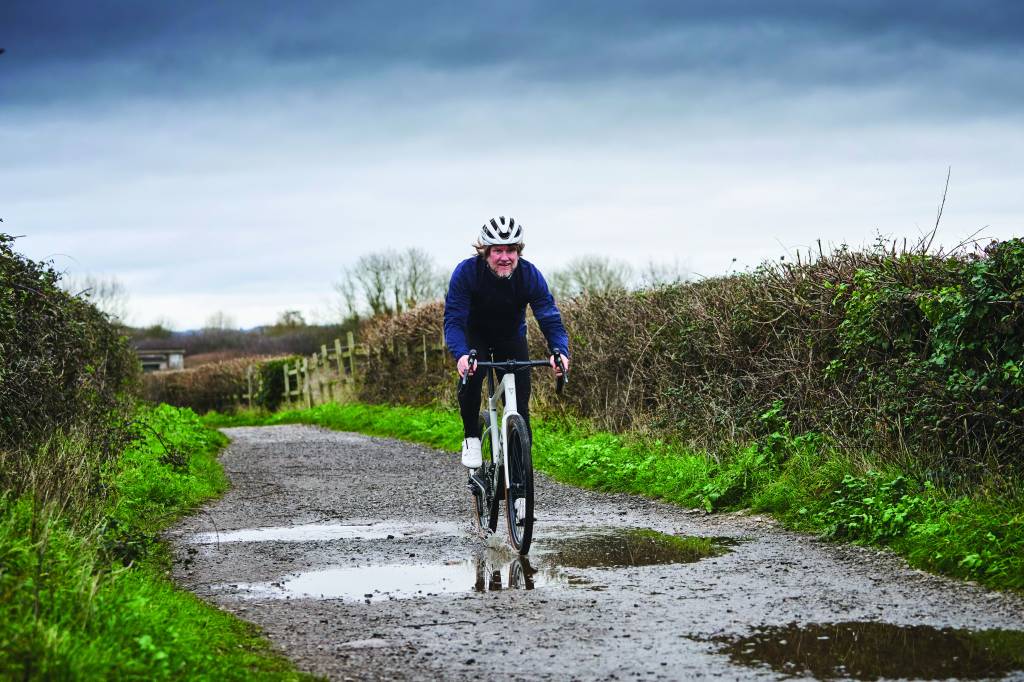
This unique dropout then raises the potential stumbling block for triathletes who are more experienced with the gravel in that this customisation means it’s not UDH applicable; in other words, it’s not a universal derailleur hanger that SRAM created in 2019 for all standard derailleurs from not only SRAM but also Shimano, Campagnolo and many more.
Now, this isn’t really a problem if you’re happy to stick with the Shimano GRX 12-speed that comes as standard for the Revolt Advanced O, but is an issue if you want to change to SRAM’s pretty recent XPLR rear derailleur, which accommodates 13-speed. It’s not a dealbreaker unless seeking that 13-speed rear derailleur but is worth noting.
That said, I’m unsure why you’d want to change the Shimano GRX 12-speed groupset as it happily and accurately shifted each and every time. Yes, it’s mechanical and at this price point, you’d probably expect electronic on a road bike. But mechanical remains far more popular on gravel bikes than road for a couple reasons.
There remains the maintenance side, which comes under greater focus when riding quagmires compared to tarmac, plus many folk buy gravel bikes for multi-day adventures. Electronic groupset batteries are very good but mechanical does banish any jeopardy that might arise from relying on a recharge.
Remaining on the groupset, interestingly Giant chose 2x over 1x. Now, after years spent mountain biking, I’m very much a 1x convert for off-road riding. You’re given a wide enough range of gears for the terrain and it keeps maintenance to a minimum. But 2x does make sense on a gravel bike, especially if you’re spending good periods on the road, which you could well do on both long days in the saddle or commutes. The higher top-end gears certainly pay off on fast road sections or descents.
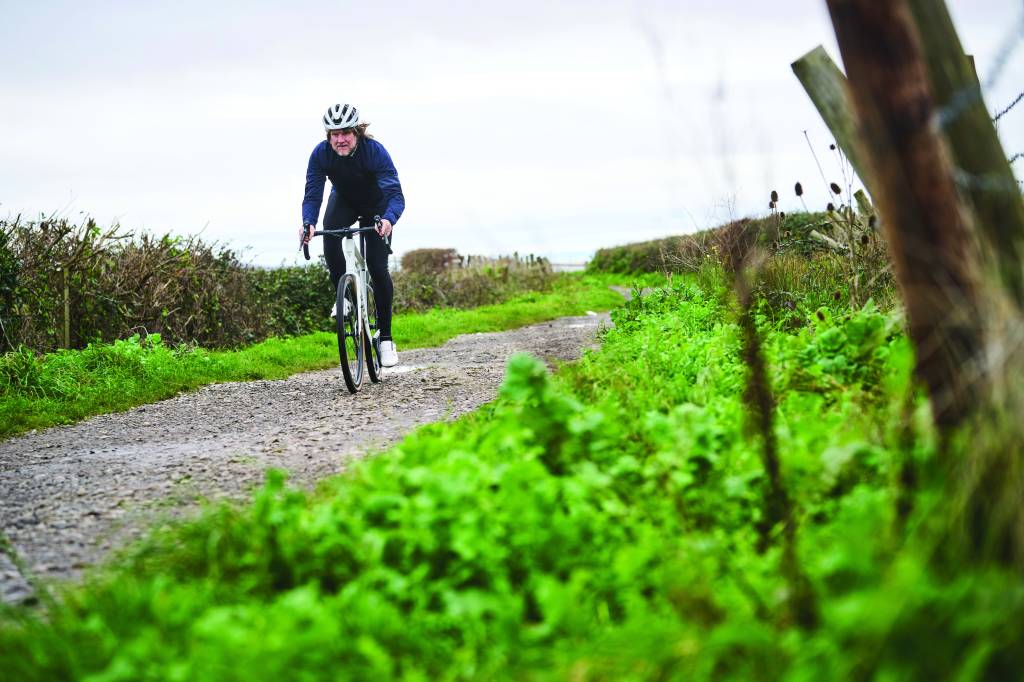
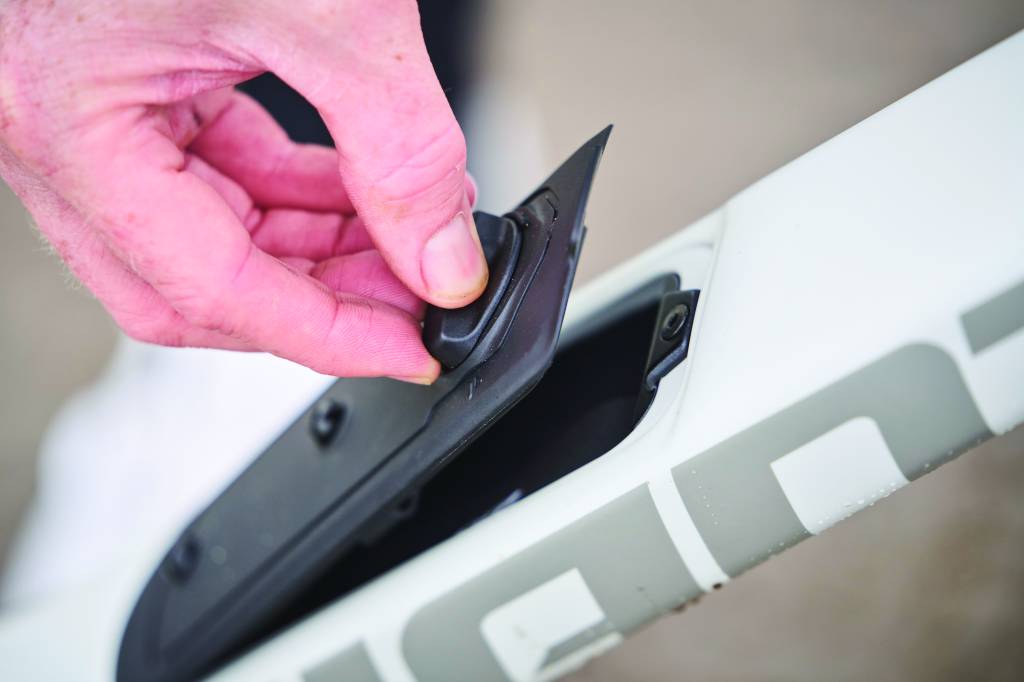
There are sufficient mounts for the keenest week-long adventure, while the Grit saddle is plenty comfy enough to cope with days after days of off-roading. Also, as we flagged up with the recent Factor Slick tri bike review, chapeau for the downtube storage. Again, similar to the Factor, a dial rotation and the lid and bottle cage lifts up to reveal a protective neoprene bag for essentials such as a multitool. It’s nifty and practical.
There really is very little to fault with the latest Revolt Advanced 0. As mentioned, there’s the lack of potential XPLR replacement. And then there’s a small but irritating one, namely the rubber bung that covers the seatpost clamp that’s integrated into the top tube. Once you’ve tweaked your seatpost, the rubber covering is a pain to sit flush. It’s not the end of the world but could lead to water ingress.
All in all, the 2026 Giant Revolt Advanced 0 is a refined, great-value versatile gravel bike that blends comfort, stability and speed. With thoughtful geometry tweaks, compliant D-Fuse design, carbon wheels and reliable GRX 2x gearing, it’s an excellent training, adventure and winter weapon for performance-focused triathletes. Plus you can race the odd gravel tri, too!


 James Witts
Freelance sports writer and author
James Witts
Freelance sports writer and author