Best 14 energy bars for triathlon: tested, rated and reviewed by an expert
Energy bars are a key aspect of a triathlete's fuelling strategy. James Witts tests the best in the industry to give you his verdict...


They’re great cycling nutrition on the bike and everyday snacking before a workout. But which of these energy bars deliver the magical combination of taste, texture and nutritional goodness?
Compared to ‘real food’, like sandwiches, the best energy bars and the best energy gels both make in-sport fuelling a calmer environment for your stomach to digest, absorb, and assimilate nutrients. That being said, the endurance runners among us will need to supplement gels with bars to maintain energy reserves.
Why you can trust 220 Triathlon
Our team of experts rigorously tests each product and provides honest, unbiased reviews to help you make informed decisions. James Witts is our resident nutrition tester and gives feedback built on years of experience and a sports science background. Author and keen cyclist, Witts knows how to tell the wheat from the chaff when it comes to the best ingredients and macro profile for fuelling workouts. For more details, see how we rate and test products.
Best energy bars at a glance
The CLIF Energy Bar (buy) is a tasty, plant-based bar packed with 10g protein and oaty goodness.
TORQ Explore (buy) are masters in the taste department when it comes to their energy bars. TORQ provides a properly flavour and calorie explosion with their moist and tasty flapjacks.
These energy bars from Veloforte (buy) are dense and packed with natural and high-quality ingredients. Ideal for a mid-ride pick-me-up or post-session refuel.
It’s hard to beat Decathlon (buy) when it comes to affordability and it helps that these energy bars are also packed with fruit, nuts, and fast-releasing carbs.
The SiS GO Energy Bake (buy) is a superbly tasty and filling energy bar with a nice texture and good macronutrient profile.
Best energy bars for triathletes in 2026
Best energy bar overall

1. CLIF Bar chocolate chip
220 Triathlon verdict
Arguably an all-rounder more than a dedicated energy bar but just delicious. Score: 89%
Pros
- Packed full of oat goodness and delicious
- High calorie count, ideal for long rides
Cons
- More of an all-rounder than a pure energy bar
| Price | $18.43 / £25 for 12 (£2.08 per bar) |
| Weight | 68g/2.4oz |
| Calories | 258kcal |
| Nutrition | 38g carbs / 10g protein / 6.1g fat |
| Flavours | Choc chip, crunchy peanut butter, choc almond fudge, peanut butter banana with dark choc, blueberry almond crisp. |
Like Science in Sport, American company Clif Bar celebrates its 32nd birthday this year. Again similar to SiS, founder Gary Erickson spent many an hour burning the midnight oil on the family’s kitchen table before he settled on what would prove to be a winning and profitable formula.
The nutrition brand was acquired in 2022 by multinational Mondelez International for a jaw-dropping $2.9-billion. What did Mondelez get for their money?
In this chocolate-chip variety – and like all their bars – a morsel that contains at least 70% organic ingredients including the core of this one: the rolled oats.
That, the brown rice syrup and rice crispies heavily contribute to a 68g bar that features 38g carbohydrates.
It combines for a terrifically appetising bar and that’s not because the remainder’s from taste-inducing fat. No, no, no. Instead, it features 10g protein (which isn’t grainy) to stimulate muscle repair.
Arguably, that flags up that this bar is, like the Skratch Labs, more for long rides or an everyday snack. Just be aware that this is one flavoursome morsel so show restraint!
| Ingredients (choc chip flavour): | Rolled OATS 22 %, brown rice syrup, SOYA crispies (SOYA protein isolate, rice flour, BARLEY malt extract), roasted SOYA beans, tapioca syrup, cane syrup, cocoa mass 5.5 %, chicory root fibre, SOYA flour, vegetable oils (sunflower, soybean, in varying proportions), natural flavourings, salt, cinnamon, antioxidant (tocopherol-rich extract). |
Best bar for natural ingredients

2. Veloforte Di Bosco Energy bar
220 Triathlon verdict
Superb bar and great price for such great ingredients. Score: 87%
Pros
- Tasty and filling
- Ideal for refuelling during long-distance training
Cons
- Not great for a quick energy release during shorter sessions
| Price | $68.99 for box of 20 / £30.79 for 12 (£2.57 per bar) |
| Weight | 62g/2.2oz |
| Calories | 238kcal |
| Nutrition | 36g carbs / 5g protein / 8g fat |
| Flavours | Di Bosco (red berries, pistachios), Zenzero (lemon, ginger, pistachios), Avanti (dates, pecans, sea salt), Ciocco (dates, almonds, cocoa), Classico (citrus fruits). |
Veloforte’s mission highlights just how much influence the laboratories have had on our sports nutrition over the years and is why Veloforte make great noise about using ‘natural food’. It sounds obvious. As we know with mass food production, it can often be anything but.
To that end, the key ingredient of this 62g bar is mixed dried fruit. Cranberries, raisins, dates, sour cherries and lemon zest are complemented by a nutty mix of almonds and pistachio.
The recipes are said to be based on a 13th-century Italian fortifier, panforte, from the town of Siena. I’ve never tasted panforte but it certainly conjures tastes and images of Christmas, and is really rather nice and unlike any of its competitors.
Each bar sends just over 36g carbohydrates your way with nearly 8g from fats. You also get around 5g protein for a hint of muscle repair. As mentioned before, this sends this bar the way of the long-distance market and everyday snackers.
| Ingredients (Di Bosco flavour): | Mixed dried fruit (34%)(cranberries* (12%), raisins, dates, sour cherries*), mixed nuts (almonds (19%), pistachios (4%)), cane sugar, gram flour, brown rice syrup, tapioca flour, lemon juice & zest, strawberry & beetroot powders, mixed spices, wafer paper (potato starch), vanilla extract, vanilla seeds. *sweetened with sugar. |
Best energy bar for taste

3. TORQ Explore (Apple strudel)
220 Triathlon verdict
Appetising and great moisture content. Score: 83%
Pros
- Tasty and free from artificial ingredients
- Handy as a pre-training snack
Cons
- High in sunflower oil so quite rich
- Not suited to training hard
| Price | $1.99 per bar / £43 for 20 (£2.15 per bar) |
| Weight | 65g/2.3oz |
| Calories | 263kcal |
| Nutrition | 43g carbs / 3.2g protein / 8.1g fat |
| Flavours | Apple strudel, ginger cake, carrot cake, banana cake, bakewell slice, black forest |
There’s a nutritional longevity theme to this issue’s test with Torq raising their carbohydrate-filled glasses to 25 years in the game. In the competitive – and often short-lived – world of sports nutrition, chapeau to the British brand.
Typically Torq, this apple-strudel flapjack is free from artificial colours, sweeteners and preservatives.
It’s also incredibly tasty, its sweetness deriving from organic golden syrup, nice chunky organic raisins and organic dark brown sugar.
That sugar hit delivers 43g carbohydrates with fat at 8.1g, predominantly down to sunflower oil (organic, of course). The choice of sunflower oil’s not nutritionally perfect as it’s high in omega-6, which are inflammatory – not great when training hard.
Then again, these are designed for either the generally lower-intensity bike or an everyday snack.
On the downside, its buttery taste and texture (from the oil; it’s vegan-friendly) borders on unctuous, which might be too rich for some. But definitely not us.
| Ingredients (Apple Strudel flavour): | Organic Jumbo Oats, Organic Golden Syrup, Organic Dark Brown Sugar (Organic Dark Brown Sugar, Organic Molasses), Organic Sunflower Oil, Organic Raisins (9%), Organic Maltodextrin, Organic Dried Apple (6%), Organic Ground Cinnamon (0.6%), Sea Salt. |
Best bar for macronutrients

4. SIS GO Energy Bake (Tiramisu)
220 Triathlon verdict
Bit too long an ingredients list but a delicious and macronutrient-impressive bake. Score: 85%
Pros
- Tasty with a nice texture
- Good for an energy hit on the bike or a pre-training snack
Cons
- None to add
| Price | £24 for 12 (£2 per bar) UK only |
| Weight | 50g/1.8oz |
| Calories | 185kcal |
| Nutrition | 30g carbs / 3.5g protein / 5.5g fat |
| Flavours | Tiramisu, strawberry, lemon |
It’s 32 years since Tim Lawson and his family created Science in Sport from their Blackburn home, their isotonic energy gel the first ever that you could doff without the need for a water chaser.
We take that ease of consumption for granted now but at the time consuming a gel was akin to squeezing that last bit of toothpaste out with a miniature mangle.
It was unpleasant. Hence, it was a game changer, leading to a lucrative SiS going public in 2013. They’re now huge but what of their products?
Well, when it comes to the Energy Bake, pretty impressive. You have a delicious texture of gentle crumbliness wrapped around a soft-filled tiramisu centre.
It’s akin to finding your favourite chocolate in a tray of Christmas goodness (as long as you like the soft centres, of course).
Each 50g bar serves up 30g carbohydrates, of which 10g are from fructose for a classic two-to-one ratio. It’s easily masticated and flows down nicely with no gastro comeback. It’s good for the bike or as a standalone snack. But points are lost for a relatively lengthy ingredients list.
| Ingredients (Tiramisu): | Wheat Flour (Wheat Flour, Calcium Carbonate, Iron, Niacin, Thiamin), Fructose, Cream Flavour Filling (15%) (Apple Juice Concentrate, Fructose, Gum Acacia, Milk Powder, Humectant (Vegetable Glycerine), Olive Oil, Coconut Oil, Flavouring, Colour (Beta Carotene)), Humectant (Vegetable Glycerine), Olive Oil, Whole Egg, Gum Acacia, Coffee, Cocoa Powder, Milk Protein, Raising Agent (Sodium Bicarbonate), Flavouring, Salt, Green Tea Extract. |

5. Skratch Labs Anytime Energy Bar
220 Triathlon verdict
Moist, tasty bar that could be ideal for hot races. Score: 80%
Pros
- Ideal for training sessions or races in hot weather
- Tasty and easily digested in exercise
Cons
- None to report!
| Price | US$29.95 / £29.95 for 12 |
| Weight | 50g/1.8oz |
| Calories | 220kcal |
| Nutrition | 33g carbs / 4g protein / 8g fat |
| Flavours | Chocolate chips and almond, peanut butter and chocolate, raspberries and lemon, cinnamon and oatmeal, cherry and pistachio. |
Dr Allen Lim is the brains behind Skratch Labs. He’s also co-writer of one of our go-to nutrition books, Feed Zone Portables, which is packed with homemade sweet-and-savoury recipes for on-the-fly feeding.
One of the benefits of homemade efforts over commercial offerings is moisture content, but that’s not an issue in the chocolate chip and almond flavour bar on test thanks to the addition of cranberries, plus the nut-and-seed butter blend.
Calorie content’s 220kcals, comprised of 33g carbs, 8g fat and 4g protein. Hence, its ‘anytime’ moniker although it’s digested easily during exercise.
Each 50g bar delivers 33g carbohydrates plus 8g fats, ostensibly from the almonds. Hence, its ‘anytime’ moniker although it’s digested easily during exercise.
It’s tasty enough, but you can taste the salt from the addition of 125mg of sodium, which could be ideal in the heat.
| Ingredients (Choc and almond): | Nut and Seed Blend (Cashew paste, tahini, sesame), oats, tapioca solids, tapioca syrup, coconut nectar, chocolate chips, sugar, cocoa powder, cocoa butter), dried cranberries, almonds, vegetable glycerine, crisped brown rice, crisped quinoa, oat flower, sorghum flakes, emulsifier, sunflower lecithin, see salt. |
Best budget energy bar

6. Decathlon energy date bars (banana)
220 Triathlon verdict
Good value but moderate taste and texture. Score: 72%
Pros
- Affordable bar
- Pleasant taste
Cons
- Low calorie count compared to other bars
| Price | £8.99 for 10 (£0.90 per bar) UK only |
| Weight | 35g/1.2oz |
| Calories | 119kcal |
| Nutrition | 20g carbs / 2.2g protein / 2.7g fat |
| Flavours | Date and banana, date and red fruits, date seeds and salt, date and cocoa, date and blueberry. |
Sports-retail behemoth Decathlon is renowned for packing many a product and many a bargain into its global stores. So it is here with 10 x 35g bars that hit the tills at just £8.99. That’s 90p per bar. Hence, marks scored for frugality.
But what about taste? Actually, it’s not bad, the date composition complemented by the banana after-taste.
That said, we’re not talking healthy chunks of fruit as seen in the Torq Explore bar; instead, it’s 67% date paste, which contributes to a slightly squashed texture that could do with a little more water content. So not as virtuous.
Then again, this is by some margin the cheapest bar on test. It’s also the lightest calorie-wise with 20g carbohydrates from each bar. Protein and fat make up 2.2g and fat 2.7g, respectively, so this is more aimed at higher-intensity moments as those carbohydrates should be metabolised swiftly.
Just note that while this is a good-value bar, once you base it on pence per carbohydrates, it’s not quite the absolute bargain you think it is.
| Ingredients (Date and banana): | Date paste 67%, oat flakes (gluten), sunflower grains 7%, banana flakes 4%, linseed 3%, sunflower oil, minerals (magnesium, potassium), vitamins (L-ascorbic acid (C), thiamine mononitrate (B1), nicotinamide (niacin, B3), and pyroxidine chlorhydrate (B6), natural banana flavour. |

7. Maurten Solid C160
220 Triathlon verdict
Practical, reliable and easy on the stomach. Score: 78%
Pros
- Reliable energy hit
- Reasonable taste
Cons
- None to add
| Price | $3 per bar / £29.95 for 12 (£2.50 per bar) |
| Weight | 55g/1.9oz |
| Calories | 204kcal |
| Nutrition | 40g carbs / 4.8g protein / 3.2g fat |
| Flavours | Cocoa or non-cocoa. |
Is there any stopping Swedish brand Maurten? They burst into the public’s consciousness when Eluid Kipchoge broke the marathon world record in Berlin in 2018, the Kenyan using their gentler-on-the stomach hydrogel product.
This year it’s been about the company’s bicarb system, which seems to have given this old nutrition strategy new legs. It’s helped them close a recent round of capital funding at the $20-million mark.
Innovation is appealing. There’s less of the cutting-edge about the Solid C 160 bar, a two-piece, oat- and rice-based chewable with cocoa.
As the name suggests, they’re a solid-looking duo but are easily chowed down, albeit they’re a little sweeter than my palate’s preference. I know that’ll hit the mark for many, though.
Each 27.5g bar comprises 20g carbohydrates from an appreciatively light ingredients list that isn’t packed with additives. All in all, it’s a bar that does the job with no airs or graces and is highly practical.
| Ingredients (cocoa): | Gluten-free OATS, Fructose-Glucose Syrup, Maltodextrin, Sugar, Rice flour, Sunflower Oil, Fat Reduced Cocoa, Rice Bran, Salt, Emulsifier (Lecithin), Rice extract. |
8. Torq Explore Flapjack (Black Forest)
220 Triathlon verdict
Impressive bar that balances good taste and nutrition. Score: 85%
Pros
- Tasty and free from artificial preservatives
- An ideal pre-workout snack
Cons
- Not ideal to consume during training
- Low in protein, so not great for recovery
| Price | $37.50 / £37 for 20 |
| Weight | 65g/2.3oz |
| Calories | 260kcal |
| Nutrition | 40g carbs / 3.7g protein / 8.9g fat |
| Flavours | Apple strudel, ginger cake, carrot cake, banana cake, bakewell slice, black forest |
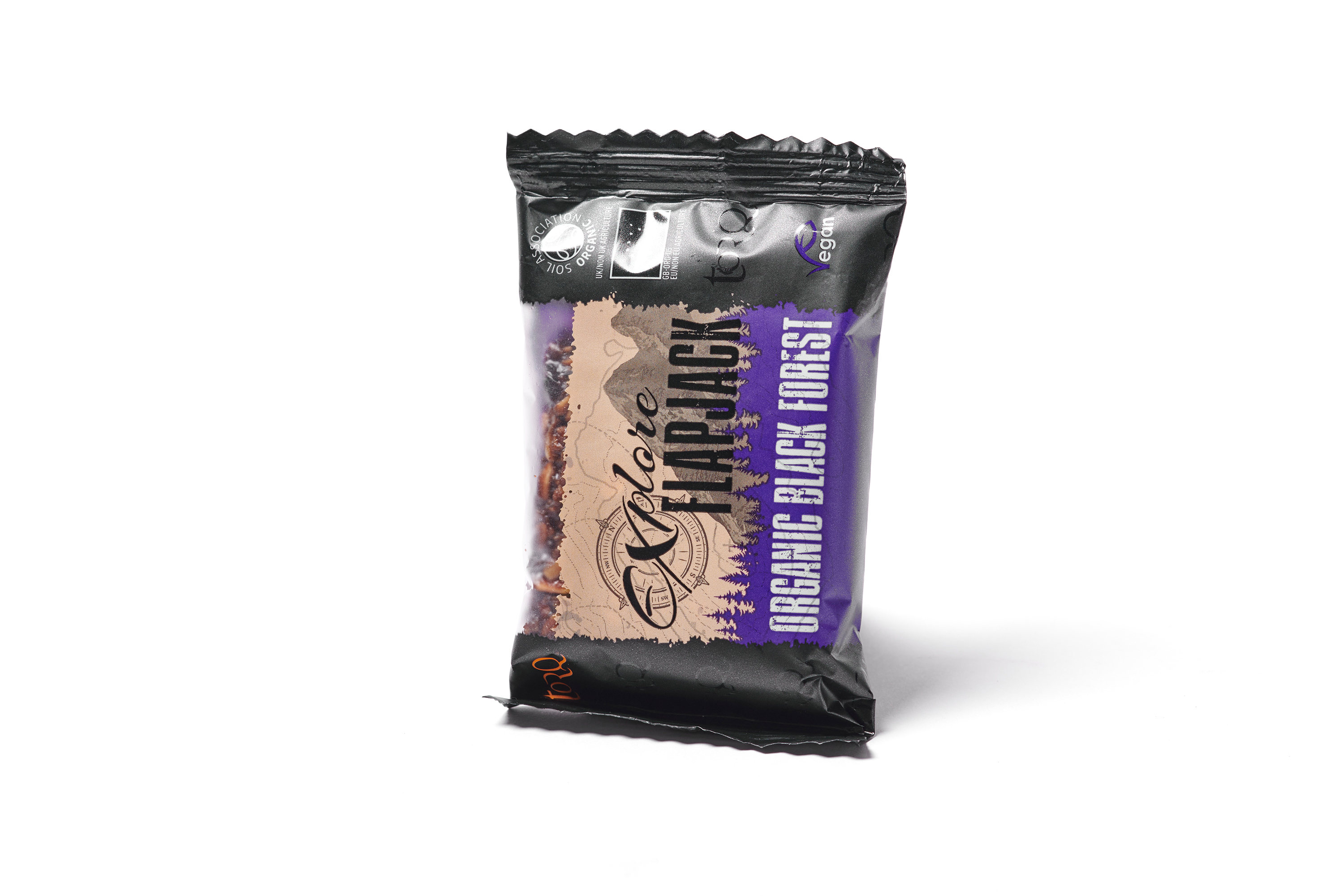
Typically Torq, this black-forest flapjack is free from artificial colours, sweeteners and preservatives. It’s also incredibly tasty, its sweetness deriving from organic golden syrup, raisins and dark brown sugar.
That sugar hit (43g carbs) cranks this bar up to 263cals with fat count at 8.1g, predominantly down to sunflower oil (organic, of course), which is high in inflammatory omega-6 – not great when training hard.
Then again, these are designed for either the generally lower-intensity bike or a pre-workout snack. You can consume post-effort, too, but the muscle-repairing protein content’s only around 13cals (3.2g).
Its buttery taste and texture (from the oil) borders on overly oily, which might be too rich for some.
| Ingredients (Black forest): | Organic Jumbo Oats, Organic Golden Syrup, Organic Dark Brown Soft Sugar (Organic Sugar, Organic Molasses), Organic Sunflower Oil, Organic Maltodextrin, Organic Sour Cherries (6%), Organic Cocoa Powder (4%), Sea Salt. |

9. Styrkr Bar50 Rice Bar (chocolate chip)
220 Triathlon verdict
Carbohydrate-packed, tasty bar but long ingredients list. Score: 77%
Pros
- Tasty and high calorie
Cons
- Too many ingredients
| Price | $39.99 / £29.99 for 12 |
| Weight | 70g/2.5oz |
| Calories | 292kcal |
| Nutrition | 50g carbs / 2.6g protein / 9g fat |
| Flavours | Dark choc chip, date almond and sea salt, apple cinnamon and caramel. |
British brand Styrkr (pronounced ‘stir-kuh’ and meaning ‘strength’ in Old Norse) enters this test with a sizeable energy bar that could feed a Viking army.
Each 70g bar delivers a whopping 50g carbohydrates, which equates to 200 calories on its own. Throw in extra from fat (9g) and you have a bar that nearly hits the 300-calorie mark.
As the name implies, much of that carbohydrate delivery’s down to its 22% composition of rice crispies with the sweet sugary hit from glucose and golden syrup plus, of course, the chocolate chip.
It’s certainly tasty albeit will be too sweet for some. The soft, chewy texture is appreciated. As is the moisture content, which helped the bar go down smoothly – though refrain from wolfing down at once as it can be a little sickly.
Marks are lost for the ingredients list, however, which goes on and on and on. In my experience, brevity often equals healthier when it comes to nutrition.
| Ingredients (Choc chip): | Rice Crispies (22%)(Rice Flour, Rice Bran, Sugar, Rice Extract), Glucose Syrup, Vegan Caramel (Sugar, Glucose Syrup, Water, Vegetable Fat (Shea), Golden Syrup (Partially Inverted Refiners Syrup), Faba Bean Flour, Caramelised Sugar, Salt, Emulsifiers (Mono- and Diglycerides of Fatty Acids, Rapeseed Lecithin), Natural Flavouring), Chocolate Chip (14%)(Sugar, Cocoa Mass, Cocoa Butter, Emulsifier; SOYA Lecithin, Natural Vanilla Flavouring), Golden Syrup (Partially Inverted Sugar Syrup), Vegetable Oil (Rapeseed), Sugar, Humectant (Glycerol), Fat Reduced Cocoa Powder, Gelling Agent (Agar), Salt, Vanilla Flavouring, Emulsifier (SOYA Lecithin). |
10. Mountain Fuel Feel Good Bar
220 Triathlon verdict
Delicious, warming bar but a meal in itself. Score: 81%
Pros
- Scrumptious and felt a treat to eat
- High in calories so best for long-distances
Cons
- None to add
| Price | $1.15 / £2.30 |
| Weight | 60g/2.1oz |
| Calories | 284kcal |
| Nutrition | 31g carbs / 4g protein / 16g fat |
| Flavours | Double ginger, orange and tumeric, date and salted caramel. |
Mountain Fuel might be new to you, but they’ve made great strides in the world of ultra-running, the highlight of which came when trail-running god Kilian Jornet was reported as buying their products.
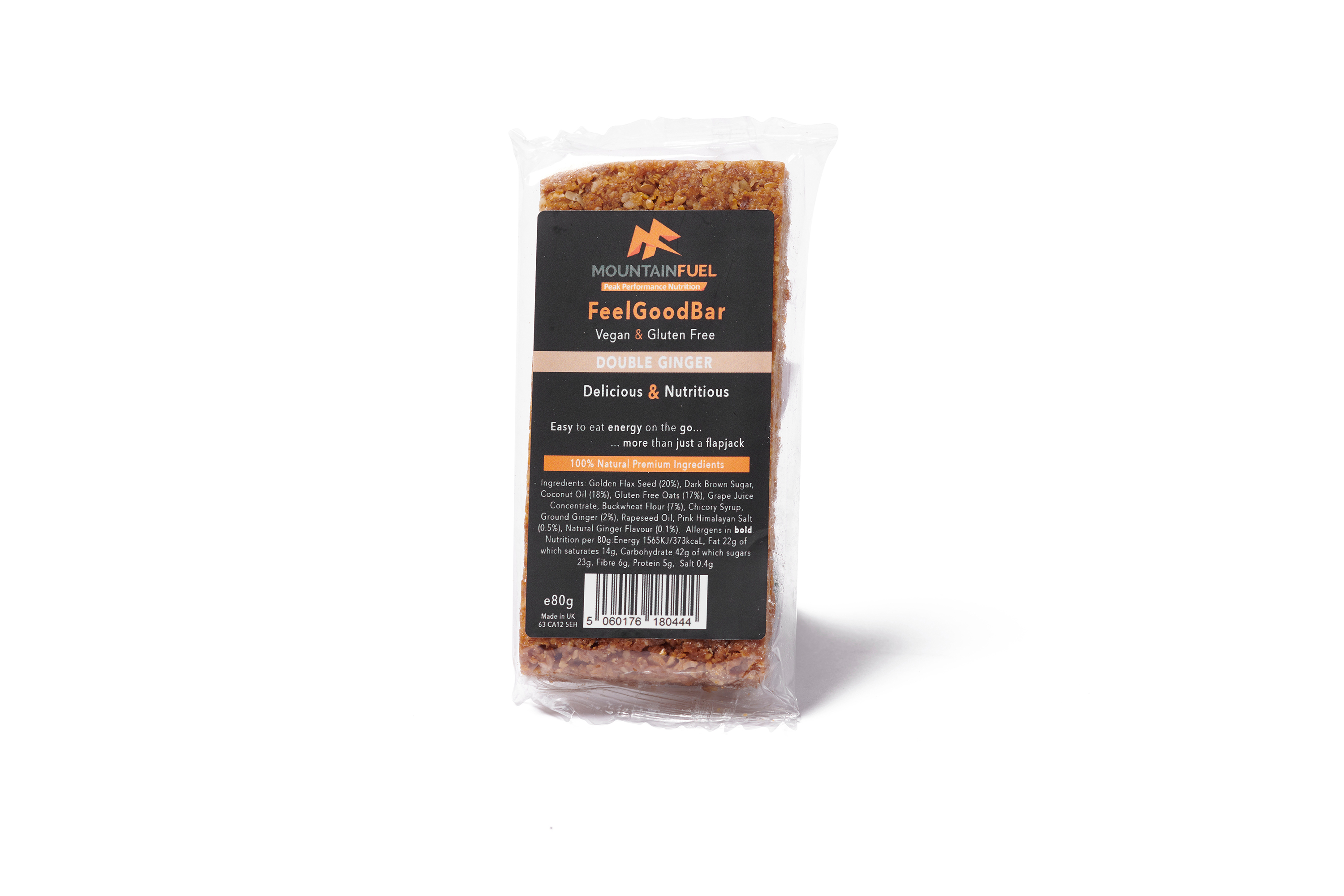
And we can see why with this ‘double-ginger’ flapjack. It’s delicious, and delivers an appreciated ginger hit via ground ginger and natural ginger flavouring.
It was particularly appreciated on long winter rides and runs, stimulating a feeling of warmth in the cold, foggy air.
Mind you, it’s a calorific beast, containing 373kcals from 42g carbs, 22g fat and 5g protein. Like many here, that ticks the long-course boxes but arguably too much for Olympic-distance. Still, it’s a bar loaded with goodness.
| Ingredients (Double ginger): | Golden Flax Seed, Soft Brown Sugar, Coconut oil, Gluten Free Oats (17%), Grape & Apple concentrate, Gluten Free Buckwheat Flour, Chicory Syrup, Ground Ginger (2%), Rapeseed, Pink Himalayan Salt, Natural Flavour. |

11. Chia Charge
220 Triathlon verdict
Big flavour, big calories, moderate price; one for ultras. Score: 77%
Pros
- High-energy boost in ultra racing
- Tastes good
Cons
- Too dense and calorific for shorter distances
| Price | $3 / £2.25 |
| Weight | 80g/2.8oz |
| Calories | 378kcal |
| Nutrition | 44g carbs / 5g protein / 20g fat |
| Flavours | Salted caramel, original sea salt, banana, berry. |
I remember years ago, when chia seeds were seemingly sprinkled everywhere, dropping chia seeds into water as per instructions.
The super-seeds expanded into pale spawn and it was disgusting. Thankfully, the same can’t be said for this tasty flapjack, which delivers chia’s mooted energy-boosting and antioxidant properties in a mix of oats and salted caramel.
This combination, plus demerara sugar, golden syrup and butter, cranks up calorie count to a whopping 378kcal.
Arguably, that’s good for ultra-racing and if you’re a very heavy trainer but, for most, that’s too extreme when this is considered a snack.
Then again, many of you will be able to consume this amount of calories per hour when riding, though just remember 22g (around 198kcal) of that’s from fats with 44g (around 156kcal) from carbs.
| Ingredients (Salted caramel): | Oats, Butter, Demerara Sugar, Golden Syrup, Chia Seeds (9%), Natural Flavouring, Sea Salt Flakes. |

12. OTE Anytime Bar
220 Triathlon verdict
Tempting bar for snacking, and pretty good for exercise. Score: 81%
Pros
- Traditional and hearty flapjack bar packed full of energy
- Good budget buy
Cons
- Vegan bar not as buttery
| Price | £1.40 (UK and EU only) |
| Weight | 62g/2.2oz |
| Calories | 249kcal |
| Nutrition | 37.2g carbs / 3.8g protein / 8.2g fat |
| Flavours | Raspberry white choc, peanut butter, lemon, chocolate orange, blueberry, coconut choc chip, apple and cinnamon, banana, caramel, cherry, cocoa nibs. |
British outfit OTE has kept things like nanna used to make with this traditional flapjack.
Around 46%’s made up of gluten-free oats, which heavily contribute to the 37.2g carbs nestling within each 62g bar. A further 8.2g fat and 3.8g protein contribute to the overall package of 248.9kcals.
That figure and macronutrient breakdown is similar to more conventional energy bars where the focus is on slow- and fast-releasing carbs (from those oats and golden syrup) over fats and protein.
This is silkier than the last OTE Anytime Bar we tested. That was a vegan number, and the vegetable oil just couldn’t match the buttery joy here.
The only criticism is the raspberry and white chocolate flavour, which just didn’t float our boat. Then again, I’m not a huge fan of raspberries so will refrain from dropping marks. Price is good, too.
| Ingredients (Raspberry and white choc): | Gluten Free Oats 46%, Golden Syrup, Unsalted Butter (Butter, (Milk)), Brown Sugar, White Chocolate Chunks 6% (Sugar, Cocoa Butter, Whole Milk Powder, Whey Powder (Milk), Lactose (Milk), Emulsifier: Soya Lecithin, Flavouring: Vanilla Extract), Rice syrup, Glycerine, Freeze Dried Raspberry 2%. |

13. Enervit Sport Performance Bar (lemon cream)
220 Triathlon verdict
Perfect for high-intensity efforts. Shame about the rest. Score: 61%
Pros
- Good for higher intensity efforts
Cons
- Tastes artificial
- Very dry
| Price | $2.49 / £2.20 |
| Weight | 60g/2.1oz (2x30g baretta) |
| Calories | 210kcal |
| Nutrition | 33g carbs / 11.4g protein / 3.2g fat |
| Flavours | Lemon cream, dark chocolate, cocoa with creatine, apple. |
This bar is such an outlier in this test that it’s akin to us lining up in the elite men’s triathlon at the Olympics. It’s out of place.
In times gone by the push for scientific breakthrough came at the expense of the two essentials: flavour and texture.
It seems that Enervit Sport’s stuck in the 2000s with its compressed, powdery formulation. Moisture’s absent and the lemon-cream hit helps make this the most artificial tasting bar on test. (There’s also a cocoa flavour that’s marginally tastier).
On the positive, it comes as a double bar for more manageable consumption and each double bar delivers 36g carbs and just 3.6g fat so, on paper, this is a good pick for higher intensity, shorter distances.
| Ingredients (Lemon cream): | Glucose-fructose syrup (23,6%) – milk protein (12,5%) – Rice starch – Maltodextrin (11%) – Whole milk powder – Condensed milk (milk, sugar)- Ground almond praline (almonds, sugar) – oat flakes (gluten free) – Dextrose (4%) – egg white powder – Lemon fiber (1,9%) – Tapioca starch – Colour: plain caramel – Natural flavouring – Sunflower oil – pyridoxine hydrochloride – Thiamin hydrochloride. |
14. Enervit Sport Competition Bar (orange)
220 Triathlon verdict
Good for racing but better bars out there. Score: 65%
Pros
- Fast-acting energy release
Cons
- Dry and not particularly pleasant to eat
| Price | $1.99 / £1.49 |
| Weight | 60g/2.1oz (2x30g baretta) |
| Calories | 212kcal |
| Nutrition | 46g carbs / 2.3g protein / 1.8g fat |
| Flavours | Orange, red fruits, banana, apricot. |
Enervit fuelled Tour de France champion Tadej Pogacar, the Italian company providing the Slovenian with the full gamut of products from energy powders to gels and bars.
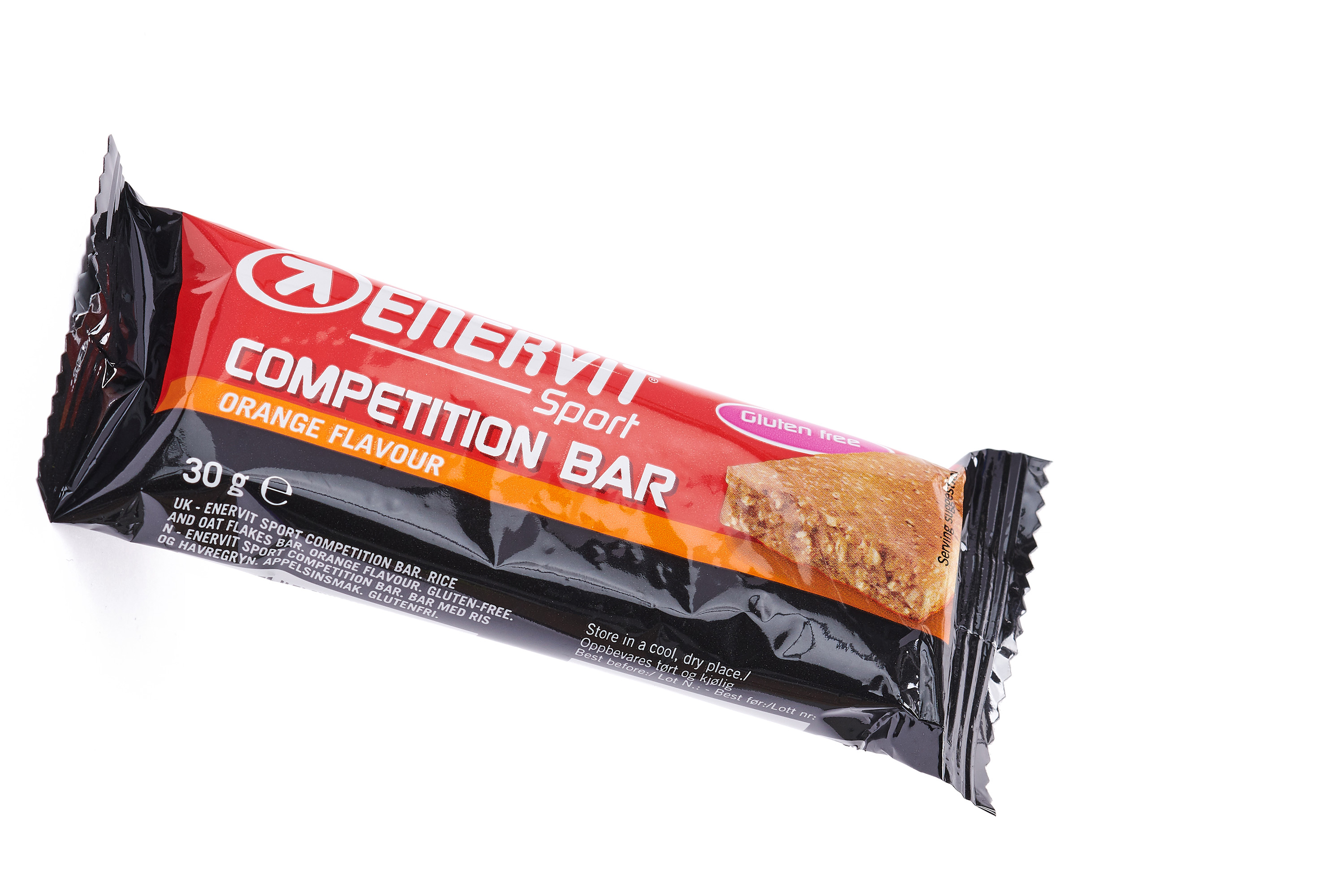
Did he consume this, Enervit’s Competition Bar? Probably, but this is the least tasty bar on test. Yes, it’s a nice hint of orange, that citrus twang sharp enough to cut through any flavour fatigue.
The problem is the texture, which is a touch old-school dryness for our liking. Okay, maybe not the Weetabix-alike specimens of times gone by, but not the smooth delivery we’ve come to anticipate of the contemporary bar.
Maybe that’s why it’s recommended to ‘eat one bar with an appropriate quantity of water’. On the positive, this is a fast-acting race-focused morsel with 23g from carbs and less than a gramme from fat.
| Ingredients (orange): | Glucose and fructose syrup (44%) – Rice flakes (rice flour, corn semolina, sugar, salt) (19,5%) – OAT flakes (gluten-free) (14,3 %) – Maltodextrin (8,7%) – Raisins (7,9 %) – Cocoa butter – Orange pieces (glucose syrup, concentrated orange juice (0,4% of the finished product), apricot pulp, fructose, natural orange flavouring, thickener: sodium alginate) (1,4%) – Isomaltulose *** (0,4%) -Natural flavouring – Emulsifier: lecithins – Colour: plain caramel – Acid: citric acid – Pyridoxine hydrochloride – Thiamin hydrochloride. |
Overall verdict
After the test period, it became clear just how much tastier ‘sports’ bars are in 2025 compared to 2002.
All the sports science in the world is made redundant if taste and texture’s repellent. Then again, science has a role, and shows that some of these bars are better for recovery (and snacking) and some for on-thebike and run fuelling.
When it comes to the former, we hone in on morsels that have higher protein content. Protein’s the building blocks of muscle (among its many roles) with much research showing a 20g post-exercise protein hit is optimum.
None of the bars reach those heights, with Veloforte peaking at 10g. If cost is no option, we’d go for the natural Veloforte over the bars like Enervit.
That said, we’d choose CLIF’s offering over both. It’s so much tastier than the last CLIF bar I tried and good for snacking and recovery.
When it comes to on-bike fuelling, Torq’s black-forest effort heads down the finish chute first, its 43g carbs delivered in a tasty package.
Hats off, too, to Mountain Fuel, despite its high calorie count, I suggest grazing is better than consuming in one go.
How we tested energy bars
When devouring the best energy bars on the market, each product gets put through the same level of testing. This includes fuelling before training and during exercise at varying intensities and durations, which allows us to check for signs of gastronomic distress.
We also delve into the ingredients list and nutritional info to check for carb sources, artificial flavourings and any potential impact from the amount of protein or fat included.
Of course, each individual triathlete will have different nutritional needs and requirements, so we recommend testing energy bars during training and not in a race environment to see how they work for you.
Our testing criteria also includes taste, carb content, energy delivery, nutritional value, portability and value for money.
Choosing the right energy bar for your activity

Energy bars generally fall into two types: carb-heavy options designed to fuel you during exercise, and more balanced bars with extra protein that support recovery afterwards. While the nutritional differences may seem small, they matter when timing your intake. Higher-carb bars are best for training and racing, whereas protein-rich bars are more suitable once you’ve finished.
Prioritise bars made with natural ingredients and minimal refined sugars to reduce digestive issues, and avoid over-fuelling — too much energy can hinder performance. Check the carb and protein content carefully and align your choice with your race or training fuelling strategy.
Carbohydrates (fuel)
Carbs are the primary energy source during endurance exercise. For consumption during activity, look for bars providing around 20–45g of carbohydrates per bar, helping you reach the recommended 60–70g of carbs per hour. Lower-carb bars are better suited after exercise or for lighter efforts.
Protein (recovery and satiety)
Protein supports muscle repair and helps you feel fuller. During exercise, bars should stay relatively low in protein (around 3-5g) to avoid digestive issues. For post-exercise recovery, bars with 8–12g of protein are ideal to support muscle rebuilding.
Calories (energy density)
Calorie content should match the purpose. Smaller bars (~35g) typically contain 120–150 kcal, suitable for frequent intake during exercise. Larger bars can provide 200–300 kcal, which may be better for long rides, races, or recovery when energy needs are higher.
Ingredients (digestibility and nutrients)
Bars made with natural, minimally processed ingredients, such as oats, nuts, dried fruit, and honey, are generally easier on the stomach. Avoid bars loaded with refined sugars, artificial sweeteners, or unnecessary additives, especially for race day.
Sugar type (fast vs slow-release energy)
Some simple sugars are useful for quick energy, but bars relying heavily on refined sugars can cause energy spikes and crashes. A mix of natural sugars and complex carbs provides more stable energy release.
Taste and texture
No matter how good the nutrition, a bar is useless if you can’t eat it mid-ride. Look for flavours and textures you enjoy and can tolerate when breathing hard (yes, this is an important consideration!) as overly dry, sticky, or sweet bars can be difficult to chew and swallow during intense efforts.
Portability and size (ease of use)
Bars should be easy to carry, open, and eat on the move. Compact bars are better for frequent fuelling, while larger bars may suit longer breaks or post-exercise recovery.
Why use energy bars?
Energy bars generally aren’t needed for up to around 75-90mins of training. After that time, however, they become essential, especially if you’re not a fan of energy gels.
That’s because your glucose and glycogen (how glucose is stored in the body) will be running low and you’ll need a top up.
How much you can tolerate’s highly individual but, as a benchmark, you’re looking at around 60g carbs an hour. Any more and your stomach might start playing (bad) tricks.
As for when you should turn to the bar, we generally keep to the bike leg of a triathlon. Its weight-bearing nature prevents your stomach flying up and down, while the chance to freewheel at times lowers intensity.
Training or racing in the heat? Check out our guide to the best electrolyte drink tablets.


 James Witts
Freelance sports writer and author
James Witts
Freelance sports writer and author