Lucy Charles-Barclay on T100 racing, battling illness and injury, plus Team Charles-Barclay
One of triathlon’s most relatable stars, Lucy Charles-Barclay’s journey from open-water swimmer to world champion triathlete is inspiring a generation. Here we talk recovery from illness and injury, battle braids, why T100 London was such an important race...

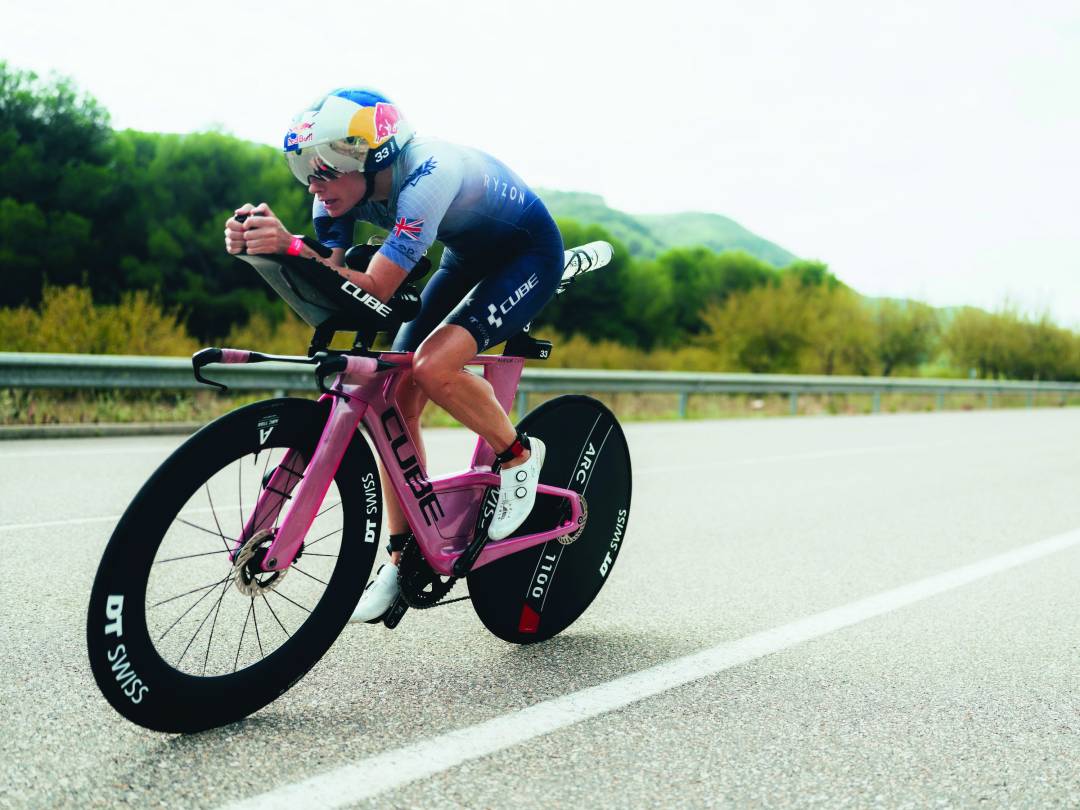
Here at 220 Triathlon, we’ve known Lucy Charles-Barclay almost since she first turned pro in 2016 after switching paths from swimming. In fact, look back at some of our training photoshoots from the early years of her tri career and you’ll see her and now-husband Reece in several of our photoshoots.
A meteoric rise since then has seen multiple wins over various distances with Ironman and 70.3 her key strength, culminating in taking the Ironman World Championships title in Kona in 2023 after placing second four times in previous years.
Behind the race wins though, have been difficulties with injuries and after being diagnosed a year ago with Coeliac disease, the need to change her approach to nutrition.
Meeting Lucy for this interview while she’s in London for the T100 race, it’s clear she’s in a good place though.
Leading a swim training session for media and some lucky age-groupers, it’s clear that behind the ever-friendly smile and willingness to share training tips and advice is a drive to train and race hard, as well as to continue enjoying the journey.
Read on as we catch up on everything from how she prepped for Kona to battle braids, T100 strategies to inspiring the next generation…

220 Triathlon: Congratulations on your recent wins at T100 London and T100 Spain! What is it you enjoy about the newer 100km race distance?
Lucy Charles-Barclay: Well, the T100 distance from what I have found is so competitive, the racing is just full on from the gun! There’s no let up, and I feel like that’s what I love about it, plus it really challenges me in a new way.
Obviously, I love the long-distance racing as well, but the T100 is bringing in the long-course athletes, plus the Olympic-distance athletes are stepping up as well. It’s just getting faster and more difficult every year.
I love that it is such a big challenge, and it’s definitely improving my triathlon game, which ultimately as a professional athlete is all you want to do.
Taking the win in London was definitely a magical moment. Such a great day. I think it really felt like almost turning the page on a chapter that’s been really difficult with injuries and health issues and yeah… being able to put it all together on home soil in front of friends, family, all the fans that were there – especially after the DNF the year before – I think it just was so, so special and everyone could see the emotion.
I think quite a lot of people shared in that emotion as well. So a really special day, and definitely one that has given me a lot of confidence for the rest of the season.

220: Do you find this slightly shorter distance to be more tactical than iron-distance racing?
LCB: Yes definitely. T100 is challenging me in different ways, and I mean, we’re here today, doing transition training with you all [Lucy went on to demo transition skills for the journalists and athletes attending on the day], which as a long-distance athlete is something I’ve never really really focused on my training.
Sometimes the long distance comes down to small margins. I mean, I’ve come second at Challenge Roth before by about 9 seconds… If I’d done a bit of transition work there, that could have been it.
So it still can come down to the small margins in long distance, but T100 is all about every margin. If you make a mistake that can cost you not just one place, it could be three places, so it’s just about refining those skills, then hopefully I can also then take them up to the longer distance.
220: There are so many race series and options to choose from now. How do you decide when and where to race?
LCB: Yeah, it’s really, really difficult! I think as a professional athlete nowadays, you could race every single weekend over any different distance from the Supertri all the way up to Ironman.
It’s about really deciding what excites you the most to get out of bed and train every single day, to push yourself hard. At the moment the T100 is really doing that for me.
Obviously, I’m still racing over the Ironman distance as well though, which I love because it’s always been a challenge.

220: We’ve got to mention Kona with the women’s race heading to Hawaii again where you won in 2023. So how’s your prep going?
LCB: Really good. For me, this year was all about having a gradual build throughout the year and staying healthy. Just over a year ago I found out I had Coeliac disease so it’s been a real journey.
As soon as I got that diagnosis I was, like, okay, that’s fine. I know what I’m dealing with now. They did say it would take six months to a year to actually heal my body from that, so I feel like I’ve got to that point now.
I feel really healthy. I feel really strong, and we’ve just had a really good consistent year of building up and not doing anything too crazy in training.
I look at my training from the years before and it was like a roller coaster where I’d have a really good block, get injured, and then it would drop off again and then I’d be chasing my tail to get back, whereas this year it feels like the graph looks really nice, it’s just been this nice progressive build. So hopefully that’ll put me in good stead for Kona this year.
Hopefully I can deliver an all-round performance and who knows what that result might be.
[Lucy went on to race strongly during the Kona 2025 Ironman champs up until the run leg, where she ended up having to pull out with the support of her husband Reece. Commenting later: “It was all going so well… until it wasn’t”. Lucy explains what happened here.]

220: As a professional athlete, how do you cope with illness and injury?
LCB: Professional sport is a roller coaster of highs and lows for sure and I’ve definitely experienced that, I’ve had my fair share with winning a world title and then being injured so it’s really tough.
Some real lows last year were not finishing the T100 race, my home race here in London and then two days before the world championship getting injured… But this year I’ve put all that behind me and tried to stay really positive and enjoy the training.
I’ve been reminding myself why I do this – because I really love it. It’s also great getting messages from people saying I’ve inspired them to do their first triathlon as well as from young girls wearing battle braids – it reminds me that this is why I do it, it’s so much more fulfilling than my own journey and that helps a lot.
220: How have you coped with your Coeliac disease diagnosis and what can you share that may help others?
LCB: It’s definitely been a really steep learning curve for me. Like, initially, you’re like, ‘oh yeah, just, you have to be gluten-free’. So, obviously, you’re not eating pasta and pizza, and things like that, and that can be quite easy, to just go for the gluten-free option.
But it’s eating out that’s really difficult, or we can’t really get a takeaway anymore because of the cross-contamination that can happen when the food is being prepared.
And unless I’m standing in the kitchen, observing what the chef’s doing, I can’t guarantee that no gluten has made its way into my meal.
For example, even if I eat out and I wanted to have chips, they need to go in a separate fryer to anything that may have been coated in breadcrumbs.
I do feel so much better from going gluten-free, so it’s definitely been worth it. We’ve made a lot more home-cooked meals.
Also, there’s a company called Field Doctor that actually deliver meals for me, that are completely gluten-free and Coeliac-approved, so that’s helped a lot because I think the biggest thing as an athlete is I need so many calories to fuel what I’m doing, and when you can’t eat carbs it’s tricky.
So now I’ve had to switch more to rice and potatoes rather than pasta and pizza that I used to carb-load on before races. It’s crazy to me that I’d go into races basically poisoning myself before the race.
I still don’t always get it right, and sometimes you don’t know what actually made its way into your food to make you feel unwell, so that’s quite difficult.
Even the smallest amount of gluten can make your immune system start to attack your gut. I think the positive thing though is where I’ve shared my journey more people have gone and got tested and found out they’ve got it as well so I think it’s important to keep sharing.

220: Are you excited about both races being back together in Kona from next year?
LCB: Obviously Kona is so special. When I did win [in 2023], it was a women’s-only day, and you felt that amazing positive energy and everyone there absolutely loved it and was so supportive.
But when I first went to Kona, me and Reece were both racing there and we were on that journey together. And I think there’s many couples that do travel and race together and that’s so special.
I think as long as on that day the women are still getting the equal coverage they deserve it’s fantastic, and I know Ironman have been changing their selection policies and things like that to actually get more women on the start line, so all of those things are really positive.
But for me, I think it will be really special to go back to that one-day event because I came into the sport as an age-grouper and a fan of the sport, and when I’m racing, I love actually seeing what’s going on in the men’s race as well, which is a nice little distraction sometimes, we’re all very supportive of each other. So, I think, yeah, that’ll be a special day in 2026.

220: It’s very much ‘Team Charles-Barclay’, not a solo mission. Does that help?
LCB: It’s amazing to have a team around me. It’s quite a small, tightly-knit team! My sister Holly helps share my journey on social media.
She does such a good job of that on YouTube and on my Instagram and my husband Reece is there every single day, supporting me. My coach is Dan Lorang and he sets the full programme, then Reece is there every day, helping me execute it to the best of my ability.
We just went away on a training camp, and my parents came with us. Dad was head chef, mum was doing the laundry. Reece was doing every other job under the sun. Holly was there doing the media… It really, really helped, just to have them there.
And also, my dogs are an amazing part of that as well, just to be that perfect distraction – when training becomes a lot I’ll just go and walk them.
And then obviously the amazing sponsors I have that support me on my journey as well – and go along with my crazy ideas that I have at times, like mermaid-painted bikes and things!
220: In terms of a pro career, you’ve maybe had a much longer career than you might have done if you’d stayed in swimming. Is that something you think about? Plus is swimming still your favourite discipline?
LCB: Yeah, definitely! In swimming you get to your early 20s, and you’re done. In triathlon it’s a completely different world – for example you’ve got Annie Haug who only just retired and was in her 40s, still breaking world records and winning. I just feel so grateful I found this sport.
With triathlon I go through phases of loving each discipline more than the other. I obviously love swimming. It’s my background, and when I’m swimming really well, I enjoy it, but it’s hard to not compare myself now to the times I used to be able to achieve as a swimmer, and it can be frustrating. But obviously, now I can cycle and run way faster than I ever dreamed of then.
I think, when running is going well it’s my favourite because it’s just so easy – you can just put your shoes on and go. As for cycling I do love it, but it can be frustrating with all the mechanics that go with it!

220: Can you just give us an overview of what we did in the session this morning and why it’s important that athletes do those drills that you recommend.
LCB: Yeah, I think most people coming into triathlon maybe don’t have a swim background, so it’s the thing they’re most anxious about or just haven’t really ever done before.
And if you haven’t done swimming from a young age those small technical things are just really alien, so just really trying to strip it back to the basics like sculling drills and things like that, where it’s really helping you get that feel for the water that everyone speaks about.
Even myself, at my level, I try and do drills once or twice a week just to reinforce that and I find if I do that at the beginning of the session, then when I go into my main set of the session, I actually just feel so much better.
A day training with Lucy Charles-Barclay
“Every day is different, but usually involves swim, bike and run!
“A typical day would be getting up pretty early, doing somewhere between 5–7km of swimming, having a second breakfast after and then usually doing anywhere between three to five hours on the bike, with some intensity on that or some at race pace.
“Then it will either be a brisk run or there’ll be a run at the end of the day, anywhere between probably 10–15km of quite steady running, sometimes throwing some strides or some pace work.
“Oh – I also do some strength training when I can throw that in as well!”
Career highlights
Lucy’s highlights are so numerous we’ve just listed her first-place finishes here, with no doubt more to come…
1st, Ironman Lanzarote, 2017
1st, Challenge The Championship, 2017
1st, Ironman African Championship, 2018
1st, Challenge The Championship, 2018
1st, Ironman African Championship, 2019
1st, Challenge The Championship, 2019
1st, Ironman 70.3 Staffordshire, 2019
1st, 70.3 European Champs, 2021
1st, Collins Cup, 2021
1st, Ironman 70.3 World Champs, 2021
1st, Long Course World Champs, 2022
1st, Ironman World Champs Kona, 2023
1st, T100 London, 2025
1st, T100 Spain, 2025


 Helen Webster
Editor, 220 Triathlon
Helen Webster
Editor, 220 Triathlon