How does endurance sport affect your digestive system?
Understanding how your body works is crucial if you want to perform at your best. Sports nutritionist Stephen Smith explains how endurance sport affects your digestive system.

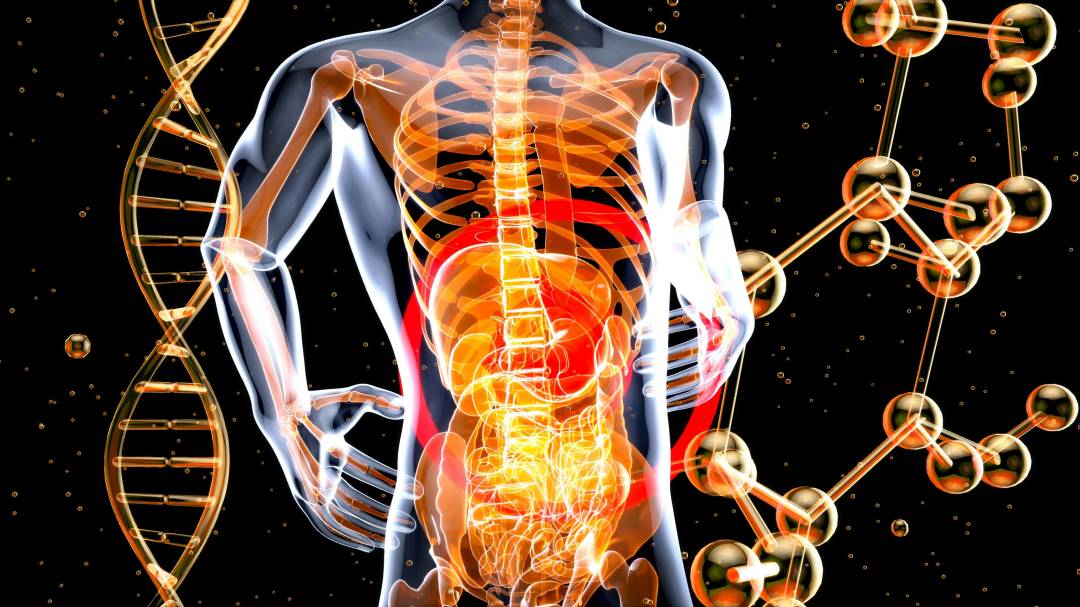
Your digestive tract, or gastrointestinal system (GI), plays a pivotal role in your ability to perform at your best and recover strong as an athlete. An impaired GI system can result in a decline in performance, primarily due to the development of unwanted symptoms such as nausea or ‘runner’s trots’.
Despite its importance, digestive issues are common among triathletes and can sometimes completely derail a triathlon race even with the best training under your belt. A study of Ironman athletes in 2000 found 93% reported at least one GI symptom [1].
There are ways to manage tummy issues during racing and training though, but first we need to get to the root cause of the issue.
How does exercise affect the gut?

Whilst the underlying mechanisms behind the occurrence of GI symptoms (in response to exercise) are not fully understood, research has discovered that exercise causes a plethora of changes within the gut.
Due to physiological and hormonal responses, exercise can lead to a cascade of events which can affect the integrity and function of the gut. When you start training, blood flow is redistributed away from the gut towards the periphery and working muscle to aid thermoregulation and muscle metabolism.
The amount of blood going to your gut can decrease by 20% within 10 minutes, reaching up to 80% after one hour of running. When you stop exercising, it takes approximately 10 minutes for blood flow to return to normal levels [2].
Dutch researchers have highlighted that this redistribution results in a lower amount of blood in the abdominal area and with less blood available, oxygen availability is reduced, leading to a condition known as splanchnic hypoperfusion [3] (hypoperfusion means decreased blood flow through an organ).

Whilst this inherent response may delay fatigue related to exercise-induced hyperthermia, or nutrient delivery to the muscle, there is a compromise towards the gut.
Prolonged periods of ischemia (inadequate blood supply) can cause injury to the lining of the gut, specifically the mucosal layer and specialised cells which line the small intestine, named enterocytes.
Whilst under normal, healthy, physiological conditions, the gut has some level of permeability, or leakiness to allow to nutrients to transport from within the gut to the blood, when the cells of the gut become damaged we see an increase in permeability, allowing otherwise impassable nutrients and endotoxins into the blood.
Indeed, a study of 29 athletes competing in a long-course triathlon found that 68% of them returned traces of these toxins immediately after the race.
Researchers have found that certain factors such as heat, dehydration and the use of anti-inflammatories can increase the magnitude of permeability. Also, we have recently shown in our lab that the higher the intensity of your run, the higher the rate of permeability.
In the Sports Science laboratory we can measure the responses of intestinal permeability to exercise using a drink containing a mix of sugars.
The participant ingests the sugars, performs the specific exercise bout e.g. 1 hour of running at 70 % VO2max., we then take a sample of blood and analyse the ratio of the sugars in the plasma.
How to manage digestive issues as a triathlete

Interestingly, it doesn’t seem that increased intestinal permeability is the cause of GI distress in athletes, but instead, how your body responds in terms of blood flow.
As such, if you are an athlete who suffers from GI stress, it may be beneficial to reduce the intensity of your training for a period of time to a level below which you normally encounter symptoms and also ingest some carbohydrates (e.g. a sports drink) during some sessions.
This may reduce the magnitude of injury by promoting a resupply of blood to the gut. Some other strategies include:
- Avoid large meals particularly high in protein, fibre or fat in the hours before training.
- Avoid the use of anti-inflammatories such as ibuprofen and aspirin, which cause and increase in intestinal permeability.
- Consider supplementing with glutamine, as research from our lab has recently shown this can reduce intestinal permeability and may improve oxygen supply to the gut.
- Avoid some foods such as milk and high-fibre foods in the hours or even days before training or competition.
- Avoid dehydration. Not only does it impair physical and cognitive performance but can increase GI permeability.
The bottom line
In summary, besides the digestion of nutrients, a lot of physiological processes happen in the gut during exercise. At the onset of training, blood is redistributed away from the abdominal area, resulting in decreased blood flow through the organs and less oxygen availability. This reduction in blood flow is different between individuals and could contribute to the occurrence of GI symptoms.
References:
1. Jeukendrup, A.E., et al., Relationship between gastro-intestinal complaints and endotoxaemia, cytokine release and the acute-phase reaction during and after a long-distance triathlon in highly trained men. Clin Sci (Lond), 2000. 98(1): p. 47-55.
2. Rehrer, N.J., et al., Effect of exercise on portal vein blood flow in man. Med Sci Sports Exerc, 2001. 33(9): p. 1533-7.
3. van Wijck, K., et al., Physiology and pathophysiology of splanchnic hypoperfusion and intestinal injury during exercise: strategies for evaluation and prevention. Am J Physiol Gastrointest Liver Physiol, 2012. 303(2): p. G155-68.


 Stephen Smith
Performance nutritionist
Stephen Smith
Performance nutritionist