Get ready for Ironman: Master your Ironman fuelling
Whether you’re racing Ironman later this year or next season, you’ll need a well-oiled nutrition strategy for 226km success. Here our experts offer their before, during and after-Ironman fuelling advice.

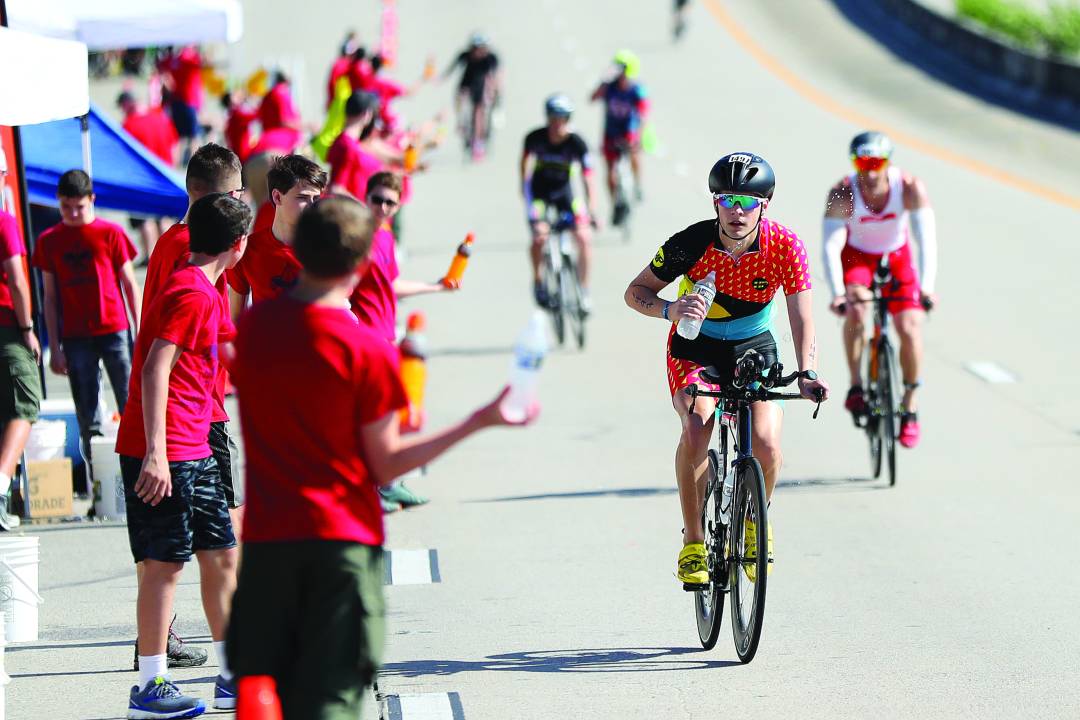
If transition is oft-cited as triathlon’s fourth discipline, then nutrition is most definitely the fifth (and it’s surely more crucial than transition, too, but that’s a story for another time). That importance is heightened as races become longer, with fuelling now recognised as paramount for Ironman success at every level.
Ironman history is littered with examples of unusual fuelling techniques and famous bonks, including six-time Ironman Hawaii champ Dave Scott’s rinsing of cottage cheese in the late seventies and Sian Welch and Wendy Ingraham’s famous crawl in Kona, Hawaii, during the nineties (Youtube it!).
And if bonking can happen to those at the elite end of the field, it can most definitely hit the age-group fraternity as well.
Gut training wasn’t something on my radar back in 2018 when I did my previous Ironman, which became a catalogue of nutritional errors before some major GI issues on the run.
Even since 2018, though, our nutritional knowledge and the availability of quality fuelling products has increased hugely. It’s surely a major factor behind how Ironman records have been tumbling in triathlon this decade, with elite athletes now (successfully) taking on over 100g of carbohydrates per hour.
That doesn’t necessarily apply to age-groupers at the slower end of the long-distance field, however, so here I’m calling on top age-grouper and Bristol-based coach Graham Wadsworth, the nutrition experts at Precision Fuel & Hydration, and coach Sam Barley to help guide us age-groupers to Ironman finish glory.
Carb consumption

Gut training and carb consumption are hot topics in endurance sport right now, with many pro athletes pushing their carb ceilings to previously unheard of numbers.
Racing an Ironman over eight hours compared to one over 16 is a different beast, however, which means I can’t just copy Patrick Lange and co without some time in the portable loo.
“Firstly, figure out how many grams of carbohydrate you’re currently taking on per hour as it might be less than you think,” says coach and Ironman Wales finisher, Sam Barley, who has sub-9h finishes on his Ironman CV.
“Then experiment with increasing that conservatively, perhaps aiming for 10g/h extra per week. If you want to be scientific about it, book in for a lab test to find out your optimal dose.”
I do just that and book a morning at Precision Fuel & Hydration’s performance lab in Dorset (they also have a handy online carb and hydration calculator), where I’m put through my paces on a treadmill in a 38°C heat chamber and perform a sweat test.
The data reveals that I should be consuming around 60-75g of carb per hour for Ironman racing, with 500ml of fluid containing just over 1,000mg/l of sodium.
Happily, Precision’s gels, chews and hydration tabs all clearly label their carb and sodium content, with their tabs available at European Ironman aid stations.
Race week nutrition

Ah, race week. The time to taper and eat, eat, eat, right? Yes and no, says coach Graham Wadsworth, who finished 25th overall at the 2023 Ironman Wales in Tenby with a 10h 25min time.
“On the days before an Ironman race, it’s time to eat your white foods – whether that’s bread, pasta or rice, which are more easily digested than the more fibrous wholewheat variations.
“You’ll need a lot of energy on race day, but you’ll be doing less training in the week before the race so don’t stuff your face carb-loading. Just be sensible aiming for something like an extra portion of bread on the side during meals.”
The all-important pre-race dinner
I arrived too late for the pre-race pasta party for my previous Ironman and was left with a gammon steak and chips at the local Beefeater for a late (and greasy) pre-event dinner.
By the halfway point of the run I was being sick in a hedge, and was unable to stomach any sports nutrition for my final two hours of shuffling.
The moral: as well as gut training way before the race, sort out your race week nutritional weeks in advance and pop sensible items on your plate when you do eat.
“Try and eat your main pre-race meal early to make it easy for your body to digest,” says Wadsworth, who will often book self-catering accommodation before a race so he can control his intake. “You don’t want loads and loads of fibre, fruit and veg the day before.
“And don’t stress if you don’t go to bed that early because it’s more about sensibly building up your sleep hours the week before. Not many people will have a great night’s sleep night before an Ironman.”
Pre-loading

The health dangers of dehydration are clear, yet research has shown that some athletes will arrive at an Ironman starting line already dehydrated or with hyponatremia (low blood sodium, caused by the over-consumption of plain water or weak sports drinks) due to a lack of sodium in their fluid intake before a race.
And there’s also an impact on performance when you’re dehydrated, which will lead to a lower power output, higher heart and breathing rates, and your brain also suffers a drop in neurotransmitters, which leads to fatigue.
“Drinking a strong electrolyte drink to optimise your hydration status before long, hot or really hard rides and events can significantly improve your performance,” says Andy Blow, the founder of Precision Fuel & Hydration.
“This is ‘preloading’. There’s strong evidence that taking in additional sodium with fluids before you start sweating is effective in promoting increased acute fluid retention and in improving endurance performance, especially in the heat.
“Take in one or two additional cups of fluid each day in the final couple of days before your event but don’t go crazy by drinking above what your body is telling you it needs. Urine colour and thirst are helpful indicators of hydration status.”
The race day breakfast

The temptation is to press the snooze button as much as possible on race-day, but Wadsworth recommends eating breakfast around 4:30am before an Ironman race start.
“Practise your pre-race breakfast before some big training sessions in the weeks before the race where you get up early. On race morning, repeat what you’d have for breakfast on those training days and stay away from anything new.
“If you’re suffering from pre-race nerves and struggling to get food down you, then try getting liquid calories from something like a chocolate milkshake. I’ve had the same pre-Ironman breakfast for about 15 years: a tin of Ambrosia cream rice pudding with a banana and a scoop of chocolate protein powder, as well as a coffee.
“But if you’ve always been a porridge or toast person, then have porridge or toast. I don’t eat anything after that apart from a caffeine energy gel 30 minutes before the race.”
Be fuelling flexible

“The big thing with a hilly long-distance event such as Ironman Wales is that it’s the sort of race where you need a flexible plan,” adds Wadsworth, who has coached a number of athletes to the Ironman finish line.
“You might be ill in the swim due to the choppy waves, while the bike is so hilly that you can’t set your watch every 15 minutes to eat. Work out roughly what you’re going to eat per hour in total.
“Study the course and work out where you think you’re going to eat, because you’ve got a lot of descents where you can’t take on fuel. Remain adaptable on the day, though, as the wind direction or crosswinds can make it difficult to eat or drink on certain sections.”
Matt’s key nutrition gear buys

- Rouvy Subscription
Rouvy’s Ironman partnership ensures that you can ride to numerous 90 and 180km bike courses, including Ironman Wales, on the platform, with a handy feature showing you where the aid stations are located. (£17.99 per month).
- Manilife Peanut Butter
If you’re going to take some peanut butter sandwiches out with you on the bike or in your personal needs bag, do it with the best nut butter you can find. ManiLife’s crunchy offering is the one for us. (£9.75 for 900g).
- Precision Fuel & Hydration
A packet of these tasty chews offers 30g of carbs, which helps you keep track of your training and racing intake. The mint and lemon or neutral flavours also provide a welcome palette-cleansing twist. (£8.99 for a pack of 4).
Storage solutions

A hydration system on the tri-bars, bottle cages on the frame and/or behind the saddle? Whatever you go for, decide well in advance of race day, advises Wadsworth.
“I always start with two water bottles – one might be electrolyte, the other water, and mount one bottle on my frame and one behind it, with the other saddle spot having my spares in it. Make sure you check things like your bottles don’t bounce out on bumpy roads.
“Also practise taking the bottles out of the cages and nutrition from your tri-suit pockets and Bento boxes while you’re cycling on your bike, not just on the turbo, and things like opening an energy gel packet while on the move.”
Prepare for success

Fine margins can shape an Ironman race day at both ends of the performance spectrum, with mislaid nutrition, aid station errors and forgetting to fuel all having potentially major physiological and psychological ramifications. The more prep you can do beforehand, the better, says Wadsworth.
“I always try and carry all my own food and only rely on the aid stations for liquid and fresh bottles because there’s so much going on at the aid stations, and you’re coming through them fairly quickly.
“Learning who the sponsors are – it’s Maurten and Precision Fuel & Hydration’s PH 1000 tabs at many European Ironman events, including Tenby – and using those on training days is a wise tactic.
“If you then run out of your own nutrition or drop it somewhere, then you know that you can use theirs hopefully without any gastric issues.”
Go nuts!

Top age-grouper Wadsworth might finish his races twice as fast as me, but we both agree that there’s always a place for peanut butter during long-course racing.
“Away from the sports nutrition, I’ve done Ironman on peanut butter and jam sandwiches and I always have a tube of salted peanuts with me,” adds the Bristol-based coach.
“It offers such a different taste in the mouth when you’ve just had too much sugary sports nutrition, and also whets your appetite for drinking more liquid.”
The ‘Red Ambulance‘
Iron-distance racing differs from shorter events in that personal needs bags come into the equation, which is something you’ll need to prep ahead of race morning. Use them wisely, says Wadsworth, and they’ll offer huge benefits during the race.
“The personal needs spot at Tenby, for example, have amazing volunteers handing you your bags. I organise mine into four different coloured bags and number each, and you can then shout what one you want when you’re coming into the personal needs area.
As for the run’s aid stations, these can be busy so take your time and walk through them to keep things simple and in control. They have a variety of stuff like crisps and coke, which I call the ‘Red Ambulance’.
Even if you’ve never had crisps or coke on a training run before, just consume them if you fancy it. You’ve been out there all day, so listen to what your body wants.”
The post-race feast

One of my own racing regrets was the burger van being closed after my Ironman, with my pre-race celebratory dinner being a soggy ham sandwich from a Shell petrol station on the A41.
“Think what you might want after your world’s worst hangover,” laughs Wadsworth. “On the days following the race, you might feel nauseous but just try and keep drinking and, eventually, when your appetite comes back, go for it. You’re probably not going to do an Ironman the next weekend, so enjoy eating what you want!”
Matt’s training stats in July:
Swim: 5km (4.2km in June)
Outdoor bike: 112km (142km)
Indoor bike: 6hrs (7:30hrs)
Run: 32.5km (52km)
Vo2 Max: 50 (50)
BMI: 23.5 (23.7)
For more Ironman Wales training tips, check out Matt’s run training and bike training advice here.


 Matt Baird
Editor of Cycling Plus magazine
Matt Baird
Editor of Cycling Plus magazine