Get ready for Ironman: Crush the bike leg
180km! 112 miles! Whatever you want to call it, an Ironman bike leg is a mightily long way. Here’s how time-crunched age-groupers can conquer this legendary multisport distance this season and beyond.

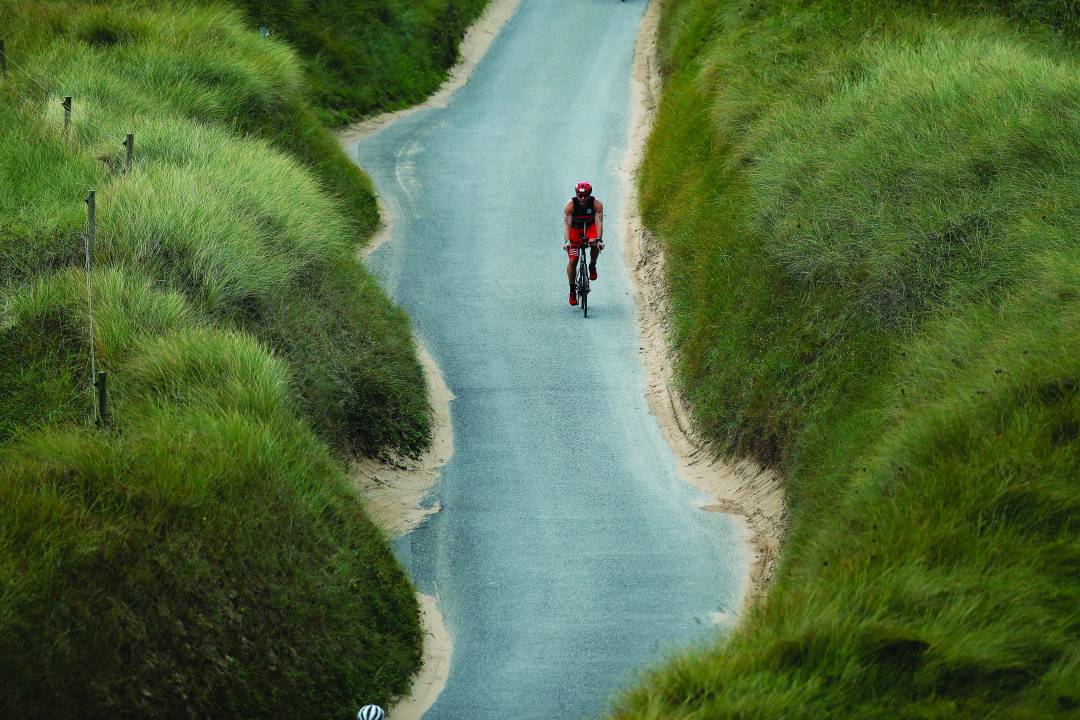
Mention the Ironman bike leg to any triathlon novice and watch as their jaw drops and their mind is blown. Some 180km (112-miles) after a 3.8km swim and before a marathon run? It’s the stuff of endurance sporting legend; a distance first attempted at Ironman Hawaii in 1978 and still the M-Dot standard some 47 years later.
With great distances come great challenges, however, especially when relentless winds (Ironman Lanzarote), extreme heat and humidity (Kona), and hills (Wales) are further obstacles to overcome.
Aerodynamics, fuelling, efficiency, comfort, power output and more are all components that triathletes should seek to improve. And that’s before we go into trying to find a hotel on race weekend that doesn’t require you to sell that Cervélo to fund it.
While that 180km/112mi distance is never to be sniffed at, thankfully Ironman training has become more simple and efficient over time due to advancements in training metrics, increased research on personalised nutrition and the indoor training revolution through gamification apps.
Here, with the help of pro triathlete Fred Funk, top coach and age-grouper Graham Wadsworth and the scientists at Precision Fuel & Hydration, is how you can prep for any Ironman bike leg this season and beyond, and how our time-poor age-grouper is slowly turning the training corner…
Beat the boredom

To misquote John Lennon, life is what happens when you’re busy making Ironman plans. Half-term holidays, work deadlines and the end of the football season (come on you Spurs!) this month meant that I struggled to get outdoors on the bike much at all, so the indoor trainer was a godsend for sneaking in hour sets at lunch and weekends.
Perhaps surprisingly, yet thankfully, the brilliantly named pro triathlete Fred Funk doesn’t chastise me too much for my ‘indoors-good’ bike ethos.
“To really get the maximum benefit out of only 5-6hr bike training per week, I’d do the majority of my riding indoors using Rouvy’s endless portfolio of routes [including Ironman Wales].
“I’d also only perform short sessions with intensity to maximise efficiency. With Rouvy you can explore the outdoors and race-specific courses from the comfort of your home and follow their great training plans and sessions to beat that boredom and let the time fly by.”
Indoor vs outdoors

As someone who previously despised indoor riding, I’ve now turned into the age-grouper version of Lionel Sanders, only without the monstrous wattage and cult-hero status. It’s convenient and targeted, especially as it takes me 15-minutes to escape the city on my road bike.
“In the winter I do 80% of my riding indoors and in the summer around 20%,” says Funk. “Even if it’s good weather, I train indoors for specific sessions because, first of all, it’s very time-efficient – I have a training room where everything is already set up and I just have to get on my bike and pedal.
“Secondly, there are no distractions like annoying wind, traffic and it’s not weather-dependant. Finally, indoor training is super-efficient because you never stop pedalling, unlike outside. Thanks to Rouvy, I can even explore places and routes virtually I’ve never been to in my life and that’s even better than riding the same loop outside at home for the hundredth time.”
Two-wheel focus
While the indoor bike benefits are clear, I’m all-too-aware that I need to get the road bike miles in on the bike before Tenby, including regularly getting to the steep climbs of Somerset’s Mendip Hills and ideally getting to Pembrokeshire itself for some on-course prep.
“Place a definite emphasis on the bike,” says Graham Wadsworth of the Bristol-based personal trainers, My Life PT. “Ironman Wales is a course that rewards strong bike resilience and putting in the hilly miles. On limited time this is tricky, so look for lots of elevation on your training rides.
“With your time of 10hrs per week – not to mention your history of overuse injuries from running – I’d aim to complete at least 50% of your training time on the bike. And, if the bike is your weakness, then don’t be afraid by doing some weeks of 80-90% bike training to make some real gains on the bike while just maintaining the other disciplines.”
Multi-discipline sets

My indoor bike training setup is taking shape, but a gym in summertime is a step too far for me so I’ve invested in a Gym Pro Luxe indoor gym set for building some much-needed strength and conditioning into my tri-training routine.
“We’re all multi-discipline athletes and changing between activities is one of the unique features of triathlon,” advises Wadsworth, who ranks Tenby up there with Challenge Roth in terms of Iron-distance atmosphere.
“Set yourself up with an indoor bike next to gym equipment and/or a treadmill. An example of a 45min indoor training session could breakdown like this: 5mins gym strength work; 5mins indoor bike; 5mins treadmill; repeat three times. It’s something different to normal training and the combination of strength and aerobic work is useful for triathletes at any distance.”
“Also make use of the downtime and use the recovery periods in training,” adds Wadsworth, who balances his pointy-end age-group feats with having a family.
“Plan the big sessions and then the rest afterwards, which is key for Ironman training, and make sure you use the recovery periods to give time and energy back to your family after you’ve been doing your training.”
Is hilly harder?

Some 2,685m of elevation gain. The Ironman Wales bike stats don’t lie – this is a demanding bike course that’s up there with Ironman Lanzarote as the hilliest official Ironman route (the XTRI likes of Norseman and Blacklake go even higher, but that’s a story for another season).
Funk, who finished second at the Ironman 70.3 Worlds in 2023, is undeterred, however, and offers an alternative view to the accepted hillier is harder view.
“Hillier long-distance courses are actually ‘easier’ than flat courses because you can get out of that aero position, use different muscle groups on the uphills and recover on the downhills. To prepare for it specifically the best is simply to practise riding hills,” is his advice.
I picked the UK Ultimate as my one and only previous Iron-distance attempt due to its pancake-flat sub-1,000m of elevation course and can understand Funk’s thinking, as it boasted few sections for out-of-the-saddle efforts and plenty of extended bottom-on-saddle passages.
As for training my body for sitting on a saddle for eight hours? “Train a lot and use plenty of chamois cream,” is Funk’s succinct advice.
Gut training
After transitions, nutrition is oft-cited as the fifth triathlon discipline and I know, after vomiting towards the end of my last Iron-distance race, that I need to nail this ahead of Tenby.
I book a private sweat test and heat chamber session at Precision Fuel and Hydration in Dorset to discover how much sodium is lost in my sweat and how it will accordingly change my fuelling intake, and how carbohydrate consumption and replenishing stores of glycogen are essential for endurance sports success (read more in two edition’s time).
Lindsey Hunt, the senior sports scientist at Precision, recommends that I’ll need to consume 60–75g of carbs per hour (four or five of PH’s clearly labelled 15g energy chews) for both Tenby and my chief preparation event, the Croyde Ocean Triathlon in July. I’ll need to train my gut to do that beforehand, however, by ingesting those amounts during training rides and runs.
“In the race I try to aim for 120g carbohydrates per hour on the bike in the form of liquid carbs in bottles and gels,” adds Funk. “This needs to be trained well otherwise it can lead to stomach issues.”
Lace it up

Comfortable kit is crucial for any triathlon, mandatory for all long-distance races. An ill-fitting wetsuit collar, poorly behaved tri-suit zipper or ropey heel counter can be problematic for sprint races, disastrous for Ironman.
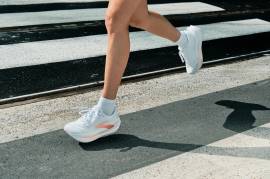
An extra bonus is looking stylish as well. Which is why I’ll be wearing a pair of Quoc’s Escape Road (£130) bike shoes. They have laces, a rare sight on any triathlon course, but I love the comfort – and lack of hotspots – that laced-bike shoes provide.
Admittedly, fiddling with the laces will cost me a few seconds in both transitions, but the aerodynamic benefits from the lack of dials might even make that time back over my expected eight hours in the saddle. And, in their all-white guise, they look pretty darn cool as well.
I’ve already chosen to ride in the bargain Giro Agilis MIPS (£99.99) road helmet, my favourite bike helmet of all-time, and one that offers comfort, ventilation for hilly rides and some trickledown tech from Giro’s top-end lids.
My chosen saddle is a Prologo Kapa RS saddle, my regular platform that I know my perineum can handle having spent 10 hours on it for the Lake District’s infamous Fred Whitton Challenge sportive in 2021.
I can’t stress how much getting a couple of professional bike fits over my tri career have helped both my cycling comfort, aerodynamics and efficiency as well, including the chance to try an array of saddles to find the best one for long-distance comfort. Also studying the pads of tri-suits online or ideally in-person will also reap the racing rewards.
Prep for punctures

As I’m not shy of telling anyone who’ll listen, I would have broken the eight-hour barrier on my last Iron-distance attempt if I wasn’t hampered by a severe puncture at the 160km mark on the UK Ultimate Triathlon’s bike leg.
I was forced to push, wobble and ride on the rim for the last 20km of the bike leg, which probably contributed an hour to my overall 15:30hr finish time.
For Ironman Wales – where my margins for making the swim bike leg’s combined 10:30hr cut-off are so tight – I’m going tubeless and coming added with a host of tubeless plugs, spare tubes and something approaching the knowledge of how to use them. If nothing else, it’ll improve my mid-bike mindset and lower my fears of hitting every thorn on the roads of Pembrokeshire.
Matt’s stats:
How our writer has fared in this month
Swim: 6km (3.5km in April)
Outdoor bike: 90km (120km)
Indoor bike: 9hrs (7.5hrs)
Run: 45km (62km)
VO2 Max: 50 (50)
BMI: 23.9 (24)
Matt’s top buys for a long-distance bike leg
Precision Fuel & Hydration

- £8.99 (pack of 4)
A packet of these tasty chews offers 30g of carbs, which helps you keep track of your training and racing intake. Refreshing, too.
Rouvy subscription

- £10.75 per month
Rouvy’s Ironman partnership ensures that you can ride numerous 90 and 180km bike courses, including Ironman Wales, on the platform.
QUOC Escape Road

- £130
Laces aren’t for tri? I get it, but I love the comfort these lightweight, carbon composite-soled shoes bring, and they’re also pretty darn stylish in that white colourway.
Next month, we’ll be focussing on the Ironman run, including staying injury-free, vital pacing advice and just how far you need to run ahead of Ironman race day. Check out last month’s article on how to conquer the Ironman swim leg.


 Matt Baird
Editor of Cycling Plus magazine
Matt Baird
Editor of Cycling Plus magazine