Free 6-month Ironman training plan that’s simple to use
With bricks, race efforts, open-water swims and tapering, this 6-month Ironman training plan will take you up to your big Ironman race day in top condition.


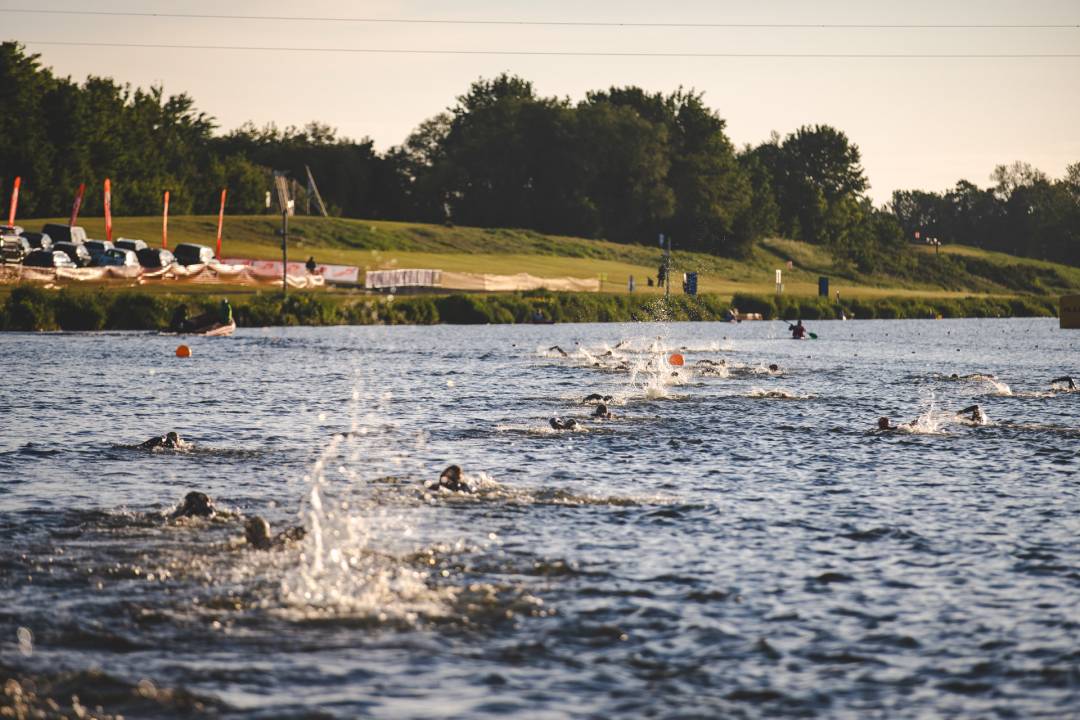
Training for an Ironman is not something that should ever be taken lightly, but with the right preparation, it’s a challenge that’s well within reach. Here’s everything you need to know to complete an Ironman in six months, including expert advice and a free training plan to help you achieve triathlon’s ultimate goal.
An Ironman consists of a 2.4-mile (3.8km) swim, a 112-mile (180km) bike ride and a 26.2-mile (42.2km) run. Also known as a full-distance triathlon, it sits above sprint, Olympic and half-Ironman (70.3) distances in both length and challenge.
When training for an Ironman, you don’t need to complete a standalone marathon before race day. The recovery required can take valuable time away from your training. Instead, a 70.3 or middle-distance triathlon a few weeks beforehand provides excellent race-specific preparation. With recovery prioritised, it’s even possible to race both a 70.3 and an Ironman within six weeks.
As for the bike leg, aim to build up to a long ride lasting around 75% of your expected Ironman bike split. This provides a solid endurance benchmark without compromising the rest of your training.
Who is an Ironman triathlon suitable for and what ability?

This race distance can take the fastest athletes around 7.5 hours to complete, while most events have an overall cut-off of 17 hours. For most age-groupers, the biggest challenge isn’t race day itself, but finding enough time to train.
If you’ve struggled with injuries in the past, be cautious about stepping up to an Ironman. As a general guide, three years is roughly how long it takes to train for an Ironman if you’re starting from scratch, and can’t yet comfortably swim, cycle, or run for more than a few minutes at a time.
If you’re not quite ready to make the leap, focus on shorter races first. Our 70.3 half-Ironman training plans are a great place to start before progressing to the full distance.
What kit do you need for an Ironman?

You will need a wetsuit (all Ironman events are open water), goggles, a road bike, helmet and running shoes. Unlike shorter distances, you might not opt to wear a tri-suit – some athletes prefer to change into fresh clothing for each discipline, prioritising comfort over speed. The choice is yours.
Many people complete the bike leg in cycling kit before changing into running gear in the second transition. While it is possible to complete an Ironman in trainers and flat pedals, using the best clipless pedals for triathlon can improve efficiency over 180km.
Fuelling an Ironman with the right nutrition is critical. Many races provide nutrition at aid stations throughout the course, so you can either rely on the on-course options or use your own tried-and-tested fuel and plan how you’ll carry it on race day.
Free 6-month Ironman training plan

This six-month Ironman training plan is designed to begin after a solid winter of base-training efforts, time trials and brick sessions.
Monday is a rest day, but you can adapt these to your own training schedule. For example, if you know you can’t train on Tuesdays or Wednesdays, make one of these your rest day.
Tips on following the training plan
If you miss a session, don’t panic. You can’t get that time back, so don’t go looking for opportunities to make up for lost training – this will only lead to burnout.
If you’re ill or injured and miss a few days or even a week of training, simply pick up the plan where you left off.
In many cases, athletes try to add extra sessions once they return, hoping to make up for lost time. However, this often increases the risk of becoming ill again or picking up another injury.
Athletes need to accept that missed sessions are exactly that – missed sessions – and move on. This can be difficult when motivation is high, but staying consistent and healthy is far more important than trying to cram in extra training.
If you’re unsure which Ironman to enter, we’ve got more advice on how to choose and plan your Ironman.
Meanwhile, follow these tips to conquer any long-course triathlon in style.


 Dermott Hayes
With contributions from