Best protein bars for post-exercise recovery in 2025
Looking for another way to get your protein fix throughout the day or after exercise? We put a range of bars to the (taste) test...



While energy gels and bars reign supreme for in-exercise fuelling, afterwards your body calls for a mixture of protein and carbohydrates, which the best protein bars conveniently provide.
A standard, balanced diet should typically provide ample protein for people who only exercise lightly. But triathletes can often benefit from additional protein to help their body recover and adapt to high volume training.
High-protein foods are great for upping your protein intake, as are protein powders. If you’re on the go or want something that tastes a little more indulgent, protein bars can be a solid choice.
Here, we put a range of bars to the test to find out which ones are worth your money.
At a glance: best protein bars in 2025
The great tasting and nutritious Tribe Nut Butter Triple Decker (buy) stands apart from the competition.
Close behind with excellent taste too but underwhelming protien content is the Tribe Protein Flapjack (buy).
The delicious Veloforte Mocha Protein bar (buy) contains a lot of whole foods like hazelnuts and few UPFs.
It might not be the tastiest but the Huel Complete bar (buy) packs in 20g of protein.
Why you can trust 220 Triathlon
Our team of experts rigorously tests each product and provides honest, unbiased reviews to help you make informed decisions. For more details, see how we rate and test products.
Meet our tester
Rob Slade was content editor at 220 Triathlon before becoming deputy editor at Live for the Outdoors. As an experienced endurance athlete and kit tester, Rob uses his analytical mind to identify bars which meet the mark for triathletes.
Best protein bars in 2025
Best protein bar overall
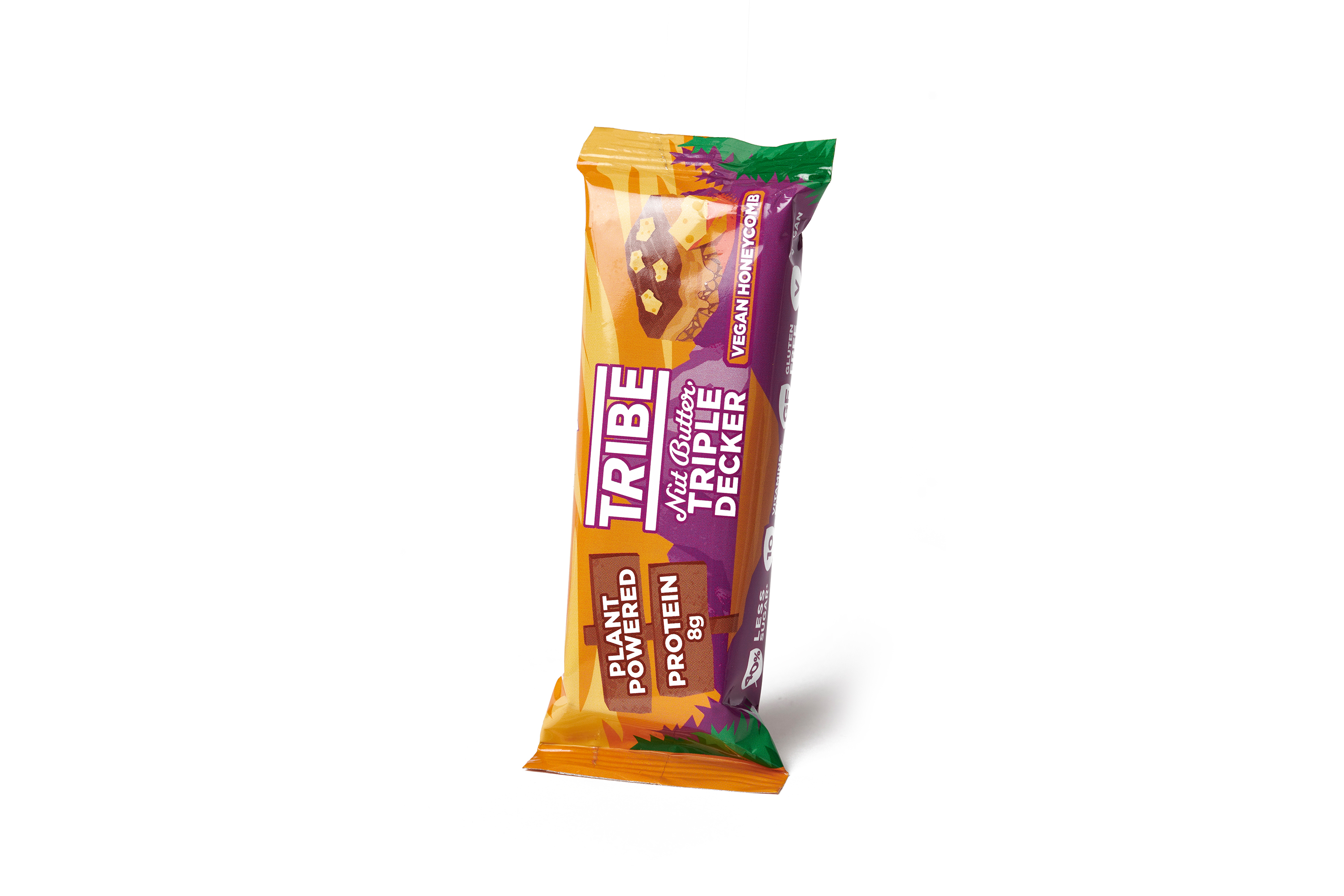
1.Tribe Nut Butter Triple Decker
220 Triathlon Verdict
Cracking bar for snacking and to stimulate recovery. Score: 87%
Pros
- Vegan protein source
- Nice texture and flavour
- Good snack
Cons
- High in fat
| Price | £22 for 12 (US pricing N/A) |
| Protein per bar | 8g |
| Calories | 184 |
| Carbs | 9.6g |
| Fat | 12g |
| Vegan | Yes |
This morsel couldn’t be in greater contrast than the last Tribe bar I consumed, the Infinity Banofee; its dry, grainy texture proved hard to masticate and reprised memories of bars of old.
Thankfully, this nut-butter bonanza’s the opposite end of the chow-down spectrum, its texture and taste top-notch.
It’s billed as the UK’s best-selling plant-protein bar and we can see why, the crunchy honeycomb base covered in a thick peanut-butter filling and finished off with a vegan-chocolate topping.
Surprisingly, it comes in at just 184kcals with 8g from pea protein. As it features just 9.6g carbs, plus 12g fat, this is definitely more snack/recovery bar than energy bar. Good for vegans and coeliacs, too.
Review by Rob Slade
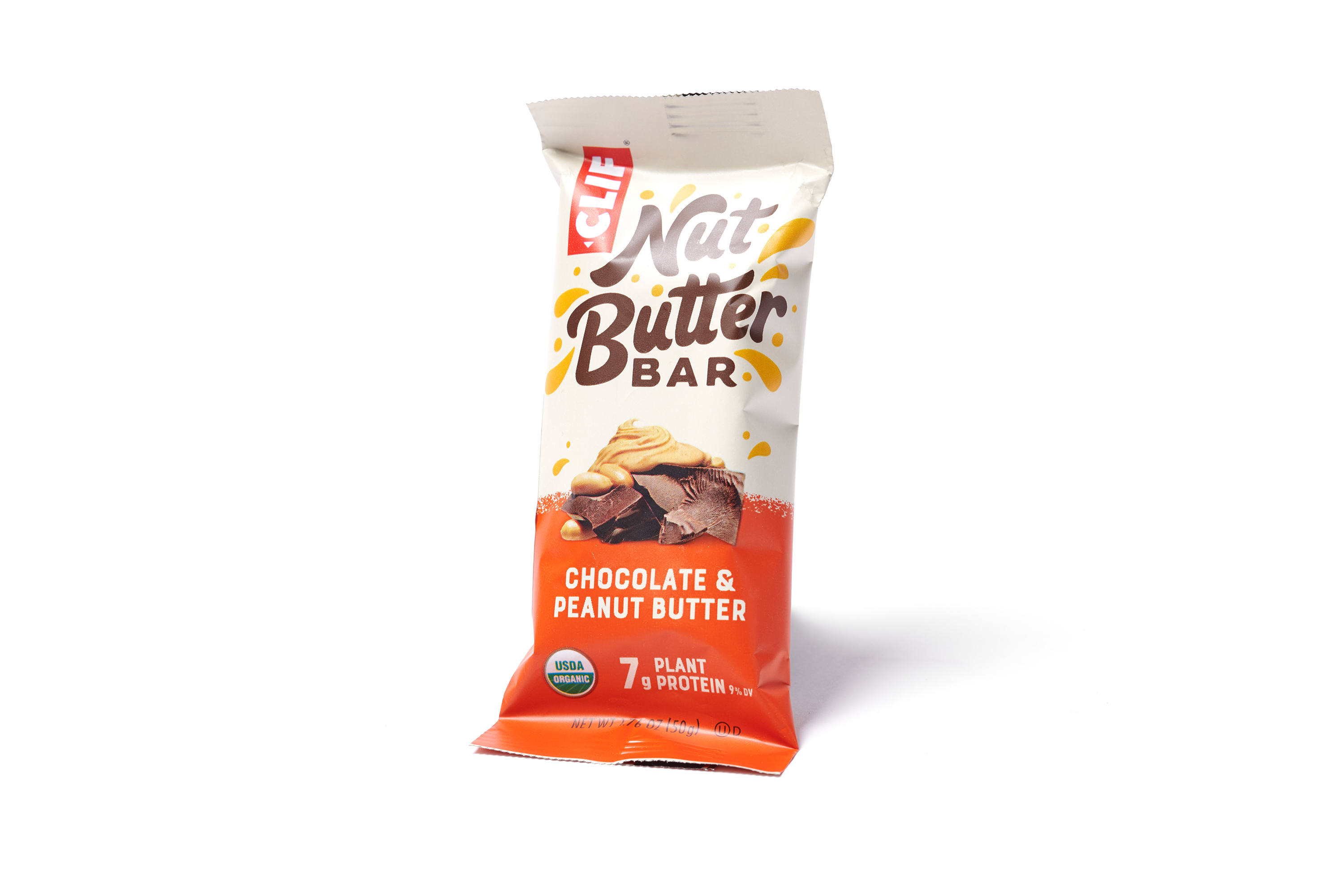
2. Clif Nut Butter Bar
220 Triathlon Verdict
More suited for snacking than on-bike fuelling. Score: 79%
Pros
- Very tasty
- Ideal post-exercise macros
- Organic and vegan
Cons
- High in fat
| Price | $21.42 / £25 for 12 |
| Protein per bar | 7g |
| Calories | 227 |
| Carbs | 23g |
| Fat | 11g |
| Vegan | Yes |
We’ve been fans of Clif for years after they were one of the first sports-nutrition brands to create bars that were actually palatable, moist and easily digested.
That Holy Trinity of contentment continues with this organic offering, though its 7g protein content suggests it’s more at home post-exercise than during.
That muscle-repairing sprinkling comes in the form of pea protein. Total calorie count comes in at 22, of which 23g is from carbs and 11g from fat.
Again, it smacks of snacking over on-the-fly fuelling. And snack you might as this is a terrifically tasty package, the chocolate-and-peanut-butter blend proving more delightful than imagined.
Review by Rob Slade
Best protein bar for natural ingredients
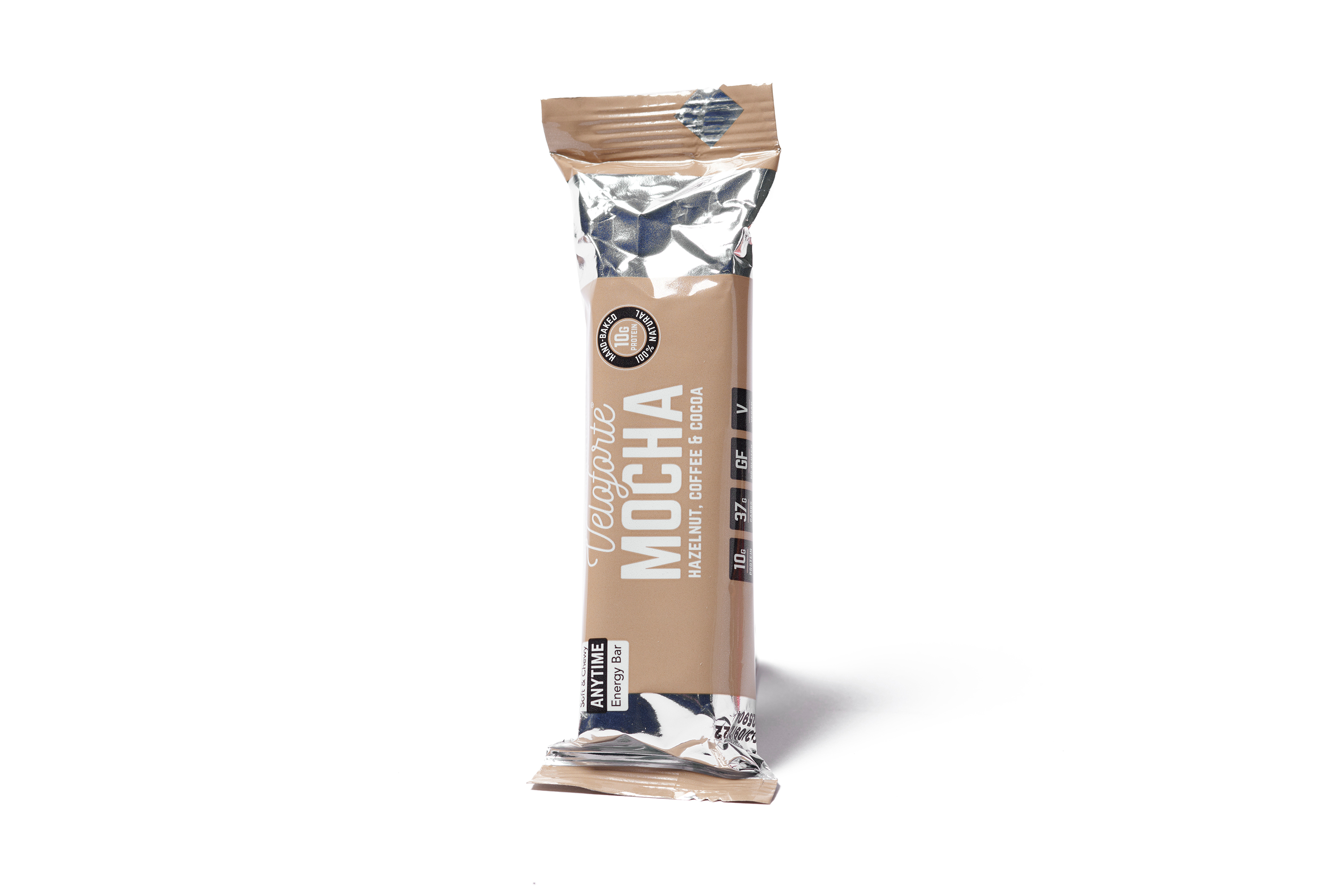
3. Veloforte Mocha
220 Triathlon Verdict
Expensive but you get what you pay for. Score: 82%
Pros
- Natural ingredients
- Brilliant taste
- Suitable recovery macros
Cons
- Pricey
- Lots of fat
- Calorie-dense
| Price | £39 for 12 |
| Protein per bar | 10g |
| Calories | 310 |
| Carbs | 37g |
| Fat | 14g |
| Vegan | Yes |
Veloforte’s mission highlights just how much influence the laboratories have had on our sports nutrition over the years, and is why Veloforte make great noise about using ‘natural food’.
It sounds obvious, but as we know with mass food production, it can often be anything but. To that end, the key ingredient of this 70g bar is hazelnuts – and not just a powdered facsimile, but real nibbed hazelnuts.
They’re blended with dates, brown rice syrup, cocoa and pea protein for a total 310kcals broken down as 37g carbs, 14g fat and 10g protein.
This 4:1 carb:protein ratio has been shown to maximise the muscle-recovery process and is why this is billed as a protein bar.
Taste is good and, despite being dense, it’s easily chowed down. Just don’t expect a caffeine rush as the coffee flavour comes from the decaffeinated variety.
Review by Rob Slade
Highly rated protein bar
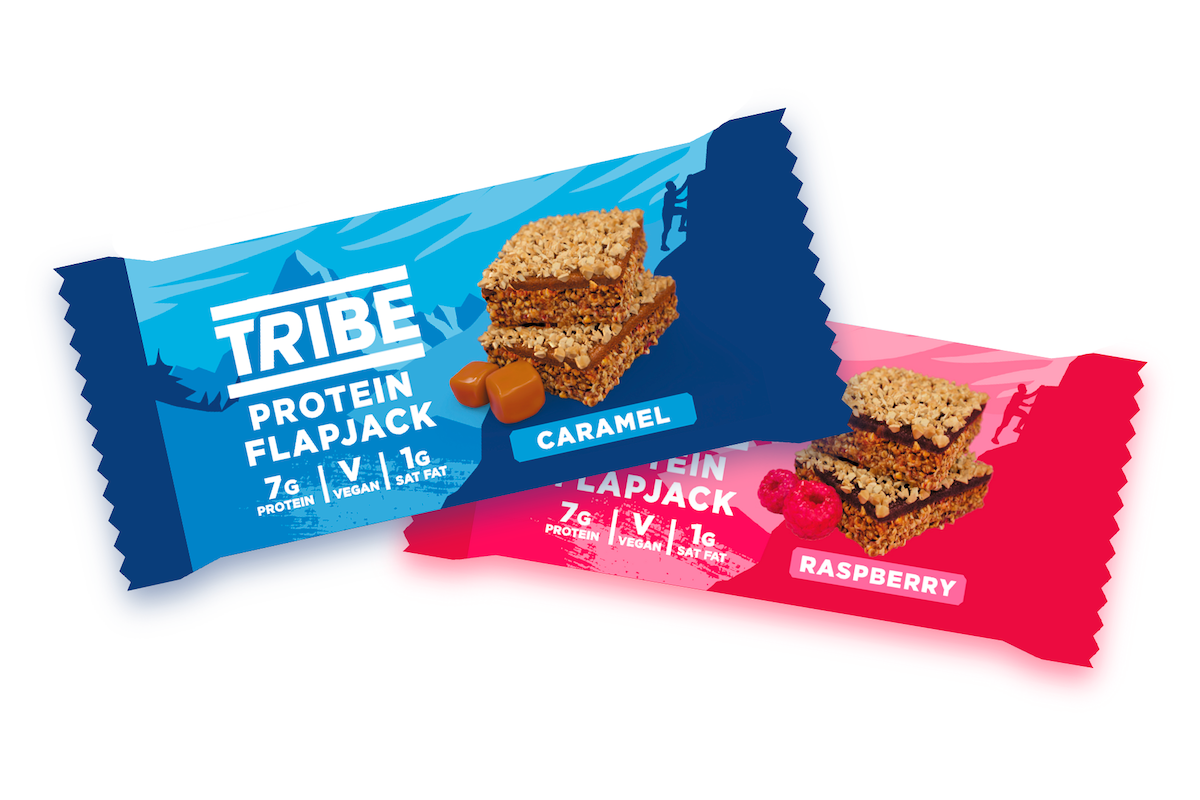
4. Tribe Protein Flapjack
220 Triathlon Verdict
Delicious taste and texture – a great option for post-training recovery. Score: 85%
Pros
- Lovely taste
- Vegan and gluten
- Near 3:1 carb to protein ratio
Cons
- Not much protein
| Price | £24.99 for 12 |
| Protein per bar | 7g |
| Calories | 198 |
| Carbs | 19g |
| Fat | 8.9g |
| Vegan | Yes |
Tribe’s flapjack is made from natural ingredients and is both vegan and gluten-free. With 198kcals, 7g of plant protein and 19g carbs, the bar is best suited to recovery.
Other bars deliver a bigger protein hit, but there aren’t many that taste as good.
Review by Rob Slade
Best protein bar for protein content
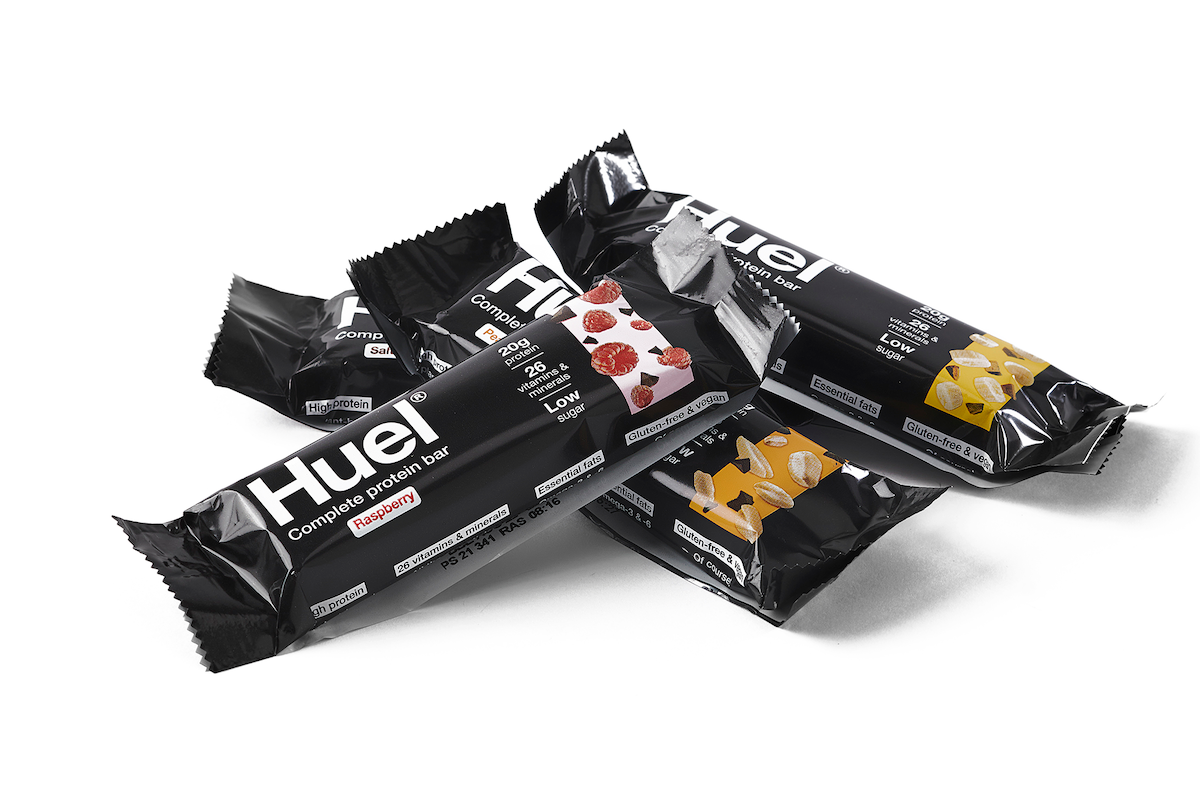
5. Huel Complete Protein Bar
220 Triathlon Verdict
Nutritionally top of its game, but work needed to make it palatable. Score: 75%
Pros
- Excellent nutrition
- Low sugar
Cons
- Unappetising
| Price | £50 for 24 |
| Protein per bar | 20g |
| Calories | 200 |
| Carbs | 19g |
| Fat | 8.9g |
| Vegan | Yes |
Billed as a low-sugar vegan snack with 20g of protein for only 200kcals per bar, you’ll think you’ve reached healthy snack heaven with these bars.
They boast 26 vitamins and minerals, and work well as recovery fuel. That’s if you can stomach the strong pea protein tang and earthy aftertaste, evident across all four of the flavours.
Review by Rob Slade
Also consider…
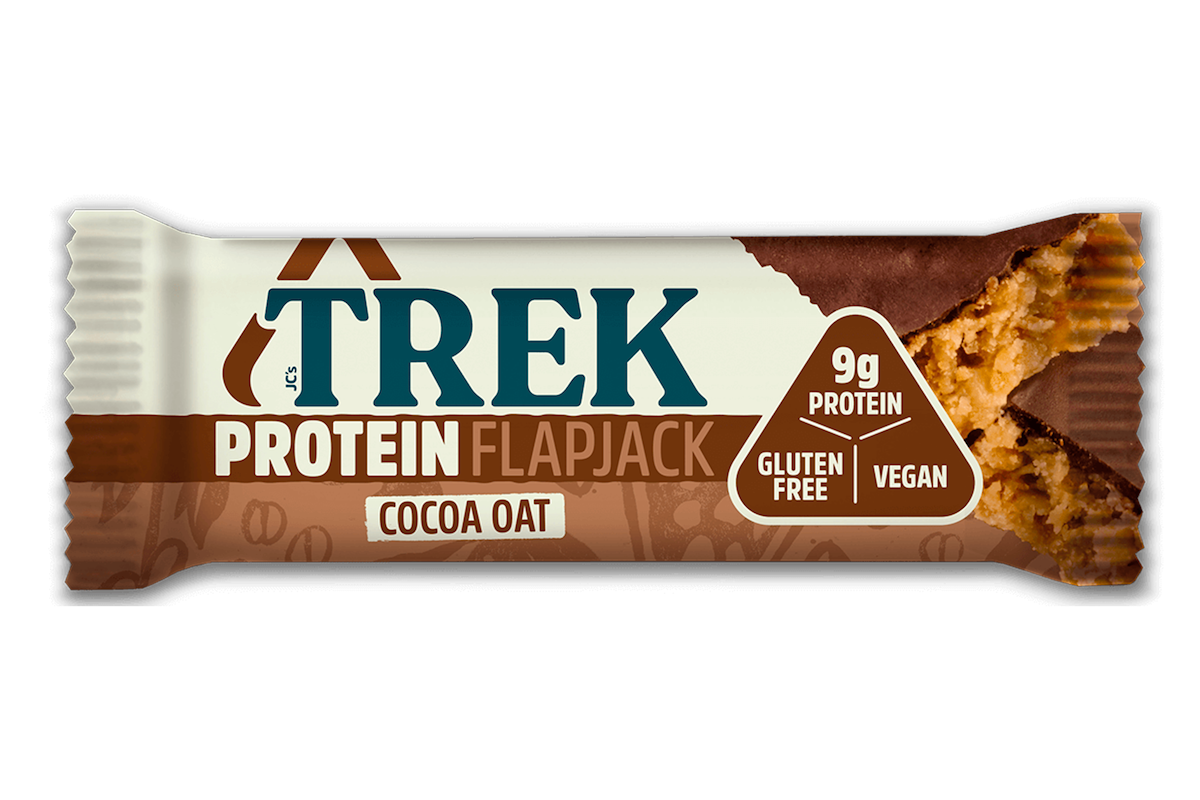
6. Trek Protein Flapjack
| Price | £18.99 for 16 |
| Protein per bar | 9g |
| Calories | 227 |
| Carbs | 21.9g |
| Fat | 11g |
| Vegan | Yes |
Being both gluten-free and vegan, the Trek Protein Bar should cater for most diets.
Each 50g bar is made up of no more than 10 main ingredients, which include gluten-free oats, rice syrup, soya protein crunchies, soya flour, raw cane sugar, salt, dark chocolate flavour coating and vegetable oils, including palm, though Trek says it’s ‘sustainably sourced’.
Every bar delivers 227kcals, which is broken down as 21.9g carbs, 11g fat and 9.2g protein.
Flavours include Cocoa Oat, Salted Caramel, Smooth lemon, White Choc & Raspberry and Peanut Butter.
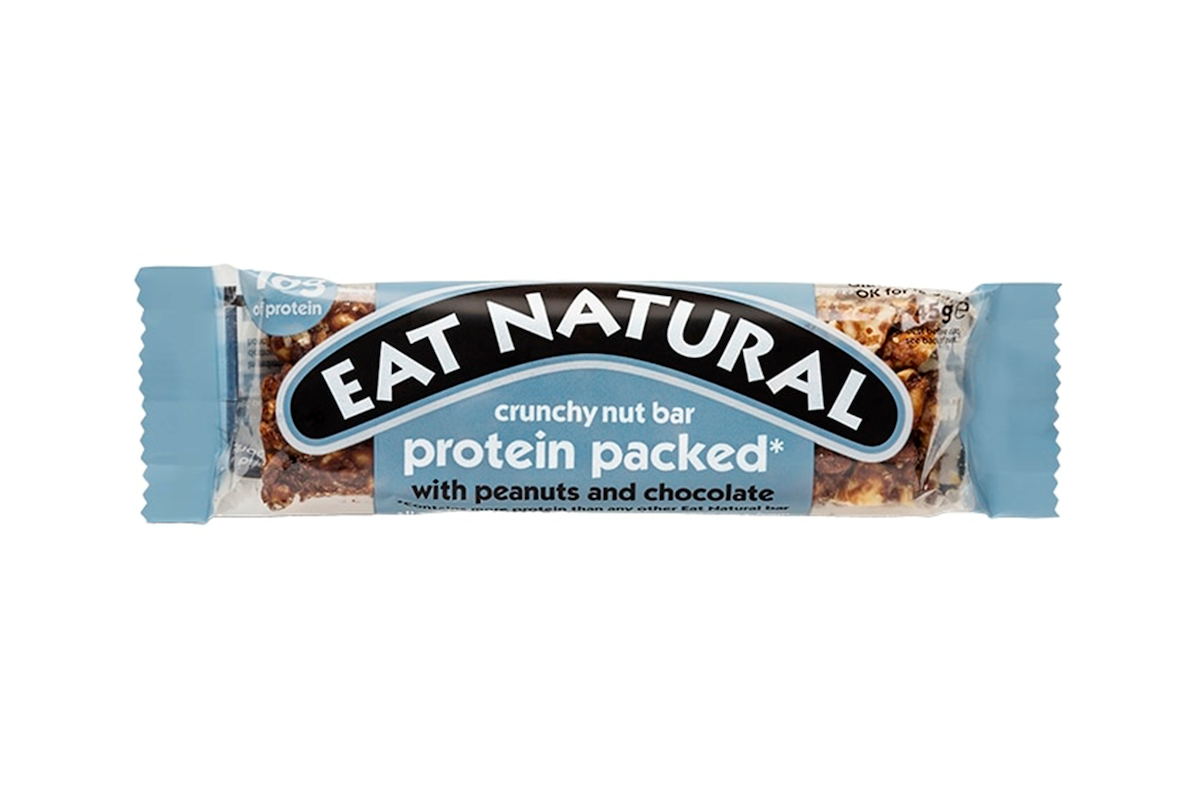
7. Eat Natural Crunchy Nut Bar
| Price | $16.45 for 12 / £12.60 for 12 |
| Protein per bar | 10.2g |
| Calories | 229 |
| Carbs | 14.6g |
| Fat | 13.7g |
| Vegan | Yes |
This peanut and chocolate flavour protein bar from Eat Natural leans heavily on peanuts (45%) for its construction, but also features glucose syrup, dark chocolate, soya, shredded coconut, honey and crisped rice on its ingredients list.
It’s gluten-free and each 45g bar delivers 229kcals from 14.6g carbs, 13.7g fat and 10.2g protein.
Alternative flavours include chocolate and orange, and salted caramel and peanuts.

8. MyProtein Protein Flapjack
| Price | £19.99 for 12 |
| Protein per bar | 11g |
| Calories | 342 |
| Carbs | 37g |
| Fat | 11g |
| Vegan | No, vegetarian |
Hailing from protein giants MyProtein, this flapjack delivers a hit of 20g of the muscle-building nutrient.
The ingredients list includes oats (26%), golden syrup, a protein blend (24%), plus chicory root fibre, salted butter, emulsifier, margarine, whey protein concentrate and vegetable oils, including palm oil.
It’s suitable for vegetarians, but not vegans, and delivers 342kcals, 11g fat and 37g carbs.
A chocolate or original flavour are currently available.
Are protein bars good for me?
Sadly, it’s the standard boring nutrition answer – moderation! There’s nothing wrong with including protein bars in your food intake. They have been designed to supplement a healthy balanced diet and not to replace food.
They’re an excellent way to top up on your protein intake if you’re tight on time or on the move.
Protein bars are a great way to find many different sources of protein (whey, pea, hemp, rice, egg, pea, soy etc). All of which are associated with muscle growth and repair, and ideal for those who have food allergies or preference as there are so many options on the market.
However, we mustn’t not ignore the fact that they do fall under the category of ultra-processed foods (UPFs).
They lack micronutrients and tend to be packed full of sweeteners, emulsifiers, preservation and colourings.
The relationship between diets high in UPF and poor mental and physical health have been studied for many years.
Protein bars should be used as a convenience food supplement and not as your main source of protein in your diet.
Just consider the frequency you consume them, and the quality and processing of the product you choose.
When is ideal to consume protein?
It’s important that you consume protein regularly throughout the day to ensure you reach your recommended daily intake.
The only time to reduce protein intake is before and during training as it’s slow to digest and therefore can cause gastric upset.
Thirty minutes after training is the key window to consume protein. Exercise creates microscopic tears in our muscles and these tears are repaired by our body using proteins from our diet to rebuild muscle fibers.
It’s important to not only repair the damage, but also create more fibers (muscle growth) or adapted fibers (speed/endurance) so you can improve your sporting performance by making physiological adaptations.
Muscle protein synthesis (MPS) is raised post training, meaning the rate at which we can turn consumed proteins into proteins desired by the body (e.g. muscle fibers, hormones, skin etc) is increased. That’s why this the ideal time to consume protein.
Research suggests a ratio of 3:1 or 2:1 carbohydrate to protein is optimal post workout.
This can be done in the form of eating a snack, meal or shake. If you like having numbers to go by 1-1.2g carbohydrate per kg body weight and 0.25g protein per kg body weight are the recommended sport nutrition guidelines for consuming post workout.
Now you’ve covered your protein requirements, learn how to carb load for a big event.


 Rob Slade
With contributions from