Essential off-season bike and run sessions for triathlon
Ready to make this your best winter yet? Well these bike and run sessions from Ben Bright and Non Stanford will help get your body ready for you best race season yet…


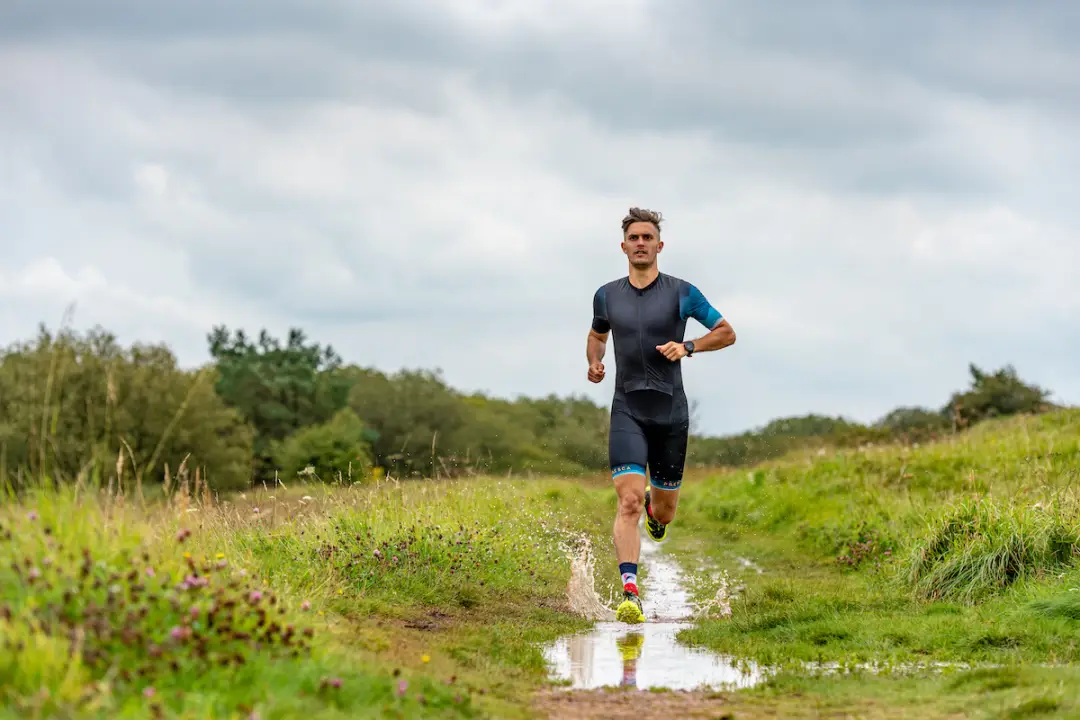
Without a doubt the winter, or off-season, is the most important period of training for endurance athletes. It’s when the building blocks of peak performance are laid by steady miles on the trails, on your turbo trainer and in the pool.
Show me your training diary in March or April and I will be able to tell you what sort of season you have in front of you.
Consistent training with plenty of variability will give you a great base for racing as well as keep you interested and motivated when the weather isn’t particularly inviting.
For off-season training aim to keep things simple and realistic with a good weekly routine that works with your lifestyle. From that basis you can then add variety to ensure you’re staying physically and mentally stimulated.
The bike and run sessions outlined here will give you plenty of options to layer different stimulus alongside or on top of your winter base training routine. They can be done as standalone sessions or incorporated into longer sessions.
The majority of the sessions can be done either indoors or outdoors but if there is something that’s location or equipment-specific (like a race on Zwift) it will be made clear where and how to do it.
Intensities are based on your functional threshold power (FTP), or percentage of threshold heart rate for the bike and rate or perceived exertion for the run.
So, what are you waiting for? Get out there and make the most of this critical time for training!
Essential off-season bike sessions for triathlon

Former British Triathlon head coach and Olympian Ben Bright shares his top bike sessions for the off-season…
1. Max it out

Within a 60min ride, incorporate 6 x 1min maximum effort sprints, one every 10mins.
This combination ofintensity and length of effort is a powerful combination that will develop your VO2 max and muscle recruitment among other things.
If you have a power meter, make sure you capture the data on each effort so you can compare efforts.
2. Tail end
At the end of a longer ride, finish off with 15-20mins of hard riding, between 85-95% of your Functional Threshold Power (FTP) or threshold heart rate.
This is a great way to develop your fatigue resistance and muscular endurance.
If you’re riding in a group or with one or two others you can do this as a chaingang effort to make it more interesting.
3. FTP test

You may think doing a maximal test at this time of year is counter-intuitive, but the data you’ll get will help you establish your training zones as well as track your progress when you repeat the test again in a month or two.
I’d recommend doing this indoors on a turbo trainer with a power meter and a heart rate monitor to gather data.
4. Cadence variation
Try doing a pyramid where you start at a low cadence, around 75rpm, and every minute add another 5rpm until you get to a cadence you can’t sustain, then come back down the same way to your start point. You can repeat this 2-3 times.
This will develop your pedalling efficiency and is best done indoors on a trainer at around 75-80% of your FTP. 5 x 5mins with 90secs recovery.
5. Gravel

It’s all the rage these days but in reality people have been doing it for years, it was just called riding off-road. Stick some fat tyres on your road bike and go exploring. It’s a great way to get some long, easy miles in the bank without even realising it and it’ll also develop your technical skills.
6. Three-minute efforts
After a 10-15min warm-up perform 4-6 x 3min maximal efforts, taking 3-5mins easy spinning recovery between each.
This session builds on the 6 x 1min session and begins to bridge between your VO2 system and the top end of your aerobic threshold.
It develops your maximal capacities for oxygen carrying and blood lactate clearance.
7. Sign sprints

When out on a longer ride with others, pick three to five village signs to sprint towards. Ensure that roads are clear, safe and with good lines of sight.
This is a classic road-rider workout and develops your ability to generate force and power quickly when you’re fatigued.
It’s also lots of fun and makes long rides more enjoyable.
8. Strava intervals

On a route you know, pick out a selection of Strava segments that are different lengths and use them as your intervals.
Choose four to six segments between 30secs and 5mins in length and do each as fast as you can. Use the time between segments as recovery.
This is a great way to make your intervals fun and competitive.
9. Over unders
Using either your FTP or your threshold heart rate, perform 3 x 12min efforts where the first, fifth and ninth minutes are all at 105-110%, and the 3mins in between are at 90%.
This is a good session to do when you’ve been back training for 8-12 weeks, have a good base level of fitness and are looking to push your thresholds higher.
11. Sportive or gran fondo

An early-season sportive or Gran Fondo is a great way to stay motivated through the winter.
Having an event to prepare for can give you that extra push out the door and is a great way to do a long ride in a semi-competitive environment.
A run afterwards makes it even more specific if you’re preparing for a long-distance event.
12. Triple aero

On a section of road where you can be consistent with your speed, do three, ten-minute efforts at around race intensity.
While doing these intervals, play around with your position on the bike and try to find the balance between power output vs aerodynamics.
Ultimately, what you’re looking for is speed, so a slight drop in power is fine if it means you’re going faster.
Essential off-season run sessions for triathlon

Former world champion-turned-coach Non Stanford shares her go-to run sessions for the winter…
1. SLR

Welcome to the Church of the Sunday Long Run. A staple of any runner’s week: just basic mileage at a conversational pace.
Run with friends, a podcast, or your dog – whatever works, but just remember this one’s not about running fast.
Build up the mileage gradually. Eventually you should be running for at least an hour to become a true member of the cult.
2. Build run
A great way to build fitness over the winter so you’re race-ready by the summer.
Start by breaking the main body of a build run into three sections based on perceived effort.
- Section 1: 5/10
- Section 2: 6/10.
- Section 3: 7/10.
Roughly each section should be 10secs/km quicker than the previous, but you should always finish a build run feeling like you could do more.
Start with a 15min build, with 5mins spent at each effort level. Increase this week on week by 1-5mins per section.
The ultimate build run is 60mins… if you’re brave enough.
3. Tempo

The term ‘tempo‘ means different things to different people, but in this instance it’s that sweet spot of a pace you feel like you could hold ‘forever’, with forever being 45-60mins.
It’s about 6/10 on the effort level scale. Start with 20mins and build by 5-10mins each week.
To help pace it, turn around halfway through and try to get back to your start point. Knowing you have to make it back will hopefully stop you from going off too hard.
4. Hill strides

The winter months are all about building strength so that you’re ready for the rigours of racing – cue hills!
You’ll need a decent gradient hill, although not one that requires walking poles to summit.
Rep length can be anything from 15-60secs, jogging back down to recover.
Strides should be fast but controlled; concentrate on running with good form.
Try three sets of 60secs, 45secs, 30secs, 15secs. This can be done indoors by adjusting the gradient on the treadmill.
5. Kenyan Hills
Kenyans are famed for training on rolling dirt roads and it’s fabled for making them efficient and strong.
The main difference between ‘Kenyan hills’ and a normal hill session is that the downhill is not a recovery; you’re instead looking to maintain the same effort, similar to that of a tempo run.
Find a hilly loop, or a long steady climb and aim for 20-30mins of continuous running.
You can break this down into more manageable chunks if needed, for example: 5 x 5mins with 90secs recovery.
6. Cross country

There’s nothing that hits quite like a good old slog in the mud.
If you’re looking for a fun way to break up training, or to get those competitive juices flowing during the off-season, then find your local cross country league and embrace some tough grassy miles.
Just don’t forget the spikes!
7. Cross intervals
If racing isn’t for you then you can still enjoy the variety of cross and all its benefits by finding yourself an undulating, grassy park and ticking off an interval session.
A great mid-winter hit out is 10mins, 8mins, 6mins, 4mins, 2mins with 90secs recovery.
8. Steady miles

Don’t underestimate the power of ticking off some steady miles.
Not every run can be a session, and there’s beauty in the simplicity of pulling your shoes on and stepping outside (or in, if the treadmill is your friend) before work, after work or in that small window of time called lunch.
Steady miles should be comfortable, below tempo but above recovery. It will be the pace you naturally run without thinking.
9. Recovery run
A recovery run is just as important as the big sessions. It allows your body time to adapt to all the hard work.
This is a 20-30min slow jog.
It can sometimes be hard to let yourself run easy, but a friendly reminder – it’s good for you and might make you faster in the long run.
10. Paarluuf

This literally means ‘pair run’, so grab a running buddy and get to work. This is a fun way to get an interval session done and is effectively a relay.
First you need to decide on a loop – 1-2mins is a good length.
While one of you completes the loop, the other waits and recovers. If your loop is a bit longer the resting partner can jog slowly in the opposite direction to meet their buddy, so that no one is stood around waiting for too long.
11. Fartlek
Swedish for ‘speed play’, Fartlek is a variation of interval training that allows speed and endurance to be combined in one session.
It’s a continuous run with periods of faster running (7/10 effort) mixed with periods of moderate running (4/10 effort).
Try this:
90 secs ‘on’, 90 secs ‘off’ x 2
60 secs ‘on’, 60 secs ‘off’ x 4
30 secs ‘on’, 60 secs ‘off’ x 4
15 secs ‘on’, 15 secs ‘off’ x 4
For some off-season swimming tips, use one of our free off-season swim training plans.


 Ben Bright
Triathlon coach
Ben Bright
Triathlon coach With contributions from