Suffering from cycling niggles? Three physios explain how to prevent hip, knee and back pain
As we get older wear and tear can start to add aches and pains to big ride days. Read an extract from new book Full Gas Forever to learn how to tackle four of the most common culprits

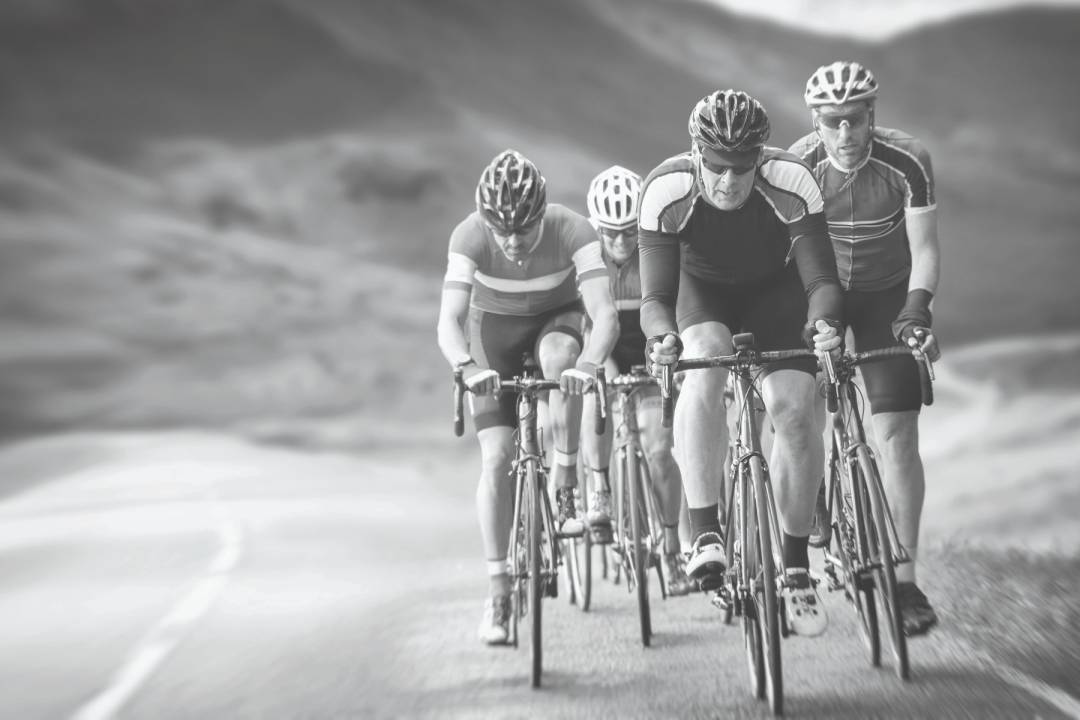
As we age, the question of how to prevent pain from cycling becomes more pressing. Picture the scene: two hours into the club ride and, it’s not painful enough to stop the ride. But it is distracting you from the views, the sunshine and the chat.
Yes, most of us will have our fair share of niggles. Treating a potential injury early on can keep you off the sofa and on the road, where you belong.
We’re talking about those annoying wear-and-tear issues caused by the repetitive nature of cycling, not broken bones.
First off, it’s tempting to ignore these sorts of niggles and hope they’ll go away. But the mantra from the experts is to get it seen as soon as the solution is probably quick and simple.
“Often niggles can be fixed with a tweak to your bike fit or a new saddle, and you can return to training as long and hard as your training plan dictates,” says Phil Cavell, cycling biomechanics expert/bike fitter extraordinaire.
“If a problem is tackled early on during its acute phase, removal of the underlying cause is enough to instantly deal with the pain, and the problem goes away. If a rider ignores the issue it’s likely to become chronic and the affected tissues and structures are now damaged,” Cavell says.
The good news? We have sought out three such specialist physio superstars and quizzed them about the most common areas we complain to them about…
1. Hip pain

“Hip problems can manifest in a few ways,” says Bianca Broadbent, the first of our gurus.
“One manifestation might be a loss of range of motion. This might not be obvious initially, but you may notice that you can’t bring your hip through the full range on the pedal stroke; you’re sitting asymmetrically (leaning more to one side) or are pedalling with your knees out.”
According to Broadbent you may also develop pain in the hip itself, or the knee. The latter is known as ‘referred pain’.
The causes of this pain could stem from a number of things, including osteoarthritis of the hip, issues with the labrum (the specialised cartilage that surrounds the hip socket) such as a tear, or an ‘FAI’ or femoroacetabular impingement of the hip. This is where the ball and socket meet awkwardly, causing a bony ‘impingement’.
Or it might be due to a combination of the above.
How to prevent hip pain from cycling
- Get another bike fit. Broadbent explains that the bike position you were in 5–10 years ago may not be optimal now.
- Troubleshoot to improve your bike fit by making tweaks in small, reversible increments just to see if they work for you.
- Try switching to shorter cranks, raising the cockpit and checking the saddle height.
- Take up strength training.
2. Lower back pain

Not many riders get away without the odd niggle here.
But Broadbent warns against automatically assuming an association between the flexed riding posture and pain.
She also notes the difference between treating lower back pain that exists in everyday life, but is aggravated by cycling, and lower back pain that is purely cycling driven, as the two are very different.
Get your bike position checked by a professional fitter.
Also, consider the amount of time you spend in this position and the kind of riding you are planning; one position might be perfectly suited to short, hard crits, but become a lower back nightmare on a multi-day stage race.
Finally, lower back ache could be traced to a lack of muscular endurance, particularly in the core and hips, which means the back becomes overloaded when the legs tire.
Lower back problems also often occur in new riders who have yet to develop sufficient leg strength or who overtrain and under-recover.
How to prevent lower back pain from cycling
- Counteract acute episodes of lower back pain with active recovery. This might be gentle movement such as walking, Pilates or yoga. Consider your flexibility and then see if your bike position matches that level.
- Change your bike position depending on the type of riding you plan to do.
- Check your saddle isn’t positioned too high or too far back. Also check it isn’t too narrow and is supportive enough.
- Ensure your cockpit is not too high, low, close or far away.
- Check your cranks are not too long.
3. Neck tension

Localised tension around the neck and shoulders during riding may arise from overloaded muscles, which leads to muscular tension, but could also indicate underlying issues at the neck joints or discs.
1. Muscular tension is the most common reason for developing aching around the upper shoulder and neck area. The muscles here work hard in a fixed position, often for a long duration, which leads to tissue overload.
2. Neck joints. While cycling, we hold our heads in an extended position (torso forwards and head up). This essentially requires the joints to close down to the end of their range, which can become painful or limited (or both) if there are joint-related changes such as osteoarthritis.
3. Neck discs. As we age, our intervertebral discs will tend to be more dehydrated and, as a result, become narrower. This reduces the spaces for the nerves to exit from the spine. The discs also become less flexible, so we may suffer with a ‘strain’ to the disc, or a disc bulge.
How to prevent neck pain from cycling
- Maximise flexibility through all the neck joints and surrounding muscles by moving your neck through its full range of motion. Try yoga but never push into pain.
- Work on upper back mobility, too – it’s crucial. The better your mid- and upper back move, the less your neck has to compensate to hold a good position while riding.
- Consider neck strengthening exercises.
- Have a regular massage to loosen tension, improve circulation and ease pain.
- Avoid setting up your bike with excessive reach or drop to the front of the bike. Reducing the reach and raising the front end can make a big difference.
- Handlebars that are too wide for your shoulders can often increase shoulder/neck tension.
- Ensure you are not leaning heavily on the handlebars, as you will more likely lock out your arms, which leads to tension around the neck caused by vibration from the road.
4. Lateral knee pain

Lateral knee pain often occurs when the iliotibial band (ITB) tendon is irritated by compression and/or rubbing during cycling, says Dr Graham Theobald, a physio with a doctorate in cycling-related knee pain.
Initially you might feel pain on every pedal stroke. If it becomes hot, inflamed or swollen, see a clinician as soon as possible.
Theobald warns that with lateral knee pain the cause might actually be further up the chain of muscles, such as tight and weak glutes and abductors (outer thigh muscles).
How to prevent knee pain from cycling
- Strengthen the gluteus maximus and gluteus medius (side of the hip) and the abductors (side of the thigh) as well as the tensor fasciae latae muscle on the outer hip.
- Check your saddle isn’t too high, causing ITB compression. Check your saddle isn’t too far forward or back, resulting in excessive knee loading.
- Check whether you have a leg length discrepancy, which causes an imbalance and reduces the power you drive through the knee on indoor trainers.
- If you’re experiencing soreness under the kneecap or just below it could be patellar tendonitis (inflammation or the tendon) if the pain increases during the ride.
- Anterior knee pain also worsens with higher loads – for example, pushing through a higher gear – and is often relieved by standing in the saddle when climbing, as this shifts some of the work away from the quads and to muscles like the glutes
Full Gas Forever
Full Gas Forever by Ed Clancy OBE and Lexie Williams is a practical and easy-to-follow guide for midlife cyclists looking to defy the years and ride faster and further. Out now, £20.00. bloomsbury.com
Now check how to ward away the most common running injuries.


 Lexie Williamson
Yoga instructor and author
Lexie Williamson
Yoga instructor and author