Follow these easy home strength training exercises for maximum gains with minimum effort
Not enough time to squeeze in strength training? Think again. James Witts shares how to build muscle at home – no equipment or gym membership required

Most triathletes would never miss a swim, bike, or run session, but strength training is often sporadic at best. The good news is that it doesn’t need to be complicated to be effective. Here’s how to get the gains without the grind.
Not enough time to squeeze in strength training? Maybe think again. One study saw 10 of 19 female duathletes add twice-weekly strength sessions to their multisport programme. These comprised just four lower-body exercises each time broken down as three sets of four to 10 repetitions. Eleven weeks later, they’d seen their cycling performance grow by 7% and run performance by 4.7% over the non-strength group. They also enjoyed reduced oxygen consumption and reduced heart rate for greater gains.
Strength work also needn’t absorb vast swathes of time – little and often works here. But if you’re an older athlete and really can’t find a little extra, it’s best to swap the occasional tri session for a gym workout as it’s been shown to be of even greater benefit to prevent the age-related decline of muscle mass.
It’s also the perfect time to map out your season: “This is the time of year to plan new goals,” says coaching outfit Goal Specific’s Fran Bungay. “It’s also a good time to focus on building specific strength and working on muscular imbalances. This’ll ensure you head into the 2026 race season strong, fast, and with a reduced chance of injury.”
Though not essential, to fully maximise the benefits of strength work, says the Dorset-based coach, undergo an assessment with a professional, who’ll analyse your biomechanics and pinpoint any areas of muscular weakness or poor mobility. “Ideally you’ll then incorporate two sessions in the week, with one session focused on pure strength, so fewer repetitions and bigger weights. The second session’s more focused on ensuring balance between the right and left sides.”
Right, onto making you a stronger, more durable and faster athlete…
10 tips to optimise your strength training and conditioning
From squatting to sleeping via a spot of windscreen wiping, these 10 tips will ensure you start the 2026 race season as a stronger, more efficient athlete.

1. Focus on your hamstrings
“Research has shown that highly trained runners have a quad-to-hamstring strength ratio close to 1:1,” says head coach at MyProCoach, Phil Mosley. “In other words, their hamstrings are almost as strong as their quads. Recreational runners’ hamstrings, on the other hand, are 30 to 40% weaker than their quads.
“Further research also suggests that a 1:1 hamstring-to-quad ratio reduces the likelihood of hamstring strains and knee injuries. So, if your hamstrings need strengthening, try hamstring curls with a Swiss ball or reverse lunges. Leg-curl machines at the gym help, too.”
2. Ensure quality sleep
Human growth hormone is released during the deeper stages of sleep – stages three and four out of five, to be precise – and is highly restorative, ensuring your muscles repair and rebuild to optimum levels. That’s why insufficient sleep leaches gains from your strength session.
To ensure a good night’s kip, cut back coffee intake to a maximum two cups per day and ideally none after lunch; don’t eat late as digestion slows down during sleep, meaning you’ll just feel bloated; and steer away from late-night intense exercise as stress hormones rise during training, preventing you from drifting off. (Granted, this last one is tricky.)
3. Do your squats
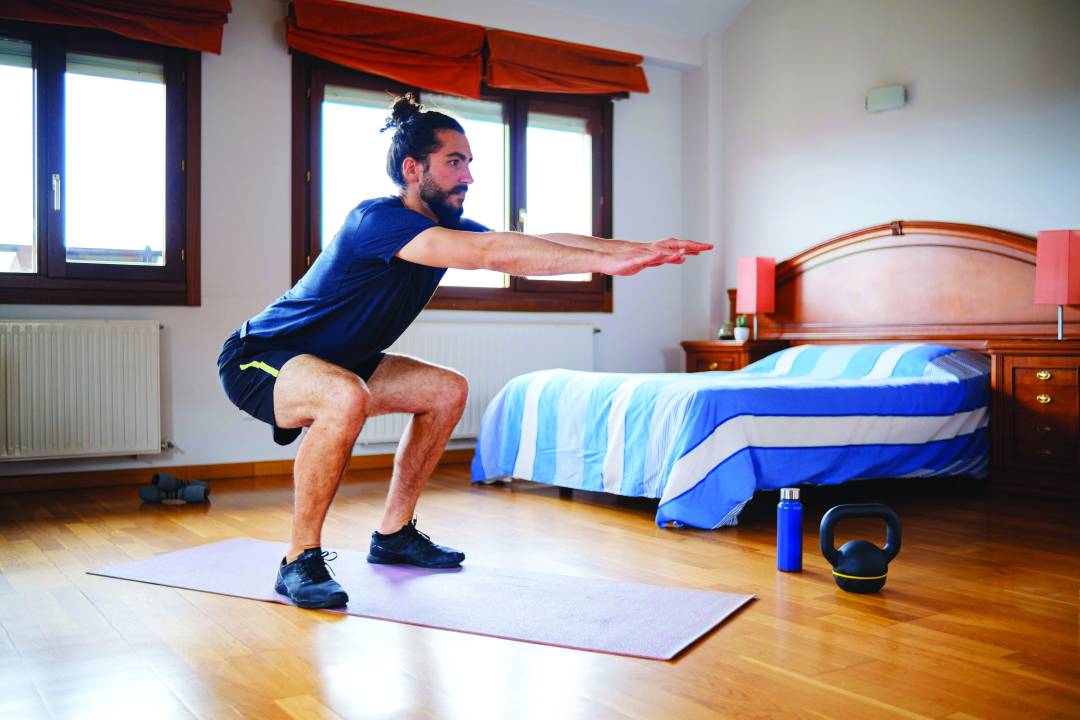
“Squats are fantastic strength-based exercises,” says TrainSharp coach Elliot Lipski. “Beyond the raising of power, it improves core-muscle strength plus strengthens supporting muscles around the knee. Step-ups onto a box, possibly incorporating a leg drive at the top, are another proven way to crank up explosive power.”
4. Wipe that windscreen
One of the most beneficial exercises to strengthen your core, which is linked with injury reduction and improved economy, is the windscreen wiper. This where you lay on your back with your feet in the air, keeping your legs straight and together. Next, take them over to the right side of your body and then to the middle and then to the left. Really slow this exercise down to work those glutes and core.
5. Train smart
“Cramming in swimming, cycling and running, plus a career and family life, doesn’t leave you with much spare time for anything. So instead of aiming to ‘strength and condition’ twice each week, you might be better doing a tiny bit each day,” advises Mosley.
“For instance, try some glute-bridges before you run to pre-activate your glutes. Or, if you’re working from home, set an alarm every 45mins for one quick exercise, such as push-ups or reverse lunges. A Swiss ball and a cheap set of resistance bands are all you need. Who knows, it may even boost your creativity and focus at work.”
6. Keep it simple
“Using S&C specifically for a certain sport is pivotal, but this is often confused with trying to use exercises to mimic exactly swim, bike and run,” explains Dave Cripps of triathlon S&C specialists Tri Tenacious. “The issue here is that these movements can become either too complex or too unstable, which compromises strength development. Stick to tried-and-tested compound exercises, like a press-up, for maximum benefits.”

7. Double up
“Remember, you can incorporate upper- and lower-body movement into the same exercise when short of time,” says Bungay. “Examples are goblet squat into press where you squat holding a kettlebell or dumbbell before raising it above your head when fully standing; forward lunge with lateral raise, holding weights; single-leg deadlift with row; and press-ups, pre- and post-front plank.”
8. Hop to it
“Single-leg exercises are perfect for triathletes,” says coach Alice Clare. “They improve balance and stability around the leg and hip area to prevent injury and boost performance. They also correct muscular imbalances or weaknesses caused by the repetitive biomechanical movements of swimming, cycling and running.
“Weak glutes, in particular, can contribute to many injuries, so incorporate glute-specific exercises. These include the glute bridge, single-leg squats and Bulgarian split squats.”
9. Reward your muscles
The right nutrition is vital for building muscle, so remember the 20min window post-session where the uptake of carbs and protein rises. In more technical terms, this is where muscle protein synthesis rates rise, reducing muscle breakdown and accelerating repair, and where muscle glycogen levels are at their most receptive to be reloaded.
“A homemade smoothie works well straight after,” says Bungay. “Blend milk, peanut butter or protein powder, and some fruit. Then enjoy a balanced meal, ideally within the hour.”
10. Exhale to victory
Strength training boosts muscle-building testosterone levels that can drop through high levels of catabolic aerobic training. Easing stress also boosts this muscle-building hormone, so work on relaxation techniques and follow deep-breathing protocols. The latter also helps to maximise your efforts during swim, bike and run training.


 James Witts
Freelance sports writer and author
James Witts
Freelance sports writer and author