A beginner’s guide to mountain biking for all fitness levels
Thrills, skills and fitness: mountain biking provides them all. We guide you through the different types, bikes, techniques and locations.

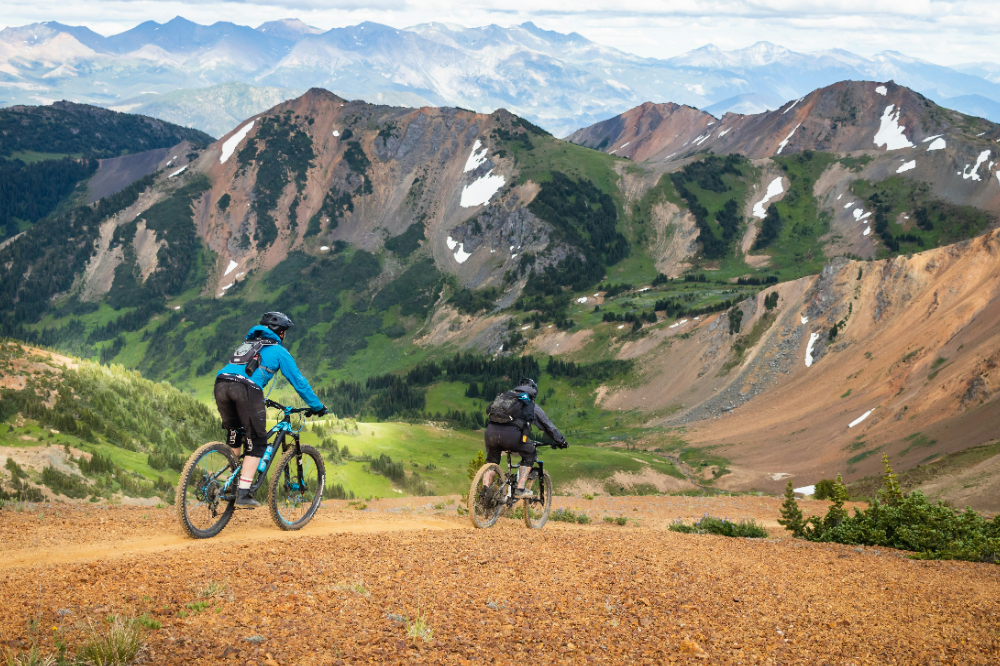
Mountain biking is one of cycling’s most thrilling disciplines which can thoroughly test bike handling and physical fitness while also staying accessible for beginners.
Although mountain biking can take you into the back of beyond, it doesn’t have to. Great riding can be within close reach of towns and cities.
And don’t let social media clips of backflipping mountain bikers put you off. They’re exponents of an extreme strand of the sport. Other types of mountain biking involve far less skill and risk.
Whether you’re interested in Xterra, an off-road multisport, or want to try something different and learn new skills, our beginners’ guide to mountain biking should help. We’ll explain how and where to get started, and which technique and equipment you’ll need.
What are the different kinds of mountain biking?

Mountain biking takes place on trails, be they man-made or natural, away from cars and tarmaced roads.
Despite the name, these don’t necessarily have to be in the mountains. But mountain biking does often involve going up and down hills.
Different kinds focus to a greater or lesser extent on descending, and the mountain bikes themselves differ according to the discipline they are designed for.
In general, mountain bikes have wide, flat handlebars as opposed to the hooked, drop handlebars on road bikes and gravel bikes.
MTB tyres are also wide and knobbly for grip, and almost always set-up tubeless, without inner tubes.
Modern mountain bikes will always have a front suspension fork to absorb vibrations from roots and rocks. Full-suspension MTBs with a rear spring or shock as well are increasingly common.
Mountain bike gearing is much easier than on road bikes due to the steepness of some ascents. Flat pedals are more popular than clipless pedals.
In terms of geometry, mountain bikes are long, slack and tall for off-road stability, calm handling and a fairly upright riding position.
Cross-country mountain biking

In cross-country mountain biking, you can go anywhere it is legal to ride off- and on-road and cover a lot of distance.
Cross-country mountain bikes or XC MTBs are often lightweight hardtails, featuring only front suspension. This typically makes them the cheapest kind of mountain bike.
XC mountain biking is the technically easiest kind and initially requires few skills that road cyclists don’t have. Therefore, it’s often the best starting point for beginners.
Another similarity with road cycling is that XC MTB is the most athletic kind of mountain biking. A shorter race resembles a more technical cyclocross race and marathon XC events involve hours of hard pedaling.
Trail mountain biking

Trail is the all-round discipline a lot of mountain bikers settle on.
You can still travel a good distance and climb well while taking on longer, more flowing descents than in cross-country.
As a result, trail mountain bikes are very versatile with front and rear suspension, wider tyres and slacker geometry for greater capability and comfort.
The mix of riding in the average trail centres cater very well for trail mountain biking.
Downhill/enduro mountain biking
Technically speaking, downhill and enduro mountain biking are separate. But we’ll group them together here because they both emphasise descending man-made trails.
From the bottom, you’ll usually slowly spin back up (Enduro) or take a lift (Downhill).
Downhill mountain descents are technically demanding – expect drop-offs and high speed. Downhill MTBs are consequently very specialised and often too heavy and slack to ride far.
Electric mountain bikes are commonly designed for Downhill/Enduro to help you overcome their weight with motorised assistance.
Where can I try mountain biking?
As a newcomer, the best place to try mountain biking is a trail centre. Here you’ll find bespoke beginner trails rated green or blue featuring largely flat terrain, sinuous bends and few or no obstacles.
The trails will also be short, so you’ll never be far from where you started.
From a trail centre, you’ll also be able to hire a bike and have the bike shops experts set it up for you. Many trail centres also offer tuition both on a one-to-one or group basis.
Another option is to start a mountain biking course in which a qualified instructor will help you gain the requisite skills.
What mountain biking skills will I need?

Mountain biking technique is quite distinct so even experienced road and gravel cyclists will need time to get to grips with it.
The basics are as follows.
Attack position
While descending on a mountain bike, you hover over the saddle and don’t sit. To better deal with bumpy surfaces, you should adopt the attack position.
You stand on level pedals, with one at three o’clock and the other at nine o’clock, and with bent elbows sticking out. This pose maximises ground clearance and uses your joints to absorb vibrations.
Look ahead
On a mountain bike, you should look three to five metres down the trail where you want to go. If you eyeball the rock you want to avoid, you’re more likely not to.
Looking ahead also increases your chances of reacting to changes in the trail in good time.
Cornering
Mountain biking cornering is very different to taking bends on a road bike.
On dirt, you should avoid leaning into the corner as you do on tarmac. Instead lean the bike but not your body.
By keeping your torso upright, you can make steering adjustments if something knocks you off line.
Lifting the front wheel

We’re talking about a small raise of the front wheel here to clear a modest obstacle while climbing or descending. Full wheelies can wait.
From the attack or seated position, flex your elbows, drop your torso to the stem and press down on the bars.
When you straighten your arms, the front wheel should pop up.
What equipment will I need for mountain biking?

Other than a bike, which you’ll probably want to loan to begin with, the most important piece of kit is a helmet.
Cross-country mountain bikers often wear road bike helmets, but in other disciplines mountain bike helmets tend to have peaks, visors and full-face protection.
Trail and downhill mountain bikers also protect themselves with knee and elbow pads, and sometimes even padded vests.
You don’t need to wear special mountain bike kit, but trailside clothing is usually baggy t-shirts and shorts not Lycra cycling jerseys and bib shorts.
For carrying spares, tools, nutrition, hydration and layers, hip packs and backpacks are preferred over pockets and bottle cages.
Where should I ride my mountain bike?

First of all, search for nearby trail centres where the difficulty of the riding will suit a range of abilities and you’ll have all the facilities you’ll need.
As you progress, you might want to seek out man-made trails in wilder environments or entirely natural trails if you’re lucky enough to live near them.
The best way to find these is through word of mouth – ask your local bike shop for advice while purchasing something.
Alternatively join an online off-road riding community or search for trails on a cycling app like Trailforks, Komoot or Strava.
In England and Wales, it’s legal to ride a mountain bike on bridleways and byways, but not footpaths. Off-road access to bikes is trickier on the island of Ireland, but easier under Scotland’s Right to Roam.
You can mountain bike off-road in much of the United States subject to local, state and federal restrictions. Cycling is often banned in wilderness areas, for example.
Staying on the trails, now find out how to get into off-road running.


 Jack Evans