Should you use a gravel bike for triathlon?
Gravel bikes have rocketed in popularity in recent times, but what are they and why should you consider investing in one as a triathlete? And can you race triathlons on a gravel bike?

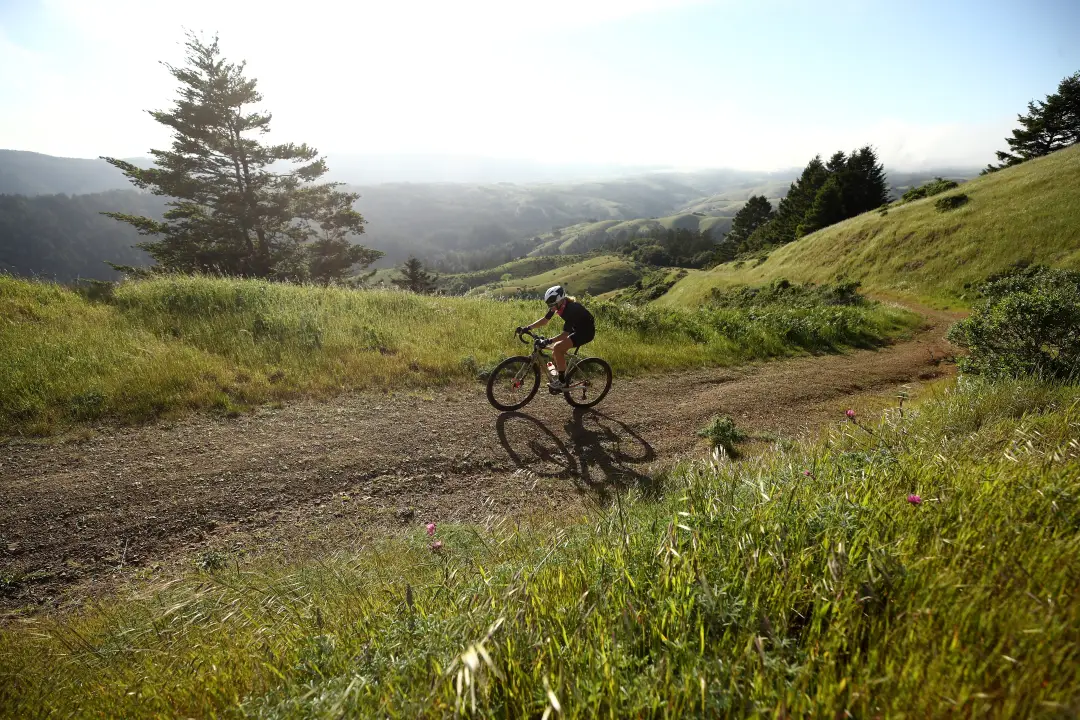
Gravel bikes have swiftly become extremely popular with both sworn roadies and trail explorers alike over the last few years. A gravel bike could even give you the upper hand over a classic triathlon bike for some races.
Many promise a sought-after versatility, providing the rider with a high-spec racing machine, as well as a vehicle for off-road jaunts and longer bikepacking adventures. Here expert bike mechanic from Evans Cycles, Toby Hockley, explains all you need to know…
What is a gravel bike?
Often referred to as a bike that offers ‘the best of both worlds’, gravel bikes are characterised by a design that incorporates road-bike drop handlebars (which often flare out for added stability), a relaxed geometry (offering a more upright, comfortable riding position), lower gearing, and thicker tyres to assist on uneven surfaces.
The biggest pro of going gravel is versatility, as this type of bike gives riders the option of linking up forest trails, gravel roads, bridleways and other uneven surfaces, as well as being not too heavy and clunky for road riding or even racing.
Can you use a gravel bike for a triathlon?

For triathletes, gravel bikes come into the mix as they offer the opportunity to take training sessions off-road, adding a much-needed sense of exploration and fun. Many gravel bikes can also be loaded up for multi-day bikepacking adventures, providing a means to escape to the great outdoors.
Of course, wider tyres and stable handling also make gravel bikes a great option for training through the winter, giving you more confidence in challenging conditions and allowing you to save your expensive aero machine for racing.
That said, there’s no reason why you can’t use your gravel bike for some fast road racing and triathlons. They’re typically heavier and a bit more clunky than a sleek aero roadie, but you can always invest in a road-orientated, race-ready wheelset or even add some aerobars to make your gravel bike more triathlon-friendly.
How does a gravel bike differ from a road and triathlon bike?

When it comes to the materials used in gravel bikes, they vary as much as their road counterparts, although the most common you’ll come across are carbon and aluminium. Remember that the frame is always at the heart of your bike. While you can upgrade other components, the frame will remain constant and, therefore, should be your first focus.
The geometry of gravel bikes is something worth knowing about. Designs tend to be more relaxed, longer and more stable, as they’ve been specifically designed for challenging off-road riding. The introduction of one-by drivetrains allows for greater tyre and mud clearance, which ultimately means less opportunity for components to need fixing.
What are the gears like on a gravel bike?
Gearing is one of the most important aspects of any gravel bike, but these can vary as it depends if you’re looking to prioritise speed or are seeking a set-up more focused on longer adventures.
One of the most common set-ups you’ll come across is a compact 50/34t chainset, which is great for riding a mix of tarmac and gentle off-roading, while keeping the baggage to a minimum.
As gravel bikes have evolved and become more popular, we’ve seen the development of gravel-specific groupsets from the likes of Shimano (see the brand’s GRX range), SRAM (see the XPLR range) and Campagnolo (the Ekar range).
It’s an area I’d recommend doing your homework on to find the right kit for your cycling needs and terrains you plan to explore.
Gravel bike tyres

One of the most defining featuring of any gravel bike is its tyres. Clearance for tyres can vary significantly, with some bikes even able to accommodate mountain bike tyres.
Typically, gravel bike tyres come in around 40mm, which is considerably wider than what you may have experienced on a pure road bike. You’ll notice that the tyres are knobbly for added grip, and more similar to those found on a mountain bike than a road one.
Gravel tyres also help you be able to run your psi (tyre pressure) considerably lower (by half or more) for added comfort and grip on those lumpy and gravely surfaces. Running your tyres as tubeless will also help enable you to do this while limiting the risk of punctures.
If there’s one bit of advice we’d offer, it’s to think about the terrain and conditions you’re riding on, as wet and muddy days will require a deeper tyre pattern than those dryer days.
Best gravel bikes for triathlon

1. Boardman ADV 8.9 Carbon
| Price | £1,800 |
| Frame | C10 Carbon |
| Gears | Shimano GRX 2×10 |
| Brakes | Shimano GRX hydraulic disc |
| Wheels | Alloy, tubeless ready |
| Tyres | Goodyear Connector, 700x40c |
The ADV 8.9 is the cheapest carbon model in Boardman’s range of all-rounder gravel bikes.
It has the same lightweight carbon frame and fork as the higher end bikes and its geometry promises capability on trails and reasonable sportiness on tarmac.
The top-value spec includes the wide-range Shimano GRX 2×10-speed groupset and hydraulic disc brakes, a must for confident off-road braking. Stock tyres are 700x40c and there’s room for 45mm-wide rubber, according to Boardman.
Another plus is that the frame is peppered with accessory mounts. It can fit mudguards for winter miles, a top tube bag for triathlon racing and training and even a dropper post if you want to get adventurous.

2. Cube Nuroad Race
| Price | £1,499 |
| Frame/fork | Aluminium Superlite 6061 frame, carbon C:62 fork |
| Gears | Shimano GRX 2×12 |
| Brakes | Shimano GRX hydraulic disc |
| Wheels | Newmen Performance X.R.25 tubeless-ready |
| Tyres | Schwalbe G-One R 45mm (50mm clearance) |
The Cube Nuroad Race is another value-packed gravel bike with the versatility to cover long distances on and off road.
Cube pairs a light alloy frame with a carbon fork in a geometry that should deliver stability, comfort and efficiency. You can also mount all sorts of bags and accessories.
Shimano’s 2×12-speed gravel drivetrain is a highlight at this price as are the Newmen Performance alloy wheels, which are wide enough to accomodate modern gravel tyres.

3. Trek Checkpoint ALR 4
| Price | $1,8999/£1,400 |
| Frame/fork | 300 Series Alpha Aluminum, full carbon fork |
| Gears | Shimano CUES U6030, 11-speed |
| Brakes | Shimano CUES hydraulic disc |
| Wheels | Bontrager alloy, set-up tubeless |
| Tyres | Bontrager Girona Pro, 700x42c (50mm clearance) |
The Checkpoint ALR is the alloy version of Trek’s gravel endurance bike, meaning it’s designed for going the distance on mixed terrain.
As ever with Trek, you pay a premium compared to more affordable brands, but this Checkpoint family is a well-respected gravel platform.
Built around Shimano’s entry-level CUES groupset, the alloy frame has multiple mounting points and clearance for 50mm tyres and 45mm with mudguards.
Trek’s component brand Bontrager supplies the wheels, which should come set-up tubeless, and finishing kit.

4. Marin Nicasio+
| Price | $1,099/£949 |
| Frame/fork | Steezy Double Butted CrMo |
| Gears | microSHIFT, 1×9-speed |
| Brakes | Tektro mechincal |
| Wheels | Marin alloy |
| Tyres | WTB Horizon, 650Bx47mm |
If you’re looking to get a gravel bike for triathlon for a grand, the Marin Nicasio+ is one of the best options.
Its ‘Beyond Road’ geometry and 47mm-wide tyres on 650b wheels promise capability on technical terrain.
The chromoly steel features rack and fender mounts and is specced with microShift’s simple nine-speed drivetrain, mechanical disc brakes from Tektro, and solid alloy wheels.

5. Giant Revolt 0
| Price | $1,500 (Revolt 2)/£1,799 |
| Frame/fork | Aluminium/composite |
| Gears | Shimano GRX 2×12 |
| Brakes | Shimano GRX hydraulic disc |
| Wheels | Giant S-X2 wheelset, alloy |
| Tyres | Giant Crosscut Grip TR, 700x40c, tubeless |
The Giant Revolt’s racy character, smooth ride and wide tyre clearance (of up to 53mm) should make it one of the best gravel bikes of triathlon.
You can also adjust the wheelbase length to speed up handling for fast paved rides.
The alloy frame is paired with a composite fork and built around 2×12-speed Shimano GRX. The in-house wheels come set-up tubeless with 40mm tyres.


 Toby Hockley
Professional bike mechanic
Toby Hockley
Professional bike mechanic