‘She’ll never remember, but we’ll have the photos’: Jelle Geens on sharing world titles with his daughter and targeting Kona
From Olympic heartbreak to back-to-back 70.3 world champion, Belgium’s understated star is now chasing triathlon’s holy grail – Kona. We caught up with Jelle Geens before he made his Ironman debut

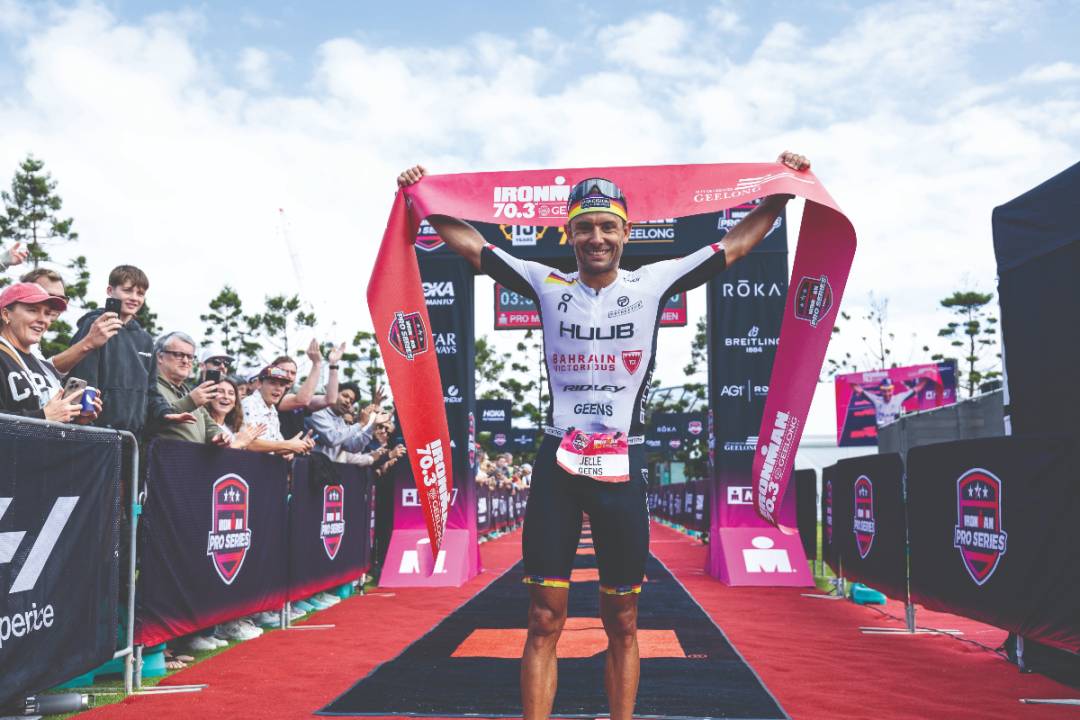
With five kilometres to run, Jelle Geens thought he had it under control. In most championship races, the decisive move comes earlier – a surge on a climb, a break in rhythm, the moment when the elastic finally snaps.
Often, by the closing stages, the leader has already begun the quiet internal celebration – “You can already process a lot and have already processed a lot at the finish line”, explains Geens, speaking from experience.
How the race was won
But this wasn’t most races. The 2025 Ironman 70.3 World Championship in Marbella, Spain, had come down to a rare sprint – a lung-busting, tactical, no-room-for-error dash to the tape. And with triathlon juggernaut Kristian Blummenfelt, no less, who last won the 70.3 title in 2022.
Even before that final flurry, the entire Marbella run leg had become a real-world chess match with Big Blu, the two seen trading tense words throughout. So what was said?
“We talked about Kristian not wanting to lead on the run, which was a bit annoying,” he says. “He always played the card that he was waiting for [compatriot] Casper [Stornes], which I know is not the case. He also wants to win, and doesn’t want Casper led back.
“But I know that’s often his race strategy and he’s really good at saving energy until he needs to. So it definitely was very tactical. But I also adjusted my tactics towards that. I tried to make the race hard on all the uphills and then tried to cruise a bit, so I also recovered and had something left for his attack, which I knew was coming.”

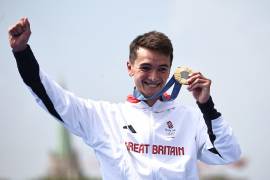
When it came, there was no time to process, no chance to rehearse the victory in his head. When the winner’s tape snapped across his chest, a mere 3secs ahead of Blummenfelt, the emotions hit all at once.
“It was a nice way to finish the race with such an exciting sprint. It really brings the emotions out at the finish line, which was cool,” admits Geens.
It was more than cool, it was historic. By defending his title in Marbella, Geens became just the fourth man ever to win back-to-back 70.3 world crowns – and the first Belgian to achieve the feat. A second consecutive global title confirmed what many had begun to suspect: the former short-course specialist, who’d spent years chasing Olympic validation without ever quite grasping it, had found his true home in middle distance. Yet if you ask Geens about the record books, he shrugs.
“It’s nice that I’m only the fourth male to ever go back-to-back. But in the end, it’s cool and all, but that’s not what I’m racing for. I just want to try and win every race and be the best version of myself.”
“The next race is what motivates me and drives me,” he adds. “There will be more [athletes] going past me and there have been more before me, so it’s not that special either.”
Travelling with a toddler

If the sprint amplified the emotion, the immediate aftermath put all the hard training and sacrifice into perspective. Waiting metres beyond the tape were his partner, Kate Dix, their two-year-old daughter Sienna, his family, plus his entire support crew. “It was really nice for me that my family was right there,” says Geens, speaking from his home in Gold Coast, Australia. “That will be something I will always remember. This victory is a team victory for me, we do everything as a family.”
Elite sport is often framed as a solitary pursuit: the athlete alone with his suffering and ambition. But modern triathlon, with its global calendar and year- round demands, is a logistical marathon as much as a physical one. Add a toddler to the mix and the margins become even tighter.
“Yeah it’s not easy with a two-year-old,” Geens says, laughing. “Being a dad and trying to accomplish everything I want to, with all the travel, it’s definitely challenging. It requires a lot of coordination with my partner and the family around us to get my training done, get my rest, spend time with my daughter and also for my partner to do her studies. But it’s very rewarding that Sienna has been there for my two world titles. She’ll never remember, but we’ll have the photos.”
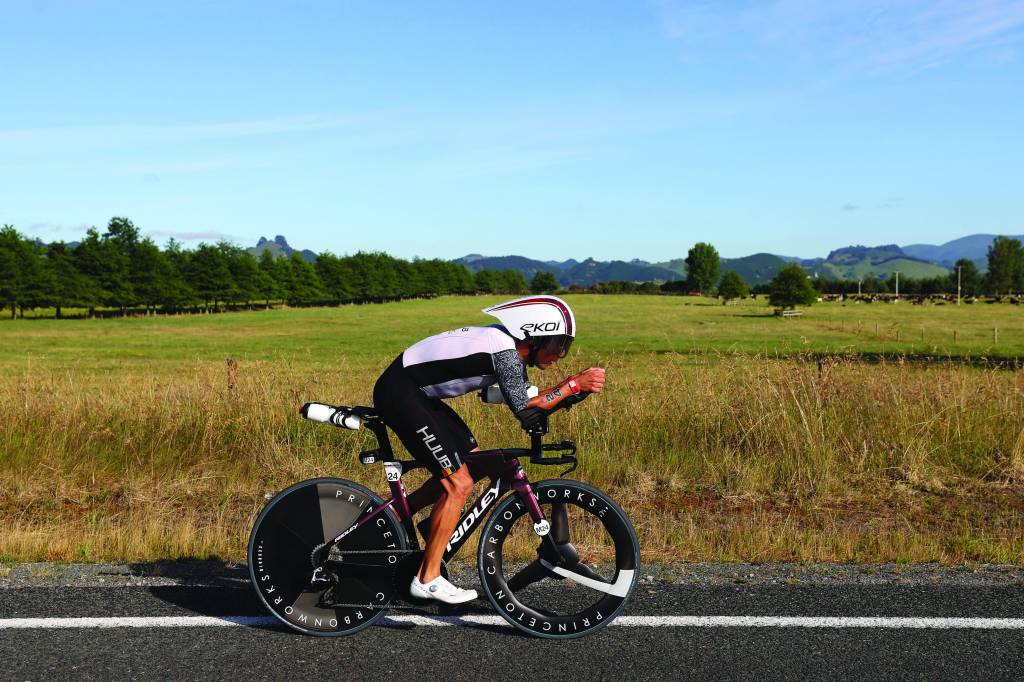
Victory in Spain was a career high; the return to Australia was not. Flights home from world championships now also present another test of endurance.
“Yes, back to the real world, traveling all the way across the world with a toddler! It was very quickly back to normal life with my feet back on the ground. But after Marbella I actually really struggled – mainly mentally but also physically from that big trip back. We all had quite a bit of jet lag. It was a rough week.”
Geens also still had the small matter of contesting the final T100 race of the year in Qatar, just five weeks after Marbella. Motivation for the final fling of 2025 was, understandably, harder to summon.
“I wasn’t really looking forward to Qatar, it was a struggle getting into some good fitness,” admits Geens. A seventh place there – his worst finish of the season, and the first time he’d been off the podium – saw him drop him from second to third overall in the series.
“I’m still happy to be overall on the podium, and T100 was a fun season, but for me, it’s a bit long to always be racing in December – that’s also one of the reasons why I’m not going for the T100 this year because I don’t think I can do another season until December.
“I’d like to be done a little bit early and take a proper off-season because if the season ends in December and you have to be ready again at the end of March, there’s not so much down time.”
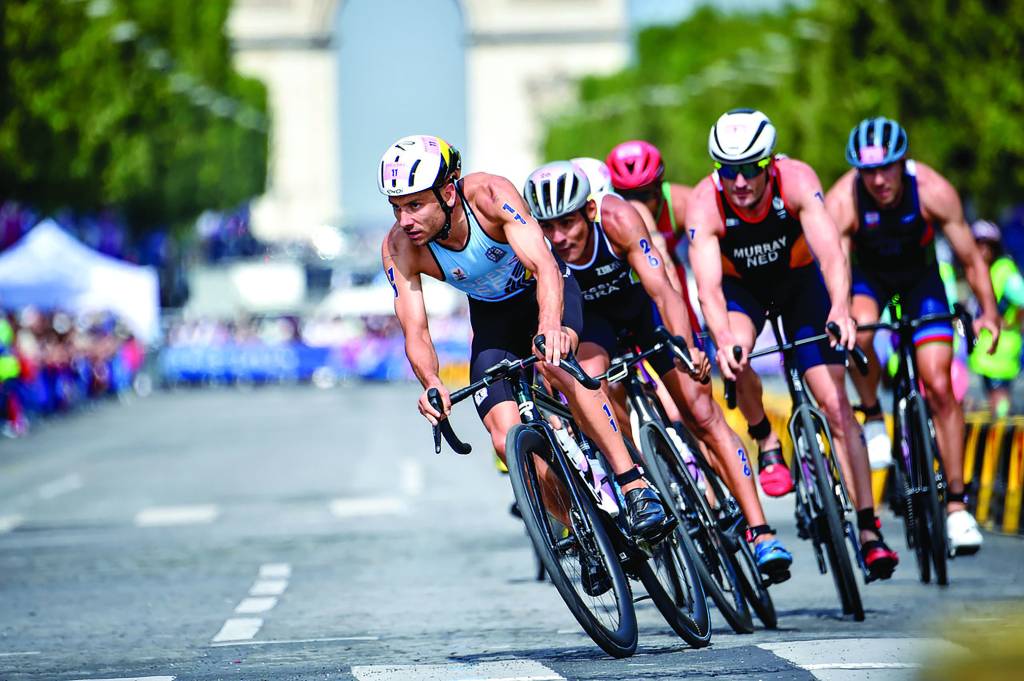
To understand why Marbella resonated so deeply, you have to rewind. Geens is a three-time Olympian. On paper, that alone defines a career. In reality, the Olympic stage never reflected his potential.
“Three Olympics have all been quite disappointing for numerous reasons. And the last Olympics in Paris was quite a disaster [Geens finished 42nd]. It really put me off a bit on the whole Olympic scene. For me, I’m very happy now doing middle distance and this year also Ironman. I definitely don’t want to go for round four [at LA, 2028].”
Freed from the intensity and unpredictability of short-course racing, Geens has flourished over 70.3, a format he first dipped his toe into in 2021 when he placed third at 70.3 Indian Wells. The full-time move post-Paris was validated in Taupō at the end of 2024 when he won his first world title, and was emphatically confirmed in Marbella.
But a key shift before his second world title came in the mountains of Andorra on an altitude camp, his first since transitioning distances – “I think that’s really where I gained a few extra percent. I felt like I was in the best shape of the year.”
Kona dreaming

Geens and his family are now based on Australia’s Gold Coast, having moved there in late 2024. It’s a triathlon hub: endless coastline, year-round warmth, world- class training partners. And while he trains primarily solo under coach Ben Reszel, he also joins in with Triathlon Australia’s swimming sessions and occasionally links up with friends, which recently included French pro Pierre Le Corre.
While his off-season has been relatively simple – “Spending as much time with family basically, going to the beach a lot” – in-season, the target is enormous. This year, Geens will step up to full Ironman for the first time, racing Ironman Texas in April in pursuit of qualification for the Ironman World Championship in Kona, Hawaii, on 10 October. Alongside that comes a bid for a third 70.3 world title, in Nice, in September.
Other races ringed on the calendar before those two behemoths at the close of the season include Geelong 70.3 (which he won in 2025), T100 San Francisco (2nd in 2025) and 70.3 Pennsylvania Happy Valley, which will host the 70.3 North American Championship.
“So not too many races,” says Geens, “but really trying to set myself up to be in my best possible shape for every single race. I think that would be a good way to really attack every race with a big training block.
“I’ve learnt from the 2025 season that that’s really something that I’m good at – big training blocks into the races and then I’ll go again to another altitude camp before Nice.”
The Olympic dream may have closed for Geens, but its emotional weight hasn’t vanished, it’s just been redirected. Kona looms large in triathlon mythology, and like many who have made the move to full distance, winning the Ironman World Champs in Hawaii is now Geens’ ultimate career goal.
“Behind the Olympics, it’s the biggest thing you can achieve in triathlon,” he says. “I’d like to leave a bit of a legacy for kids to see the sport of triathlon and see how cool it is, how fun it is. I think I can do that best by being myself in training, in racing, and trying to win Kona.”
A day in the life
Ever wondered what a full-time pro/ dad does in the off-season?
Well, look no further as Jelle Geens shares a typical Monday…
6am: The Sienna alarm goes off!
6:15am: Coffee, breakfast, spend time with Sienna
7am: Run workout, approx 90mins
8:45am: Food, shower, relax and play with Sienna
10am: 2hr bike ride
12pm: Lunch
12:30pm: Relax a bit while Sienna naps
3pm: Off to the pool
3:30pm: 5km swim
5pm: Home, play with Sienna while Kate cooks
5:30pm: Dinner with the family
6:30pm: Shower Sienna
7pm: Read books with Sienna
7:45pm: Put Sienna to bed
8pm: Watch some TV
9-9:30pm: Bedtime


 Liz Barrett
Freelance sports journalist, copywriter and editor
Liz Barrett
Freelance sports journalist, copywriter and editor