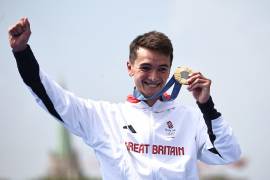
Marginal Geens: How Belgium’s Ironman 70.3 world champion edged out Kristian Blummenfelt in tightest of battles
Defending champion Jelle Geens and Kristian Blummenfelt dissect their nailbiting sprint finish at the Ironman 70.3 World Championship in Marbella

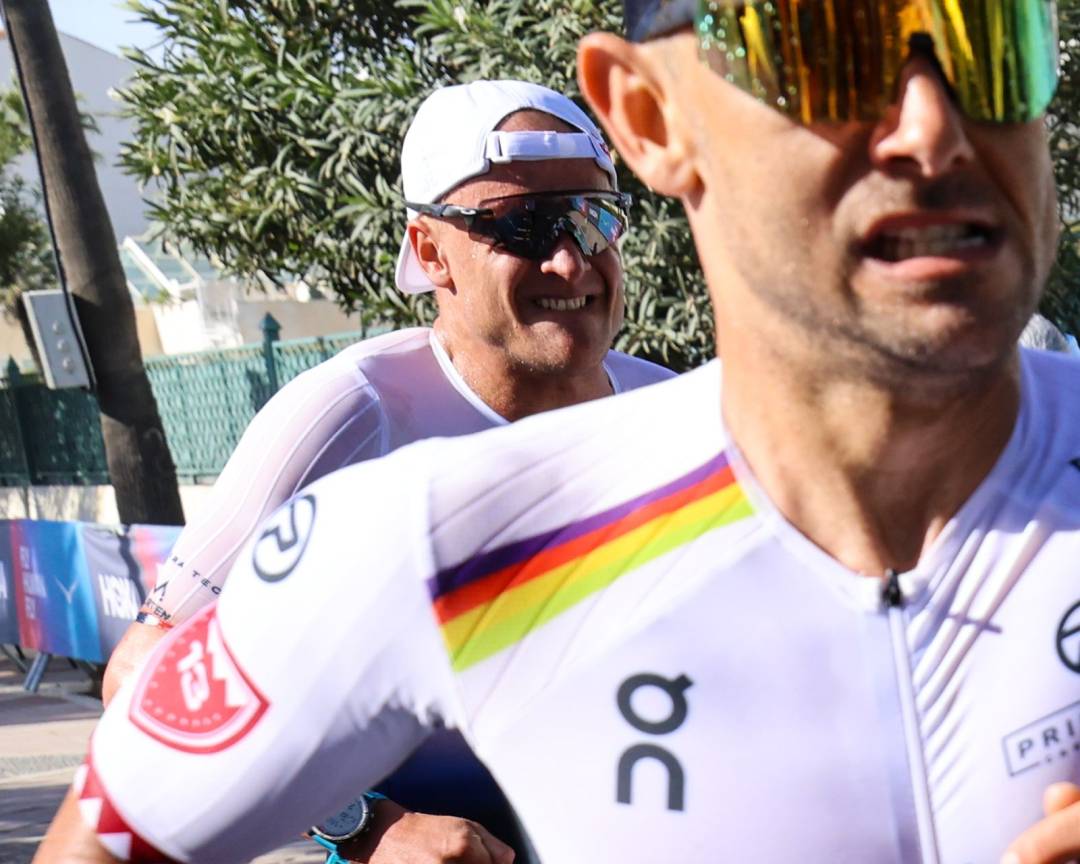
Elbow-to-elbow as they approached the line, Belgium’s Jelle Geens and Norway’s Kristian Blummenfelt hadn’t been much further apart for almost the entire run leg of the Ironman 70.3 World Championship in Marbella.
By the tape, one of the tightest and most exciting championship races in Ironman history was determined by the smallest of margins.
Geens had been trying to use any uphill sections on the two-lap half-marathon course to his advantage. After seizing the inside line on the final corner, it was the final few metres of black carpet plus the final kick up to the finish arch where he pulled clear to become only the fourth man to retain the 70.3 world title.
“I knew it was going to come down to the final few kilometres, or even a sprint finish in the end,” Geens said. “It got quite narrow and we were touching elbows. I really wanted to be first to that u-turn because it was going to be crucial. I tried to ease up a bit and then really accelerate coming out. My legs were quite ‘lactic’ but luckily Kristian’s were as well.”
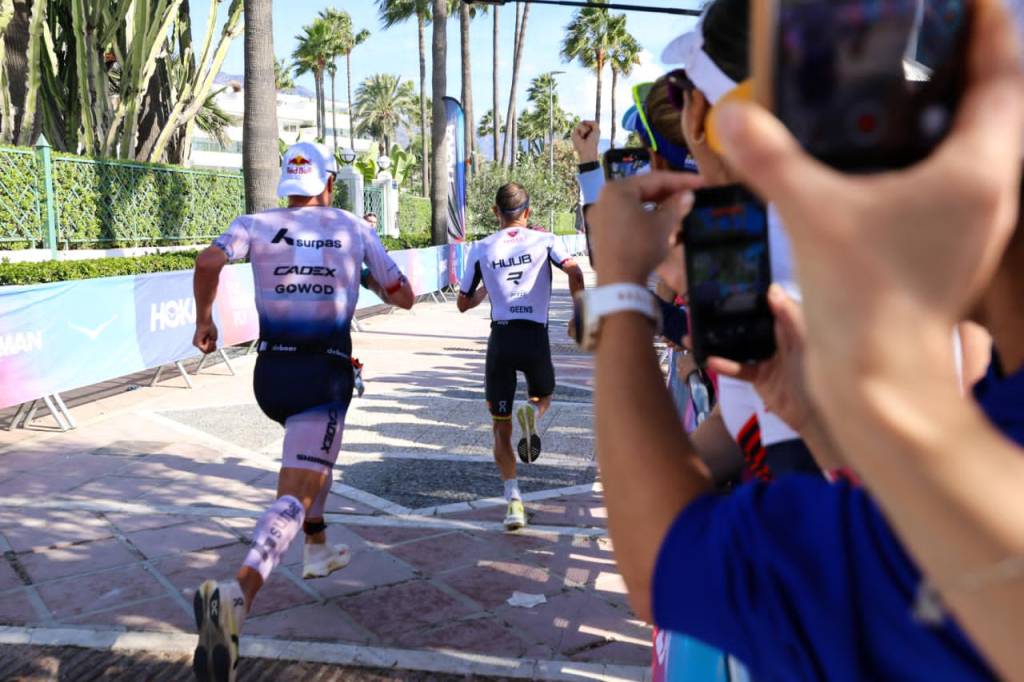
Geens produced a race-best 1:07:35 run to defend the title he took in New Zealand last year, but felt he could have gone even faster had the duel with Blummenfelt not become tactical during the latter stages.
“I was getting a bit annoyed [with leading], but any time I asked Kristian to go to the front, he would say he was waiting for Casper [Stornes] – although he was quite far behind.
“But even when he went to the front it was so slow. At one point under the bridge we were almost standing still, so I was like: ‘I’ll run my tempo and hope to hurt him enough.’
“I thought he would accelerate at one point, but when he accelerated I felt like he didn’t have so much left and it wasn’t so fast, so I aimed for the sprint and tried to time it perfectly.”
The day hadn’t started well for Geens, after what he felt was a “bad swim” by his standards left him 22nd out of the water, and then he had a minor crash on the first roundabout that forced him to stop again because his rear derailleur hanger was bent and he couldn’t access all his gears.
But once onto the half-marathon, he seized the initiative and Blummenfelt – who was desperate for a world title after finishing third in the full distance race in Nice – felt there wasn’t much more he could have done.
“I was saving myself for the last 1.5km, and you get one chance at a tactic like that,” Blummenfelt said. “The second option would have been going earlier, but I’ll never know if that would have worked because Jelle was still strong. I’m obviously disappointed to only get a podium and not get a title. We train to become world champions, not just medalists.”
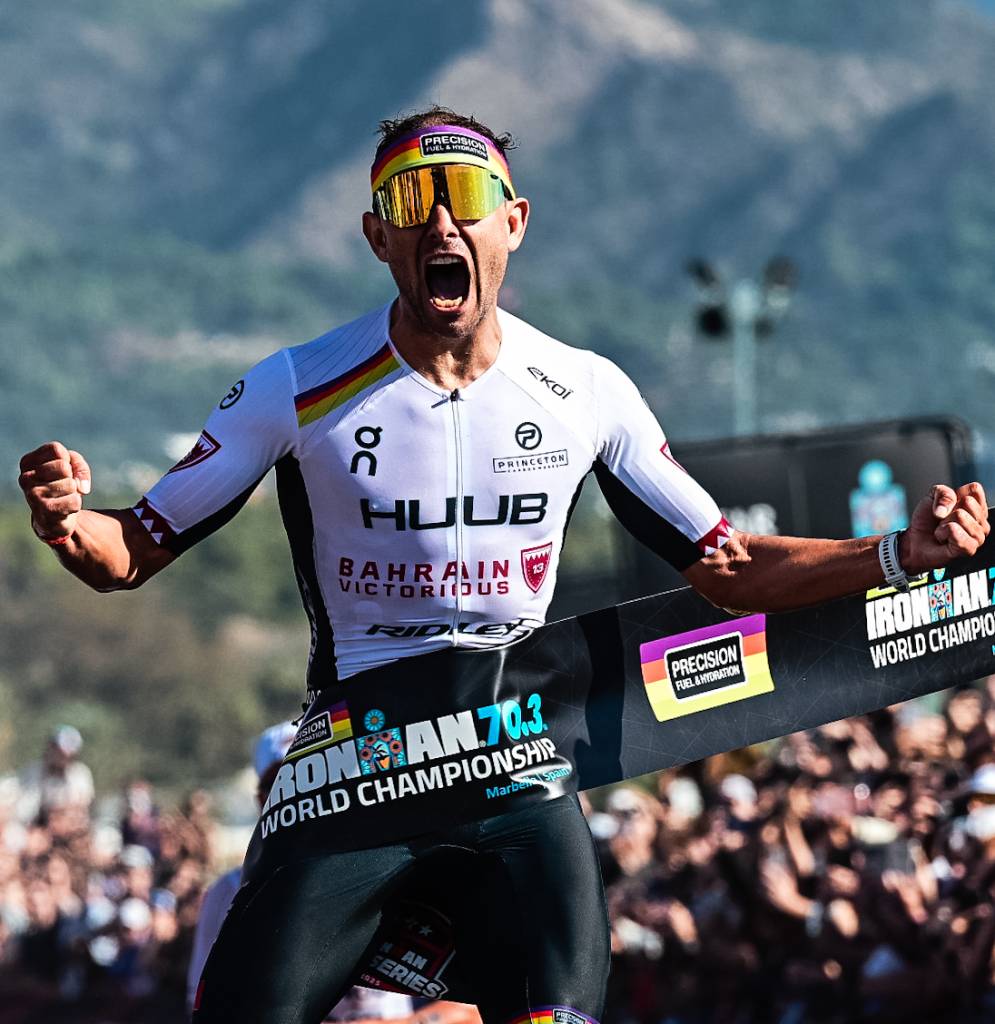
Having focused on T100 racing earlier in the season , Geens has spent the past month training at altitude in Andorra and unlike last year, where he had just moved his family, including one-year-old daughter Sienna, across the world from Australia to Europe, this time the preparation was near perfect.
“I feel like I’m in the best shape of the year for sure,” he added. “Because I crashed, I didn’t have my bike computer so I don’t know what my pace or power was on the bike, but I ran similar to Taupo, but it felt quite a lot smoother – like I could have run a minute faster had I needed to.”
Blummenfelt had the consolation of winning the Ironman Pro Series and with it a cheque for $200,000, while Geens became only the fourth man following Michael Raelert (2009 and 2010), Sebastian Kienle (2012 and 2013) and Gustav Iden (2019 and 2021) to win back-to-back Ironman 70.3 titles.


 Tim Heming
Freelance triathlon journalist
Tim Heming
Freelance triathlon journalist