How secure is triathlon’s Gulf windfall? Middle East backers now form the financial foundation of the sport – could it be crumbling?
Everything to lose and everything to gain – the current conflict in the Middle East brings to the fore the precarious financial footing of elite racing. Tim Heming investigates...

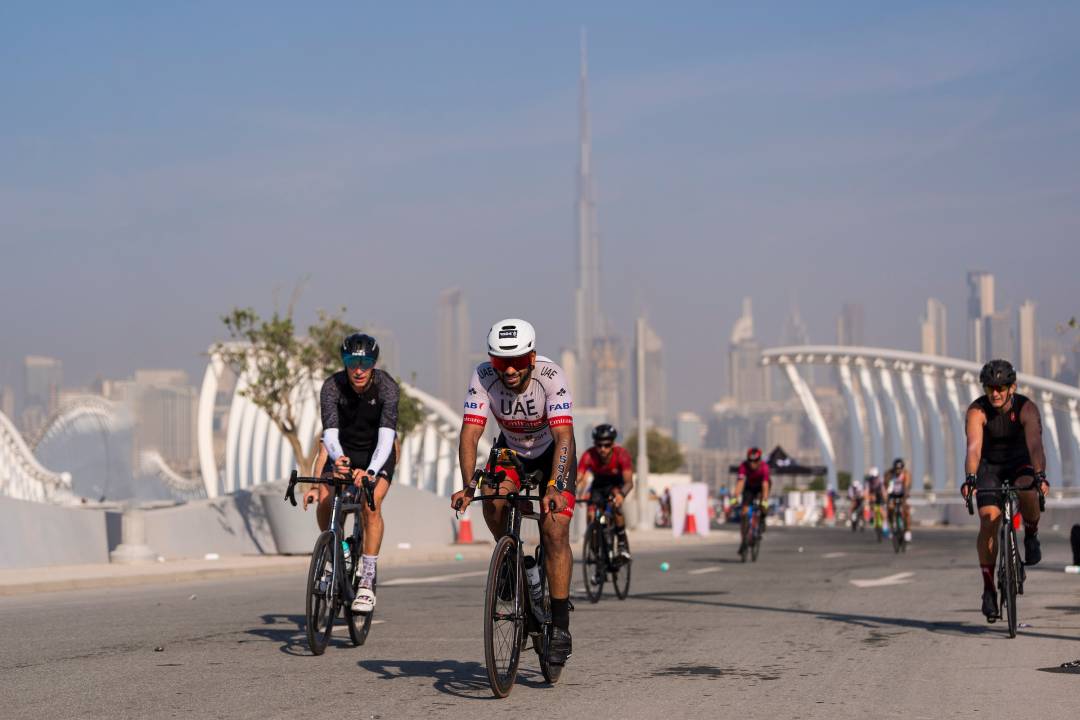
Middle East powerbrokers are increasingly bankrolling triathlon’s biggest organisations, yet instability in the region highlights how fragile that funding may be.
The past few years have offered unprecedented financial opportunities for professional triathletes. In a sport where elite competitors are not traditionally showered with riches, the post-pandemic emergence of the Professional Triathletes Organisation (PTO), along with the pressure it placed on Ironman to better reward long-course professionals, has proven a windfall for athletes talented and astute enough to take advantage. The question is whether this will continue.
- Free triathlon training plans to get you in peak shape for all distances
- Gordon Ramsay shares impressive swim stats in training for Ironman triathlon
Professional triathlon’s reliance on sovereign wealth funds
At the professional level, triathlon is becoming increasingly reliant on investment from the Middle East. Saudi Arabia’s Public Investment Fund backs the PTO, while Ironman has struck a multi-year partnership with Oman, including hosting the 70.3 World Championship in 2029 —one of the biggest weekends in the sport—and acting as title sponsor of its annual Pro Series.
With the PTO recently acquiring Challenge Family, all the major players in long-course triathlon are now tied to the region. Even the international federation is linked through its partnership with the PTO’s 2027 World Tour, which incorporates World Triathlon’s premier series.
Triathlon is not alone in this shift. Sovereign wealth funds have invested billions into football, golf, motorsport, combat sports, and tennis, whether by staging global events like heavyweight boxing bouts and Formula 1 Grands Prix or by acquiring clubs such as Newcastle and Manchester City.
Under Abu Dhabi leadership, Manchester City’s spending—close to £2 billion on new signings alone—dwarfs investment in triathlon, yet even tens of millions is enough to reshape the landscape of swim, bike, and run.
Is it a sustainable model?
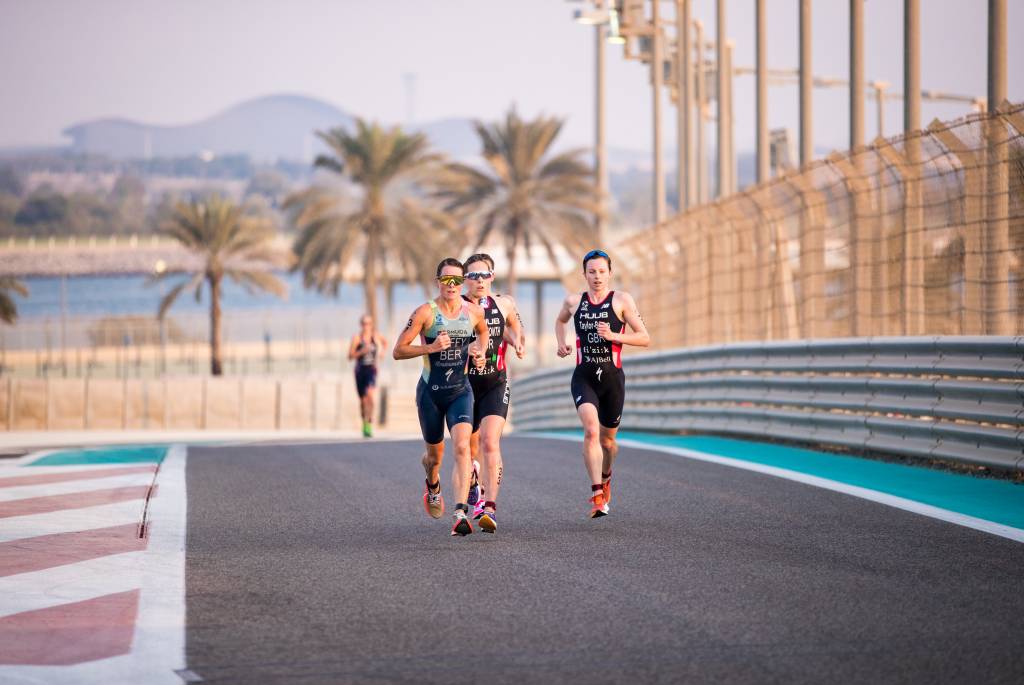
Even so, the model appears fragile. Unlike football, broadcast revenue is not a major factor, and funding is increasingly focused on driving sports tourism to the region through amateur participants and their families. It will take time for endurance events to become embedded in the culture, and results so far are mixed.
For instance, only 159 women finished Ironman 70.3 Muscat in Oman in February, despite it being billed as the Middle East Championship. In contrast, more casual fun runs and shorter-distance triathlons in Dubai, which have stronger local community appeal, have proven more popular.
Triathlon’s position is further complicated by the fact that, regardless of contractual obligations, investment funds can quickly be redirected to more pressing priorities. Given that Saudi Arabia, Qatar, Abu Dhabi, Dubai, and Oman—all locations where triathletes compete—have experienced conflict, governing authorities may become more hesitant to allocate wealth to what could be seen as relatively trivial pursuits.
All to win and all to lose
Of course, if the situation stabilises, the opposite could occur, with increased spending used to promote tourism and signal business as usual. There have already been hints of this approach. When the Abu Dhabi World Series event scheduled for this weekend was postponed, the announcement avoided calling it a cancellation, instead stating that it would “take place as scheduled on 28–29 March, with adjustments to the competition categories.”
The professional races featuring international athletes are delayed until later in the year, while the age-group competition, made up largely of local participants, is set to go ahead. It was a notably stoic response.
There is unlikely to be any immediate change. Investors in both the PTO and Ironman are not under pressure to make sudden decisions, particularly as the Middle East race calendar pauses until autumn after the Abu Dhabi event. If global conditions are more stable by then, concerns around funding may ease. If not, challenges will emerge.
Ironman is set to host its first full-distance race in the region in four years in Oman this December, while the PTO’s final three events in its Race to Qatar T100 series are scheduled for Dubai, Saudi Arabia, and Doha from November onward.


 Tim Heming
Freelance triathlon journalist
Tim Heming
Freelance triathlon journalist