I used a pro cycling nutrition app for a month and raised my FTP by 17 watts
Hexis is a nutrition app used by many of the world's top cyclists. But can amateurs benefit too? I put it to the test for a month.

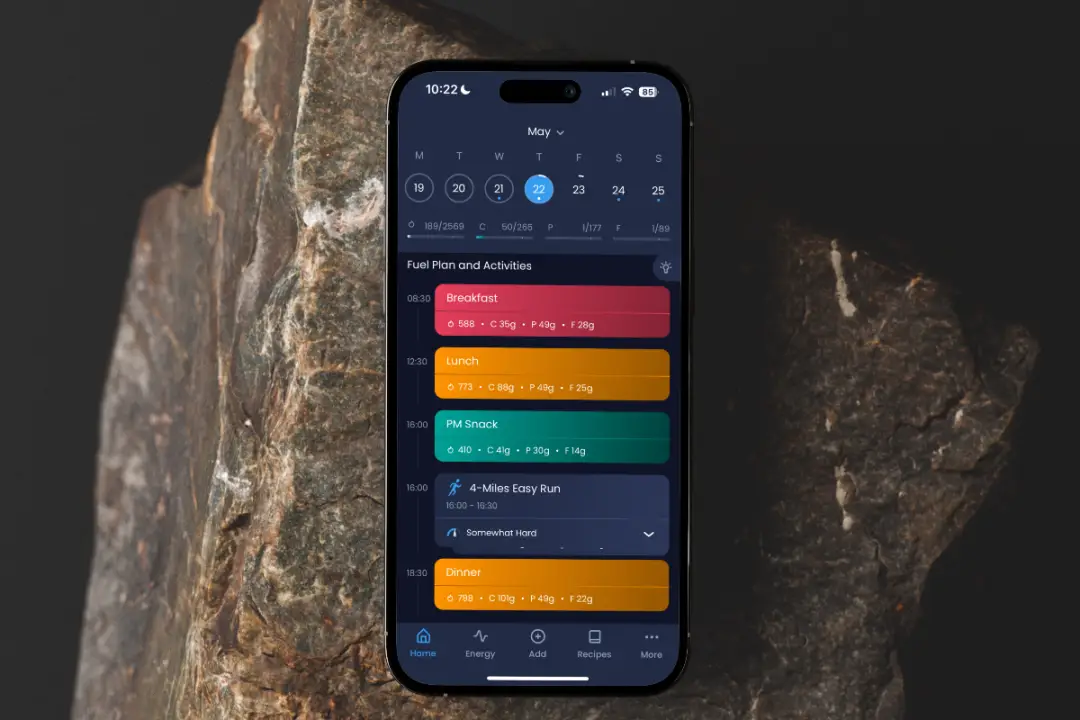
Hexis is an AI-powered sports nutrition app that helps many of the world’s best cyclists to ensure they are adequately fuelled for training and racing while managing weight.
I’ve used it for the past month and have come away impressed. It’s far smarter than simple food logging apps, like My Fitness Pal, it syncs seamlessly with other apps, and its user experience is excellent.
My time using Hexis to log food and plan fueling coincided with a big block of training, a significant increase in watts per kilo and generally feeling ‘good’ on and off the bike.
Obviously I’m not going to attribute all of this improvement to Hexis – I put in the work after all– but I did appreciate its support. Whether I continue using it or not, I feel I’ve enhanced my understanding of my nutritional needs.
How does Hexis work?
Hexis gives you personalised daily nutrition and exercise fuelling plans based on your energy requirements.
You can either manually plan workouts in the app, by predicting duration and intensity, or import scheduled workouts from triathlon training apps such as Training Peaks.
It adjusts its recommendations according to changes in the workouts you upload and meals you log.
This part of the app works well. The database catches most kinds of food, plus you can scan bar codes, save meals and recipes, and take a picture of the food on your plate.
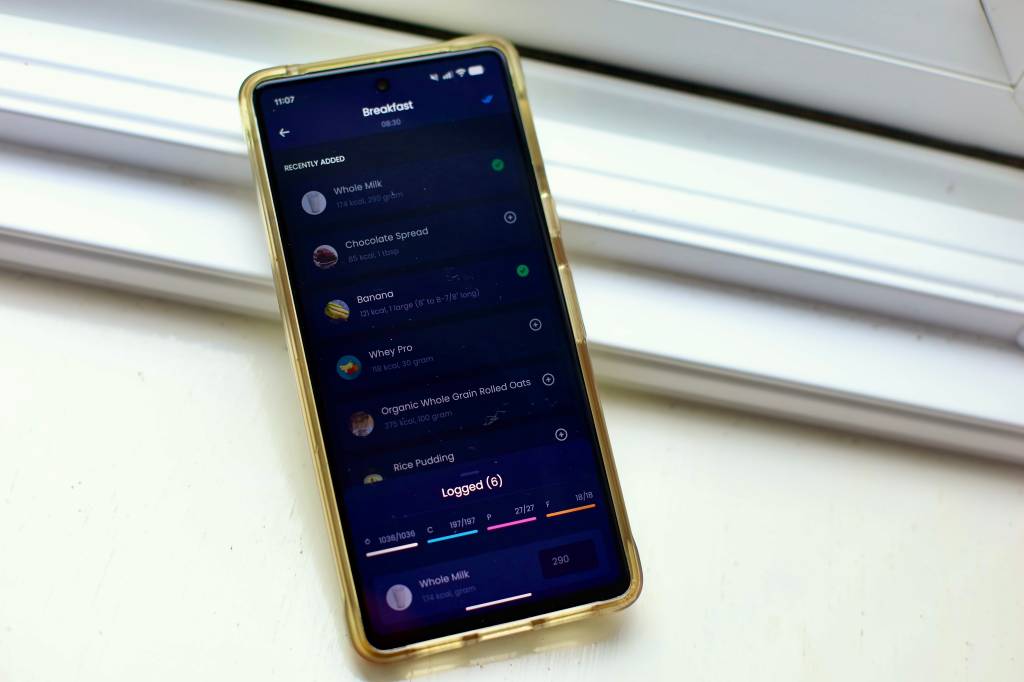
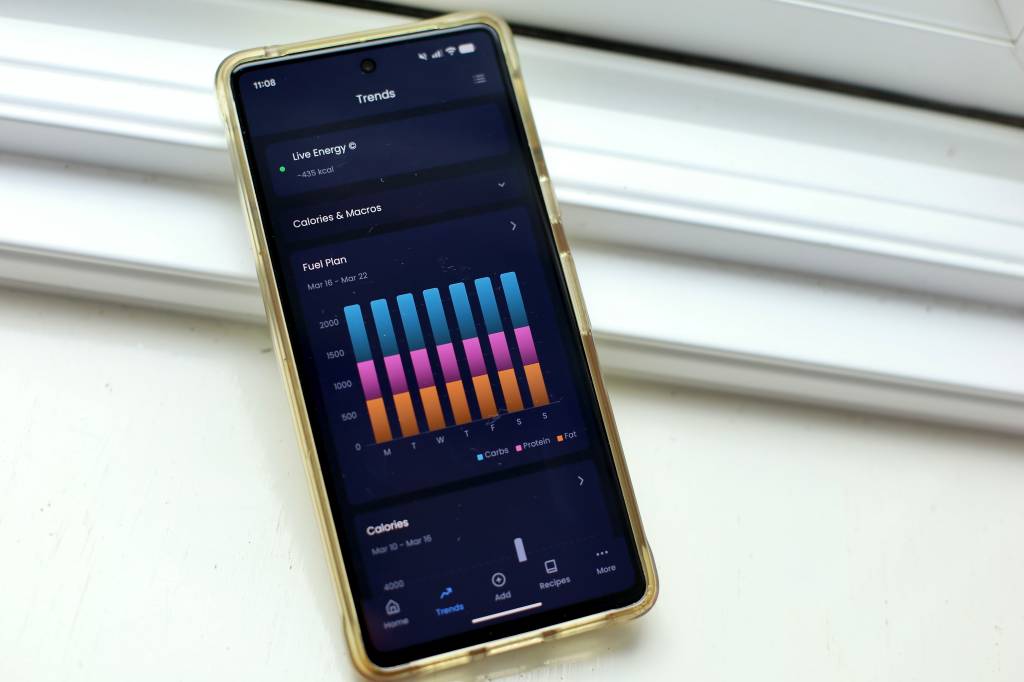
The key advantage over a basic food tracker is that Hexis suggests how many grams of carbohydrates, protein and fats and total calories to consume, so you can better plan the meal.
Its Carb Coding feature encourages you to ‘fuel for the work required’ by indicating which meals and snacks need to be high, medium or low carb. In practice, this colour coding gives you an idea of how many carbs to consume if you don’t have the will or time to count exactly.
In terms of weight management, you can select whether you want to gain, maintain or lose weight. Hexis adjusts your recommended daily intake to help you achieve your goal.
However, Dr Sam Impey, co-founder and chief scientific officer at Hexis, underlines that, given the limitations of calories counting, the main objective is hitting carb targets.
Who uses Hexis?
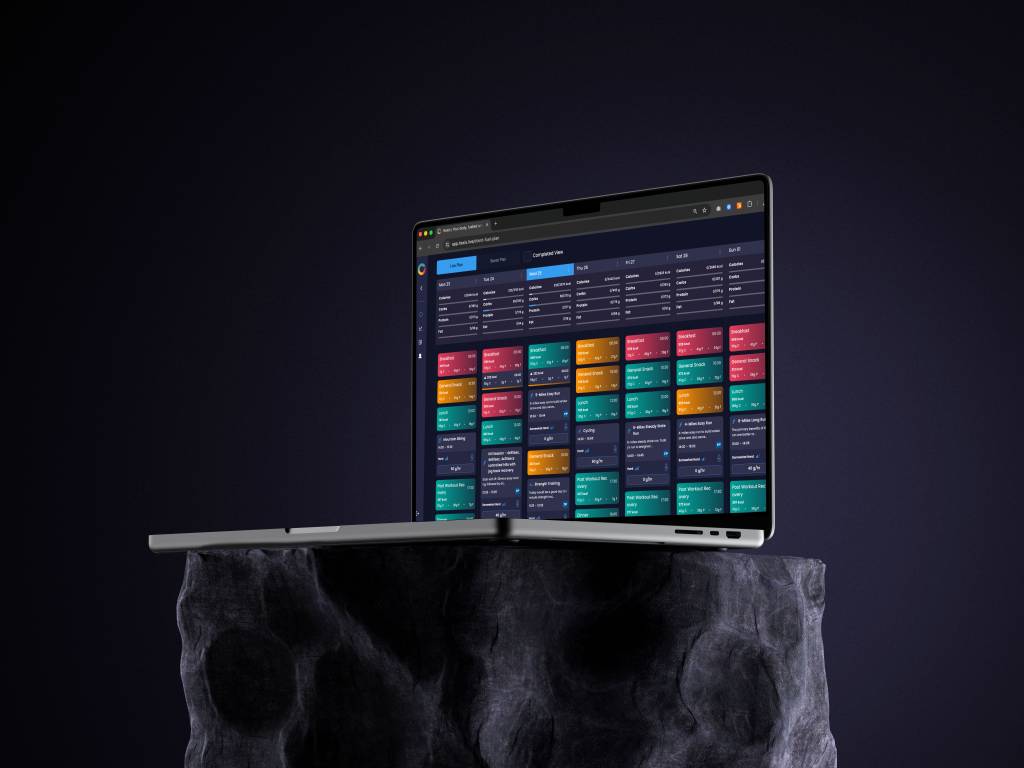
In the elite peloton, Hexis works with the likes of Ineos Grenadiers, EF Pro Cycling, UAE Team ADQ, Tudor Pro Cycling and Q36.5 Pro Cycling and Alpecin-Premier Tech.
Arsenal FC, the Irish rugby team and Team GB are also said to use it.
How much does Hexis cost?
On a three-month basis, Hexis costs £9.99/month and a 12-month plan equates to £19.99/month.
My experience with Hexis
Before and after my trial, I spoke to Dr Impey, who is also the author of a seminal paper on sports nutrition: “Fuel for the Work Required“.
This is what I’ve learnt from using Hexis and how this knowledge has benefited my cycling.
Don’t skimp on protein

Before trialling Hexis, my protein intake was usually 1.2-1.5g/kg bodyweight. I found out this is at the lower end of what is now recommended for endurance athletes training for 12 hours a week on average, like myself.
Hexis generally recommended at least 2g/kg bodyweight per day. Meeting the target required me to add a scoop of whey protein here and there and combine protein sources at dinner.
When asked why this is important, Dr Impey explained that high protein recommendations are not just for people spending a lot of time in the gym.
“We always think about protein as just going to our muscles, but the lining of your digestive tract turns over every three days. And so to replace all those cells, you need protein, because they’re the building blocks of a lot of structure in the body,” he says.
In addition to keeping your gastrointestinal tract capable of digesting large amounts of fuel, you need protein to support your heart, lungs and skeletal muscles.
“Having a good source of a wide variety of all the amino acids available for your body to use to replace and resynthesise the musculature protein as well as the other systems in your body is hugely beneficial,” he adds.
Carbohydrate timing
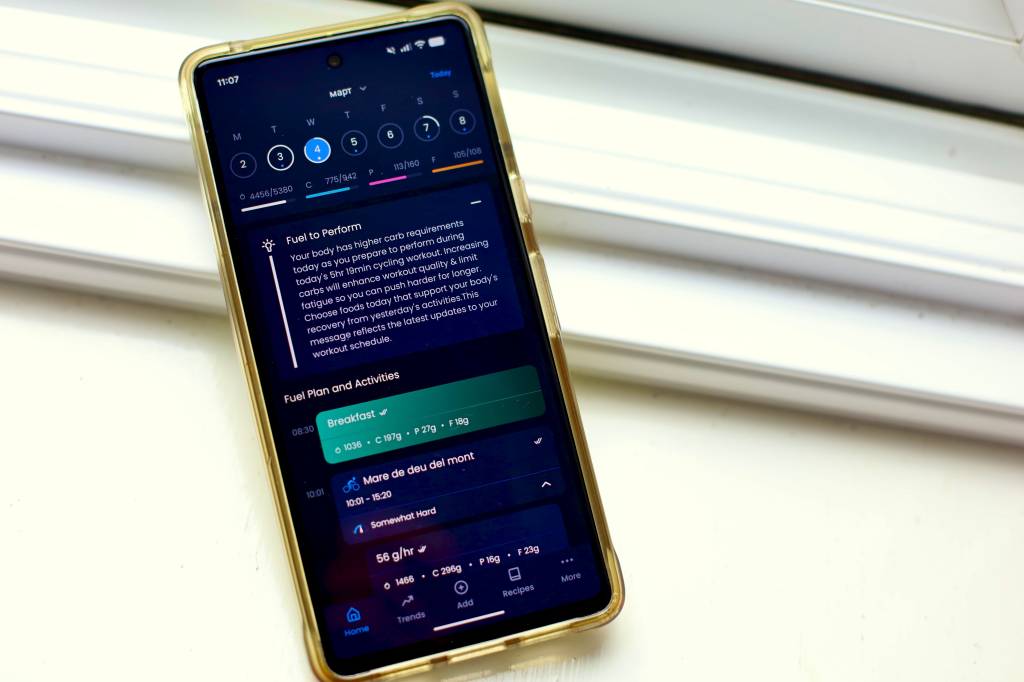
I was also struck by the extent that Hexis recommends grouping carbohydrate intake in and around training. I’d focused on high-carb pre- and post-ride meals before, just not to this level.
For example, a 90-minute pre-work ride would call for lots of carbs during and for breakfast, slightly less at lunch, then much lower carb afternoon snack and dinner.
“Putting, if not all, but a large proportion of your carbohydrates in the period before, during, and after exercise, gives them to your body when you really need them,” says Dr Impey.
What’s called carbohydrate periodisation is believed to stimulate positive adaptations, according to Impey.
“We’ve seen people just respond incredibly well to that from an adaptive and body composition perspective,” he says. “We quite often see people who are trying to maintain total body mass, actually reducing their body fat.”
The mechanism by which this happens is not fully understood. But Dr Impey believes the way lower carb intake in non-training times shifts your metabolism towards stored fat may explain it.
While I didn’t detect a significant change in body composition, I raised my FTP by 17 watts and lost a kilo while feeling very well fuelled.
Carbohydrate periodisation may have contributed to this.
“When people start to periodise their carbohydrates, we often see they tolerate training better,” says Dr Impey. “They can do the quality work more consistently, more often without getting sick or having additional days off. That compounds into better physiological outcomes.”
More on-bike eating
Hexis tended to recommend a carbohydrate intake of 60g/hour during rides, rising to 90g/hour for longer ones. This was as much as double what I taken in previously.
Upping carbohydrate consumption helped me feel stronger and mentally fresher in the last hour of four- and five-hour workouts. I also felt I recovered better from shorter, more intense sessions, and had to eat less for the rest of the day.
Dr Impey says the mental aspect is probably explained by how the brain runs almost exclusively off glucose.
The reason riding when well fueled with carbs feels subjectively easier is that you require 10% less oxygen to produce energy with carbohydrates than fat. “It’s a more efficient way to produce energy,” says Dr Impey.
Although there is no scientific evidence for it, he adds: “I think fueling during exercise has a longer tail of benefits from a metabolism perspective.”
Go easy, go lower
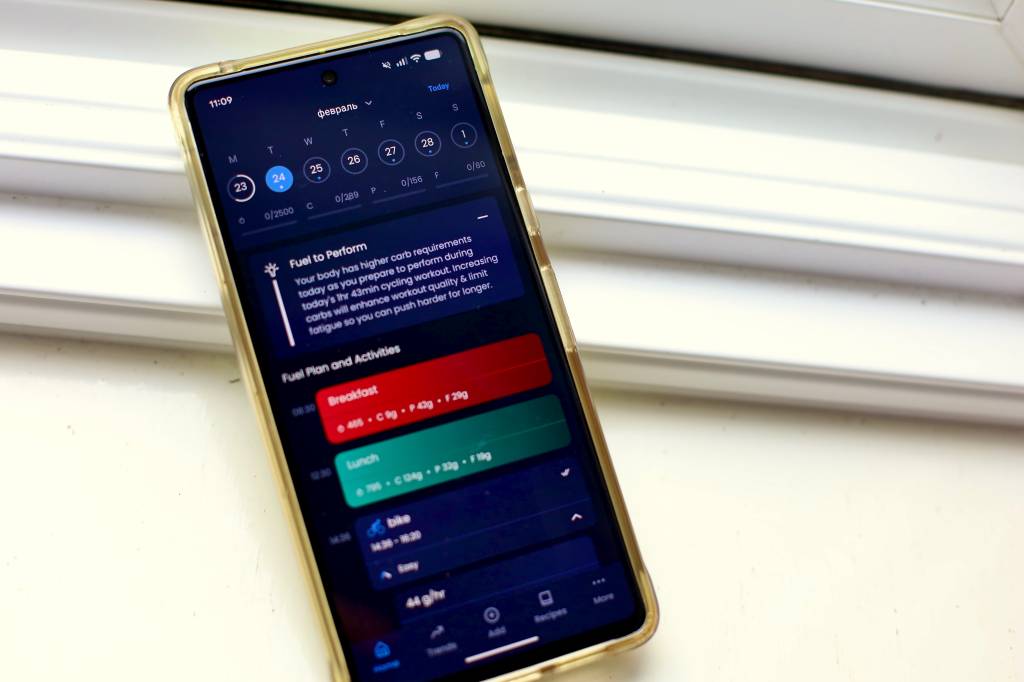
The flipside of fuelling for the work required is that rest and recovery days need comparatively few carbs. Hexis will still recommend 3-4g per kg bodyweight of carbohydrates on such days.
Dr Impey says: “It’s low carb and it’s certainly not zero carb. But it’s just significantly lower than when you’re doing four hours of bike riding because you also don’t have 3,000 calories of exercise to fuel on that day.
“That reflects the idea of putting the fuel in for your body to reflect the metabolic needs that it has on that day.”
This was a slight change for me. Before, due to not eating enough on hard days, I’d carry a deficit over onto easier days, which would encourage me to overheat for their demands.
While this isn’t necessarily an issue if you maintain overall energy balance, Dr Impey adds: “It seems like it’s suboptimal for driving the best responses to training that we want to see.”
Hexis is clever enough to detect when you might need to deviate from this principle. For example, when you have a hard workout planned early the next morning. If you designate this as a ‘key performance’ ride, the app will raise your recommended carbohydrate intake the night before.
Everyone can benefit
Don’t let Hexis’ association with elite sport put you off if you, like myself, are miles off that level. Impey says he and his team are working to make Hexis more accessible to people who ride a few times a week.
“The message that we really want to share is that we can be beneficial for you. It doesn’t have to be about performance,” he adds. “Maybe you just want to feel better riding your bike and have more energy. We can help you do that.”
I agree, and I think Hexis can benefit all levels of cyclists. When I was new to cycling I usually underfueled. Looking back I wish I’d had something like Hexis to improve my nutrition quicker.
I’m far more experienced now, but still learnt lots during my month using the app. More crucially, I put these lessons into practice.
Given a yearly subscription works out as a tenner a month, Hexis represents good value considering the insight it provides, how easy it is to use and its potential benefits. After all, being optimally fuelled at a good weight is a maximal, not marginal gain.


 Jack Evans