Steady as she goes: how consistency unlocked elite podiums for Jess Fullagar
Consistency, patience and a growing self-belief are fuelling British pro Jess Fullagar’s ascent through the ranks, and thanks to several recent world-class results the tri world is starting to take notice. During a stopover in Hong Kong, we caught up with the next British female star.

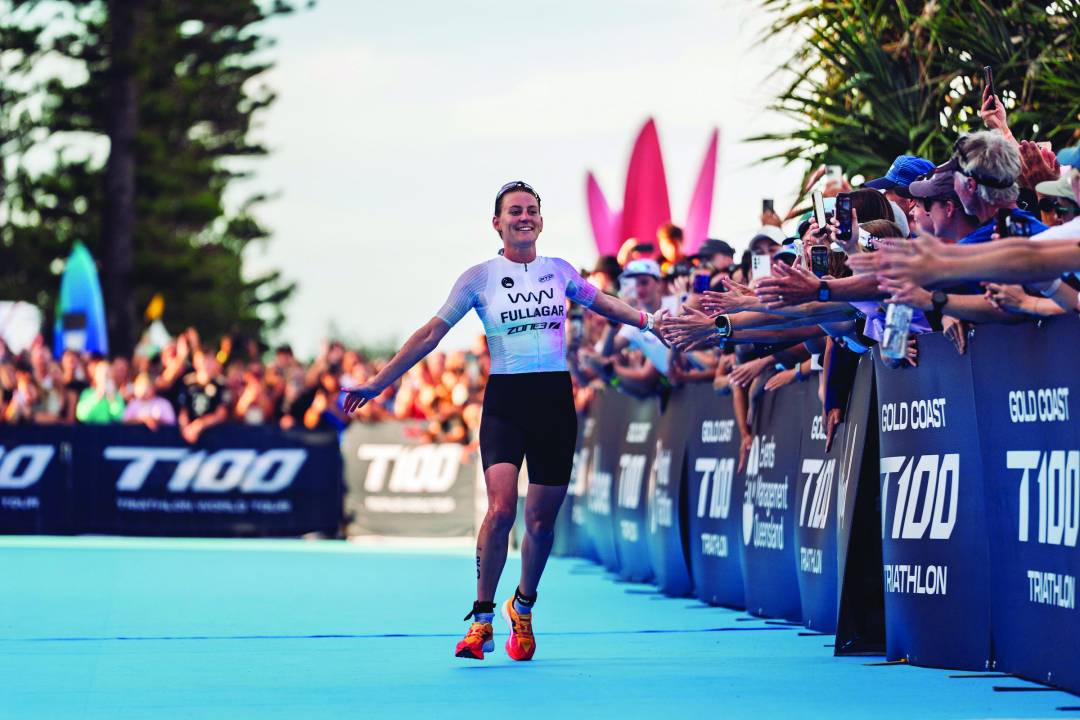
Jess Fullagar answers our call from Hong Kong, mid-way through a carefully planned stretch of racing and training as she builds toward a packed World Triathlon Championship Series calendar. It’s hot, she says of her temporary location, “very sweaty, but all good”.
Following a headline-grabbing six months of results at the back end of 2025 and into spring 2026, Fullagar, who grew up in France and raced for the French national junior squad before relocating to Leeds, has stepped firmly into the ‘ones to watch’ conversation.
The 2026 WTCS season has begun in measured fashion for Fullagar, who describes her recent performance in Samarkand, Uzbekistan, with a mix of satisfaction and quiet critique. “Overall I am happy with it,” she says of her 11th-place finish. “I felt like I was lacking maybe a bit of sparkle, but I’m always a bit tentative for my first race of the season, kind of feeling it out.”
She points to missed opportunities: “Being a bit more aggressive on the bike and having a bit more self-belief”. But an 11th-place finish was once the stuff of ambition; now it’s something she views through a different lens: “If you told me I’d get 11th a couple of years ago in a World Series, that’d be pretty cool”.
That shift in expectation is perhaps the clearest indicator of her progression. Fullagar, now 25, isn’t chasing breakthroughs anymore. Ask what’s behind her recent run of form, and the answer is straightforward: “A lot of consistency”. Under the guidance of Rhys Davey, head coach at Leeds Triathlon Centre, Fullagar has embraced a training philosophy rooted not in extremes, but in reliability.
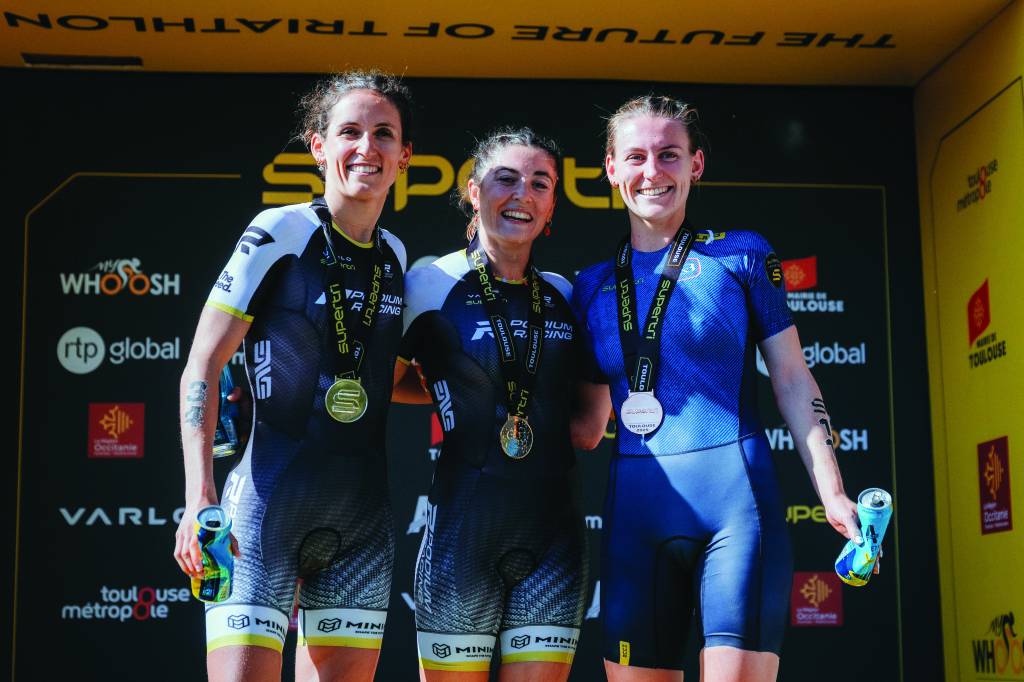
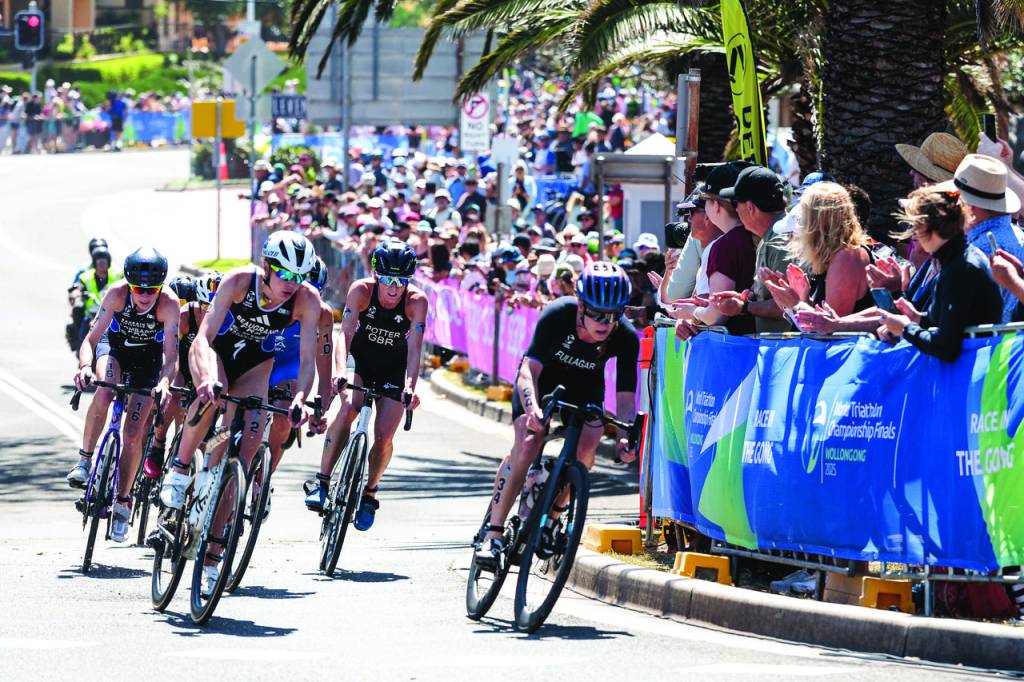
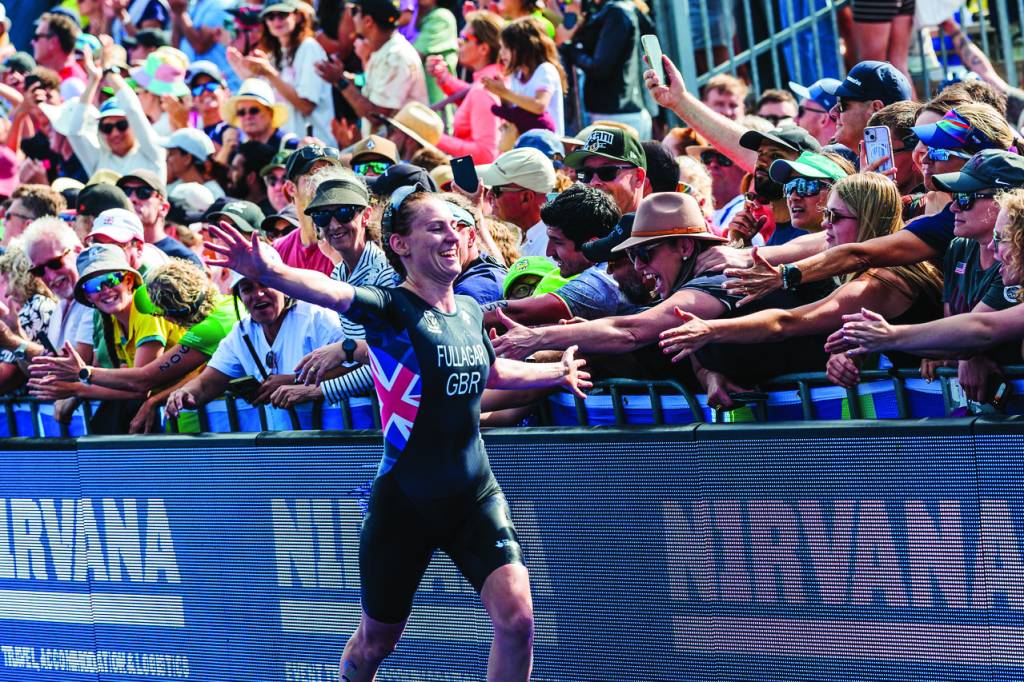
“There weren’t many sessions missed over the whole year,” she explains. “Nothing was extraordinary, but we prioritised training blocks and camps.” That approach may lack the glamour of headline-grabbing sessions, but it has delivered results – a first Super League podium in October, a breakthrough fifth place at the Worlds in Wollongong, a Noosa Triathlon win – beating Paris gold medallist and world champion Cassandre Beaugrand into third place in the process – to that debut T100 podium in Singapore in March of this year. “If you’d asked me in August, there were times I was quite teary because I felt fit but wasn’t getting results.” But then, as she puts it, “it all came together”.
Embracing the unknown
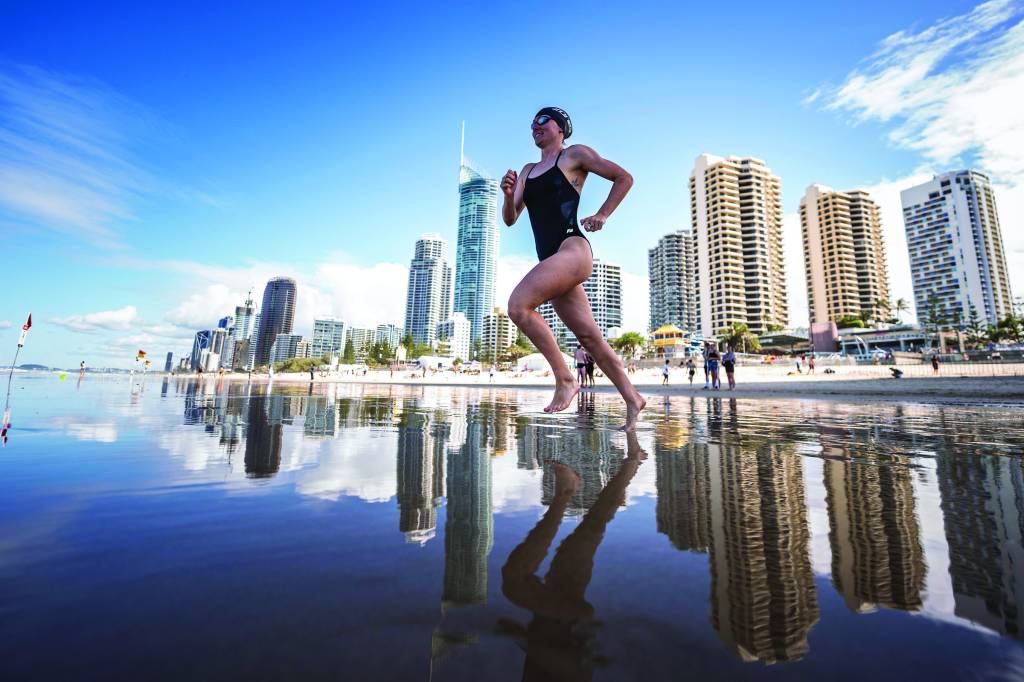
One of the more intriguing chapters in Fullagar’s recent journey has been her step up to 100k racing. It’s a format that demands not only physical endurance, but also a willingness to embrace the unknown. “I had no idea what to expect,” she admits. “My main concern was nutrition. I thought I might be frazzled by the end. I remember saying to a lot of people, ‘I’m just scared that I’m not going to have the pace’. You hear so many of these stats about girls holding these watts for 80, 100k, and it just sounds mad. Rhys was like, ‘well, do you want to set a target power to ride to?’. But I said, ‘I’m a racer, so I’m just gonna go with the race and if I can hold it, I can hold it, and if not, then I’m just going to feel it out’. But mostly I was surprised by how much I enjoyed it. It was a long day, but I loved it.”
Fullagar would finish second behind one of the best in the long-distance business, Taylor Knibb, who could be seen on TV chatting away with Jess at the line. “She was like, ‘so do you like it?’ And I was like, ‘I think so, but I might need an hour or so before I give you an honest answer because I’m sore all over right now’. She said I should definitely do some more. We both agreed that it complements our short-course racing. She’s such a chatterbox, bless her, but I was like ‘I need a minute here, Taylor’!” So what was Jess’s biggest take-home from stepping up in distance and finding she was well-suited to it? “That a bit of self-belief goes a long way, just believing that you can. I think for quite a few years I really doubted my running ability. But out of all those races, it was my running that surprised me the most. So I think it’s just backing yourself.”
Part of the environment
Helping her to discover that inner confidence and playing a crucial role in shaping her approach also has a lot to do with her training environment in Leeds. “It’s massive,” she says of its influence. “I chose where I train based on who was there.”
Training alongside athletes like Non Stanford and Georgia Taylor-Brown has left a lasting imprint.
“Non is an incredibly hard trainer and that influences me day to day,” she explains. “Her work ethic is unlike anything I’ve ever seen. But also on top of that, as a person, she looks out for the younger generation. You can be successful and a really decent human being as well. I was really fortunate that I was coached by her for two years. And Georgia just loves an aggressive race, which reflects how I want to race.”
It’s a blend of discipline and daring, two qualities that define the very best in the sport. And while several of the big names have moved on (Non to coaching in Australia, for example, but the two remain close despite the distance), their influence remains.
“It’s on me to take that [legacy] forward,” Fullagar says. “Most are still racing of course, so it’s not like they’ve passed the baton or anything, but I want to continue what they’ve taught me.”
That sense of responsibility marks another step in her evolution. She’s no longer just learning from the environment, she’s becoming part of what makes it so effective. Leeds remains the cornerstone of Fullagar’s training life. It’s a place she’s come to call home since arriving as a student when she was 18. So having experienced training in both the French and the British national squads, how do the two differ?
“The French get professional very young, which can be amazing because it means that they’re extremely diligent and detail-oriented. But on the flip side it’s very intense, very young. Whereas when I came to Leeds, it was very much, ‘you are still a person first and foremost. There’s a world outside of triathlon and we need to look after you as a person, you’re not just a triathlete.’
“So that was quite a big shift. I was always called the English girl when I was with the French, and so as much as they did take me in I still somehow felt like an outsider. I’ve always felt at home [here in Leeds],” she says. “And the group just makes it.”
A day in the life
A day in the life
In Leeds, a typical Wednesday for pro senior WTCS athlete Jess Fullagar looks something like this…
7:20am: Wake up
7:30am: Breakfast 1 – toast and jam
8-8:30am: 30min run with the dog in the trails around my home
9am: Breakfast 2 – normally yoghurt, granola, hot cross bun and a hot drink
10am-2pm: 4hr long ride with a group around the Dales, usually involving a cafe stop
3pm: A quick lunch at home post-ride – usually eggs on toast
4pm: Leave for the pool 4:30-6pm: 90min swim, usually around 5.5km
7pm: Dinner with my girlfriends – this is a routine night for us all to get together to have dinner
9:30pm: Bed, read or watch something
The Yorkshire Dales, too, have left their mark. “I’d never been before and I just loved riding there,” she recalls. “A summer’s ride, it’s really nice.”
Of course, it’s not without its challenges. “Winter and the limited daylight,” she says with a smile. “And more pools would be nice.”
Still, the structure it provides is invaluable. A typical training week is a carefully balanced mix: six swims, five rides, five runs, gym sessions, drills and recovery (see box opposite, for more detail). In total, around 28 hours of training. Rest is taken just as seriously.
“I aim for eight to eight and a half hours of sleep,” she says. “If I get nine, I’ve smashed it.”
Naps are added where possible. It’s a routine that reflects the same consistency she credits for her progress – nothing flashy, just relentlessly effective.
The power of perspective
Perhaps the most defining element of Fullagar’s current mindset is perspective. It’s something she gained during a two-year break from the sport due to injury – a period, where she went to work in a brewery, that could easily have derailed her career but instead reshaped it. “
Before, I really struggled when it did get hard,” she admits. “Whereas now I do it because I enjoy it. I’ve got the perspective that you might be having a bad session or you might be really tired, but I’ve got friends who work in A and E who pick up vomit and shit every day. And realistically, my LT2 being 10 watts lower today just because I’m tired is not the end of the world.
“And also just because what I get to do is really, really cool. I just love being able to swim, bike and run for a living around the world. It’s not going to last forever, and I just want to be the best version of myself.”
Looking ahead, Fullagar is clear about what success means to her: “Making an Olympic team”, she says. “That would be the pinnacle.” Beyond that, it’s about longevity and impact. “If I can inspire one or two more girls to pick up a bike or a pair of running shoes, that would be success.”
There’s also a personal benchmark, one that speaks to her character as much as her goals. “If I can look back and think I trained as hard as I could, I was as smart as I could, and I have no regrets, that would be success”. For now, though, she’s focused on the present – the steady climb, the building of momentum. “It’s like we are simmering,” she says as a way to describe this phase of her career. “And I hope to bring it to boiling.”
Jess Fullagar’s training week
Jess will spend approximately 28 hours doing swim, bike, run and gym work. Here’s the breakdown…
Swim
6 sessions, including 2 quality (one V02, one threshold). The rest are smaller volumes and generally just aerobic work. There might be a few sprints, but they’ll be a smaller volume.
Bike
5 sessions, including 2 sessions based on the time of year, e.g. one threshold and maybe one LT work, or whatever we’re working on at the time.
Run
5 sessions, including 1 track, 1 tempo, 1 long run and 2 easy jogs.
Gym/drills
2 gym and 2 drill sessions a week, including plyometrics.
Sleep/rest 8-8:30hrs sleep per night.
I do try and nap but there are days where it’s back to back, like long aerobic days, so it’s pretty hard. But definitely on a Tuesday, a Thursday and a Friday I’ll get a nap in. And Friday afternoons we have off, so I just swim and gym. You can also get some jobs done or you reset, you rest, you get physio. Ready to go again


 Liz Barrett
Freelance sports journalist, copywriter and editor
Liz Barrett
Freelance sports journalist, copywriter and editor