“It gives me freedom but also responsibility, you have to create your own path.” Miguel Hidalgo talks trailblazing in triathlon for Brazil
He won his country’s first-ever WTCS race in 2025 and this year is hoping to bring home its first world title. Brazil’s Miguel Hidalgo tells 220 how he plans to shake up triathlon’s pecking order.

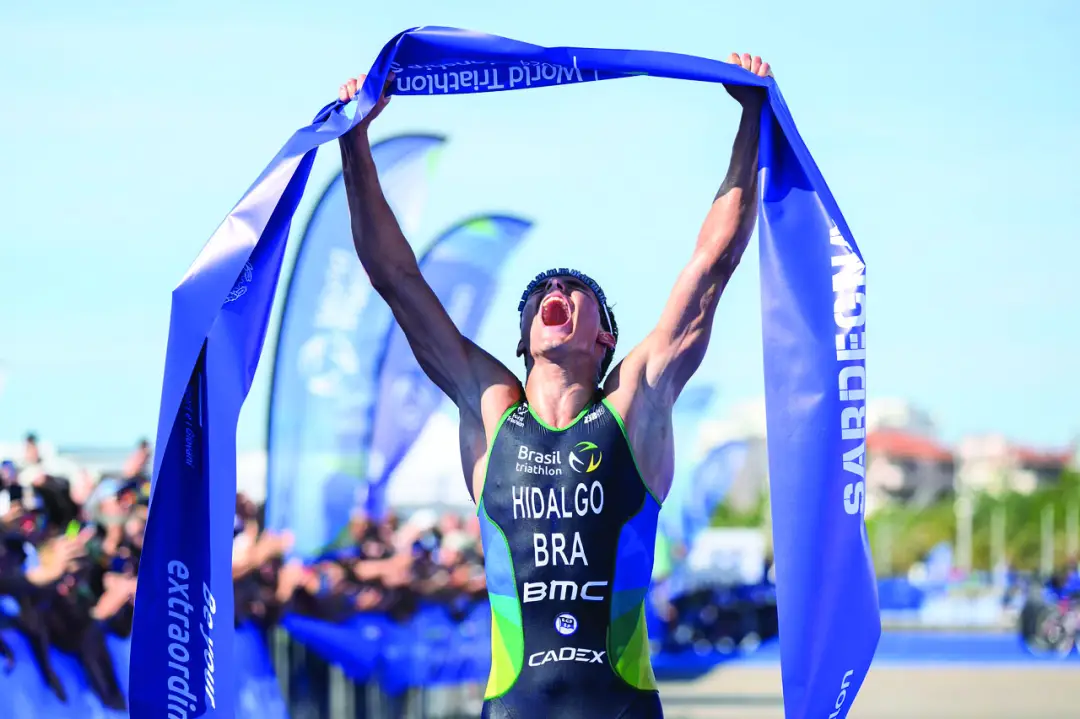
Miguel Hidalgo doesn’t just want to win races, he wants to change what’s possible. At 26, the Brazilian has already done something no athlete from his country has achieved before: standing on the top step of a WTCS podium.
His breakthrough victory in Alghero in May last year wasn’t a flash of brilliance, but part of a season that confirmed his arrival among the sport’s elite, culminating in second place overall in the World Triathlon Championship Series standings.
Add a top-10 finish on his Olympic debut in Paris a year earlier and a statement middle-distance win over 70.3 in Brasília in April 2025, and it’s clear Hidalgo’s trajectory is only pointing one way.
Yet what makes Hidalgo particularly compelling isn’t just the results, it’s how he’s earned them. Coming from a nation without a deep-rooted triathlon system, his path has been anything but conventional. Moving abroad, adapting to new environments and navigating financial and logistical challenges, he’s had to build his career largely from scratch. In doing so, he’s become a trailblazer for Brazilian triathlon.
Last season, however, also exposed the fine margins that exist at the very top of short-course racing. For all his consistency – hello six top-four WTCS finishes from seven starts – Hidalgo knows that relying on a world-class run alone is no longer enough. The takeaway? For consistent victories, he must become a more complete athlete – one capable of dictating races. That evolution has shaped his approach heading into this season.
There’s been no radical overhaul, but rather a process of refinement: more race-specific training, sharper tactical awareness and, crucially, a growing belief that he belongs at the very front of the field. Last year Hidalgo competed with the best; in 2026 he intends to beat them. With the WTCS title firmly in his crosshairs, and Olympic ambitions sharpened by his Paris experience, Hidalgo enters this campaign as both hunter and hunted. The return of heavyweights like Alex Yee and Hayden Wilde only raises the stakes, but, for Hidalgo, racing the very best is what fuels his progression.
And so here, responding to our questions over email from his training base in France at the start of April, Hidalgo reflects on a breakthrough year, the lessons hidden within it, and how he’s shaping the next phase of his racing evolution.
Q&A with Miguel Hidalgo
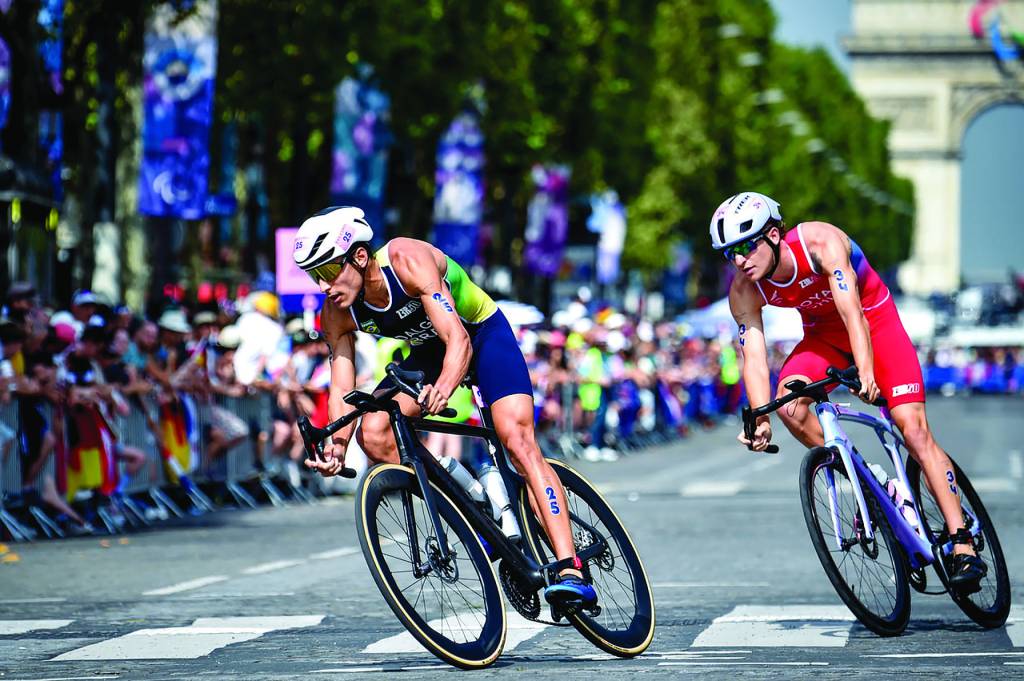
220: Looking back at 2025, what were the biggest highs and lows for you personally and professionally?
Miguel Hidalgo: Last year was amazing for me with the results I got in the season. The highs were being consistently in the mix with the top guys at World Cup and WTCS races. And the lows were a few mistakes in some races that I made, but I automatically learned from them.
220: Is there anything you would do differently if you could replay last season?
MH: I would probably be more selective with my race calendar and manage peaks better. At this level, it’s about getting the right races in your best preparation.
220: What do you feel you learned most about yourself as an athlete over the past year? MH: I learned I can rely on my run, but also that it’s no longer enough on its own. Also that you might be confident in every win or even when you get a top three in every race.
220: Was there a specific race or moment that changed your perspective or approach going forward?
MH: As above, there were a few races where I came off the bike slightly too far back, which showed me that even a strong run isn’t always enough. Being in a good position before T2 is so important in every race.
Miguel Hidalgo’s best resuls to date
The young Brazilian is no stranger to a podium or six. Here are his highlights so far…
2nd overall, 2025 WTCS
5 x WTCS podiums, inc. victory in Alghero, 2025
1st, Ironman 70.3 Brasilia, 2025
10th, 2024 Paris Olympic Games
220: How did last year shape the way you’ve approached training and preparation ahead of this season?
MH: It pushed me to become a more complete athlete, not just chasing from behind, but racing from the front.
220: How did you spend your off-season?
MH: I took some time to reset mentally, but stayed active with some more enjoyable training.
220: What were the key areas of focus in your training during the off-season?
MH: I always feel that there is space to improve my positioning on the swimming and bike. If I improve that, there is no doubt I’ll be a step ahead to fight for the win.
220: Have you made any significant changes to your coaching set-up, training structure or mindset since the end of last season?
MH: Yep. It’s more about refinement than change, working more race-specific situations and also a mindset shift towards winning, I can be more assertive in races, without a doubt.
220: What is your main performance goal for this season? And how are you structuring your year to achieve it?
MH: I have to be more consistent on the podium and fight for the overall WTCS title, structuring the year around key races.

220: Do you already have a race schedule mapped out? And which events are you most excited about?
MH: Yes, WTCS races and championship events are the priority, those define the season.
220: Who are you most looking forward to racing this season and why?
MH: Quite simply, the best in the world, that’s what pushes the level higher.
220: With Hayden Wilde and Alex Yee back in the WTCS mix, how will that change the dynamic, do you think, for this all-important Olympic qualifying year?
MH: These guys push the level and make races more intense and tactical. You can’t afford to make any mistakes.
220: What specific improvements do you think are needed to go one better and finish as world champion?
MH: I want to improve my swim positioning and automatically I will be in the front bike group.
220: What are your thoughts on the delay to the World Triathlon Series start in Abu Dhabi, and how has that impacted your preparation?
MH: It requires adjustment, but also gives me more time to prepare and arrive stronger [at the first race in Samarkand, Uzbekistan, on 25 April].
220: Two years on, how do you reflect on your Olympic debut at the Paris Games – what did that experience mean to you?
MH: It was a very special experience, representing Brazil on that stage was unforgettable and motivating.
220: In what ways has racing at the Olympics changed your mindset or ambitions moving forward?
MH: It’s made me more ambitious, now it’s about fighting for medals – especially the gold medal!
A day in the life
To race at the pointy end of tri it’s all about “monk mode” for Miguel Hidalgo.
Here he shares a typical pre-season 24hrs…
7am Wake up
7:15am: Breakfast and coffee
8am: 4-5km swim
10am: Snack and recovery
10:30am: 2.5-4hr bike
2pm: Lunch and rest
4pm: Run session
5:30pm: Mobility session
7pm: Dinner
9:30pm: Sleep
220: As a Red Bull athlete, what does that partnership mean to you and how do they support your performance?
MH: Well, since I started my career as a professional athlete, I always dreamed of being a Red Bull athlete some day. Thank God, the dream came true last year. It represents performance and pushing limits, and gives me the support to focus fully on improving.
220: Brazil has no real endurance sport legacy. Compared to some of the more traditional triathlon nations – Germany, Australia, UK, France – how were you able to create your career path? What obstacles have you faced to get here? And what obstacles do you continue to face?
MH: It wasn’t a structured path, for sure. I had to move abroad, adapt, and overcome financial and logistical challenges.
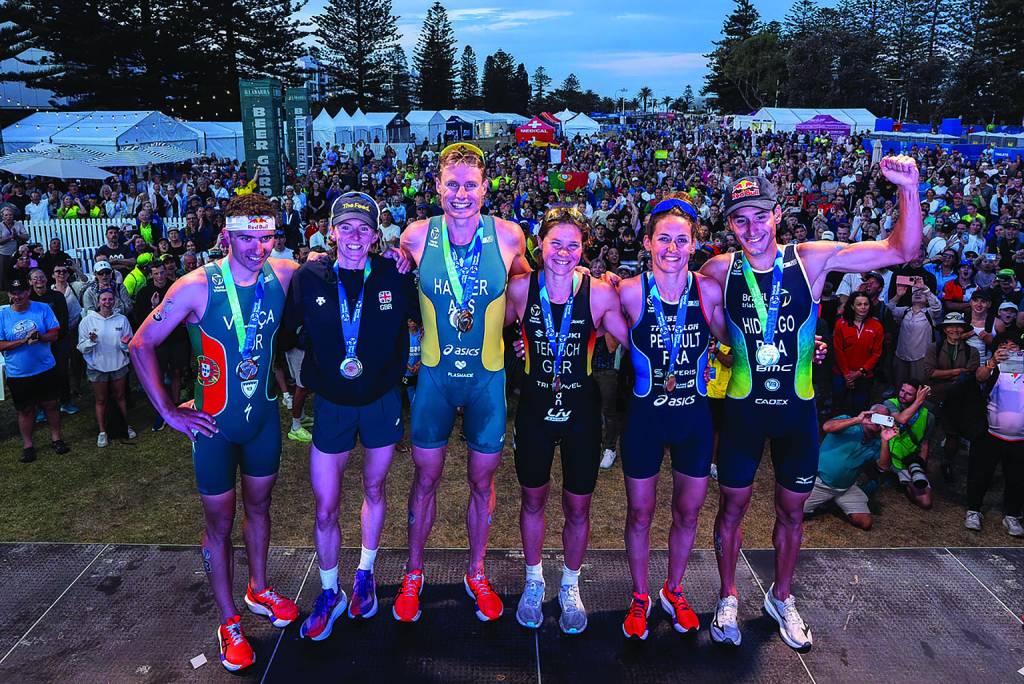
220: On the flipside, there are no expectations, no one’s footsteps to follow in – what’s it like being a trailblazer representing your country in the races?
MH: It gives me freedom but also responsibility, you have to create your own path.
220: I read that you worked with a psychologist – what brought that about and how did they help you in your profession?
MH: It’s been key for dealing with pressure and improving my decision making in races.
220: You’ve also competed in several 70.3s, how does middle-distance racing compare to short-course racing for you, both physically and mentally?
MH: It’s more about pacing and control, while short-course is more explosive and tactical. For me, WTCS races are like F1 and endurance triathlon races, such as 70.3 and Ironman are like Le Mans.
220: What made you sign with the Bianchi Pro Triathlon Team – a traditionally long-course/Kona- focussed outfit – in 2025?
MH: Bianchi has a long and amazing history in the cycling world with great results and the brand is aligned with my long-term goals.


 Liz Barrett
Freelance sports journalist, copywriter and editor
Liz Barrett
Freelance sports journalist, copywriter and editor