Polar Grit X2 review
After five years, Polar has released the second-generation Grit X2. What's new and is it any good? James Witts finds out.


220 Triathlon Verdict
Much better value than the Pro. Fine watch. Just needs a little makeover to make it ideal. Score: 81%
Pros
- Better value than before
- Excellent GPS
- Smart coaching features
Cons
- Polar app still disappoints
- Route loading only via third-party app
- User experience could be better
It’s been five years since Polar launched the Grit range of multisport watches, so fair play to the Finnish crew that the Grit X2 is only around £50 more than the original on launch.
In a world that’s been highly inflated these past few years, that’s impressive. The news for US shoppers is less good. In dollars, the price has soared by $270 or so.
The fact it’s $200 / £250 cheaper than the Grit X2 Pro, with predominantly the same feature set, isn’t to be sniffed at, either.
How we tested multisport watches
Our expert reviewers take triathlon watches on several rides, runs and swims to assess their heart-rate and GPS accuracy, multisport modes, health and fitness metrics, comfort, clarity of screen, connectivity, value for money and extra features. For more details, see how we rate and test products.
Polar Grit X2 vs Grit X2 Pro
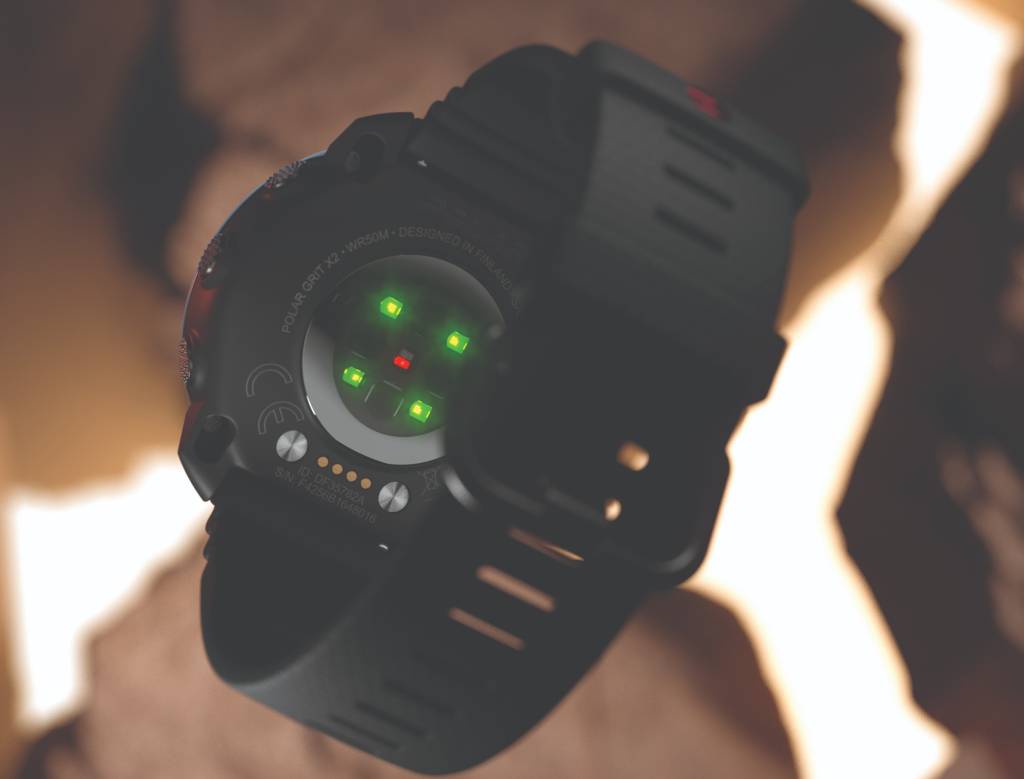
What are the main differences between this and the $749.95 / £650 Pro? In all honesty, it’s more about software than hardware.
It’s smaller, at 45mm compared to 49mm, which is still sizeable enough to sight during exercise and feels plenty big enough, without swamping smaller wrists.
Naturally, that means a smaller battery, which means a shorter battery life. But that’s not a problem as it still comes in at 30hrs in full GPS and seven days in smartwatch mode.
Its waterproofing’s 50m compared to 100m on the Pro but that’s still sufficient for triathletes when open-water or pool swimming. Just don’t go scuba diving!
Polar Grit X2 navigation
Like the majority of watches here, it delivers the majority of features any discerning triathlete would desire, arguably the main one being excellent GPS pick-up.
That means you can trust the mapping option, which pings thanks to the AMOLED screen.
Like many at this price point, turn-by-turn navigation is available only when you upload routes via a GPX file or third- party apps like Komoot. You don’t need to download for the back-to-start mode, however, which is always appreciated if you’re running somewhere new.
The only minor annoyance carried over from the Pro is that occasionally the map needs calibrating via a jolt of the wrist. It’s no biggy but in this high-tech world it does feel a little parochial.
A coach on your wrist
It’s packed with Polar’s array of smart coaching tools to assess how recovered you are, when you should fuel – extremely useful on long bikes – and how you’ve slept.
They’re all useful to help drive on your triathlon training, as is the VAM feature in the cycling department. This measures the rate at which you climb or descend, taking both vertical and horizontal data into account, and is a good, proven metric to measure your ascent to top-notch climber.
Heart-rate accuracy is middling – it’s fine for easy efforts but can be a little jumpy during interviews – and there’s a screen torch, which is okay but nowhere near as effective as the Garmin flashlight.
Bottom line
But where the Grit X2 could do with a nudge forward is its user interface and the Flow app itself.
Both seem a little dated compared to the clean, smart feel of the Garmin and Amazfit. Hopefully that’s in development as both interfaces have been around for many years now.
Polar Grit X2 specs
| Price | $799.99 / £399.99 |
| Weight | 2.19oz / 62g including strap |
| Dimensions | 44.7mm x 44.7mm x 12.5mm |
| Screen | 1.28in AMOLED display, touchscreen, 416 x 416 resolution |
| Performance | 275Mhz CPU, 32GB storage |
| Tech | Dual-frequency GPS, 24/7 activity tracking, turn-by-turn navigation, Vertical Speed and VAM, swimming metrics, wrist-based running power, Training Load Pro and Recovery Pro |
| Connectivity | Bluetooth 5.1, USB-C cable for charging |
| Battery life | Up to seven days in smartwatch mode, up to 30 hours in training mode |


 James Witts
Freelance sports writer and author
James Witts
Freelance sports writer and author