What are the best clip-on aerobars? We’ve tested 10 for speed and aero comfort
Often, the easiest way to shave off seconds on a road bike is to add a set of clip-on aerobars. Here, we review 10 of the best for triathlon…


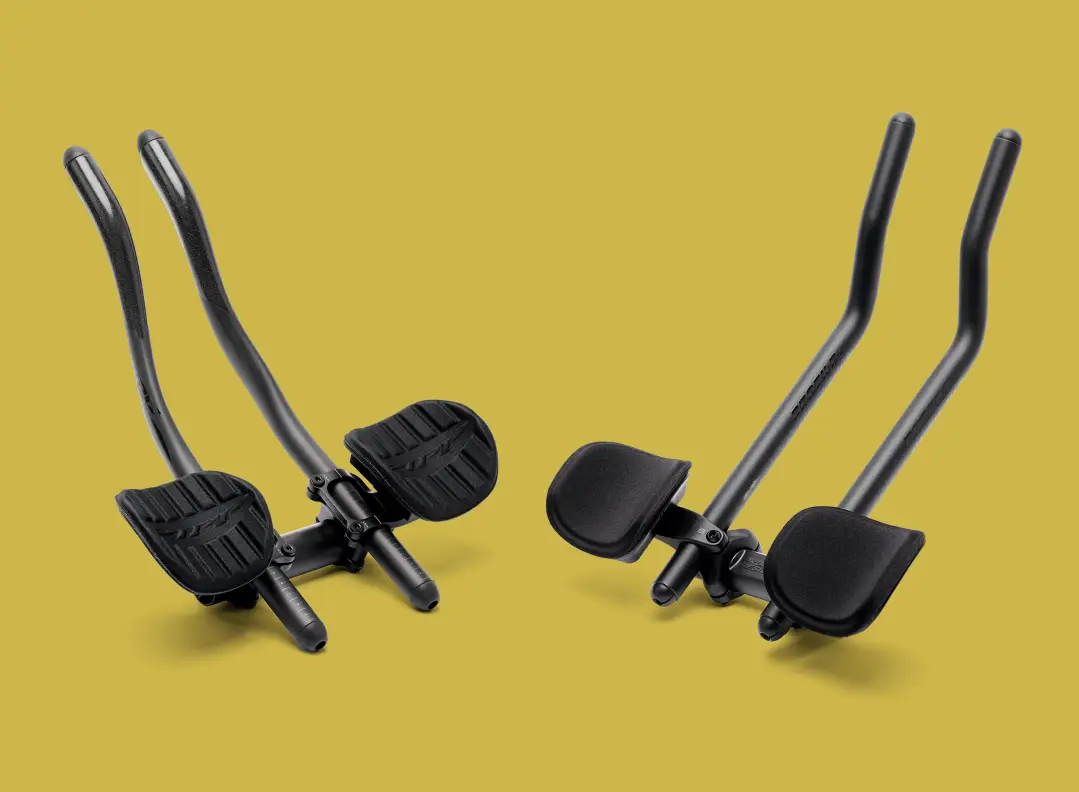
Clip-on aerobars, which are also known as triathlon bars, are handlebar extensions with padded forearm rests that allow the rider to get into a more aerodynamic position by drawing their body forward into a tucked position, with a dropped torso.
It’s no use wearing one of the best aero road helmets if your head is sticking up in the air. So if you want to make your bike faster for time trials and triathlon races, tri-bars should be one of your first purchases.
Here are our favourite clip-on aerobars for triathlon racing, plus a guide underneath about what they are and what makes the best aerobars so good…
Why you can trust 220 Triathlon
Our team of experts rigorously tests each product and provides honest, unbiased reviews to help you make informed decisions. For more details, see how we rate and test products.
The Zipp Vuka Clip (buy) is incredibly ergonomic, simple to set up, and offers lots of adjustment options.
The Profile Design SubSonic Ergo 39A (buy) provides lots of adjustability while being comfortable and aero
The Van Rysel Long-Distance Triathlon Extensions (buy) are affordable, easy to use, and incredibly good value.
For ease of use and adjustment, the Vision TriMax Carbon Clip-on S-bend (buy) score highly.
The lightest aerobars on test at 11.64oz / 330g, the Deda Elementi Superzero Extensions (buy) will appeal to weight weenies.
If your budget and experience level are high, the Deda Elementi Jet One Clip-on (buy) could justify the cost.
Providing more than 100 arm positions and permitting you to upgrade parts, the Profile Design Sonic Ergo 39a (buy) are a tinkerer’s dream.
Excellent vibration damping and plush armrest padding make the Pro Missile Alloy Clip-on S-Bend Extensions (buy) very comfortable.
The BBB Aeromax (buy) are a shrewder investment than many budget clip-ons due to their superior speed, adjustment and comfort.
If you’re looking to reduce drag, consider the Profile Design Subsonic Ergo 35A (buy), which let you get 2cm lower than most rivals.
The limited extension range of the BBB Aerobase (buy) makes it easier to find your fit if you’re smaller in stature.
Best clip-on aerobars in 2026: tested by experts
Best overall aerobars

1. Zipp Vuka Clip
220 Triathlon verdict
Expensive, but brilliantly ergonomic and lots of adjustment on offer. Score: 90%
Pros
- Great ergonomics
- Highly adjustable
- Simple set-up
Cons
- Pricey
| Price | $165 / £154 |
| Extension length | 70/110mm |
| Weight | 19.9oz / 564g |
| Stack height | 37mm, 60mm |
Zipp’s Vuka Clip bars are available in aluminium or carbon – we tested the luxurious latter version, weighing 7.69oz/218g per bar including the clamp.
The standard 31.8mm clamp makes it suitable for use as a clipon with drop bars, or on a full tri rig with Zipp’s own Vuka Alumina Base Bar or Vuka Bull.
Extra wedges are included to increase the armrest angle by up to 15°, which you’ll appreciate if you favour a ‘mantis’ position. It also supports internal cabling to route gear shifters through if you intend to use on a tri bike.
Set-up is simple with two T25 bolts either side to tighten the extension clamp to your drops, and another two T25 bolts on top to tighten bars to the clamp.
There’s a handy key on the bars to dial in the fore/aft of the extensions. Carbon assembly paste is included to prevent slippage between the clamp and base bars you’re mounting to.
Zipp say that the Vuka Clip was born out of ‘data compiled from thousands of fit sessions’ to help riders maintain their aero tuck for longer, and it shows in how ergonomic the extension is.
The bend and the shape place the wrists in a highly comfortable position, and coupled with the wide, dense arm pads, I felt like we could stay out on the aerobars all day long.
Highly-rated aerobars

2. Profile Design SubSonic Ergo 39A
220 Triathlon Verdict
Unique aerobars with some very clever features. Score: 90%
Pros
- Great design
- Widely adjustable
- Comfortable and ergonomic
- Aero extension shape
Cons
- Not cheap for alloy
| Price | $250 / £189.99 |
| Extension length | 340mm |
| Weight | 20.8oz / 590g |
| Extension angle | 39° |
The Profile Design SubSonic Ergo 39a are not cheap, but if you’re after maximum aero gains without going full custom, they’re one of the smartest options out there.
Uniquely among clip-on aerobars, they incorporate a clever sleeve to secure the extensions.
The clamp attaches to your base or drop bars, and the alloy extensions slide into the brackets for a sleek appearance.
As the bars are in line with the clamp, this allows for a lower stack, meaning the rider can achieve a lower, narrower position.
The clamp is also compatible with Profile Design’s riser blocks (sold separately) which can add up to 70mm of stack without affecting the pad to grip angle.
It’s clever stuff, and the extra benefit is they ain’t half easy to set up; just a 5mm Allen key was needed to attach the clamps to my road bike, before sliding the extensions in and tightening the bolt on each side with a 4mm Allen key.
I have a huge bag of Profile design spacers that came with the Cube Aerium tri bike I reviewed for 220, so I tested the bars set up as low as they go, and with 30mm of rise.
I personally prefer the latter, but whatever stack height you choose, the other features of the SubSonic Ergo provide a comfortable, ergonomic ride, for any triathlon distance – handy if you race several.
The Ergo armrests and pads are wide and plush, and the extensions themselves have a nice J-bend shape for improved aerodynamics, and felt nice in my hands.
Best aero bars for adjustability

3. Profile Design Sonic Ergo 39A
220 Triathlon verdict
With so many points of adjustment, upgrade potential and a very reasonable price, these would make a great choice. Score: 86%
Pros
- Impressive levels of adjustment
- Very good value
Cons
- Extensions could be too long for some
- Upgrades can become expensive
| Price | $190 / £149.99 |
| Extension length | 400mm |
| Weight | 19.9oz / 564g |
| Extension angle | 39° |
Adjustability is a big aspect of the Profile Design Sonic Ergo 39A, with 100 positions available via the armrests according to the brand.
It makes this a versatile set of clip-on aerobars, and they’re very good value, too. This set is available with various shapes and sizes of bars, with the name of this particular model denoting a 39° uplift.
I found the bars easy to get set up on my road bike, and achieving a good fit was straightforward, while a weight of 19.9oz / 564g for everything was also pretty decent.
The extensions are rather long, so you may need to trim them down if you have a short reach. Otherwise, your legs could knock into them.
I enjoyed using them on my test rides and you can even upgrade the armrests or extensions, as I experimented with in my full Profile Designs Sonic Ergo 39A review.
Best aerobars for comfort
4. PRO Missile Alloy S-Bend Extensions
220 Triathlon Verdict
Very comfortable over different distances with an aero design and competitive weight. Score: 85%
Pros
- Excellent comfort
- Fast-looking design
- Pretty adjustable
- Respectable weight
Cons
- More costly than most alloy options
- Spacers sold separately
| Price | $209.99 / £140 |
| Weight | 17oz / 484g |
| Shape | S-bend, 30-degree rise |
| Length | 13.5in / 344mm |
| Features | 31.8mm bar clamp, soft arm pads, multi-position width arm pads, adjustable bracket |
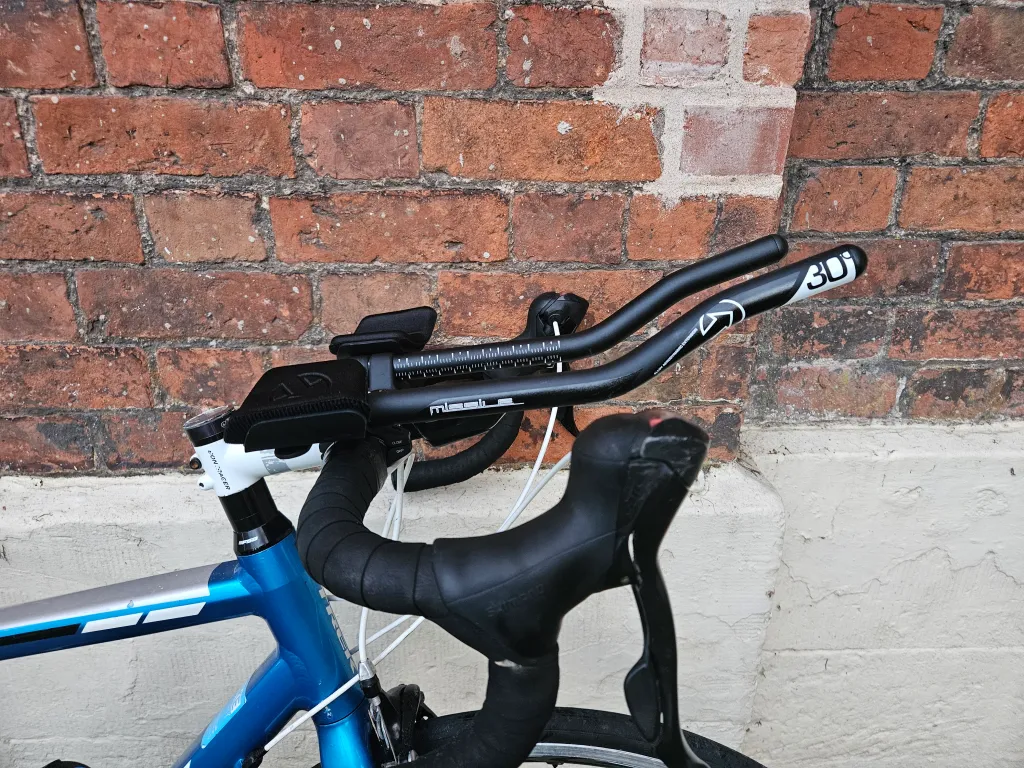
The PRO Missile Alloy S-Bend Extensions put you in a low, stretched position with their 30-degree upswing at the end of their S-shaped design.
Given the cost and limited availability of the spacer kit, I reckon these are best used with no stack, as I did in my testing.
Besides their impressive weight for their alloy material, the Missile S-Bend Extensions are also very comfortable. They damp vibrations well and the armrest padding provides a sustainable position for your forearms.
Although the price is relatively high for aluminium, these clip-ons are readily adjustable and straightforward to set up.
Read my full PRO Missile Alloy S-Bend Extensions review.
Best budget clip-on aerobars

5. Van Rysel Long-Distance Triathlon Extensions
220 Triathlon verdict
Extensions that do the job impressively at a jaw-droppingly minor cost. Score: 83%
Pros
- Incredible value
- Some adjustability on offer
Cons
- Pads aren’t all that comfy for going long
- Not the lightest
| Price | £44.99 (UK only) |
| Clamping diameter | 31.8mm / 26mm |
| Weight | 17.3oz / 490g |
| Extension angle | 40° |
These no-frills bars from Decathlon aren’t the comfiest, lightest, or most adjustable, but they’re a cheap way to upgrade your road bike and get into aerobar riding.
The clamp will fit 31.8mm or 26mm drop bars and the aluminium extensions have a measuring scale etched on so you can note your preferred length if you need to remove and reaffix.
There’s also some armrest adjustability to achieve your preferred forearm position. We found the position we dialled in comfy enough for short efforts.
The foam padding doesn’t cover much of your arm, so for middle to long distance, where you’ll often be in a fixed position, you might prefer bars that have larger, comfier pads.
They weigh 17.3oz / 490g for the pair, not even the heaviest in this test, although the extensions are quite short. Overall, it’s another bargain from the French brand.
See my full Van Rysel Long Distance Triathlon Extension review for more.
Best mid-range aerobars

6. BBB Aeromax
220 Triathlon Verdict
Affordable entry-level aerobars with impressive adjustability. Score: 87%
Pros
- Room for adjustable
- Decent weight
- Simple to set up
- More aero than most budget extensions
Cons
- Arm pads could be more comfortable
| Price | £79.99 (Europe only) |
| Clamping diameter | 31.8mm / 25.4mm |
| Weight | 18oz / 512g |
| Extension shape | J-bend |
The BBB Aeromax clip-on bars offer an affordable way into improving your aerodynamics.
The J-bend shape is aerodynamically optimised to replicate the ‘mantis’-style position now favoured by many triathletes.
The full set including the mounts and clamps comes in at 18oz / 512g, about average for aluminium clip-ons.
The bars are 350mm in length, and the bar ends are removable for running gear cables through.
Most triathletes in the market for budget clip-ons will be running them on a road bike, and that’s how I used them for my testing.
The bar clamps are ready for standard 31.8mm diameter drop bars, but inserts are also supplied for the few handlebars that are 25.4mm.
The bolts, adjustable with a 5mm Allen key, are easy to access, making set-up simple.
I was ready to go in less than 10 minutes.
For extra adjustability, the armrests and bar clamp for BBB clip-ons are separate, so there’s more fore-aft to play when mounting the pads.
The pads are also plusher and more refined than the basic foam you get on BBB’s Aerolight clip- ons, with numerous mounting positions, and I think these two bonus features are worth the extra spend.
While I prefer wider and deeper armrests, I found the shape and position of the bars excellent, and I’d only be wanting extra forearm comfort for longer triathlons.
For any triathlete buying their first clip-ons, I think the BBB Aeromax are significantly better than most entry-level options because of the extra adjustability and aero shape.
Best aerobars for short people

7. BBB Aerobase
220 Triathlon verdict
Well-shaped extensions and range make these a smart clip-on intro. Score: 80%
Pros
- Impressive value for money
- Good range of bar extension
Cons
- Road buzz isn’t reduced as well as higher-priced options
- Limited adjustability on the pads
| Price | $60.95 / £59 |
| Extension length | 365mm |
| Weight | 17.95oz / 509g |
Hit the sub-$100 price point and the compromises immediately begin to show in the AeroBase from BBB’s four-strong clip-on range.
That’s most evident in the cheap pads and sheer lack of adjustability options underneath them (just two fore/aft and width settings).
And yet there’s much here to please clip-on newcomers beyond the price, with an 80mm range of bar extension meaning I found his desired fit easier than some others on test (very tall riders might want more than the 365mm bar extensions, however).
I also liked the ergo-bend extensions and their steeper angle on the bike, while some neat metallic clamps are included to add more mid-ride security and protection between your bike’s handlebar and the system itself.
That said, the cheaper material doesn’t reduce road buzz as well as pricier options, so add bar tape for more protection. The weight for the complete aluminium set comes in at 17.95oz / 509g.
Best aerobars for an aggressive position

8. Profile Design Subsonic Ergo 35A
220 Triathlon verdict
Great for those getting low, but the standard Sonics have broader appeal. Score: 78%
Pros
- Ample adjustability on offer
- Wide pads offer great support
Cons
- A little on the heavy side
- Extensions may not work for everyone
| Price | $179.99 / £179.99 |
| Extension length | 350mm |
| Weight | 20.8oz / 590g |
| Extension angle | 35° |
Whether it’s the brand’s fully-integrated sets or clip-ons, Profile has long been one of the dominant forces in aerobar design.
That theme continues in the Subsonic, the chief tech being the mid-mount positioning so they extend in-line with the handlebar to secure a position that’s at least 20mm lower than most upper-mount bars.
The 35a standard aluminium extensions offer a, yep, 35° angle and an 80mm rise. Combined with 80 different positions from the rotating pads and the adjustability options are high.
Yet there are bars that offer more than the 40mm range of length extension, with the standard Sonic Ergos more appealing for less flexible age-groupers (at 168cm / 5 foot 5 inches tall, I was overreaching and wanted to bring the extensions closer).
The wide pads are great for arm support and set-up is easy, but the weight is high at 20.8oz / 590g.
Best aerobars for saving weight

9. Deda Elementi Superzero Extensions
220 Triathlon verdict
Well-crafted and lightweight, but not the broadest appeal for triathlon. Score: 75%
Pros
- Lightweight
- Easy to mount
Cons
- Not ideal for long distance
- Can’t get into a full aero position
| Price | $211.10 / £191.99 |
| Extension length | 190mm |
| Weight | 11.64oz / 330g |
| Clamp diameter | 31.7mm (compatible with 31.8mm handlebars) |
You’ll regularly see stubby clip-on bars at ITU pro racing, the USP being that they’re allowed in draft-legal racing as they don’t extend further than the brake hoods and have a bridge linking the arms (the bridge can be removed, too).
As for age-grouper non-drafting appeal, it’s now limited to U23, Junior and Youth racing by the ITU.
Onto the bar’s performance, and the carbon build is smartly constructed and lightweight (11.64oz / 330g for the complete set), and they’re easy to mount onto handlebars.
The obvious downside is that the tiny pads aren’t designed for lengthy periods, adjustability is limited, and you can’t extend fully into an aero position compared to conventional full-length tri-bars.
This all makes the Deda pretty niche, but we can see the appeal in hilly non-drafting events with irregular flat sections, long-distance touring and bikepacking.
Best aerobars for fuss-free fitting

10. Vision TriMax Carbon Clip-on S-bend
220 Triathlon Verdict
Classy, comfortable aerobars, but quite extravagant. Score: 81%
Pros
- Easy to install and configure
- Versatile
Cons
- Not the best value
- Potentially excessive for many athletes
The Vision TriMax Carbon Clip-on S-bend are the pricier carbon version of the TriMax and do offer great performance, albeit at a high price.
While they are quick to set up and customise and have excellent ergonomics, helping to maintain comfort over a wide range of triathlon distances, most triathletes can do without something this sophisticated.
They may be worth the investment though if you have a road bike and are considering buying a tri bike, where they’ll fit as well.
Read my full Vision TriMax Carbon Clip-on S-bend bars review.
How we tested clip-on aerobars
The clip-on aerobars reviewed here have been tested by former 220 Triathlon staff members Jack Sexty, Matt Baird and Rob Slade, who all have years of triathlon and gear testing behind them.
To test these aerobars, we set them up on our own bikes and took them for multiple rides, judging them on ease of set-up, weight, value, comfort, adjustability and suitability to real-world triathlon racing.
We assess their suitability for the type of triathlon they are designed for. On aerobars for long-distance tri, we scrutinise the quality of the armrest padding, for example, because you’ll rest your forearms here for hours. We also look out for how well they absorb vibrations. Meanwhile, aerobars intended for shorter races should enable you to get into a lower, more aggressive position.
While we haven’t scientifically aero-tested these aerobars, our wind tunnel testing of aero road helmets and the best tri-suits has given us a good understanding of which shape of extension is faster. And generally a J-bend tests quicker than an S-bend.
See our guide on the key aspects of clip-on aerobars below for more insight into our testing criteria.
For more information on 220 Triathlon’s rating and review process, read our page on how we test products.
Frequently Asked Questions
Aerobars, also known as triathlon bars, are handlebar extensions with padded forearm rests that allow the rider to get into a more aerodynamic position by drawing their body forward into a tucked position, with a dropped torso.
Therefore, they’re one of the best ways to turn your road bike into a triathlon bike in order to reduce drag.
‘Clip-on’ styles can be added quickly and easily as they bolt onto both normal handlebars and aero base bars (aka cowhorns).
For non-drafting races, extensions come in a number of shapes, from straight to ski-curves, allowing a variety of hand positions.
Choose based on personal fitness, adjustability and comfort, not what looks fastest or what the pros are using.
For draft-legal races, the extensions cannot extend more than 15cm in front of the wheel axle or the brake levers’ foremost line. They must also be bridged.
For a non-drafting set-up, pads should support your arms at or near your elbows and your shoulders should be close to perpendicular above them.
Look for width, rotational adjustment and the ability to remove for washing.
On draft-legal bars, there often aren’t pads or they’ll be more minimal. You won’t be on the aerobars for extended periods, you won’t be so far forward and any pads will give your forearms a bit of support.
Risers are a key component for adjusting the height of the elbow pads.
They can be more aerodynamically shaped than stem spacers, so running your base bar low and using risers to add stack height is the faster set-up.
However, gains will be fairly marginal so, if you also need a couple of stem spacers to get your position right, don’t stress too much.
An optimal aero handlebar set-up minimises frontal area with your forearms extended out in front of you. The closer together you can comfortably get your elbows, the better. Your back should then be as flat as you can make it. You’ll also need to adjust for road bike geometry. Read our full guide on how to fit aerobars onto your bike here.
Handlebar tape adds comfort and grip for bikes with drop bars or aerobars.
Tape comes in different materials and thicknesses. Tacky finishes offer grip, while thicker tape adds comfort. Wrapping it requires tension and even overlap, starting at the bar end. Read our full guide on how to wrap handlebar tape for aerobars here.
How much time aerobars can save you depends on your position. For example, on a 25mi/40km time trial, clip-on aerobars can shave off around two minutes when compared to the same course completed in an upright cycling position.
If you’re already riding in a more aero stance, like on the drops or using the “sphinx” position, the actual gain drops to about one minute and 15 seconds.
Meet our testers
Former 220 Triathlon staff writer Jack Sexty now edits road.cc, so is an authority on cycling tech and still contributes to this site.
Before moving to Live for the Outdoors website, Rob Slade was content editor at 220 and has more than a decade of gear testing experience.
Triathlon author Matt Baird, who was 220 features editor, has also edited Cycling Plus magazine and completed some of the world’s toughest multisport events.
For more aerodynamic triathlon kit, take a look at our lists of the best triathlon bikes.
Recent updates
- 21 October 2025: we added more information about our three reviewers of these aerobars.
- 27 October 2025: we included more detail on how we tested these aerobars.
- 15 December 2025: we added more images and checked stock of all products.
- 20 February 2026: we checked all the product links to make sure we had the best deals and reorganised our FAQ section.
- 2 April 2026: we trimmed down the number of products and checked everything was in stock.


 Jack Sexty
Editor at road.cc
Jack Sexty
Editor at road.cc With contributions from