How to repair a puncture quickly during a race
Work calmly when changing a tube mid-race. It’s all too easy to get angry, frustrated or panicky, none of which help. And follow these six steps…

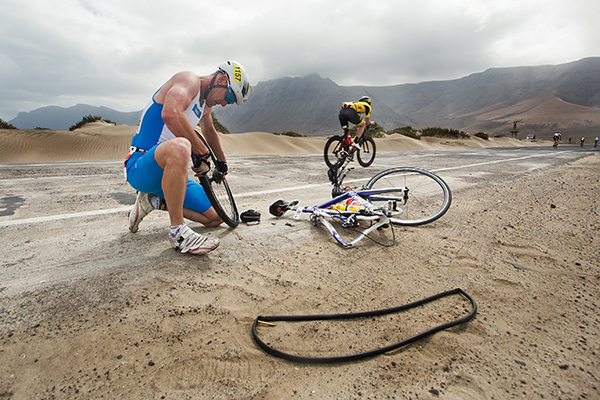
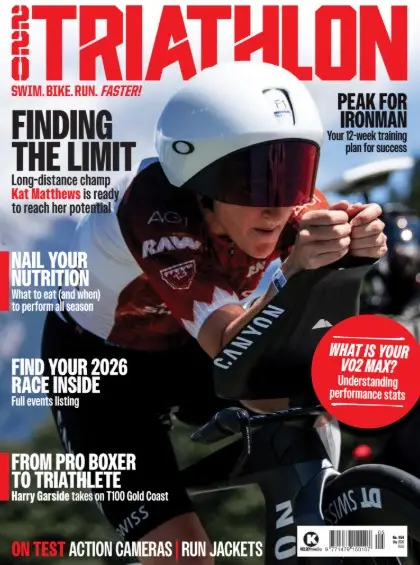
Kat Matthews pulled out of Ironman Texas with a devastating mechanical this weekend. Many of us fear a flat tyre mid-race – but while not all can be fixed roadside, here are some tips to help should the worst happen.
A mechanical is surely one of the things most triathletes fear. You’ve done the training, you’re in shape and you’ve avoided injury – only for a problem with your bike to see you out of the race through no fault of your physical fitness. Such was the case for GB’s Kat Matthews at Ironman Texas over the weekend, where a catastrophic puncture saw her having to withdraw from the race.
Posting on Instagram after the event she said:
“I failed to achieve the race I wanted yesterday, but critically, only due to circumstances outside of my control and without any negligence on my or my team’s behalf.
“Today holds dampened spirits for sure, it is a big let down for the year.
“☝️Tomorrow we move on, it could prove to be a positive for the priority races and I can’t wait to find out!”

While Matthews’ bike was beyond repair, many punctures can be fixed during a race and it’s definitely worth all triathletes knowing how to fix their tyres (where possible) as this could be the difference between a bit of time lost (frustrating) and a complete DNF (devastating).
How to fix a puncture
1. Be prepared with all the kit you need on the bike: a spare inner tube, tyre levers and a pump (or a CO2 cartridge with a nozzle adapter). Find our test of the best puncture repair kits here.
2. Take the wheel out of the frame and put the bike down safely off the road. If removing the rear wheel first, click the rear derailleur down so that the chain is sitting on the smallest cog. Loosen the quick-release lever on the brake caliper to allow the tyre out of the gap.
3. Remove one side of the tyre from the rim using the tyre levers. Start near to the valve and work away. Leave the tyre half on the rim and check the inner and outer skins for whatever caused the puncture. Remove the foreign object and check again – there could be more than one.
4. With all nasties out of the tyre, put a very small amount of air into the tube to stop it twisting and push it into the gap between tyre and rim. Make sure you line the valve up completely straight.
5. Push the beading of the tyre back into the rim, starting opposite the valve with two hands working in opposing directions, checking all the time that you are not pinching the tube under the beading.
6. Once the tyre is re-seated correctly, put the wheel back into the bike, securely fasten the quick release and pump the tyre up (or use the CO2 canister). Aim to get the tyre as hard as you can – or to about 100psi if you have a pressure gauge on the pump.
Image credit: Jose Luis Hourcade


 220 Triathlon Team
Journalists, reviewers, coaches and athletes
220 Triathlon Team
Journalists, reviewers, coaches and athletes