Boardman SLR 9.8 road bike review
Boardman’s updated SLR road bike range promises versatility without compromising speed, delivering premium performance at a price that makes sense for amateur triathletes. James Witts sees if reality matches the rhetoric…

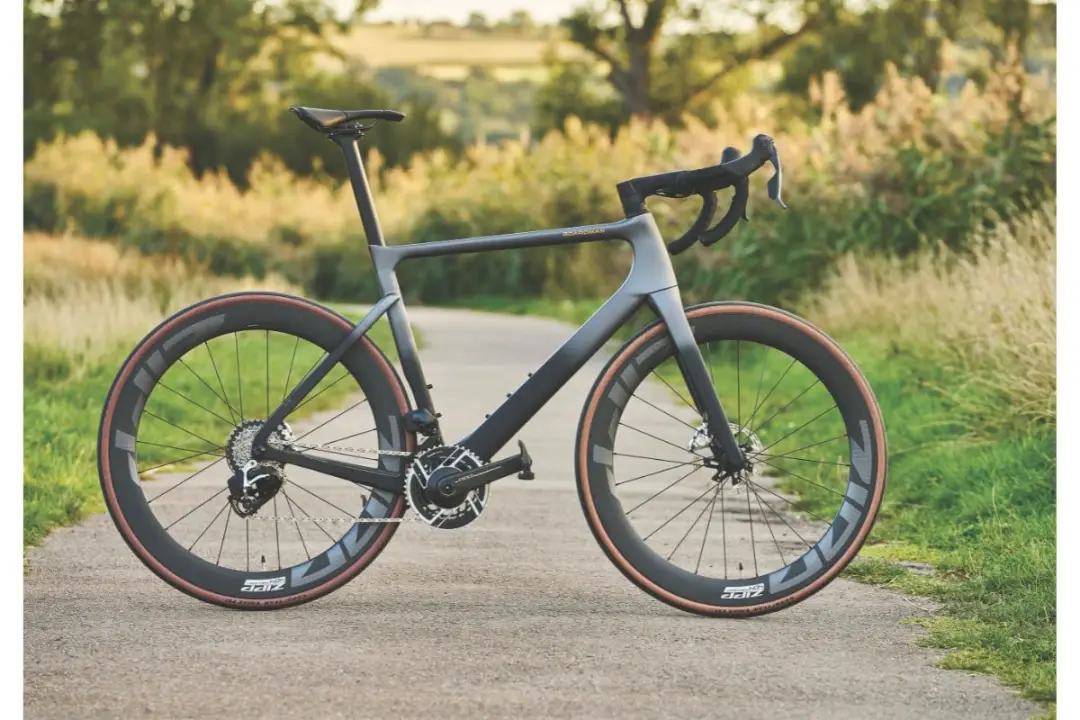
220 Triathlon Verdict
Impressively versatile and value-saturated bike that excels in many areas for year-round riding. Score: 88%
Pros
- Incredible value for money
- Fast
- Comfortable
Cons
- Seatpost clamp slippage
‘Four Seasons Fast.’ Chapeau to Boardman’s marketing team whose tagline for the updated range of SLR road bikes nicely summarises its intentions of marrying versatility with speed.
But is the top-notch publicity team matched by the performance of the top- of-the-range SLR 9, or is it a jack of all trades, master of none?
We’ll find out soon enough.
How we test road bikes
The road bikes we review are tested by James Witts, former 220 Triathlon magazine editor and current freelance sports writer. James takes the bikes on several test loops on his local roads near Bristol, in South West England, to evaluate their speed, weight, comfort, geometry, spec and value for money. He also considers how well the road bikes would perform in triathlon racing. For more details, see how we rate and test products.
Astonishing value
What’s clear is that Boardman’s continued the theme that’s carried them successfully through 18 years since launching their first bikes in July 2007 – namely, value for money.
The C10 carbon frame is dressed in premium components that are seen on bikes twice the £5,500 price tag (Boardman bikes are not available in the US). SRAM’s Red AXS E1 12-speed groupset retails for around £3,000.
Zipp’s 404 Firecrest carbon tubeless wheelset is around £1400. Throw in the combined value of the saddle, seatpost, bars, tyres and other accoutrements and you’re basically bagging a premium carbon frame for several hundred pounds.
How does Boardman consistently achieve this financial witchcraft? It’s something we put to the company’s brand communications manager, James Ryan.
“As Halfords owns Boardman, it means we are, in essence, a business-to- customer brand.
“We sell through Halfords’ brick-and- mortar proposition, as well as directly online via halfords.com and Tredz.com (Tredz is also owned by Halfords). This means we don’t factor a third-party retailer’s margin.
“Combine this with the buying power Halfords has as a cycling manufacturer for their other cycling brands, and we have significant weight with suppliers to ensure the best possible price. All of which we pass on to the customer.”
No sponsorship, anymore

The final part of the fiscally prudent equation is that Boardman doesn’t invest in high-profile team sponsorship.
This is something I recall speaking about to Chris Boardman many moons ago. The 1992 Olympic gold medallist, once star of ITV’s Tour coverage and now national active travel commissioner, said that it’d cost several million pounds to do so.
That’s in cash and doesn’t include the bikes. It’s also not a great PR hit if you then withdraw sponsorship down the line.
“Yeah, it’s definitely a double-edged sword, as it’s a trusted way to get your product in front of key audiences,” says Ryan. “On the other hand, someone has to pay for that investment and, ultimately, it’s reflected in the cost of the product.”
So, Tadej and Remco’s loss is the amateur triathlete’s gain. But enough about the value on paper, let’s see how it performs on the road…
Lightweight, strong foundations
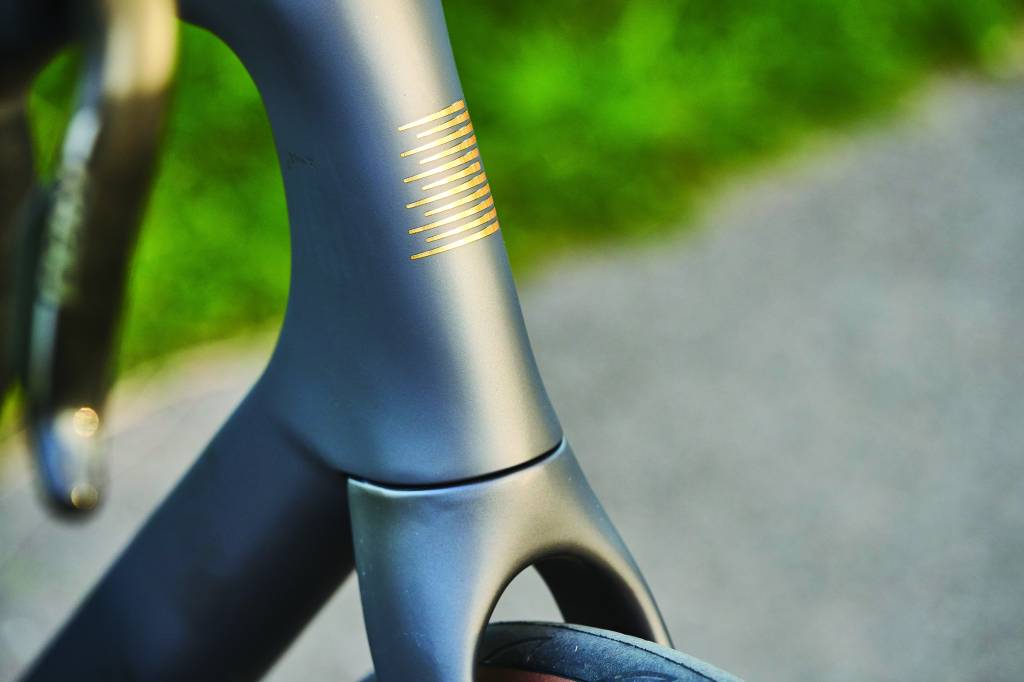
We’ve shone a brief light on the premium componentry, but that’s arguably to do a disservice to the frame, which is Boardman’s top-end C10.
It also provides the foundation for the £3,500 SLR 9.6 and £2,500 SLR 9.2, while the SLR 9.0 (£1,800), and SLR 8.9 men’s and women’s (both £1,400), use the C7.
As ever, the main difference between the two options comes down to weight and strength.
“C7 typically comprises Toray T700 fibres or equivalent, with a lay-up that optimises the tensile strength and modulus properties of the material to achieve the desired combination of weight, stiffness, impact resistance, compliance and comfort,” Ryan explains.
“C10 is primarily composed of Toray T800 or equivalent, which on its own has approximately 12% higher tensile strength and 28% higher modulus than its C7 counterpart.
“Plus, C10 also features a higher grade mixed into certain areas, resulting in a further 16% increase in tensile strength.
“The addition of higher-grade fibres to specific areas of the frame enables us to add incremental stiffness and strength, while also reducing overall weight.”
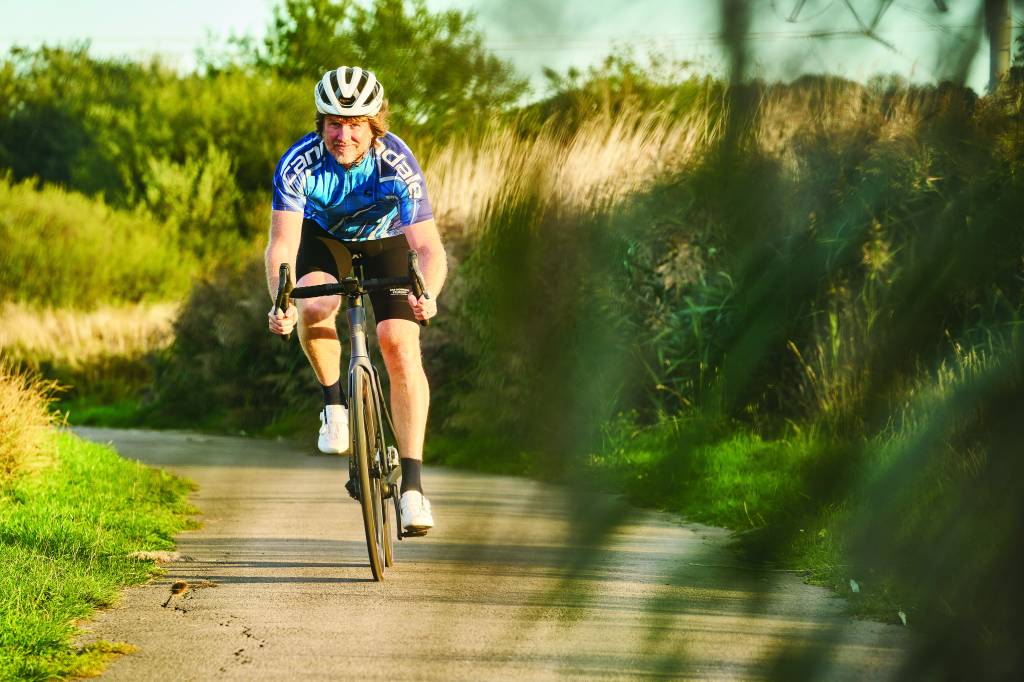
It’s one reason why the SLR 9.8 hits the scales at around 17.6lbs / 8kg compared to the 8.9’s claimed 20.7lbs / 9.4kg.
Agile and aero
That’s not up there with pure lightweights like Specialized’s Aethos Pro, which comes in under 15.4lbs / 7kg. But the Aethos is heavily skewed to climbers, jettisoning aerodynamic tubing to save weight.
While the Boardman SLR 9.8 is ‘Four Seasons Fast’, that doesn’t mean it comprises speed. Far from it, as this is one lively bike, reacting swiftly to changes in torque and holding pace superbly on the flat.
In fact, for a bike pitched as taking you from winter rides to summer races, I was surprised just how lovely it felt.
Quicker than its predecessor
According to Boardman, it’s just under six watts faster than the previous SLR across the full yaw sweep of -15 to +15°. That’s at 30mph / 50km/hr.
This drag saving is down to a tweaked aerodynamic tubing profile that’s the result of partnering with the Silverstone Sports Engineering Hub and Catesby Projects.
Co-incidentally, the brains behind both are aerodynamic experts TotalSim and its founder Dr Rob Lewis. Alongside Chris Boardman. Lewis was one of the founding members of the so-called ‘Secret Squirrel’, whose innovations led to an Olympic gold rush for Team GB’s track cyclists.
“Their involvement meant that we could rapidly design and computer-test frame iterations, utilising their scanning, CAD [Compute-Aided Design], FEA [Finite Element Analysis] and CFD [Computational Fluid Dynamics] capabilities,” says Ryan.
“Once we had prototype frames, we returned to them to take advantage of the Silverstone wind tunnel to further aerodynamically test and refine the frame.”
Compliance to match
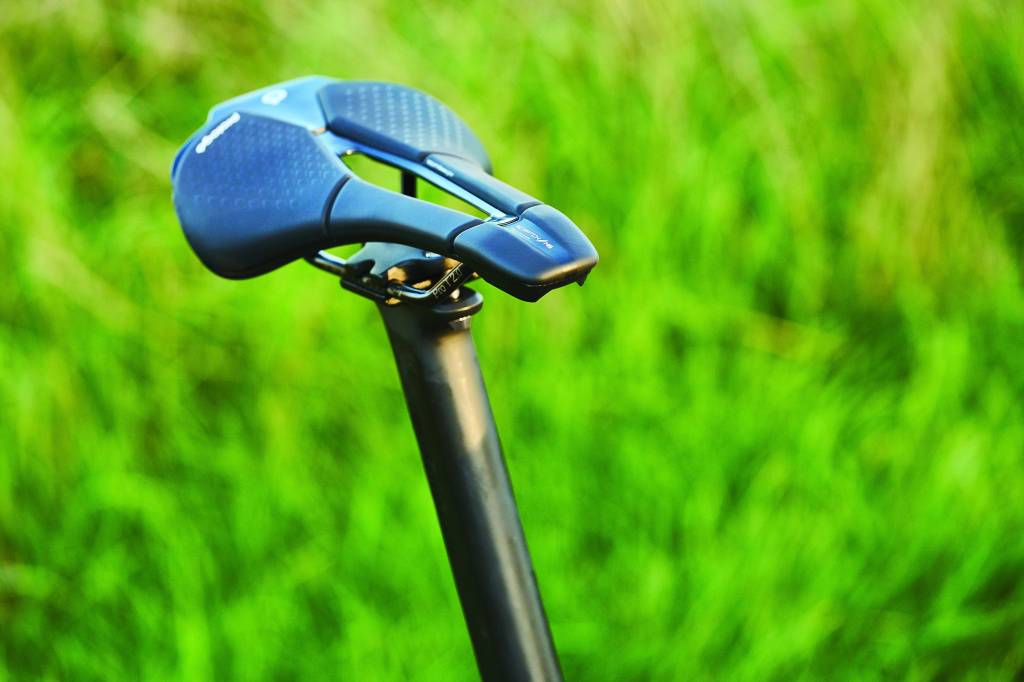
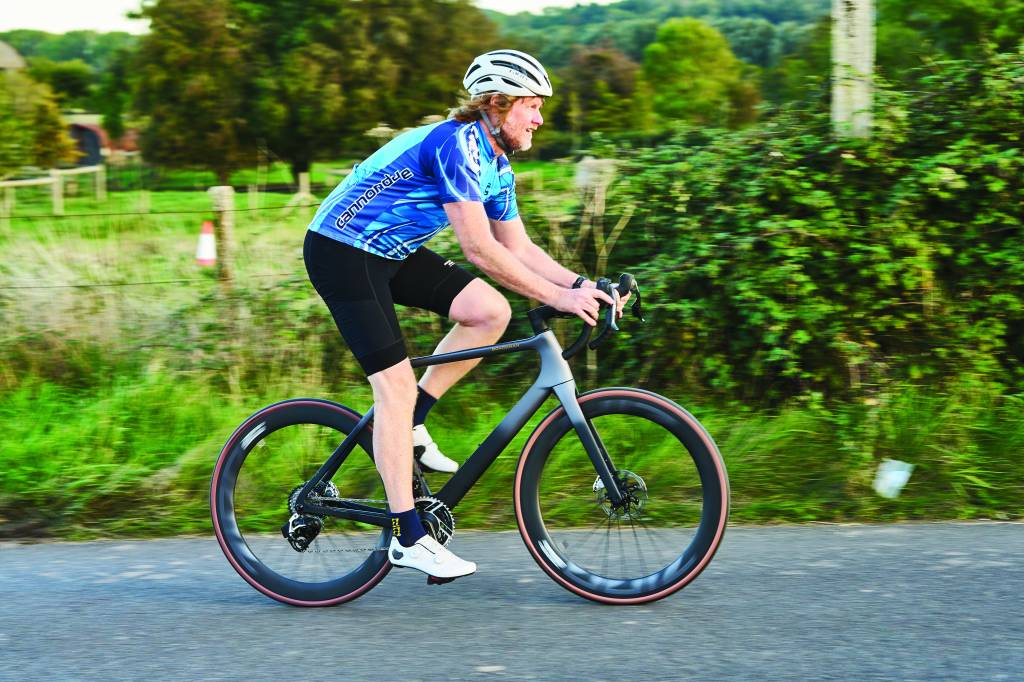
Its speed doesn’t come at the expense of comfort. For that, a great deal of credit must not only go the C10 carbon and the excellent Prologo Scratch saddle, but also the Goodyear Eagle F1 tubeless-ready tyres.
Their 30mm width adds comfort without dulling the ride. Both frame and fork actually have generous tyre clearances of up to 36mm, signalling the bike’s dual purpose of performing at both races and in training, even commutes.
Again signalling its all-year-round intent, that tyre clearance shrinks to 32mm if you take advantage of the mudguard mounts.
If you do, note that Boardman has worked closely with Kinesis to offer a dedicated mudguard called ‘Fend Off’. They’re made from aluminium, come in 40 and 50mm widths, and prices start from £40.
That user-friendliness extends to the bottle-cage mounts, of which there are three. It has the standard bosses on the downtube and seattube, plus a set beneath the downtube.
This set-up is more commonly seen on gravel and adventure bikes. It is a boon to those who prefer stashing their inner tubes and Allen keys away in a tool can than a saddle bag.
In theory, adding that weight lower is also better for the bike’s balance.
Superb shifting

While those extra bosses highlight the SLR 9.8’s practicality, that SRAM Red AXS 12-speed electronic groupset is all about luxury.
This wireless wonder is brilliant and right up there with Shimano’s Dura- Ace Di2. Shifting is precise and reliable, no matter what the weather. For the unfamiliar, the right shifter shifts you up the gears. The left goes down the gears. Pressing both at the same time nudges the chain up or down the front chainring.
A nifty feature that’s also seen on Shimano are the ‘bonus buttons’ on the hoods. You can use customisable buttons for shifting, scrolling though the screen of your bike computer and even operating it.
They’re a really rather clever addition. Though just note that they are there as they’re subtle so can be easily overlooked for your first few riders (as per our test dummy!). This customisation takes place in SRAM’s usable AXS app.
The rechargeable batteries are lightweight, last an age and very easy to change. We know from past experience that you can consistently rack up around 600 miles / 1,000km per charge. Plus you can swap batteries between derailleurs if you ever get caught short.
Confidence from the brakes
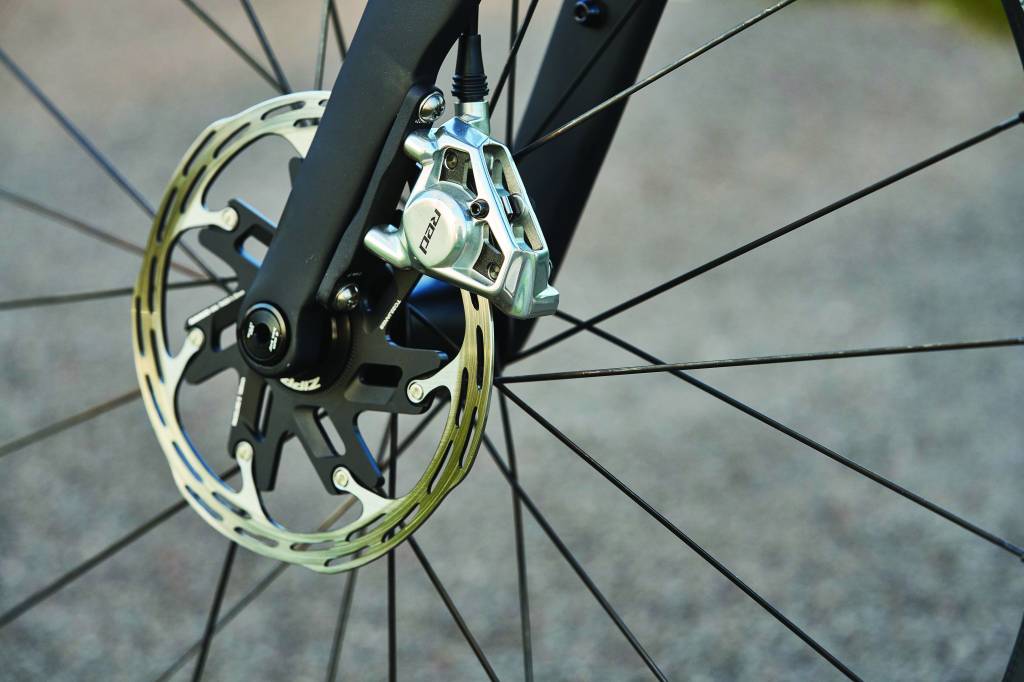
Its braking performance is arguably even stronger than its ability to project you forward.
Impressive modulation and an effortless but still assured lever action results in an incredible braking experience, which I appreciated down the vertiginous Cheddar Gorge on my test route.
Counter-intuitively, this ability to brake with such minimal effort results in more speed, as it cranks up cornering confidence, leading to a faster entry and exit.
If we’re nitpicking – and for completeness – we’d swap out the SRAM Force cassette and chain for SRAM Red alternatives, but you really can’t grumble on such a value-packed bike.
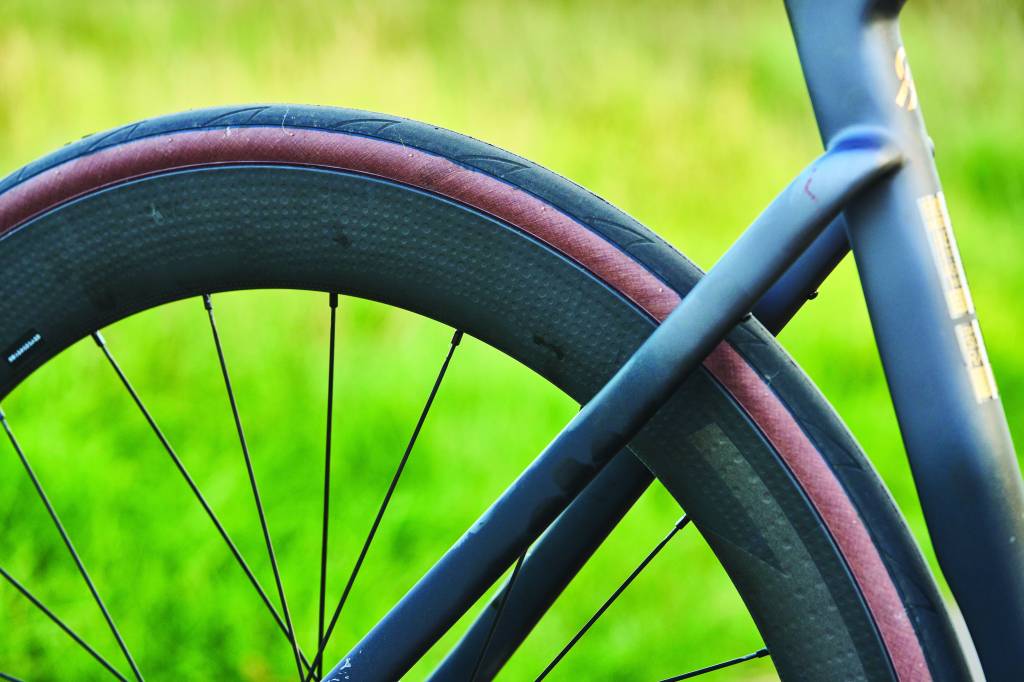
The SLR 9.8 handles with confidence, too. That’s helped by the Zipp’s 404 Firecrest carbon tubeless wheels that are famously stable in crosswinds. The 58mm-deep rim is aerodynamically focused but not to the extreme of 80mm-plus. That helps.
As does the Firecrest shaping that’s designed to slash side-force tugging, plus smooth out airflow.
The wide rim and blunt nose profile reduce steering torque when caught by cross-winds, too.
Our only caveat is that while this bike’s mantra, ‘Four Seasons Fast’, is true, the more conservative amongst you might want to swap these out for a shallower rim offering during the windier autumnal and wintry months.
Aimed at amateurs
As for the rest of the bike, there are several other areas where we appreciate its real-world appeal and really hammers home that this is a bike designed for amateur athletes, not professionals. This is so often the case if a bike brand supplies a WorldTour team.
Take the two-piece bar and stem. Nothing transformative there, of course. But by eschewing aerodynamic handlebars, you can only seamlessly change to a wider or narrower bar depending on your bike fit. Plus, you can clamp in your bike computer without buying an extra attachment.
Triathlon ready
You can also fit on a set of clip-on aerobars when preparing for – and taking part in – triathlon races. Doing so naturally steers your geometry into a more stretched-out aerodynamic position. In itself, that can sometimes cause discomfort as you’re in a position the bike wasn’t naturally designed for.
However, this is somewhat helped by Boardman’s own seatpost that offers both inline and 15mm layback options. Nifty.
What isn’t nifty is the seatpost clamp, which is hidden between where the top tube meets the seattube.
That’s not the problem. The problem is its capacity to clamp effectively. Several times when putting the torque down, as per climbing or racing my equally middle-aged mates, the seatpost began to sink into the frame. Only a nudge. Or two. But clearly enough to disrupt the rhythm and the ride.
Dismount and tightening followed, albeit you clearly have to be careful with overtightening within a carbon frame.
My hidden seatpost-clamp complaints aren’t reserved for the SLR 9.8. I’ve experienced it elsewhere and it’s resolved by purchasing carbon gripper paste – but for the life of me I don’t know why manufacturers don’t stick with the traditional but, in my eyes, best design of a normal seatpost clamp.
Boardman SLR 9.8 bottom line
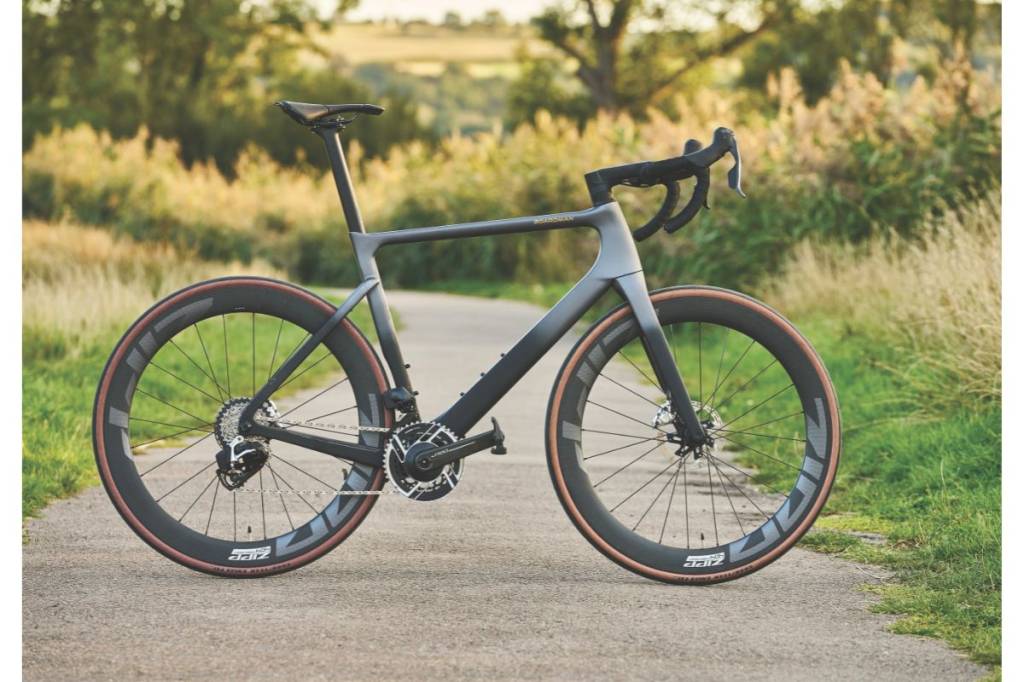
Still, I wouldn’t let a £5 additional paste purchase cloud your judgment.
This is a brilliant bike that proves top-tier performance doesn’t have to come with a five-figure price tag.
Its balance of comfort, practicality and outright speed makes it one of the most compelling choices for amateur triathletes who are seeking that one bike that sees them throughout the seasons.
If you’d like a dedicated tri bike, read our guide to the best triathlon bikes.
Boardman SLR 9.8 spec
| Price | £5,500 (US pricing N/A) |
| Weight | 8kg (claimed) |
| Frame | Boardman C10 Carbon |
| Gears | SRAM Red AXS E1 12-speed |
| Brakes | SRAM Red AXS E1 hydraulic disc |
| Wheels | Zipp 404 Firecrest Carbon Tubeless |
| Finishing kit | Goodyear Eagle F1 R tyres, Boardman Aero Alloy Handlebar, Boardman SLR ICR Stem Boardman Two-Position Aero D-Shaped Carbon Seatpost; Prologo Scratch M5 Pax Tirox saddle |
Also consider …
For a little less, the Boardman SLR 9.6 will set you back £3,500. It features the same C10 carbon as the SLR 9.8 but is armed with Shimano Ultegra Di2. Wheels are Zipp’s 303 carbon tubeless.
For a lot less, Boardman’s SLR 8.9 is yours for £1,400. The C7 carbon frame hosts Shimano Tiagra’s 10-speed groupset, while the wheels are Boardman’s own RD alloys.


 James Witts
Freelance sports writer and author
James Witts
Freelance sports writer and author