“Everyone goes through highs and lows in an Ironman!” Zone3 athlete Kieran Lindars talks setting British long-distance records and why the right kit is essential
Kieran Lindars, Zone3 athlete and recent British record-breaker at IRONMAN Texas, talks all things pro triathlon with fellow Zone3 ambassador Scott Hill.

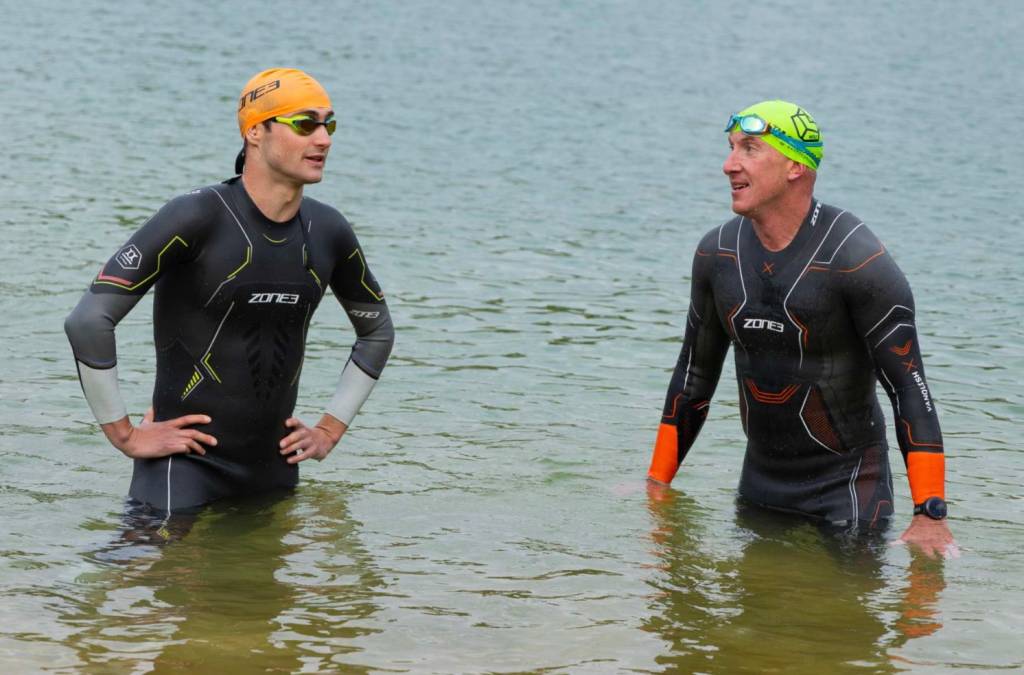
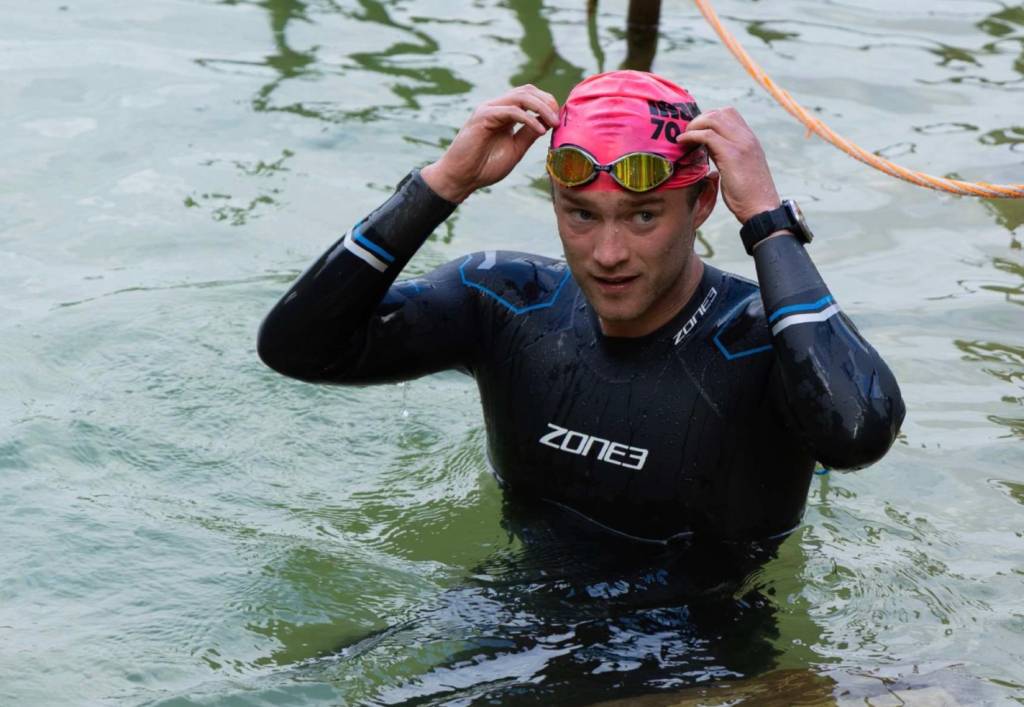
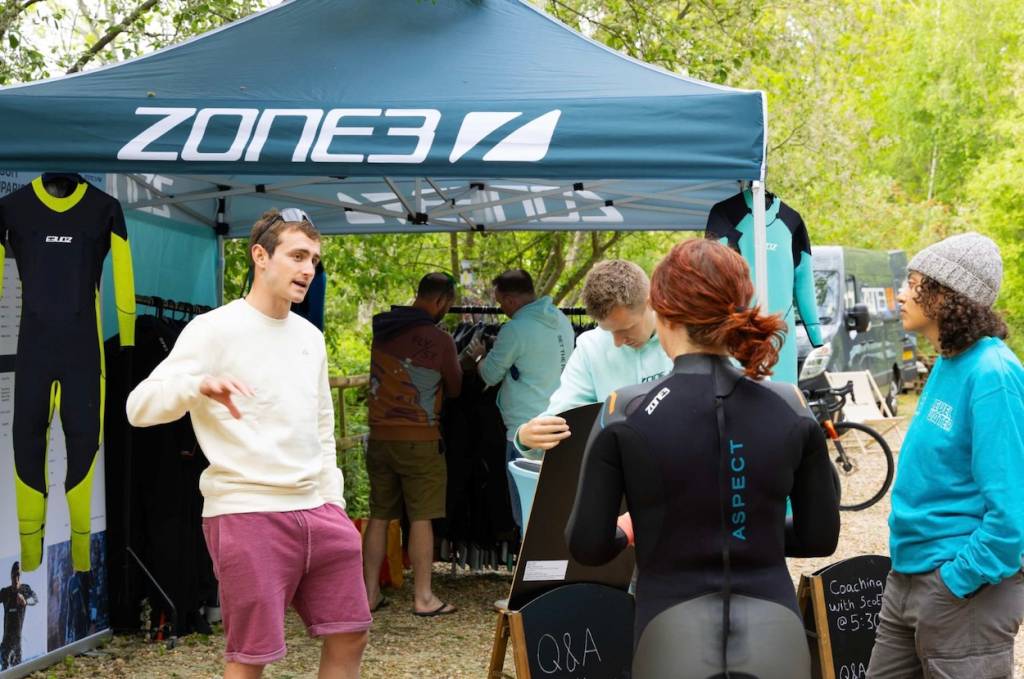
After breaking the British record at IRONMAN Texas recently, Zone3-sponsored pro triathlete Kieran Lindars found some time to chat at the first National Triathlon Day at Divers Cove in Surrey. In conversation with British Triathlon High Performance Coach Scott Hill, they talked triathlon, training, tactics and tapering – and why Kieran’s wetsuit of choice is the one we recently voted our highest-scoring of all time…
Scott Hill: So, Kieran, you recently broke the British record at IRONMAN Texas in a time of 7 hours, 32 minutes, and 3 seconds. Has that sunk in yet?
Kieran Lindars: I think the result hasn’t sunk in quite yet. I think, time-wise, it’s just a little bit faster than the previous record I set, so I felt like that was within myself.
But I think when you look at the field at Texas, there were very few top names missing from that list. So, it’s given me a lot of confidence moving forward into the World Championship. So, the result is slowly setting in, but I think it was one of those days where everything comes together. I’m still coming to terms with how to try and do it again.
SH: I think one thing that we as British athletes struggle with is hot climates. Typically in the UK it’s a colder climate, and the weather varies so much that we don’t actually acclimatise to UK weather because of the variance.
So, having to train through the winter and then go out to Texas, how has that been for you and how have you had to train around that?
KL: It’s no surprise that it’s difficult training in the UK over the winter, but I think if you can tolerate the bad conditions, it makes every day seem nice.
It actually started raining partway through Texas, and I sometimes think the people who are only ever used to training in the sun struggle with that a bit more.
It’s almost like a secret weapon that if you can do all the training in bad conditions, race day becomes that bit easier.
Obviously, the downside is you might not be heat acclimatised, but there are pretty well-known ways of doing it now. So, I don’t really feel too far behind when it comes to hot conditions anymore.
Getting into triathlon
SH: Let’s go back a little bit then. How did you get into triathlon?
KL: It was totally accidental. My mother wasn’t the most confident swimmer. She could swim very well, but the water scared her a little bit, so she wanted to make sure her sons could swim well. So, I learned to swim like most children do. My swim teacher thought I maybe had a little bit of talent, so he introduced me into competitive swimming.
I also ran cross-country for school, and someone spotted me during a local school race. Then it came down to my mother again, who said, “Why don’t we try this thing called triathlon? It’ll be good for your swimming and running.”
So we did it, and in my first one I managed to finish right up there in the results. I got noticed by the South East regional coach and kind of fell into it naturally.
I think it was good that it happened that way because everything has been on my terms. It’s been difficult figuring some things out because my parents and I were learning everything ourselves, but it was always fun.
If anything, it’s just a hobby that’s gone out of control really.
SH: So we can say you’re an accidental triathlete. And what age were you when you did that first triathlon?
KL: My first triathlon would have been around 13 or 14. Then when I started racing properly and trying to take it somewhere, I first started doing the Super Series at 16.
So in that regard I was relatively late, but I’d already been swimming and running from a young age.
Realising potential
SH: At what point did you feel you could make a go of this and become a professional triathlete?
KL: I think I always believed I could do it, but I mainly wanted to see how good I could become when I really committed myself to something.
The first time I thought I could genuinely be quite good at this was when I stumbled into doing really well in the relay qualifiers. The selection policy was basically that if you finished top three, you got to race at the European Youth Relay Championships.
I’d spent the winter trying to get my swimming to a competitive level, just to see how far I could take it, and I accidentally came top three.
That opened the door to the European side of the sport, although it still took me another 10 years to really establish myself there. But that was the first moment where I thought I could potentially race at that level.
SH: Was that through Loughborough?
KL: No. I was still in sixth form at the time. Later, I went to Brighton University to train with the South East regional setup because my coaches were based there. I chose that instead of Leeds or Loughborough because it felt more familiar to me.
Mistakes and development
SH: Looking back, do you think you made a lot of mistakes early on?
KL: I think the biggest difficulty for every athlete is that when you’re a junior, doing more training generally means you improve more. But eventually there comes a point where simply doing more doesn’t mean you’ll keep getting better.
Triathlon is especially difficult because you’re balancing swimming, cycling, and running. You can easily lose focus. You might nail your morning session but completely struggle in the evening session. Then you’re asking yourself: was that actually a good day?
Did I overdo the morning session? Did I underperform later because I went too hard earlier? Working all that out takes time. And honestly, I don’t think anyone has fully figured it out yet.
I almost cringe at things we were doing 10 years ago. We were riding 23mm tyres at 120 PSI, and now we’re on wider tyres and half the pressure. Sport evolves constantly, so mistakes are part of the process.
IRONMAN Texas and the British Record
SH: When you went into IRONMAN Texas, did you intend to beat your previous British record?
KL: Not really. With IRONMAN racing and records, you’re relying on the conditions being good, so I don’t think you ever go into a race specifically expecting a time.
The main goal was qualifying early for the World Championships, which meant trying to finish in the top six.
When we got halfway through the bike and I could see the split was under two hours, I knew we were on for a quick day provided the pace continued.
But you’re still relying on the bike pack moving well, the temperature staying manageable on the run, and a lot of other variables.
I wasn’t fully aware of where we were time-wise, but I knew if I was riding and running with those top guys, then we were moving quickly.
Anyone who races these distances knows that the final 5km can either feel like 20 minutes or two hours. So you try not to think about the outcome too much.
Choice of wetsuit
SH: What wetsuit do you race in?
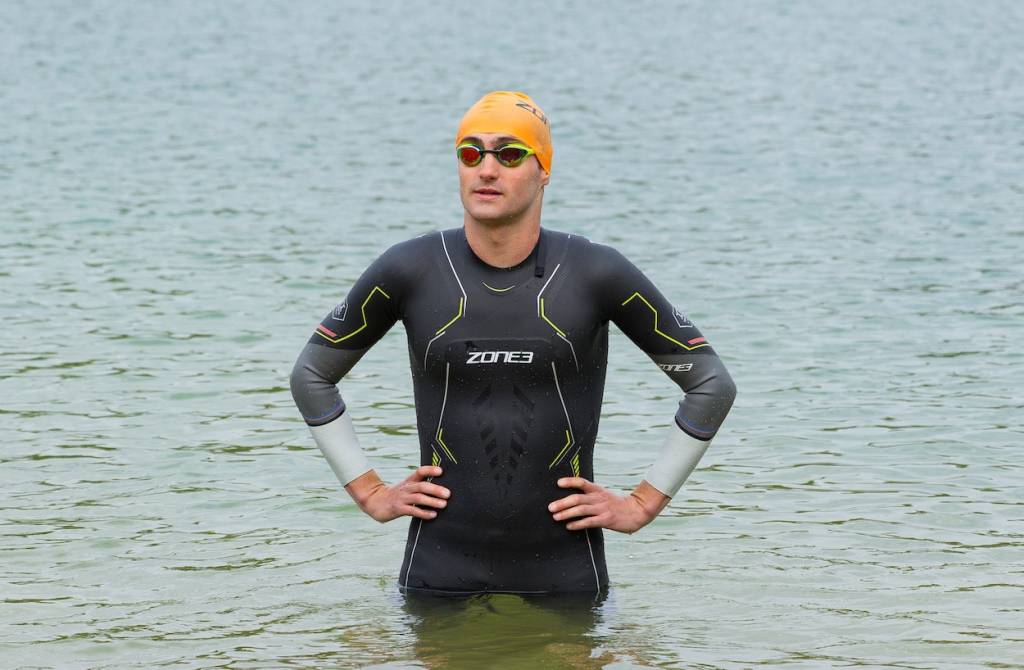
KL: I race in the Zone3 Aspire Wetsuit (buy). That surprises people because most assume the Zone3 Vanquish X (buy) is the top-level pro suit. But I like the Aspire because the buoyancy is more neutral.
The Vanquish lifts the legs more aggressively, which works brilliantly for many athletes, especially those from cycling or running backgrounds.
But the Aspire suits my swim style better and makes me feel more balanced and higher in the water.
Confidence in equipment is everything. You’ve done nine months of hard training, so your equipment has to deliver on race day.
That’s why I’m really proud to work with Zone3. Because it’s a British brand, I’ve got very close contact with the team and can work directly on testing and refining equipment.
Age groupers and race dynamics
SH: We’ve spoken about age-group athletes potentially interfering with the pro race. Did that affect your race?
KL: Honestly, I think we interrupted the age-groupers more than they interrupted us. Because of delayed starts and wave formats, when it’s a two-lap course you’re inevitably going to catch people.
You might have a fast age grouper overtaking slower athletes while we’re trying to come through as pros.
In trying to overtake quickly, we can suddenly end up intruding into someone’s draft zone, meaning we have to slow down sharply. That then affects everyone around us.
So even though we’re the fastest athletes out there, we can still get in the way of other people’s races. But these moments are brief, and in an eight-hour day, getting worked up over five seconds just isn’t worth it.
One of the beautiful things about long-course racing is that everyone’s out there having their own battle. Sometimes just finishing is enough.
Lindars’ recent progress
SH: Your performance has increased massively over the last few years. What’s changed?
KL: I think there’s been much more clarity in training. It’s easy to get confused about what you’re doing and why you’re doing it. Now I understand exactly what I need from each session.
For example, a typical Monday or Wednesday swim session for me might literally be six 100s off 10 minutes. That could take the whole hour.
We might only swim 600 metres, but that’s exactly what’s needed for maximum speed or lactate tolerance. You need confidence to trust that process.
Another pivotal moment was finishing top 10 at the World Championships in 2024. Before that, if I took a rest day, I’d think I should be doing more because I was trying to compete with these guys. After that result, I started trusting myself and my coaches much more.
Peak training and tapering
SH: What do your peak training weeks look like leading into a race like Texas?
KL: Usually the last four weeks are about ticking off what I’d call “confidence sessions.” For me, that means things like getting a 32km run done so I know I can handle the marathon distance.
I’ll also do race-specific bike sessions where I hold race power for close to race duration, just to confirm I’m ready. If I’m not quite there, then maybe we slightly adjust the race plan.
Then two weeks out, it’s about winding things down and actually enjoying training again. By four weeks out I’m usually pretty miserable and very fatigued.
At that point, the work is done. It’s about freshening up and not doing anything stupid trying to cram extra fitness in.
SH: Do you still get doubts during taper?
KL: Everyone does. But I’m experienced enough now to know that four weeks out, you basically already have what you’ve got. If you taper properly, at some point you’re going to feel horrendous. Heavy, sluggish, stiff — that’s normal.
A lot of it is glycogen stores refilling and your body actually recovering. The mistake people make is suddenly changing things because doubt creeps in.
You start wondering whether to change saddle height or tweak something in training, when really you should just keep everything consistent and freshen up.
Data vs feel
SH: Are you very data-driven?
KL: I used to be. Now most of my training is based on feel. I haven’t had a set running pace in probably three years. It’s all “5K feel” or “10K feel,” and then I use the data afterwards to justify it.
The same goes for cycling. You might be pushing 400 watts, but if you’re not actually moving fast enough, then what does that number really mean? Your body is pretty good at telling you when something is wrong.
Data can guide decisions, but the human body is inconsistent. It doesn’t account for bad sleep, stress or life factors.
Handling bad days
SH: How do you cope when you’re not feeling good in training or racing?
KL: In racing, sometimes you just don’t have it. At the end of the day, it’s just a triathlon. It’s a privilege to do it. There are much worse things in life than having a bad race.
In training, the whole point is to fatigue the body. So eventually you’re going to feel tired. In some ways, if you’re tired enough to need recovery, you’re actually doing your job.
Obviously if it keeps happening, then adjustments need to be made, and that’s where a coach becomes important.
Working with coaches
SH: Do you have a good enough relationship with your coaches to tell them when you’re tired?
KL: Absolutely. My coaches know me well enough to understand that I wouldn’t raise concerns unless I genuinely thought they mattered.
When I came back from university, my running coach said to me, “I’m your run adviser.” That was an important shift from being a junior athlete to an adult athlete.
Now it’s collaborative. We discuss decisions together instead of me just blindly following instructions. If you don’t communicate how you’re feeling, then coaches can only assume everything is fine.
That’s especially important with online coaching. It’s far better to speak up early than end up injured and unable to train for eight weeks.
Race tactics at Texas
SH: During Texas, when did you realise you were on for a top result?
KL: If I’m having a good race, you usually won’t see much of me until late in the run. I like to race quite passively, absorb the hits, and outlast the race dynamics.
Everyone goes through highs and lows during an IRONMAN. I actually had a rough patch around two hours into the bike and thought I was going backwards.
Then later I felt really good. I knew I was on for a strong race once we got off the bike.
Some of the athletes who looked super strong on the bike clearly struggled during the first few kilometres of the run. I trusted that I’d paced things properly. You have to be confident enough to know you’re hard to beat, but humble enough to know you’re also easy to beat.
The importance of swim equipment
SH: A lot of athletes spend huge money on bikes but try to save money on swimming equipment. How important is it really?
KL: It matters massively. Water is much harder to move through than air, so equipment becomes incredibly important. But more than anything, swimming is about confidence and relaxation. When you’re in a suit that feels good and moves well through the water, you relax more and swim better.
And if you can break away from the chaos of the swim start and come out fresher, you set your whole race up better. People underestimate how much the swim impacts the rest of the day.
What’s next?
SH: What’s next for you?
KL: The big goals are the European Championships and then the World Championships.
SH: Do you think sub-7:30 is possible?
KL: Definitely.
SH: And what’s your goal for the World Championships?
KL: I finished eighth in 2024, so naturally the next progression is top five. But realistically, if you’re aiming for top five, you may as well aim for the podium. The long-term goal with Zone3 is to put myself in a position where I can challenge for those top spots.
Advice for age group athletes
SH: What do age-group athletes misunderstand most about IRONMAN racing?
KL: Recovery. Age-group athletes are balancing jobs, families and training. Honestly, I think what they do is incredibly difficult. Because time is so limited, recovery and sleep often get sacrificed.
But there comes a point where your body simply isn’t benefiting from more training. So I’d say: don’t underestimate rest, and make sure you still enjoy the sport.
Audience Q&A
What’s the best piece of advice you’ve ever been given?
KL: “Slow is smooth, and smooth is fast.” That applies especially to IRONMAN racing. Transitions are a great example. If you rush them, you make mistakes and lose more time than you gain. Sometimes taking an extra second to do things properly is actually faster.
What advice would you give someone preparing for their first IRONMAN?
KL: Make sure you’re having fun. There’s so much information and so many opinions in triathlon that it can become overwhelming. Find good people to train with and keep it enjoyable. As soon as it starts feeling like a chore, you stop getting the best out of yourself.
Thank you to the team at Zone3 for this interview.
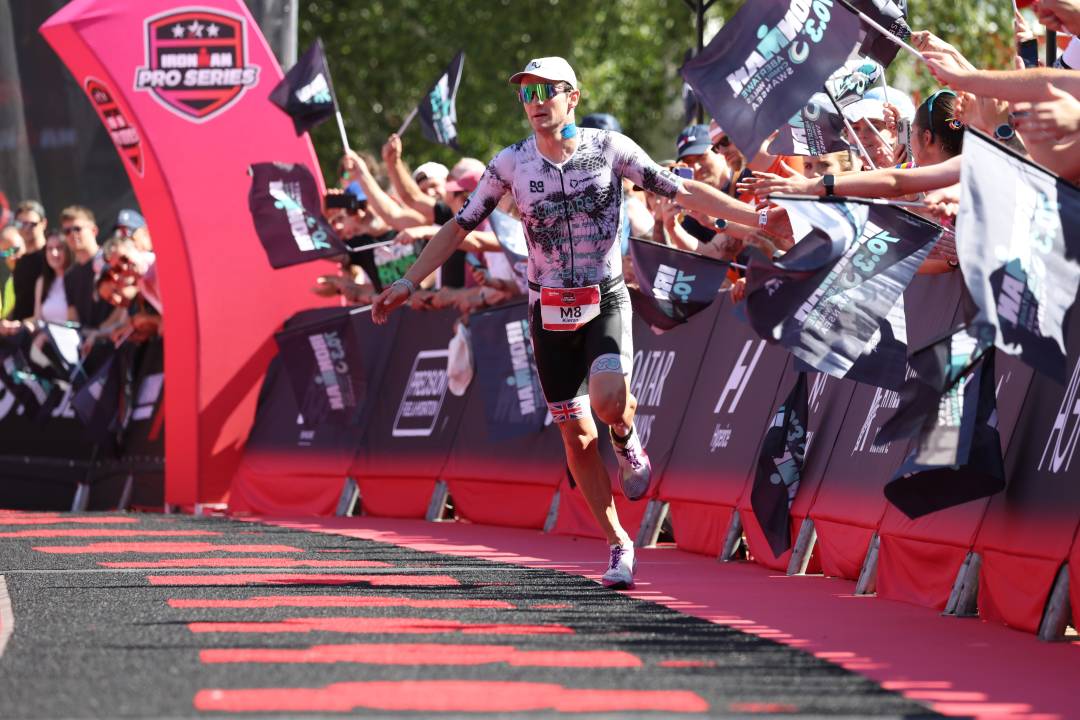
Lead image: SWANSEA, WALES – JULY 13: Kieran Lindars of Great Britain finishes 3rd at Ironman 70.3 Swansea July 13, 2025 in Swansea, Wales. (Photo by Nigel Roddis/Getty Images for Ironman)


 Laurence McJannet