Great atmosphere but desperately needed a recce: Contrasting emotions for GB’s elite men following the return of London World Series event
There were no British men in the top 10 in the WTCS, but it wasn’t for a lack of home crowd support

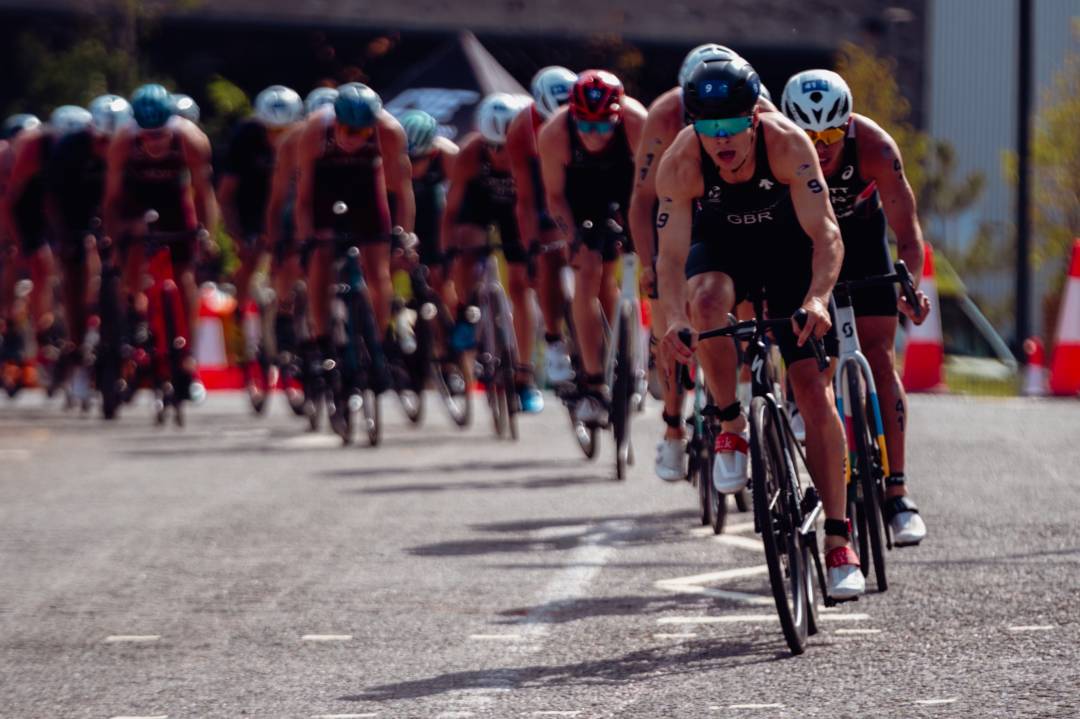
Incredible home support, a unique and challenging course, a superbly executed race by Max Stapley, and a race-best 5km run by Alex Yee were GB’s highlights for the men’s race as the World Triathlon Championship Series returned to London for the first time in 11 years.
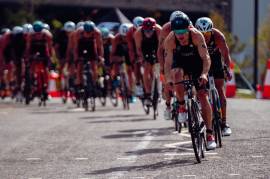
However, the inability to recce the seven-lap Docklands bike course ahead of the race was called out as a mistake by all four of the GB male athletes we interviewed, and blamed, at least in part, for the late crash that soured the race for the chasing pack.
“To be honest, the bike course was a bit ridiculous,” said Harry Leleu, who finished 40th. “I don’t know if everyone saw the massive crash at the front of the chase pack coming into transition, but Alex, plus probably the front half of our group, came down, and I had to stop and unclip.
“We weren’t able to recce it, so we were riding into a blind right-hand corner and went straight into a line of cones. If you can’t recce the course, it’s not safe enough to race. It could easily have been the front group, in which case it would have been all over the cameras, but because it was the chase pack nobody saw it.”
Jack Willis was in a similar position to Leleu on the course at the time of the crash. “I think it was jostling for position going into the narrow section, and because we didn’t get to recce it, we didn’t know how tight the cones would be. I just about managed not to go down, but like everyone who didn’t, I had my back wheel in the air trying to stop.”
While Yee also felt that having the ability to ride the course before the event would have helped, he was more critical of broadcast motorbikes on the course. Depending on the distance from the cyclists, riders can gain an aerodynamic advantage if vehicles are ahead of them on the road.
“I was able to ride fairly well and move up into the second group,” Yee said. “But they got working at the front, and maybe a little bit of motorbike assistance as well came into play.
“We’re constantly seeing groups of 10 or 15 go up the road, and if you’re not in those groups, you’re not going to be in the race. We’re seeing motorbikes at the front of that group and motorbikes at the back of our group, and there’s not much you can do about it. But those guys [at the front] also worked incredibly well and made the race. They’re racing aggressively and that’s all you can ask.”
Included in that front group was Stapley, who, despite a bout of sickness and feeling a position of 12th didn’t represent his current level, finished in a much chirpier mood.
“That’s exactly how I would want the racing to play out,” he explained. “It was honest from start to finish. We really pushed the swim and then the ride was really solid. I nearly came off on the cones – I don’t know what they were doing there at the far end and I think they need to revise that for next year – but we all worked well together.
“I had a decent run. I was in the fight for the top 10 and just fell off there in the last 700–800m. But I think I’ve picked up [a bug], as my stomach has been funny all week. I never vomit after a race and I’ve just chucked my guts up, but I’m just glad to have rallied, finished 12th with good points, and as top Brit. So I can’t complain.”
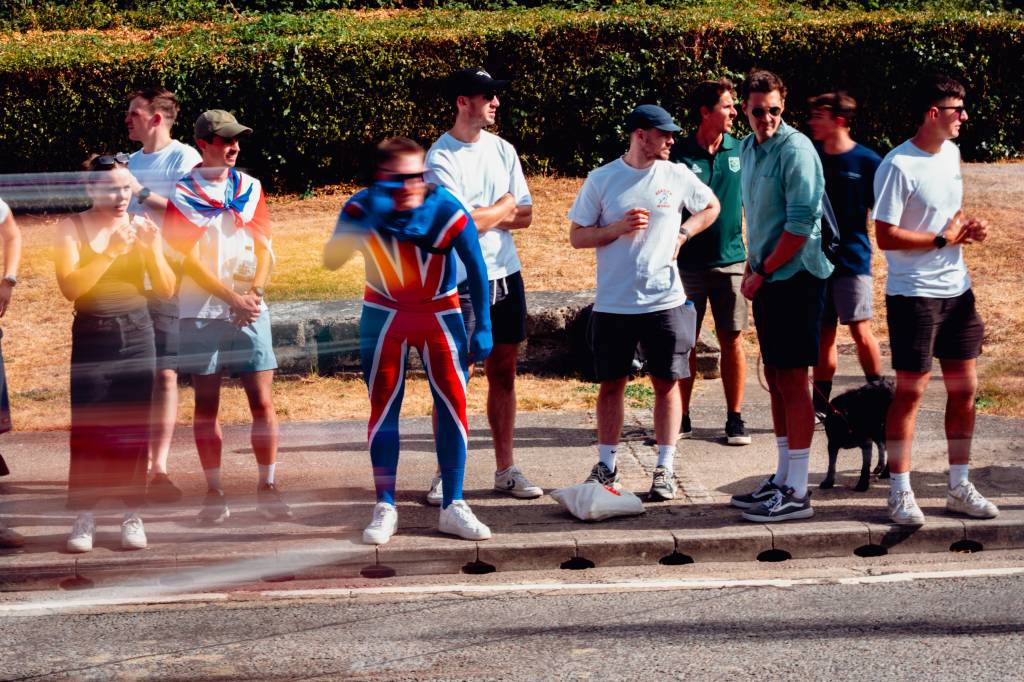
One area all the Brits were in agreement on was the outstanding home support.
“I had to use the home support and got to the finish line with nothing left,” Leleu said. “It’s been a tough week for me. I had a bit of illness at the start of the week, and it was probably the worst weekend of my life for that to come, but no excuses.
“I was there mentally today, really up for it, and thanks to the crowd and everyone who supported. There were so many people cheering my name, it got me to the finish today.”
Yee felt the course layout for the 5km final leg, with the athletes running through ExCeL each time on the three-lap course, was a real plus point of the event too.
“Particularly kudos to [World Triathlon and T100] for the run,” he said. “They did a good job with that. We had a lot of interaction with the crowd, and to be able to come in and out [of ExCeL] and hear them each time inspired us and gave us home advantage.”
Despite finishing 23rd, Willis agreed the run was a highlight. “It was really cool to have so many friends, family and training group there to watch,” he said. “It meant we could really go for it even though we were not mixing it at the front of the race.
“The depth is crazy. You’re running well, but there is so much density. If you’re one body length down in the swim, it can break your race, and be the difference between fighting for a top 10 or top 30.”
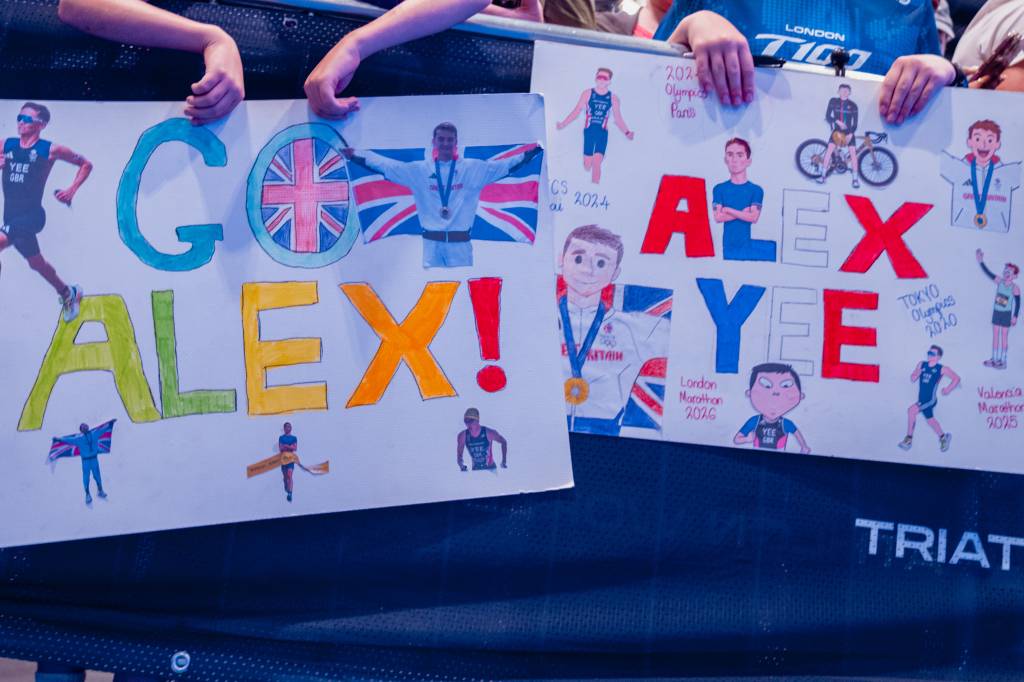
As a four-time Olympic medallist, including being the reigning individual Olympic champion, the weight of British expectation for the men’s race lay with Yee.
While he felt a solid bike and a 13:52 5km run – 17sec faster than race winner Matt Hauser – were encouraging, there was disappointment, as there had been with previous WTCS races in Quiberon and Alghero, with his swim.
“About 100m out, I was caught up between three guys shoulder to shoulder, and from that point was trying to salvage my swim,” he explained. “I managed to move up well through the buoys and then lost a bit on the way back in. I’ve a little bit to unpick from that considering I probably had my best swim of the year at the start [of the season] in May in Yokohama.
“We’re getting there on the run, and potentially on the bike, but the swim has got a lot of work to do. It’s going well in training but I need to execute in the race because it doesn’t matter what you do in training.”
Yee currently sits 26th in the WTCS standings and is out of contention to regain the title he won in 2024.
“I’ve had a challenging year, there’s no denying that,” he added. “It’s not been going well and just getting through this race, coming out the other side to have a good run and good bike, shows positives.
“But you can’t be 1% off in any of these disciplines and I’m probably 5% off where I need to be in the swim. There’s stuff to unpick with Adam [Elliott], the coach, to move forward from here.”
Yee still said his overwhelming emotion was pride at being able to compete in his home city. “I’m proud I was able to give it 100%,” he added. “There weren’t any Brits on the podium this year but hopefully in years to come it’ll keep rolling and we can have a lockout on the podium.
“As much as I have outcome and process goals, I also want to be able to leave the sport in a better place. I feel like racing well here and inspiring people here can make a big impact for future generations. London 2012 was something that lit a fire for me, and hopefully this can light a fire for someone else.”


 Tim Heming
Freelance triathlon journalist
Tim Heming
Freelance triathlon journalist