Does a woman’s athletic performance improve after having a baby?
James Witts explains how having a baby can actually (temporally) improve a woman's athletic performance – providing they have the time to train and race

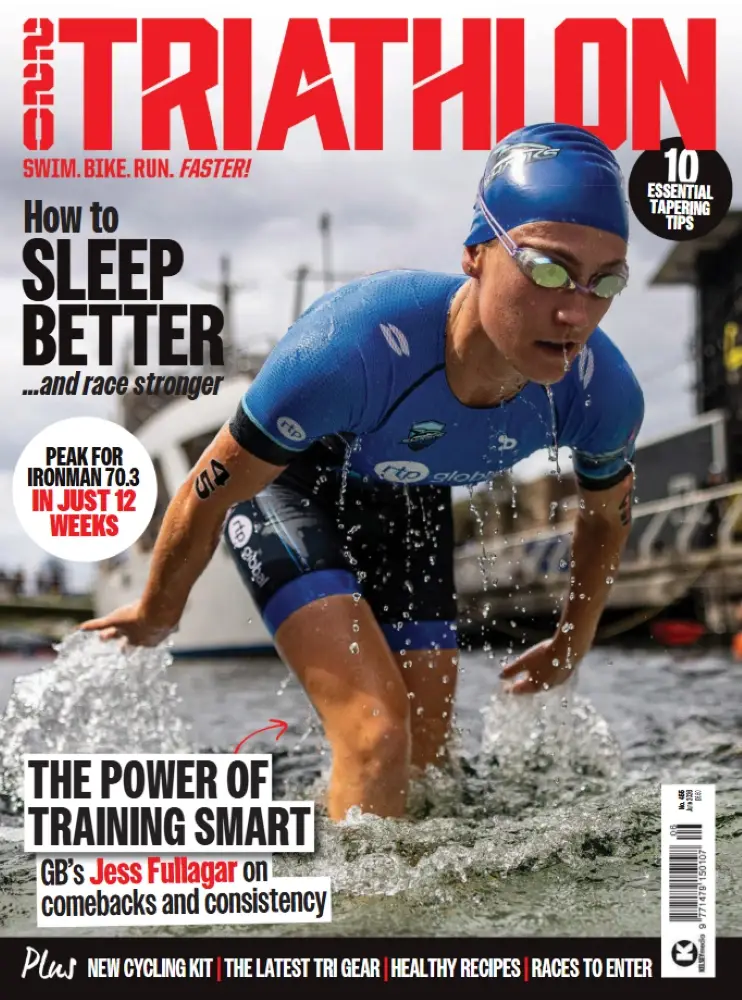
Jess Learmonth, Gwen Jorgensen, and Nicola Spirig, to name but three top female pros who also happen to be mums, have all shown motherhood shouldn’t be to the detriment of performance.
In fact, the science reveals that there could be physiological benefits. Author and sport science expert James Witts investigates…
How does the body adapt during pregnancy?
One structural adaptation that occurs during pregnancy is the expansion of the ribcage, which of course assists breathing, but is of even greater benefit when it comes to cardiovascular changes.
Both age-grouper and elite triathletes enjoy up to a 50% increase in blood volume during pregnancy and up to an 18% increase in red-blood cell count.
Stroke volume – the amount of blood pumped out on every beat – also rises by 10%. All these adaptations are heavily down to supplying the foetus with oxygen, which is also nectar for endurance athletes.
- Are women the stronger sex?
- What specific strength training should female athletes do?
- Research shows women outlast men during dynamic muscle exercises
How does the body adapt after birth?
What’s key to note is that the body doesn’t revert back to normal once the baby’s born for anything up to 12 months. This is highly individual and includes factors like diet, the degree of trauma during the birth, and training regime. Theoretically, this means that there’s a favourable window for endurance athletes.
It’s also been noted that women’s oestrogen levels are higher during pregnancy – oestrogen stimulates the release of the hormone serotonin that essentially makes exercise feel less painful and so minimises fatigue.
Then there’s the psychological factor of dealing with unique levels of pain that, whether consciously or sub-consciously, you can take into subsequent training sessions. The result? You dig deeper. Again, this is clearly a difficult one to quantify and highly individual, but does point to improved performance.
Of course, here we’re looking at the science in isolation and there are many reasons why an athlete may not be able to reach this potential boost in performance after giving birth, when focus naturally shifts to looking after a new little one. All the same, we’d love to hear your experience with getting back into training after giving birth and any physiological changes you felt.
- Does a woman’s hydration needs differ to a man’s?
- Why do I feel extremely lethargic the week of my period?
- Women found to be more naturally fit than men


 James Witts
Freelance sports writer and author
James Witts
Freelance sports writer and author