How hot weather affects your body and your ability to train and race
Hot weather can cause physiological challenges for athletes when training and racing. Sports scientist and Precision Hydration founder Andy Blow explains its impact

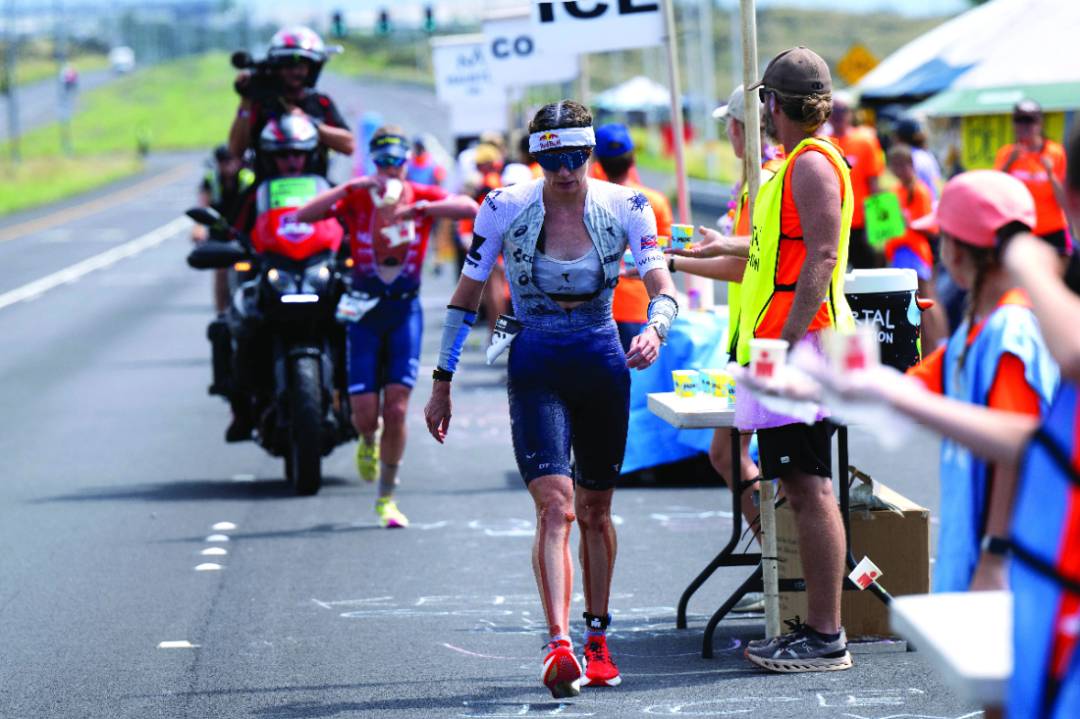
Although most of us would probably rather be training and racing in warm and sunny conditions, the physiological challenges are significantly greater than when it’s cold outside.
The humid and hot Hawaiian climate has put paid to many triathletes’ hopes, as Lucy Charles-Barclay found at the 2025 Ironman World Championships. Meanwhile Solveig Løvseth partly credited her win to heat training in the bathroom. Whether you’re racing at Kona or not, with summers getting hotter everywhere, it’s vital to know how hot weather affects training and racing and how to adapt to it.
Sports scientist and Precision Hydration co-founder Andy Blow gave us the lowdown on the impact the heat has on your body when you’re exercising and shared his tips for coping with hot conditions.
How heat affects your body when you’re training and racing
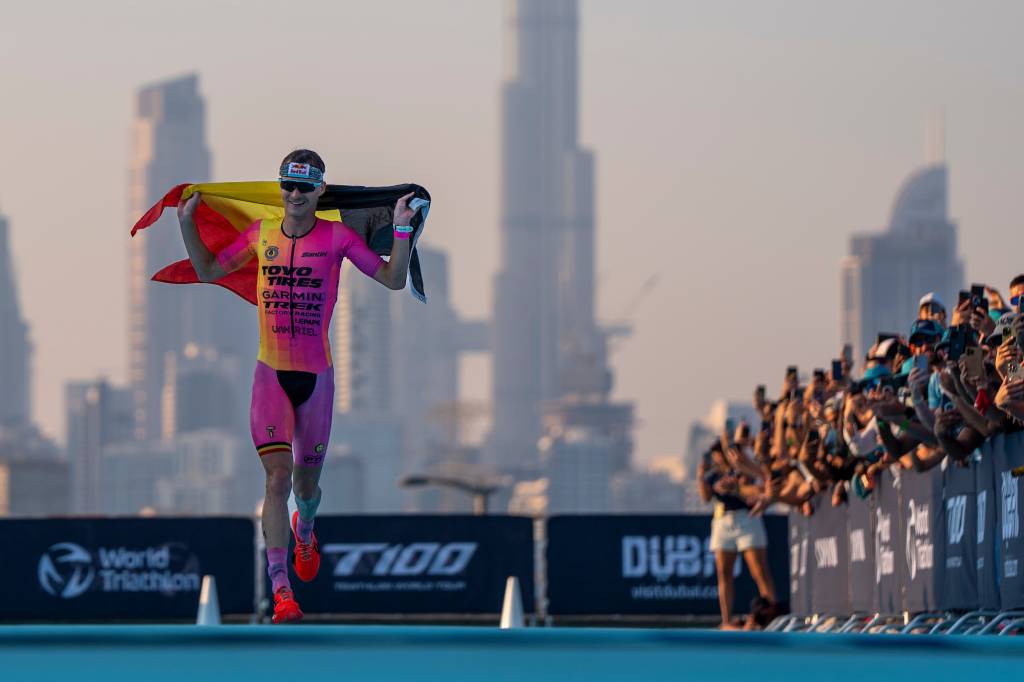
Exercising in the heat is tough for the body to cope with because of the challenges heat poses to controlling your core body temperature via a process known as thermoregulation.
The thermoregulation process has one key objective, to maintain your core body temperature within a very narrow range. The core body temperature of a healthy human is usually close to 37°C (98.8°F) at rest. If it increases to above ~40°C (104.5°F), or decreases by ~2°C for prolonged periods, you can be in significant trouble. There’s very little flexibility either way.
Excess heat production
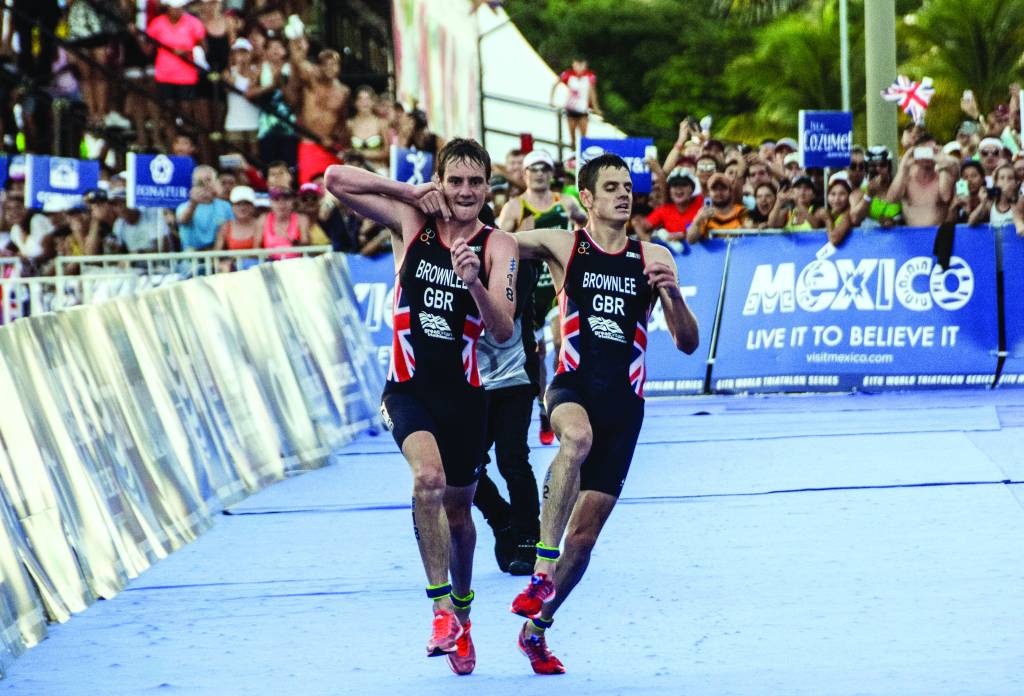
At rest, your basal metabolic processes produce something in the region of 100w of heat energy, about the same as a bright light bulb! This excess heat can usually be radiated and convected away to the external environment pretty easily. It’s primarily done via your blood being diverted to flow close to your skin, taking heat from your core and ‘dropping it off’ into your external environment.
This is precisely why you start to go red when you get hot and more blood rushes to your skin. But, if you start riding a bike or running hard, your muscles can produce way more heat because humans are only about 25% energy efficient (similar to a car engine) at converting food energy into mechanical work. For example, cycling at 250w at the pedals can produce ~1,000w of excess heat and running 6 minute miles can kick out ~1,500w!
In a cold environment this excess heat production from your muscles is not a huge issue. In fact it’s potentially very useful as it helps keep your core body temperature from dropping too low. So, if you work hard enough, you can run in surprisingly light clothing even on a very cold day.
Sweat, baby, sweat
However, when you workout in hot conditions, you still have to try to dump the excess heat off to your external environment. You can’t achieve this by radiation/convection alone (or at all if the air temperature is higher than your skin temperature).
As a result, you have to sweat to prevent overheating. Sweating works because the evaporation of water into vapour consumes lots of energy and results in a dramatic cooling effect. This is why you get cold quickly when you get out of the sea and there’s a breeze in the air.
It’s also why exercising in a hot and humid environment is so much harder than in a hot but dry climate. If the air is too wet for your sweat to evaporate easily, then the sweat just drips off you, taking very little heat with it.
It’s also the reason why the ‘Heat Index’ gives us a better idea of how hot a given temperature will really ‘feel’. It takes air temperature and humidity into account.
What happens if you do overheat?
The consequences of dramatically overheating can be scary and even fatal. “Heat illness” is the catch-all term used to describe a collection of conditions that occur when the human body overheats. Heatstroke is at the really scary (and possibly terminal) end of that spectrum.
Heatstroke occurs when the thermoregulation process is overwhelmed by heat production and there’s insufficient ability/opportunity for your body to cool itself down.
Heat stroke risk factors
High humidity, lack of air flow, excess clothing, high air temperatures, a lack of acclimatisation to the heat and high levels of metabolic work all contribute to the risk of heat stroke in athletes.
If a person experiencing heat stroke is not cooled down rapidly enough it can be fatal, causing extensive brain and organ damage.
Three things have been suggested to contribute most to heat stroke risk in athletes.
1) Heavy clothing (e.g. American Football pads and kit), which inhibits cooling
2) Pre-existing illnesses, because these can drive up your resting core body temperature even before exercise is involved.
3) Stimulants or similar medications (e.g. A.D.D meds like Adderall).
How to treat heatstroke

If you ever experience heat stroke or it’s suspected in an athlete near you, the key thing to do is to try to cool them down as fast as possible. Getting them in the shade, placing ice packs on major blood vessels (e.g. the groin, neck and armpits), using cold water sprays, fans and wet cold towels are all good if accessible.
Luckily, heat stroke in athletes is extremely rare. In large part this is because your body and mind do a great job at subconsciously slowing you down when you’re racing and training in the heat. The goal is to stop you from doing lasting damage to yourself.
Studies have shown that athletes even instinctively set off at a slower pace or lower intensity of exercise in the heat (when blinded to their actual pace). And, when you do start to overheat your brain does all it can to reduce your metabolic output. It inhibits the amount of muscle fibres it lets you recruit and by making you feel fatigued so that you’re forced to slow down.
How to train and race better in the heat

Through adapting beforehand, racing sensibly and cooling yourself before and after, you can mitigate the effects of heat.
1) Adapt through heat training and acclimatisation
The good news is that your body can adapt, becoming significantly better at cooling itself with practice. This is what we call heat ‘acclimation’ (adapting to a simulated hot environment) or acclimatisation (adapting to a real hot environment). It happens relatively rapidly if done right.
Repeated exposure to the heat has been shown to kick off a handful of key physiological adaptations that combine to help you thermoregulate much more effectively. Interestingly these changes essentially all focus on helping your body cool itself more effectively, rather than working to significantly increase your tolerable core temperature range.
It seems that the upper limit for core body temperature doesn’t ever really budge upwards from about ~40.5°C, no matter what. It’s as though there’s a kind of ‘thermal cut off’ at that point that’s non-negotiable.
Benefits of heat training
The reason why you need to train in the heat are that it produces the following adaptations:
- An increased sweat rate
- A lower core temperature stimulating the onset of sweating
- An increase in total blood volume
- Improved blood flow to your skin
These changes start to kick in a matter of hours after exposure to the heat. Within about 5 days of exposure most people are about 70% as adapted to the heat as they’ll ever be. ‘Full’ acclimatisation takes about 14 days. The whole process is more effective if you undertake some light training in the heat (60-90 min a day) rather than just passively experiencing the temperature change.
Some of the adaptations (particularly increased blood volume) are also advantageous for exercise in cool conditions. Therefore, there has been a lot of interest quite recently in undertaking heat training to boost performance in temperate climates.
Use it quickly or lose it
Importantly, although these adaptations kick in pretty quickly, they also reverse pretty quickly too.
For most people the benefits last around a week before degrading rapidly from there if they’re no longer exposed to the heat. So acclimatising for a race in a hot country should be done in the immediate build up.
If travel to a hot environment isn’t possible, then training in cooler climates with extra clothing on can also be effective. It pushes your core body temperature up and stimulates the body to adapt in similar ways.
It’s well worth doing this if you have an event coming up in the heat but aren’t arriving early enough acclimatise fully. You can also take regular hot baths, use saunas and try to train indoors on a treadmill or turbo trainer with no cooling.
If you do this though it’s important not to push it too far and really overheat, as heat stroke can be fatal. Caution is a must and you should never undertake heat training alone or unsupervised.
2) Pace yourself
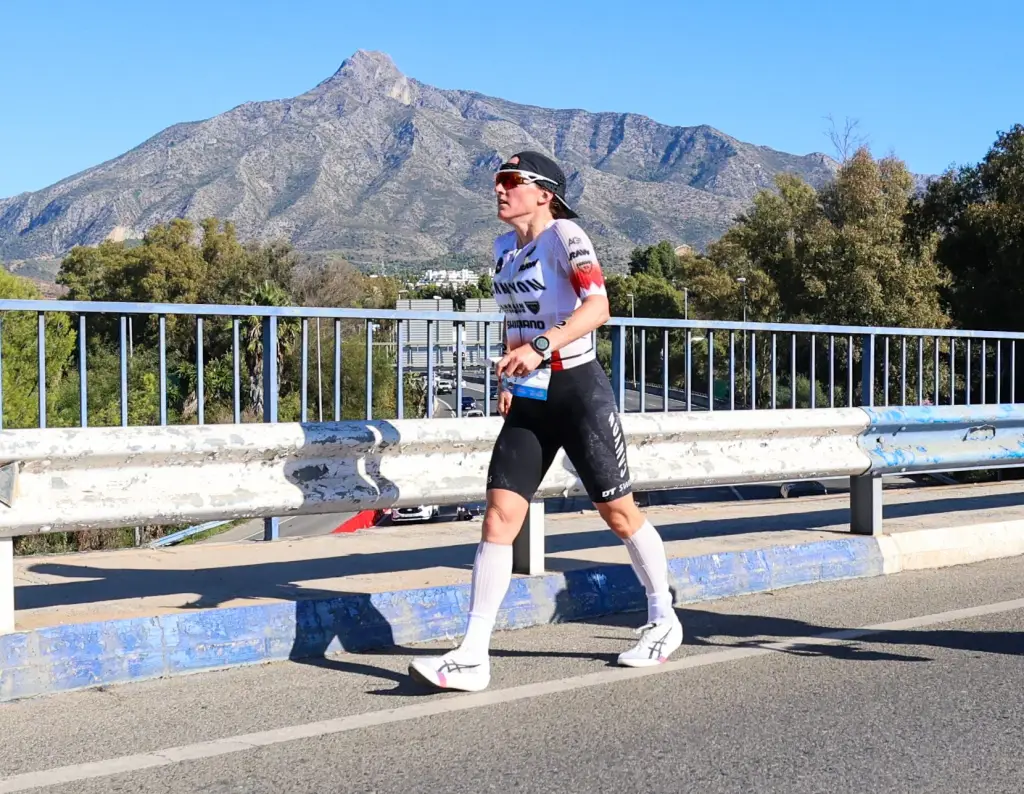
Another critical factor in controlling core body temperature in order to race well in the heat is pacing. Pacing matters because the majority of the excess heat you need to offload to the environment comes from your working muscles. The faster you go, the more heat you produce.
If you go off too hard in cool conditions and get a bit hot, when you slow down your temperature corrects itself pretty quickly and overheating is averted. But, when it’s hot the penalties imposed for overheating early on are more severe. In some cases getting your temperature back down is impossible without a dramatic reduction in pace or even stopping altogether.
So, having a robust and conservative pacing plan than usual when you’re racing in hot conditions is critical if you want to avoid the pitfall of ‘cooking yourself’ by going out too hard early on.
3) Pre cool yourself
One proven tactic commonly employed by elite athletes is “pre-cooling” (i.e. reducing your core body temperature before the start of an event). It allow more ‘headroom’ before the thermal cut off point of about 40.5°C (105°F) is reached.
This can be done with special cooling jackets, ice baths or just by staying in cold rooms right before the start of an event. Drinking cold drinks can help too. Ice-slushies are best as ice is way better than just cold liquids. The phase change of ice to liquid in the stomach consumes a lot of energy, removing heat.
As a minimum, avoiding long winded warm-ups that promote an increase in core body temperature. Stay in the shade / under the air-con for as long as possible before the start is a sensible plan when it’s really hot.
4) Pour water over your head
Another pretty effective tactic is to dump water over your head/body during an event. This will evaporate and act like sweat (assuming the humidity is right), whilst allowing you to sweat less and preserve body fluid and blood volume.
5) Preload on sodium and fluid to start well-hydrated
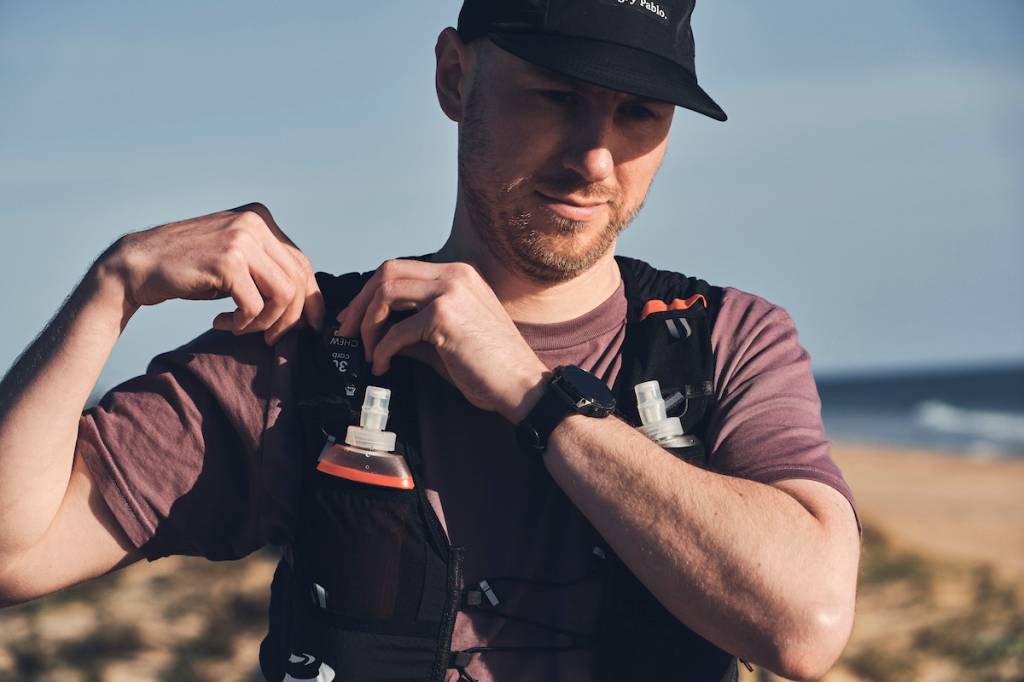
Just drinking loads of water before exercising in the heat is definitely not a sensible strategy to adopt. You risk a condition called hyponatremia (lower blood sodium levels through dilution). This will really impact your performance and can even be dangerous.
Instead, sodium/fluid “preloading”, i.e. drinking a stronger electrolyte drink before races (or long/intense training sessions) in the heat can help to expand your blood plasma volume and aid your performance.
Precision Hydration’s free online Sweat Test helps you get started with personalising your hydration strategy through some good old-fashioned trial and error in training.


 Andy Blow
Sports scientist
Andy Blow
Sports scientist