Orbea Ordu M10iLtd tri bike review
Orbea has revamped its popular Ordu, and claims the bike that’s been ridden to the world’s fastest Ironman bike split numerous times is now even faster. Should we believe the hype? Jack Sexty finds out

220 Triathlon Verdict
A cutting edge tri superbike but one lacking integrated storage options. Score: 84%
Pros
- Nimble handling
- Very adjustable
Cons
- Lack of storage
- Slow stock tyres
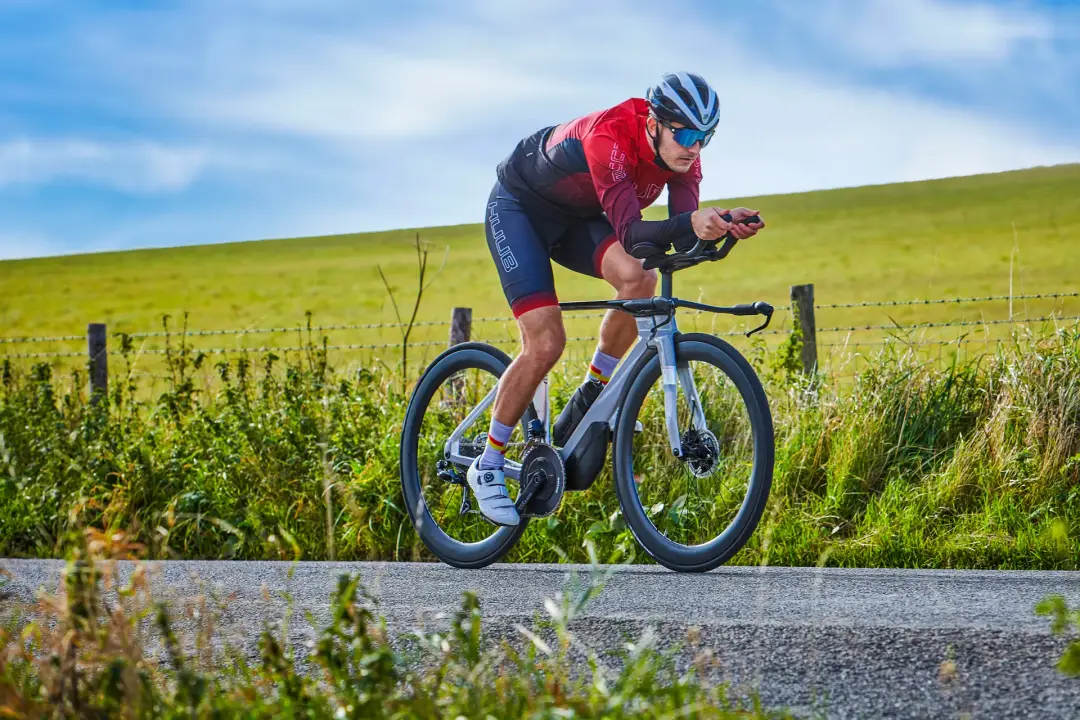
Orbea’s Ordu triathlon and TT bike was first launched in 2006, and has seen plenty of success and rave reviews from 220 testers over the years.
Most notably, it’s been consistently ridden to blisteringly fast times by Andrew Starykowicz. The American has recorded some of the fastest Ironman bike splits in history.
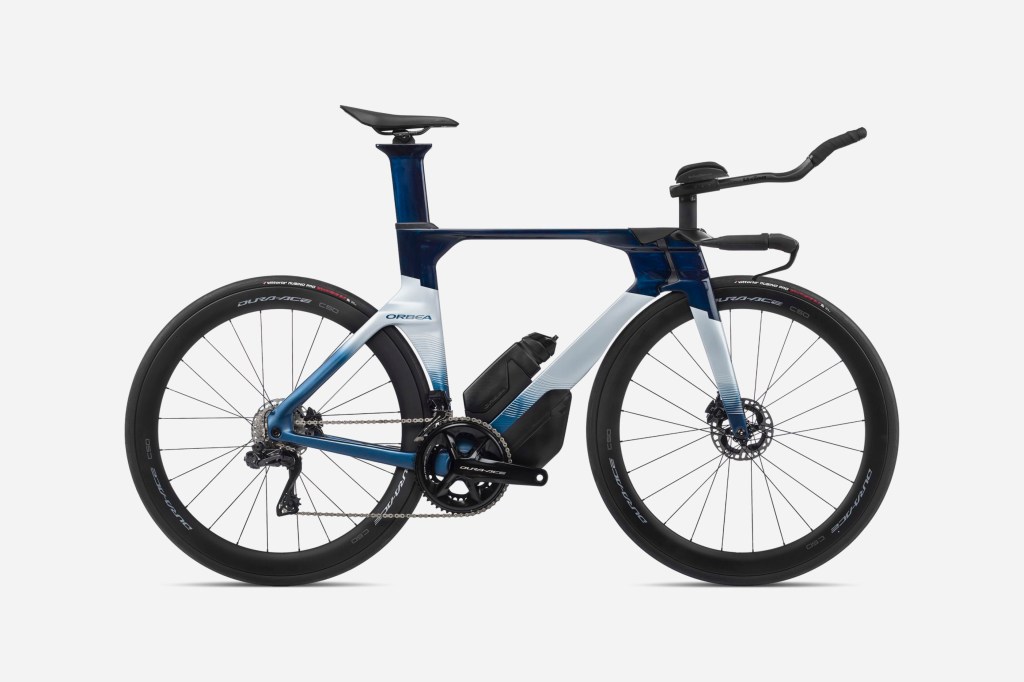
Since we tested the bike in 2021, the price has risen to $11,599 / £11,999 on account of an upgrade to the latest Shimano Dura-Ace R9200 Di2 groupset. The top-of-the-range Ordu now rolls on Oquo Road Performance RP57LTD wheels from the Spanish company’s in-house brand, while the frame remains identical to the one tested.
How we test triathlon bikes
Former 220 Triathlon staff writer and current Road.cc editor Jack Sexty and former 220 Triathlon digital editor Debbie Graham tested triathlon bikes according to criteria such as fit, adjustability, storage, impression of speed, stiffness and usability, ie how easy the bikes were to work on and pack in a bike box. They also considered the quality of the spec relative to price. For more details, see how we rate and test products.
Orbea Ordu M10iLTD update
For 2021, the Ordu was given a full revamp, now boasting hydraulic disc brakes, clearance for tyres up to 30mm, completely integrated cable routing and plenty of innovative new features designed by Orbea in-house. All these changes are intended to make it faster, more comfortable to ride and easier to adjust.
As with any cutting-edge tri bike, Orbea has done the homework to come up with what it says is the “best compromise” possible between aerodynamics, stiffness and weight.
Around 2,500 hours of R&D and calculations later, the Spanish brand claim to have created the ideal machine. Orbea says the total drag reduction of a mighty 11.5% compared to the Ordu of old should translate into a 41sec improvement over an Ironman bike leg of 112mi / 180km, riding at an average speed of 27mph / 43km/h (we can dream).
That might not seem like a huge amount at all for an eight-grand outlay. And yet, the weight saving and a claimed increase in stability should add up to a more comfortable ride. If this allows you to hold your aero tuck for longer, that’s very important for going fast over 112mi / 180km in the real world.
Orbea Ordu range and builds
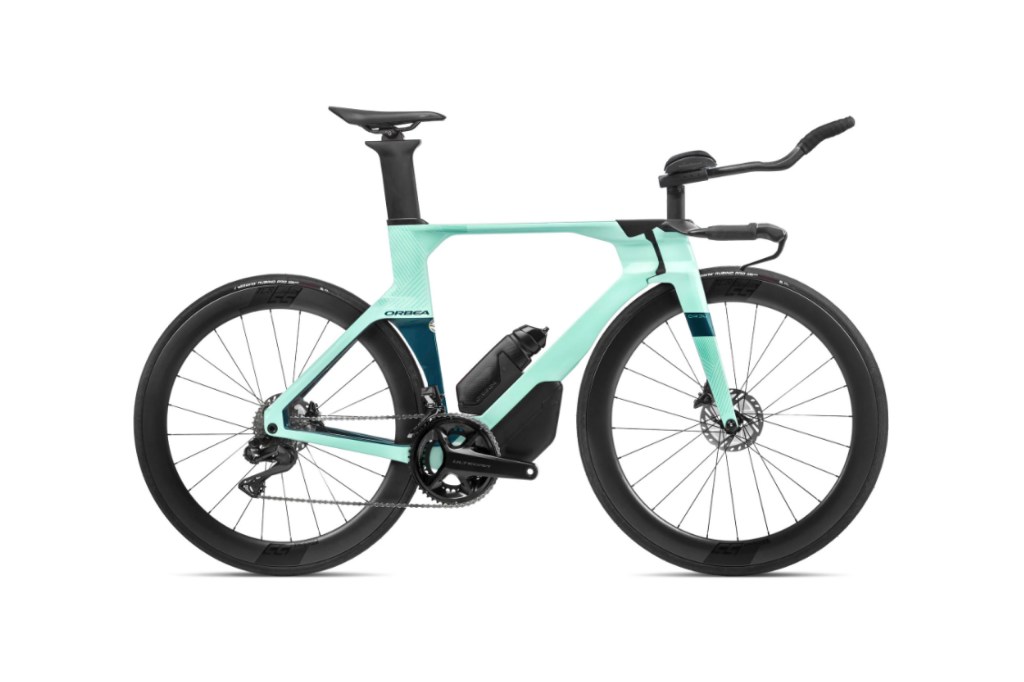
The Ordu range contains three complete builds, starting at $7,299 / £7,699 for the M30ILtd with Shimano 105 Di2 shifting.
The same carbon monocoque frameset and fork, plus Oquo Road Performance carbon wheels feature on all three.
While $7,299 isn’t cheap by any means, the M30Ltd offers tri bike tech that’s rarely seen at this price point. So it is well worth your consideration if our hero model is out of your price range.
My size S-M Ordu weighs in at 17.9lbs / 8.1kg without pedals and Orbea says the frame weighs 2.5lbs / 1.13kg. This is a fair bit lighter than other high-end disc brake tri bikes we’ve tested from the likes of Quintana Roo and Cervélo. In fact, it’s the lightest tri ‘superbike’ we’ve come across in recent years. (The Ordu comes without any integrated top-tube storage, rear storage or a hydration system. These all add extra weight if you specced aftermarket solutions.)
Frame weight savings
Orbea says it managed to shave weight off the frame by redesigning the shape so the required stiffness was maintained throughout. But the amount of material used in areas for extra rigidity was cut down thanks to an adjusted laminating process and the use of high-modulus carbon.
Orbea credits the lengthened reach and relatively relaxed 72° head angle for giving the Ordu enhanced stability and a “more direct and reactive” control of the fork.
The fork itself has a smooth profile and a hinge design, which significantly reduces the frontal area of the head tube. Coupled with base bars that are just 38cm wide, the whole front end is very narrow for extra drag reduction.
The bottom bracket area has been lowered to offer better weight distribution and balance, a feature we were huge fans of on the long and low Quintana Roo PRsix 2 reviewed here. Just four sizes are offered but, thanks to the transformative Ordu OMX integrated bar system, there should be an Ordu to fit most triathletes.
There are numerous pad positions, and you can even flip the bridge that the pads sit on for an extra 120mm of reach adjustment.
The height of the Vision Metron aero extensions can be adjusted quickly and easily with a new mono-riser contraption. This is very similar to the ‘Speed Riser’ system on Cervélo’s PX Series. You can also tilt them up to the tune of 15° if you prefer your bars right out in front of your face.
Ample adjustability
The final trick up the sleeve of the Ordu OMX front end is that the base bars can be flipped around for an extra 30mm of height.
The brake and gear cables do have to be disconnected to do this, although the pads, mono-riser and bridge just require hex keys to make adjustments.
At the rear, the seat clamp can be slid back or forward to adjust the seat angle from a more relaxed 74° through to a fairly aggressive 78°.
UCI-legal frame
Orbea has also designed its own aero bottle (manufactured by Elite) and downtube toolbox for the new Ordu. According to Orbea’s testing, both reduce drag by 1.6% and 1.3%, respectively.
Take the toolbox off and the Ordu is fully UCI-legal. This will probaly only appeal to elite cyclists and those racing the National Time Trial Championships.
The reach of the Ordu has been extended to make the Ordu handle more predictably. Soon into my first test ride, I was impressed with how ‘normal’ it felt despite the rocket ship-esque appearance.
That’s not to say it feels as familiar as a road bike straight away. Like anything that goes this fast, it takes a bit of adjustment. It’s also refreshing to ride a tri bike that weighs more or less the same as a quality road bike. It felt sprightlier on climbs and nimbler through corners.
Orbea believe that the weight reduction compared to its previous Ordu will only shave nine seconds off an Ironman course with 2,000m of elevation. Even so, we’d go for the Ordu to take on a notoriously hilly race like Ironman Lanzarote over a tri bike pushing 22lbs / 10kg.
Orbea Ordu M10ILTD set-up
Setting the Ordu up with a fairly relaxed position, I felt like i could ride on the extensions all day and found things very comfy in our aero tuck. On a bumpier test ride that required more use of the base bars, we did find that the shape of the bar wasn’t hugely comfortable and our palms started to ache towards the end of the ride.
As far as the shifting and braking is concerned, we can’t really fault Shimano’s excellent Dura-Ace Di2 paired with hydraulic disc brakes. Shifting was set up sequentially and 140mm rotors provided plenty of stopping power. Rotor’s Aldu cranks with Rotor chainrings don’t appear to offer any discernible benefits over a Dura-Ace crankset, but they’re a little lighter to save weight.
Orbea Ordu M10ILTD wheels and tyres
The Vision 55 SC carbon wheels are solid all-rounders that won’t cause you any trouble in crosswinds – although seriously competitive racers may want to go deeper and spec a disc wheel at the rear for fast and flat courses.
While I was disappointed to see my test bike specced with Vittoria Rubino Pro tyres, hardly the fastest available, the latest bike comes with the Vittoria Corsa Pro G2 TLR, which are much racier.
The toolbox is convenient and easy to use, highlighted by a puncture we suffered on one of our test rides. It can easily fit an inner tube, tyre lever, multi-tool and CO2 inflator, and can be taken off and reattached rapidly.
We found Orbea’s Aero Bottle easier to use than the Aerobottle 500 that features on the Cervélo P-Series (reviewed in issue 380) due to the cage being placed slightly further up the downtube for easier access. It’s still fiddlier than a standard round bottle and cage but, with some practice, clamping it back in can be performed with minimal fumbling.
Orbea Ordu M10ILTD storage
When pressed about the decision to lose the top-tube mounting bolts that featured on the previous Ordu, and forgoing an integrated hydration solution, Orbea told us that it was all about giving the rider the choice to spec their own preferred accessories.
“There are many solutions in the market that can be fixed with Velcro and can easily be removed,” said Orbea’s road product manager.
“We considered the food bag is something that isn’t used every single ride, but mainly in competitions. The bag must be placed behind the stem rotation point, so we decided to give the consumer the freedom to customise their solution. They could even place a bag on the armrest bridge.”
While choice is extremely important, could Orbea guarantee that its countless hours of aerodynamic optimisation would be maintained if aftermarket solutions were added?
Not exactly, as we were simply directed back to the claim that the Ordu shows an aerodynamic improvement of almost 3% with the Aero Bottle and toolbox added.
Considering other brands are integrating far more storage options as part of the bike’s ‘system’, we found the Ordu a little underwhelming when it came to accessories.
Practically, there’s no issue with leaving it down to us customers to spec the extra storage and hydration options of our choosing.
But without a very expensive trip to an aero testing facility, all Orbea’s hard work to aerodynamically optimise the Ordu could theoretically be undone. All it would take is a poorly set-up hydration system, or an ill-fitting top-tube bag that catches the wind.
Orbea Ordu M10ILTD ride impressions
Of all the latest tri super bikes we’ve tested, I think the Ordu is one of the best when it comes to ride quality. It was just easy to get on with from the off.
It feels responsive and easy to handle through corners and on descents. When you’re bombing down a flat stretch of road on the aerobars, it feels as fast as any other tri bike we’ve ridden.
Orbea Ordu M10ILTD bottom line
Overall, I was mightily impressed by the handling, low weight and speed of the Ordu, but less so by the more minimal storage solutions.
The frame design is cutting edge. The low weight and sensible geometry give it a more familiar ride feel than many of its streamlined counterparts.
The price is also a little bit nicer than the competition for a top-of-the-range model (it’s all relative!). The huge range of adjustment means there should be an Ordu to fit any seriously competitive triathlete with deep pockets.
Orbea Ordu M10ILTD 2025 specs
| Price | $11,599 / £11,999 |
| Crankset | Shimano Dura-Ace R9200, 52/36T |
| Extension | Vision Metron TFA Carbon Aero Clip-on JS-bend |
| Brakes | Shimano R9270 hydraulic disc |
| Wheels and tyres | Oquo Road Performance RP57LTD, Vittoria Corsa Pro G2.0 TLR 700x28c |
| Seatpost | Orbea Ordu OMX |
| Saddle | Fizik Transiro LD R5 size 135mm |


 Jack Evans