Suunto Run watch review
Suunto’s latest Run watch delivers impressive performance and style at a wallet-friendly price, but how does it fare for triathlon training and racing?

220 Triathlon Verdict
Superb entry-level watch, though more for runners than triathletes given the features. Score: 78%
Pros
- Good value run-focussed watch
- GPS accurate and a solid build
- Music storage and lap feedback
Cons
- No topographical maps but expected for the price
- Fairly basic but you get what you pay for
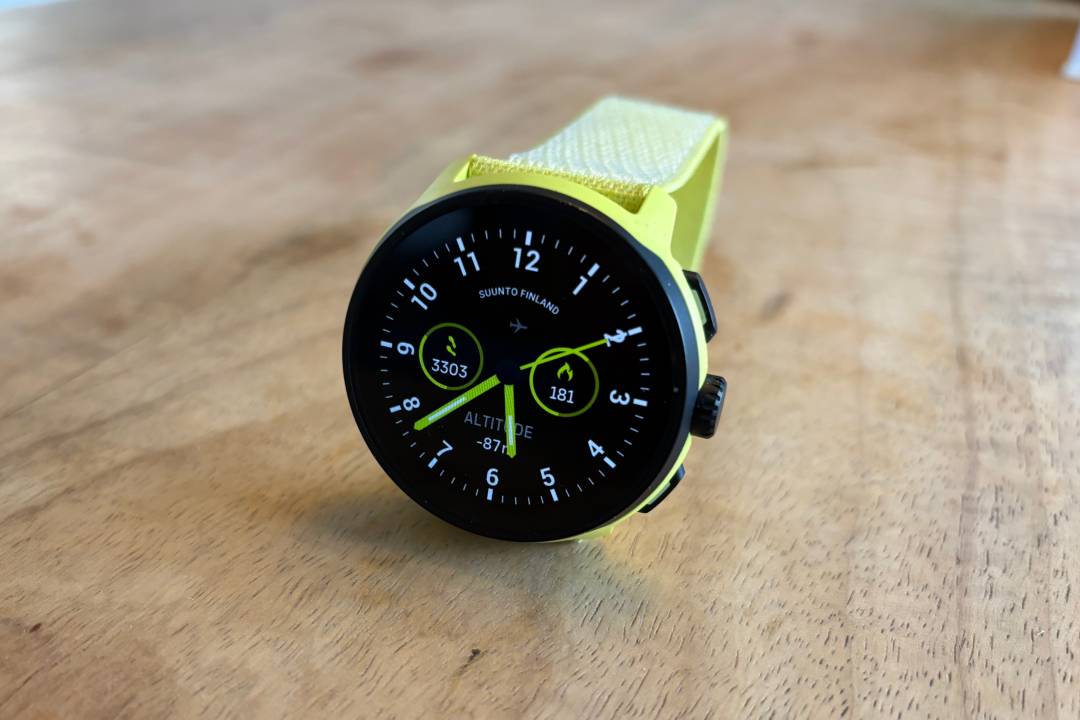
The Suunto Run GPS watch is a well-priced, slick-looking number whose vibrancy of look not only comes from its fetching yellow/lime colourway, but also its stainless-steel bezel and Gorilla Glass protection.
The core of the watch is tough plastic, which doesn’t detract from its smart aesthetic. (It also comes in orange, grey and black.) The Velcro strap is also a winner – it’s light and comfy – though some will prefer a traditional silicone version.
As for its software, there’s much here to applaud. The GPS held up well in most conditions, performing impressively on trails runs beneath the canopies of trees.
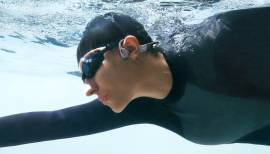
It was fine on the bike, too, and was okay in the open-water but nothing more than that. Although I didn’t test it on an athletics track, others report that its track-running mode is a real boon, ‘locking’ to the lane you’re running for greater distance and pace accuracy on curved surfaces.
How we test multisport watches
Our expert reviewers take triathlon watches on several rides, runs and swims to assess their heart-rate and GPS accuracy, multisport modes, health and fitness metrics, comfort, clarity of screen, connectivity, value for money and extra features. For more details, see how we rate and test products.
Features and performance

While the Run lacks topographical maps, you can plan routes on the excellent app and sync them to the watch. That’s to be expected beneath the £200 mark.
Similar to the Polar, heart rate can be a little erratic at times but for the most part is reliable. As is the Ghost Runner, a feature whereby you either chase or be chased by your shadow when training at a certain pace or aiming for a set finishing time. It’s a cute feature but arguably one you’ll use half-a-dozen times at most.
Additional runner-friendly pros include offline music support and Bluetooth headphone support, so you can transfer songs from your computer or phone to the Suunto Run using the USB-C charging cable and stride to your heart’s content without carrying your phone.

Enabling Auto Laps also gives you voice feedback after each lap, keeping you updated on your performance in real time. It’s useful, though borders on irritation after a while.
All of this and its moniker highlight that this is more a run watch than a multisport tool. Despite that, it’s pre-loaded with 32 sports including triathlon. It also features advanced swimming features like the SWOLF score, which measures your stroke efficiency.
It calculates open-water swim distance, too. We also appreciate how Suunto offsets the predicted lifetime carbon-dioxide emissions of the Run via a reforestation project in south-east Africa.
It’s a fine watch but, though more expensive (£345), we’d guide you to Suunto’s impressive Race. Its battery life is higher than the 20hrs seen here (in full GPS mode) and it comprises more advanced multisport metrics to optimise your performance. If running is your main activity and you’re on a budget though, then the Suunto Run is a fine option.
Suunto Run specs
| Price | $249/£199 |
| Weight | 1.27oz / 36g |
| Screen | 1.3″ AMOLED display; 466 × 466 pixels |
| Dimensions | 46 × 46 × 11.5 mm |
| Battery life | Up to 12 days in smartwatch mode; up to 20h in GPS mode |
| Tech | Dual-band GPS |
| Storage | 4GB |
| Connectivity | Bluetooth |


 James Witts
Freelance sports writer and author
James Witts
Freelance sports writer and author