Kieran Lindars on almost quitting, chasing watts, and podium breakthroughs
From almost quitting the sport to join the police, to heading to his second Ironman Worlds Champs, the last 12 months have been a wild ride for Kieran Lindars, as he tells 220...

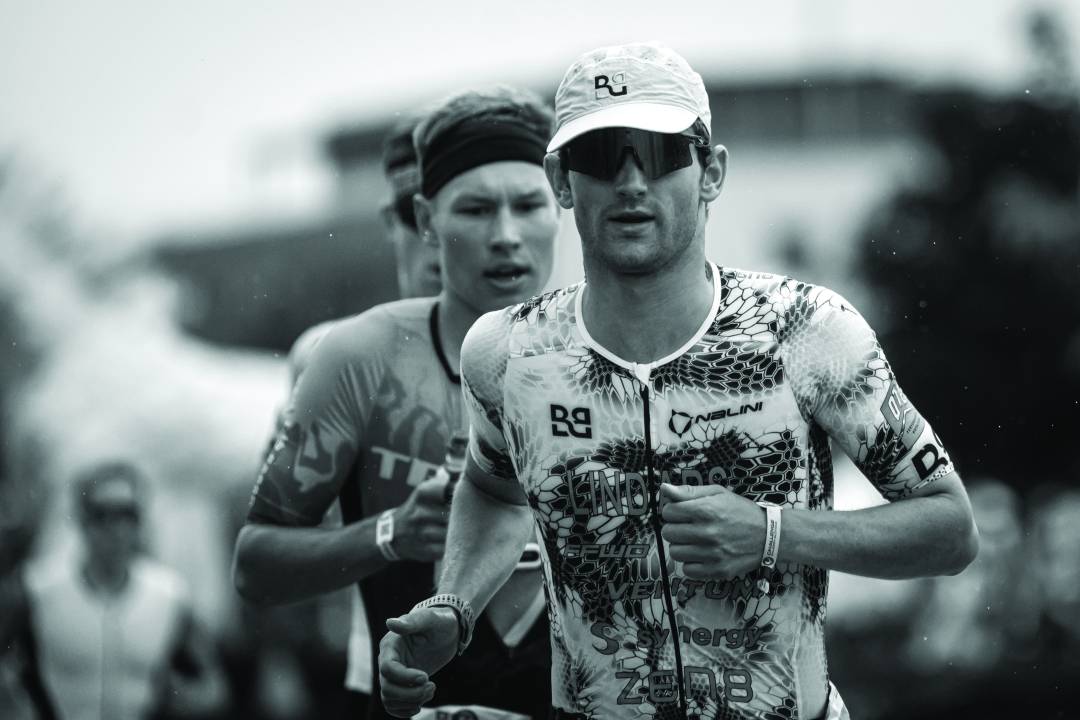
The first time many people heard the name Kieran Lindars was when the young Brit made the headlines at Challenge Almere in 2023. Joining a long list of fine athletes who have experienced the infamous ‘bonk’, Lindars was filmed weaving an unconventional path on his way to a valiant second place at the race he won the previous year.
Learning several key lessons in the aftermath, Lindars returned in 2024. But following a few middle-of-the-road results, the then 27-year-old started to question his place in the sport.
His make-or-break race would be Ironman Frankfurt in August – cue the 30 Watt Project, an ambitious plan to make improvements to every aspect of his kit and performance and save 30 watts during the 180km bike leg.
The outcome? A second place behind Kristian Blummenfelt; the fastest British Ironman time ever of 7:32:14; and a ticket to his first World Champs, in Kona, where he would finish inside the hallowed top 10 in eighth place.
And aside from a crash at IM Texas and a DNF at Frankfurt after losing all his nutrition, 2025 has so far been a solid one for the ever-improving British pro, with three podiums and a fourth at the first-ever Leeds Ironman at the end of July, which bagged him his second Ironman Worlds’ slot.
And it’s post-Leeds when we catch up with him, to talk training towards Nice, the highs and lows of Frankfurt, and the one session he dreads above all others…
220: Leeds – you said it was one of the best race experiences you’ve ever had. Why was that? What were the highlights?
Kieran Lindars: I think racing in Leeds really showed how passionate this country is about Ironman and triathlon racing. It’s a significant place in the history of British sport, so it was great to pay homage to that. It’s also rare for me to have a home crowd behind me – it’s a real advantage and a pleasure to be around.

220: Ironman Worlds qualification is now in the bag – congratulations! – how much of a relief is that now?
KL: It’s always a big relief qualifying for the World Champs. It’s the pinnacle of our sport, and sometimes qualifying can be as hard as the race itself. So it’s always an honour to be one of the lucky few who earn a slot, especially with how close racing is these days.
220: What does the rest of the season now look like training-wise as you build towards Nice?
KL: My training will now be focused predominantly on Nice. There’s not a lot of time, but there’s a good opportunity to get a solid training block in, so I’ll be concentrating on the specificity of that race and sharpening the body for the event. [Lindars would go on to come out 12th after the swim in Nice, before having to DNF after 40 miles on the bike due to feeling sick.]
220: How disappointing was Frankfurt for you this year given last year’s career-changing race?
KL: Extremely disappointing. I went into that race with a lot of excitement, especially after such a good performance last year. Unfortunately, it was the first race with the new World Triathlon rules, and I was testing new hydration mounts – one of which broke. The cobbled section caused problems for several athletes, so I wasn’t alone. It’s just part of racing.

220: How would you rate your season to date?
KL: I’m really proud of what I’ve achieved. So far, my worst result this year – other than DNFs – is fourth, and I’m happy with that. This is also the first season I’ve podiumed at the 70.3 distance, and I’ve done it in every 70.3 so far.
It’s great to see that progress, and I want to build on it. I’m still dealing with some post-crash issues from Texas, so it’s been amazing to perform well even when I don’t feel 100% – a credit to the team and support crew around me.
220: How have you adapted your training as the season has progressed? Did Texas and Frankfurt force you to change things up?
KL: Texas and Frankfurt ultimately meant I lost a lot of training. I had two big tapers and then needed recovery time from injuries, so I missed out on important training volume. I’m currently working to rebuild that base.
220: A year ago you were walking away from the sport. Why? And how much did Frankfurt transform your career?
KL: Frankfurt changed everything. It was the first time I truly felt I deserved my place in professional triathlon, and it also showed the world what I’m capable of. I had been struggling with imposter syndrome up until that point, and it really helped me mentally.
220: What were you going to do instead, if you walked away?
KL: I was actually going to apply to the police – I wanted to be a detective!
220: What’s your season’s goal?
KL: My main goal this season has been to be in and among the race at every start line. I want to be someone who actively contributes to the race dynamics.
220: What’s the ultimate career goal?
KL: To stand on the podium at a World Championship.

220: What do you do when you have a particularly tricky session and need some extra motivation to get through it?
KL: I think about everyone who has sacrificed to get me to this point. A lot of people have gone out of their way to give me the best opportunity in this sport, and I try to remember how privileged I am to be in this position.
220: Is there a training session that you dread? If so, what is it and why?
KL: The one that always makes me nervous is my final marathon prep. It’s 90 minutes of running at or around marathon pace, and it’s absolutely brutal. It also takes a long time to recover from, so the following 10 days are tricky – managing fatigue while keeping the training going.
220: You’re known for trying to find those marginal gains, how much do you enjoy working with brands to improve your performance?
KL: It’s amazing to be surrounded by such passionate people. There’s nothing more motivating than everyone pushing to create the fastest package possible. It’s also a chance to learn from the best in the industry and understand triathlon beyond just racing.
220: What’s the one piece of kit you can’t live without?
KL: My water bottle. As a junior, we were always told off if we didn’t have water with us — so you’ll rarely see me without one now.
220: Where do you think the biggest marginal gains will come from in tri?
KL: The biggest marginal gains definitely come from the bike. There are so many areas and details you can nerd out on, and it’s definitely where I spend the most time.

220: We’re in a rich period of fast performances, how much faster do you think we’re going to see times go in long-distance racing?
KL: The sport is developing at an extremely fast pace. Investment is growing, giving athletes a real opportunity to make careers. I also think we’re seeing the first wave of athletes who’ve trained seriously from a young age.
Since triathlon became an Olympic sport, countries have taken it seriously, and now we’re seeing a generation of highly trained athletes emerging – which is why times are dropping so quickly. It’ll be fascinating to see how much the bar is raised as new generations come through.
220: If you could steal one triathlete’s skills whose and what would they be, and why?
KL: My fiancée’s (Chloe Pollard) swim ability and determination.
220: Favourite place to race, and why?
KL: Either Holland or Germany. They always create the best atmospheres and help carry you across the finish line.
220: Who do you look up to in the sport and why?
KL: Tom Bishop. He was a few age groups above me and someone I always looked up to. It’s surreal to now consider him a close friend and an ally at races.
A day in the life of Kieran Lindars
For Kieran Lindars, whose days are in his words, “pretty simple”, this is a typical Saturday.

5:15am: Wake up. Light mobility and preparation for swim session.
6-8am: 2hr swim session (Maxwell Swim Club)
Focus – Sprint set
Structure – High-intensity intervals aimed at top-end speed and anaerobic capacity
9am: Breakfast – 100g oats with fruit and yoghurt, three slices of toast and coffee
10am-1pm: 3hr cycle session (Tri Revolution)
Focus – Sweet spot training (just below threshold)
Zone – ~88–94% FTP
Purpose – Build aerobic capacity and muscular endurance
2pm: Lunch – typically rice, eggs and some ham
Afternoon/Evening:
Recovery – Stretching and mobility work
Work – Reviewing and updating coaching plans for athletes
General downtime and recovery focus
Kieran Lindars’ career highlights
Lindars’ tri career may have been short, but so far it’s been very sweet…
- 4th, Ironman Leeds, 2025
- 3rd, Ironman 70.3 Swansea, 2025
- 3rd, Challenge ‘The Championship, 2025
- 3rd, Challenge Sir Bani-Yas, 2025
- 8th, Ironman World Champs, 2024
- 2nd, Ironman Frankfurt, 2024
- 1st, Challenge Almere, 2022


 Liz Barrett
Freelance sports journalist, copywriter and editor
Liz Barrett
Freelance sports journalist, copywriter and editor