Swim coach reveals the real benefits of cold water swimming
What are the benefits of cold water swimming and is it good for our health and mind? Find out here...

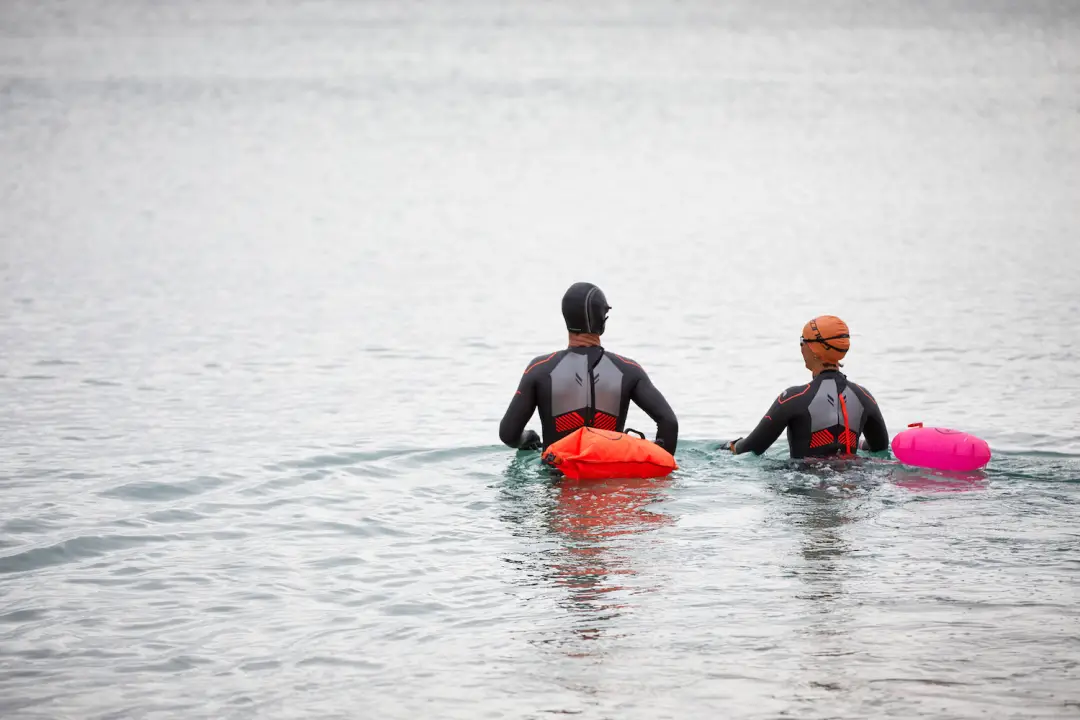
Cold water swimming has been popular for a while now (which is why you see so many stylish swim robes around), but are the suggested benefits real? In this article, I’ll uncover what is fact and whether swimming in chilly water is right for you.
From advocates using cold showers or home ice baths to gain the benefits of cold dipping, to swimmers extending their season to all-year-round and reporting improvements in wellbeing, cold water swimming has seen a significant rise in recent years.
As triathletes, we swim for training and enjoyment, but if we only swim in the warmer water of the summer season, are we missing out? And if you do decide th etake the plung, so to speak, are any potential benefits for health and mind worth embracing the chill?
Well in short, the answer is yes! Below I explore some of the things you can expect to see when you start swimming in chillier waters…
How do we define ‘cold’ water?
First up, a little housekeeping. Generally, unless we’re in a heatwave, open water swimming will always feel a little bit chilly!
So how do we define cold water? To give you an idea, most swimming pools are heated to around 28°C (82°F) and here in the UK, open water rarely reaches those dizzy heights.
The usual definitions as used by the RNLI and RLSS, and by open water swim venues, are as follows:
- Below 15°C / 60°F = cold water
- Below 10°C / 50°F = very cold water
- Below 5°C / 41°F = ice swimming

Of course, these figures are a benchmark and the time you spend in the water is very much down to a range of personal circumstances, from level of acclimatisation, habituation (how much you do it), individual health and physiology, and to what the weather is doing on a particular day.
These figures give us an idea, though, and remind us that under 15°C water is ‘officially’ cold, so we should expect to adjust our swimming accordingly, and possibly opt for a thermal swimming wetsuit for extra insulation.
However, that’s not to say we shouldn’t still respect the water above 15°C as being too cold, and hypothermia can still be a risk factor above that temperature.
It’s a good idea to keep a note of your swims and the temperature of the water on a particular day. Over a year or two, you’ll start to build up a picture of what the water temperatures at your local swimspot do throughout a year, and also how you need to adjust your time in the water depending on the temperature and your cold tolerance.
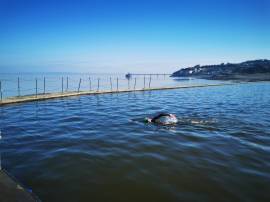
As a guide, my local swim spot, the South West Maritime Academy (a deep flooded quarry), saw a low of 5.8°C in February, when the water is usually coldest, and a high of 24°C in August.
The type of water and how sensitive it is to temperature fluctuations will also impact how cold it is. For example, as a huge body of water, the sea will change temperature much more gradually than a small lake.
One note here, too – please always follow advice when swimming in cold water and be mindful that it can be a dangerous environment so it is crucial to be respectful of that. Find more of my practical safety and best practise advice for adapting to cold water here.
The benefits of cold water swimming

When we talk about the benefits of cold water swimming, we can roughly divide them in to two categories: the ‘hard’ physiological benefits (what actually happens to your body when you immerse it in cold water) and the ‘soft’ more psychological benefits (how the experience benefits our mental wellbeing through situation and environment).
It’s important to mention as well that much research is ongoing into the benefits of cold water swimming and that many findings are the result of cohort research (many swimmers reporting the same experiences).
Professor Mike Tipton also explained in an interview he gave 220 that you don’t actually need to stay in the water for very long to achieve many of the benefits:
“The good news is, quite a lot of the beneficial effects of cold water immersion are obtained in the first two minutes. There isn’t a need to stay in the water for a long time.
“If you want to do long distance, just wear a wetsuit so you don’t get too cold. Whether with or without a wetsuit, I think you probably get the same benefits in terms of those initial responses as a wetsuit still allows water in, so your body is still exposed to it.”
Good news, right? So here are those benefits in a bit more detail…
1. Acclimatisation and habituation

Professor Tipton also explains that we don’t need to do lots of cold water swimming/dipping to minimise that unpleasant feeling of entering colder water, when the ‘cold water shock’ or ‘stress’ response (which peaks between 10°C and 15°C) leaves us feeling brutally cold and gasping for breath.
“We found that if you cold acclimatise, which only takes five or six immersions of 2-3 minutes, you can halve the cold shock response – which has a real benefit for open-water swimmers,” says Tipton.
“Plus 14 months later it was still reduced by 20-25%, so quite a lot of that habituation is probably fairly permanent and fairly central.
“Now that doesn’t mean at the start of the next season you can run down the beach and dive in, because unless you keep going, you will have lost some of that adaptation!”
The good news for triathletes, though, is that even with short dips maintained throughout the colder months, you’ll have a head start on non-cold water swimmers come the start of triathlon race season.
So as well as the other benefits, it’s purely worth doing so that things feel easier and you can crack on with training in the water more easily come April/May next year.
2. Reduction in inflammation and chronic conditions

This is one many athletes will be familiar with – the use of ice baths in sporting recovery has long been extolled.
In short, and in its most simplistic form, this works by vasoconstriction; reducing blood flow from areas of inflammation that have worked hard (such as the legs) as the body works to keep the core organs warm by diverting blood to the middle of the body.
Studies are ongoing to monitor the wider effects of this phenomenon in recovery from major injury/trauma and in reducing other inflammatory or long-term conditions in the body.
A good read for more on this topic is the book Chill by Dr Mark Harper MD PhD, as well as the information on his website.
Harper is an expert anaesthetist and researcher who through his medical research explains how cold water immersion can help conditions including chronic pain, arthritis, anxiety, depression, PTSD and migraines.
Facial immersion in cold water also stimulates the vagus nerve, resulting in an anti-inflammatory response that’s good news for cold water swimmers who are worried about whether you achieve the benefits while wearing a wetsuit!
Stimulation of the vagus nerve is also hypothesised to help with depressive disorders [1].
3. The post-swim ‘high’

When we immerse our body in cold water, a number of things happen all at once.
Our circulation and heart rate increase as our body works to move blood around to keep the core warm, and theories suggest that regular open-water swimming results in a post-swim ‘high’, triggered by the release of beta-endorphins, dopamine and serotonin.
On a ‘softer’ benefit note, that high and the reduction in anxiety and depression can also be linked to the positive mental benefits of doing something challenging and difficult.
Many of us get a buzz from conquering something challenging and swimming in cold water definitely ticks that box. Many cold water swimmers also report feeling more body positive as a result of focusing on what their bodies can achieve.
4. Blue-green and social therapy
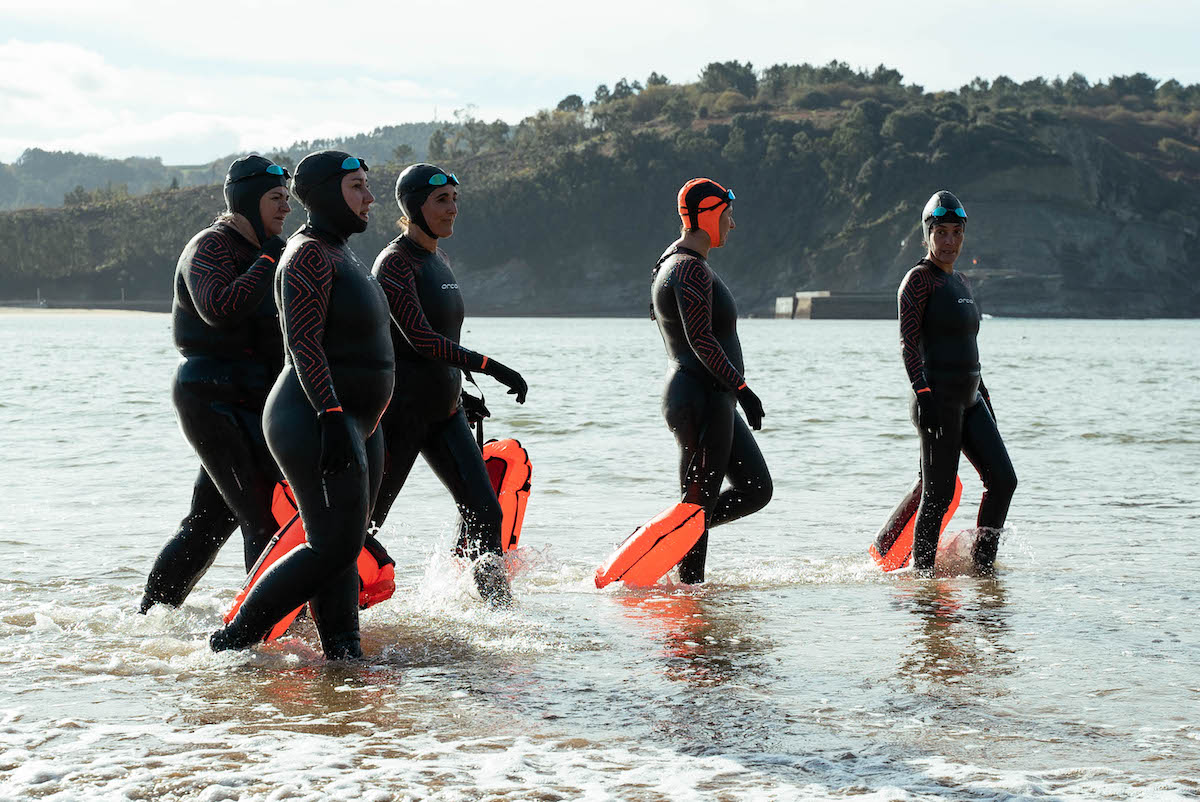
The blue and green therapy you get from being around water and nature is not to be underestimated in making us feel good – especially at colder times of year when we are likely to be indoors much more. Take in those views and get some vitamin D (maybe, if the sun comes out).
This innate craving to be around nature is suggested to be one of the reasons outdoor swimming has seen such a boost during the pandemic and lockdowns, when so many of us were starved of access to swimming and the outdoors.
Being around other like-minded swimmers is good for the soul as well (never swim alone in open water, for safety reasons). Time around other people sharing swim goals, challenges (and cake!) can always give a boost to our mindset.
Why not check out local triathlon clubs or swim groups for cold water swim sessions?
5. Stress reduction and mindfulness
As noted earlier, when we get into cold water our body goes a bit nuts, which also triggers the ‘fight or flight response’ and a good dose of the stress hormones adrenaline and cortisol.
Part of being a cold water swimmer is learning to calm the body by relaxing and breath work, so you have your breathing under control before you start swimming.

New cold-water swimmers should be encouraged to enter the water gradually but purposefully, while focussing on breathing, relaxing the shoulders and never putting the face in the water until the breathing is calmed.
It’s also key to venture out with other swimming buddies or at least a spotter to keep an eye on you. A swimming tow float is a great addition for safety and provides something to rest on out of the cold water.
Mindfulness also comes with the territory of cold-water swimming. If you’ve ever struggled to ‘switch off’ during other practises such as yoga or meditation due to a racing mind, you may find that cold-water swimming does the trick.
You literally can’t think about anything else than the water, the temperature and how you are feeling in cold water.
So there you have it – a whistle-stop tour of some of the things that be achieved for your mind and body through swimming in cold water.
Please do refer to our other articles on safety while cold water swimming and how to warm up after a cold swim, to ensure you’re looking after yourself properly.
References:
- Open water swimming as a treatment for major depressive disorder [2018], BMJ Publishing, Mike Tipton et al.)


 Helen Webster
Editor, 220 Triathlon
Helen Webster
Editor, 220 Triathlon