Follow these easy wins to maximise your front crawl on race day
Dermott Hayes shares 8 key tips for honing your swim stroke for maximum gains with minimal effort on race-day.

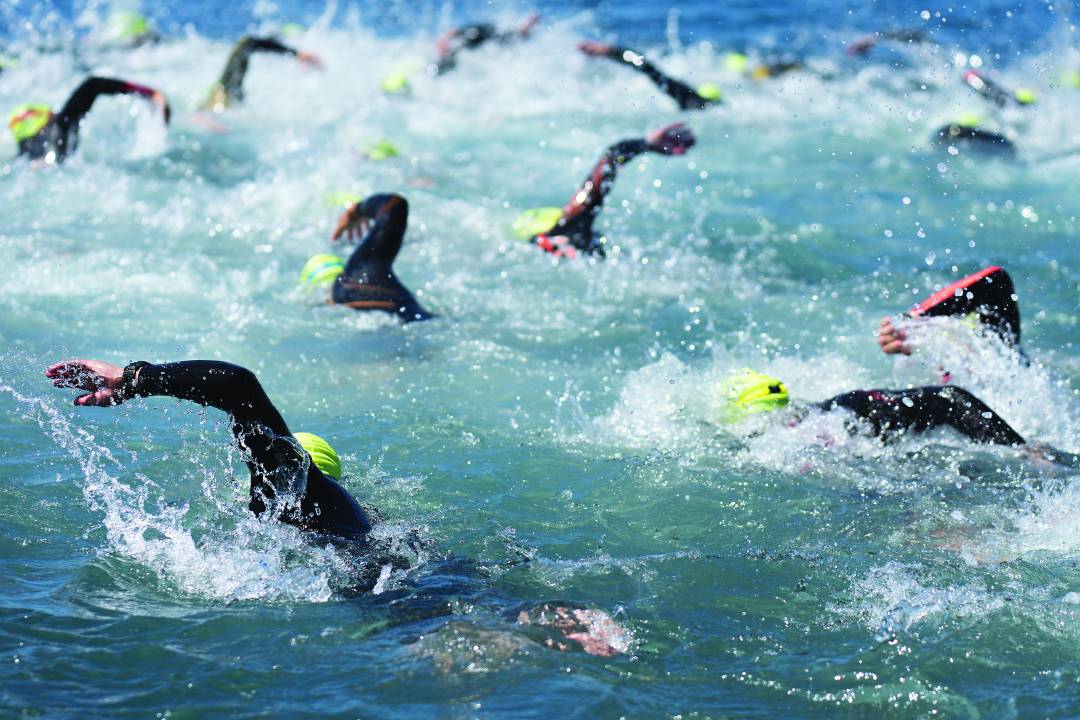
Front crawl is king on triathlon race day and it’s time to refine your stroke for maximum performance gains on the big day. Swim smarter, not harder with these simple yet effective tips from swim coach Dermott Hayes.
1. Push and glide
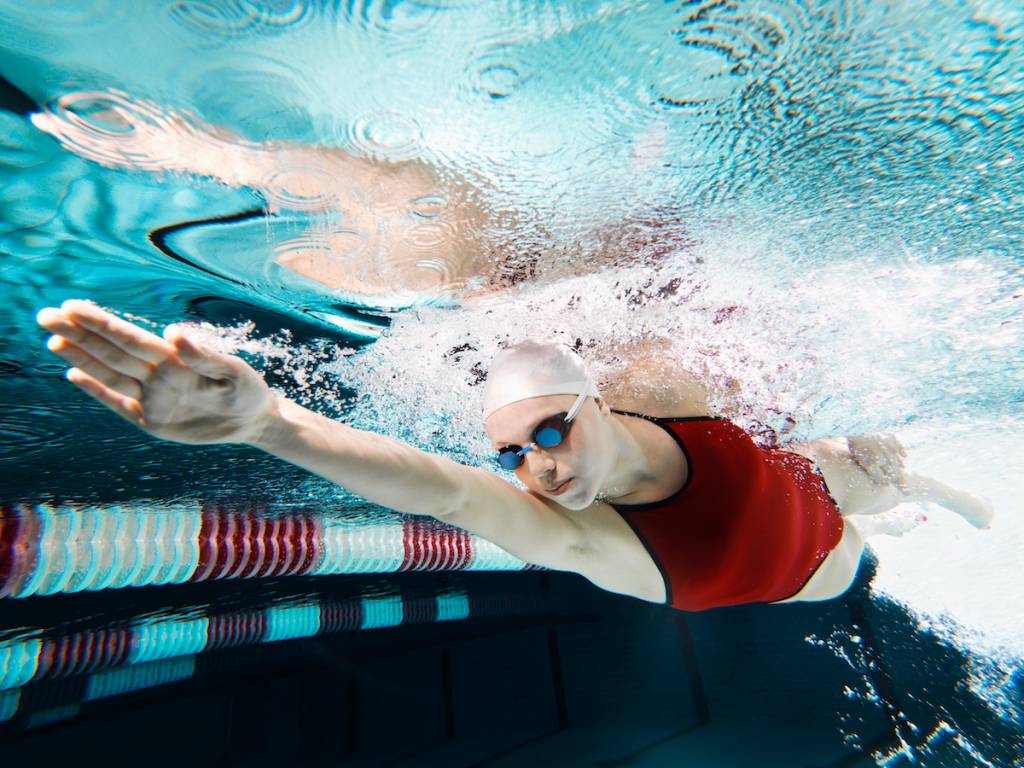
Begin every length of the pool with a strong push from the wall to cover maximum distance. Position your arms out in front of your head, keeping them as long as possible, with fingers pointing forwards and placing your head in between your upper arms. Become as streamlined as possible and hold your position by engaging the strong core muscles. Breathe out as you push off the wall and allow your body to naturally rise to the water surface.
2. Scoop sweets
To improve the pull phase of your stroke imagine your hand as a scoop. As you catch the water, begin to scoop sweets back all the way to your hips and finish by putting them into your back pocket at the end of the stroke. To achieve optimal propulsion and movement, focus on keeping your elbow high with a strong forearm throughout the complete stroke.
3. Keep your ankles floppy
The perfect leg kick still only equals a small percentage of your forward propulsion, but a poor leg kick will definitely slow you down. Try and keep your ankles floppy when kicking by keeping your legs relaxed. With the final part of the kick, let your ankle create a short whip-like action to guarantee your toes point behind you. To improve ankle flexibility, try sitting down onto your heels to help stretch the connective tissue.
4. Master bilateral breathing
Having the ability to breathe comfortably to both sides is a real advantage in the swim section of a triathlon, for two reasons. First, it helps to balance out an uneven body position. Secondly, it’s helpful in open water as it gives you greater peripheral vision and allows you to sight more frequently, ensuring you swim in a straight line. In training, include blocks of six lengths in the pool where you breathe exclusively to your right up the lane and to your left back down the lane. Then for a further six lengths breathe bilaterally every three strokes.
5. Pick your turn
Choosing your style of turn will depend on the race situation. For example, if you have a lot of people around you don’t try a corkscrew turn! My choice is a ‘Superman’ turn, where you lead with your arm closest to the buoy, keeping it out in front and just under the water’s surface. Then the outside arm does 2-3 short and fast strokes to maintain pace and movement. You’ll need to keep your head down throughout this movement, so take a deep breath before turning. Then return back to your regular stroke as quickly as possible.
6. Train hypoxically
Very often in a race – especially in open water – you may find that you’re thrown out of your normal breathing pattern due to waves or other swimmers. This can lead you to completing more strokes before being able to breathe. To prepare for this, practise training in a hypoxic state, i.e. without oxygen, to help minimise stress.
To do this, build blocks of lengths with more strokes per breath into your regular swim sessions. You must be able to control the exhalation so you don’t take a panic breath.
7. Beat the chop
Adapt your stroke over the top of the water to cope with high waves, so think about your arms as windmill blades.
Get them high in the recovery phase and throw the hand forward to get maximum reach. This technique can also help to increase stroke distance that, in turn, reduces stroke count and can save energy.
8. Vary finger and thumb position
The ‘Catch’ and ‘Pull’ phases are often seen as the most crucial in a swim stroke. In order to be able to ‘feel’ the water, a great technique drill is to vary your finger and thumb position to force you to pull the water more efficiently. Start by hiding your thumb behind your hand and swim one length, then hide your little finger behind your hand and swim one length. Gradually reduce the number of fingers until you’re swimming with a closed fist. Then swim as normal for 6-8 lengths before repeating. This really improves your forearm/hand strength and your feel of dragging the water behind you.


 Dermott Hayes