How to build adaptable skills in open water
Improve your ability to perform in all open water racing conditions by building adaptable skills into your training schedule, explains Andrew Sheaff.

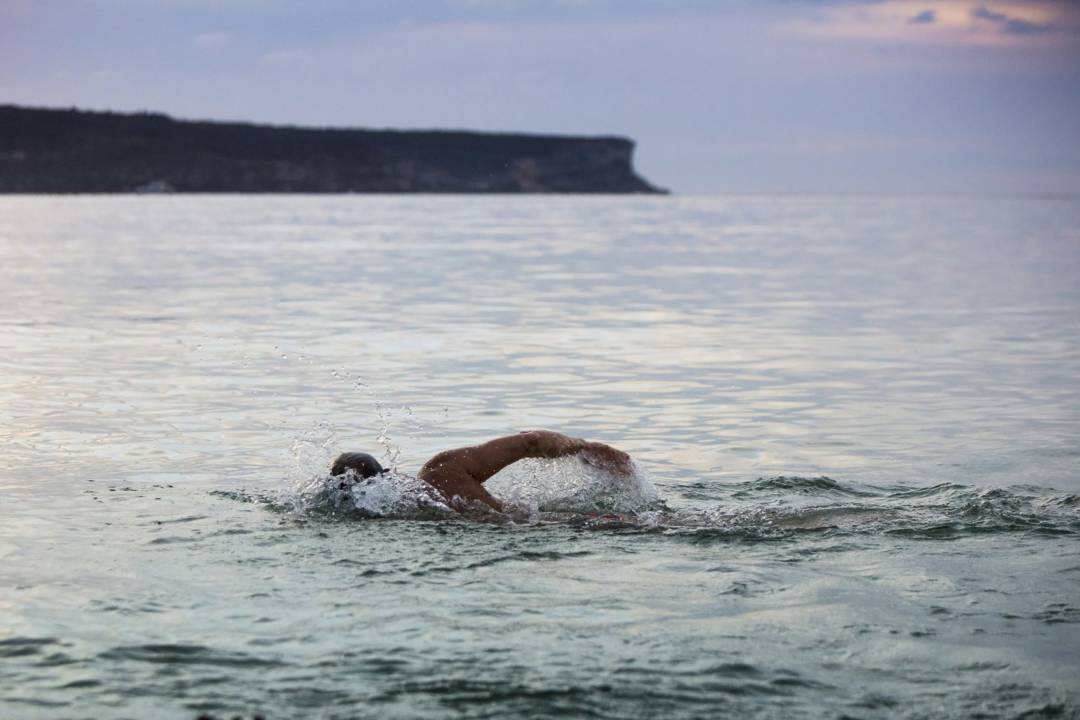
Open water racing is unpredictable as you have different water and environmental conditions to contend with. You’re also competing against individuals ranging in ability, which means that everything can change within a race! To ensure a successful race, it’s key to build your open water swim skills.
You need to be adaptable during a triathlon swim if you want to be successful. That could mean adapting your skills or adapting your race strategy. Swim coach Andrew Sheaff has been helping people improve their swimming for over 20 years, here he’s give us some useful tips to get started.
It’s not just about doing something different. It’s about doing something different that effectively keeps you on track to accomplishing your goals.
While racing is unpredictable, you can train to meet the unpredictable demands of racing by including plenty of change within your swim training schedule.
Let’s take a look at some strategies for making it happen, including how contrast training can lead to faster development in the water, which is also incredibly useful in open water.
Change up your speed

Within your workouts, play with quickly changing your speed. Introduce surges of very high speed for very short distances, or introduce controlled, extended surges.
Rather than constantly swimming at the same speed within sets or within repetitions, get comfortable making or matching moves, and then settling back into a consistent rhythm. It’s a great way to become skilled at managing race dynamics.
Change the stroke count
There are multiple ways to swim effective freestyle, with some swimmers taking shorter strokes and others taking longer strokes. It’s good to be able to do both, and by deliberately changing your stroke count within workouts, you can learn how to do so.
While you may rarely use any stroke other than your preferred one, you never know when you might need an alternative. Having the ability to switch back and forth between longer strokes and shorter strokes also provides you with the skill to consistently swim with a stroke that you choose.
If you have a tempo trainer, you can also practice building this type of adaptability by swimming at high stroke rates and low stroke rates.
Switch hand postures

Another strategy I really like is to frequently change your hand postures. Switch between swimming with open hands, closed fists, or holding your hands in an OK sign.
It’s going to dramatically change what you’re feeling in your stroke, and your goal is to maintain the same rhythm and skill regardless.
Since your stroke is going to feel different with waves or chop in a race, you want to practice handling any change that comes your way in training.
Switch drills
Beyond just switching how you perform freestyle, you can also introduce different drills into the middle of your freestyle swimming. Simply change from freestyle to a drill and aim to do so as seamlessly as possible. For some drill ideas, check out our 15 key front crawl swim drills to improve your technique.
To increase the challenge, you can use multiple drills. The idea is to quickly make the change without any sort of hesitation. The more quickly and effectively you can transition between different activities, the more adaptable your skills will become.
Want to know how your swimming pace compares in triathlon racing? Coach Andrew Sheaff shares swim benchmarks and what’s a good swimming pace.


 Andrew Sheaff
Swim coach
Andrew Sheaff
Swim coach