How to stick to your New Year fitness resolutions
Vowed that next year will be the year you stick to your fitness goals? Here are 5 top tips from coach Nick Beer to make sure you stay motivated...

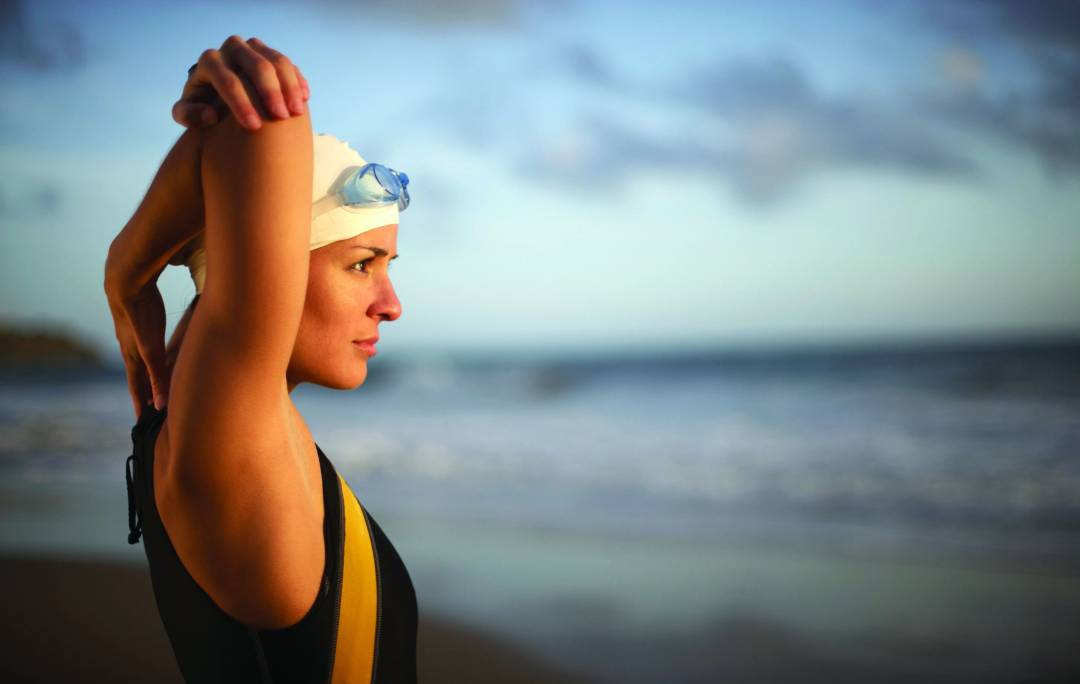
Want those new year fitness resolutions to stick? Here are coach Nick Beer’s five important methods to apply to ensure that you don’t give up after the first couple of weeks…
Christmas is over. You may have begun 2026 with a cold sea swim, a long cycle, a fun road running race or just have been bound to your sofa nursing a hangover… Either way, we will all began 2026 with a set of goals and objectives that we want to achieve.
We are all highly motivated and over the holiday period, with every sip of alcohol and persistent grazing of the delicious festive treats, we had at the back of our minds: “this will all come to end when 2026 begins; this is my year!”
We all know it’s easy to slip back into old habits once our daily routine comes into full effect, but what happens if there was a way to maintain our motivation and never have that drop in energy – can this be achieved? And above all, can it be maintained indefinitely? I know it can!
Five ways to keep your New Year’s fitness resolutions

Below, are five methods, that when applied to our training, will help install consistent motivation as part of our personality and not as something that we have to acquire:
1. Start off steady
It may sound self-explanatory, but when motivation is high and our bodies are full of energy, it is very easy to push too much too quick.
What will happen is that we will have a good few days of training, feel fantastic and then the fatigue will take over.
The DOMs (Delayed Onset Muscle Soreness) will govern our bodies resulting in soreness and tiredness. The effect is that we will not be able to keep up the momentum and inevitably, lose focus.
There will be no avoiding DOMS in the first few weeks of the new year, but we can avoid the severity. Take it steady and build slowly into training.
By the third week our bodies should have adapted sufficiently and then training can move on to the next phase.
2. Think S&C

Putting a strength and conditioning training plan in place is essential as it will complement our training, enhance our performance and prevent injury, which ultimately leads to consistent training and better race results.
The focus of your strength training exercises should be on posture, core, trunk stability, glutes, hips, hip flexors and our bio mechanics.
During the triathlon off-season training, perform at least two weight sessions a week. This is considered the minimum to see improvement.
They don’t need to be long though. In just 30 minutes, including a short warm-up, you can get through three to five sets of simple exercises. Back squats, split squats, dead lifts, lunges and rows are extremely beneficial to endurance athletes.
In the race season, you might want to drop down to one weekly strength workout to maintain strength.
3. Structure training in cycles

By periodising our training we start to create a purpose and a direction. If we keep training religiously week after week, with no direction or clear vision we run the risk of losing motivation and creating boredom.
The energy we mustered up at the start of the year will all be vain and cause a loss of interest. An effective triathlon training plan often works in four week blocks.
The first three weeks we build to the third week being the highest volume and hardest intensity with the fourth being the recovery week.
Each week is greater in volume than the previous week and then the fourth week is when we look forward; when training volume decreases and we have more time to rest.
This is essential in cementing the previous three weeks and where fitness development happens.
4. Add some variation

This may sound straightforward, but we are all creatures of habit and feel happy sticking to what we know.
The benefit of doing exactly the same sessions week after week is that there is consistent data to compare against that show our progression.
However, after the tenth week the mundanity of these sessions will become much more apparent and motivation will be lost. Also, the negative to this is that we become good at these sessions – that is it!
Our bodies adapt very quickly to stimuli, therefore, we need to constantly change things around so that we don’t get used to it. By varying our training with different training focuses, we accelerate the training effect and increase our fitness levels much quicker.
5. Relax your mind

This is often overlooked and sometimes not considered too important.
It is easy to keep ourselves busy, but how many of us find it easy to rest and not to entertain the thoughts that bombard our minds every moment of the day?
Has anyone been for a run and not thought about anything apart from our breath and how our legs and arms are moving in sync?
Or after a training session to come home, sit down and regardless how the session went, completely switch off from it and let it go?
These are very hard traits to master. But with a quiet mind it will allow our bodies to work in harmony and and once they are in sync, this is when the big performances will happen.
We hear stories from Kona when athletes go through these dark patches where they want to stop and quit. But somehow find that inner peace to override that command and go on to glory.
A way to begin this is to find five minutes in the day when you are having coffee or on your own and practise not allowing any thoughts to enter your head.
In your running shoes or on the turbo trainer; try and focus solely on how the body is moving and generating the required energy.
By applying these five steps to stick to your New Year’s fitness resolutions 2026 you will be in a strong position to achieve your goals.
Taking a step back and looking at your training instead of going head first into it will help uncover a deeper enjoyment for what you do instead of a quick fix.
Longevity and consistency is the key. Find the excitement and apply these important steps and your new year fitness goals will be achieved with gusto!
Having a race in the calendar can boost motivation, so pick one of the UK’s best triathlons as a target.
Nick Beer is an Endurance Specialist and Corrective Exercise Coach, with a wealth of experience providing nutrition advice for weight loss and performance.


 Nick Beer
Rehabilitation strength and conditioning coach
Nick Beer
Rehabilitation strength and conditioning coach