How to sleep easy, to race hard: The science of better rest for peak performance
Sleep specialist Dr Charlotte Edelsten explains why age-group athletes are falling short – and how smarter habits around training, nutrition, thermoregulation, and caffeine can turn nights into a secret weapon.

In the United Kingdom, we’re rapidly approaching that very small window that is known as summer. That means a cranking up of weather talk, bemoaning your company’s lack of air conditioning and lashings of anti-perspirant. We also forecast many nights spent tossing, turning and generally lamenting the UK summer. In fact, it’s these searing heat waves that send the greatest recovery tool we possess – sleep – front and centre.
Your mood plummets along with your tolerance. It’s explicit and hammers home the importance of good sleep – an importance that you must remember when the mercury drops. That’s because, as you’ll discover, nail your nocturnal recuperation and your health and performance fires up. Enter the realms of insomnia and your sleepwalking to a personal worst…
Expert input
Dr Charlotte Edelsten is one of the world’s leading sleep specialists. Her palmares is impressive. She spent 20 years in both a clinical and research environment, studying the power of sleep, before becoming a sleep consultant (high-performance-sleep.com) with a wide range of clients, including elite and amateur athletes.
Edelsten’s worked with numerous triathletes and Ironman athletes, plus ultra-runners. She’s based in the heartland of UTMB (Ultra Trail du Mont Blanc) – Chamonix – and has studied the UTMB runners and how sleep deprivation impacts and impairs the 180km footrace over 10km of elevation. “The elites don’t sleep at the event but we manage their sleep in the build-up,” she says. “Amateurs obviously take longer – there’s a 46-hour cut-off – so we examine how we can manage their fatigue by sleeping for usually no more than 20 minutes at a time.”
Triathlon is challenging. But thankfully, unless you’re a fan of deca racing – as the name suggests, 10 successive triathlons – your sleep challenge is the everyday. And, as 2024 research out of Brazil suggests, that is quite a challenge.
Brazilian Triathlon Confederation coach Luiz Vieira noted that his athletes were struggling to sleep. Seeking empirical reasons why, Vieira examined the sleep habits of 151 age-group triathletes. To determine their sleep quality, the 108 men and 43 women, between 20 and 59 years old, completed the Pittsburgh Sleep Quality Index (PSQI) questionnaire that assess sleep efficacy over the previous month.
The PSQI covers seven sleep components, from how long it takes you to fall asleep to whether you use sleep medication. Each element is rated from zero to three with total scores ranging from zero to 21. An overall PSQI score under five indicates fine sleepers. Anything over is deemed poor. According to Vieira’s study, “All triathletes were classified as poor sleepers.”
Why the underperformance beneath the covers, the study continued, is down to a number of triathlon-specific factors, including high training volume, muscle soreness and early workouts. That’s not great, as insufficient sleep’s been shown to pile on the weight – not desirable in a sport like triathlon.
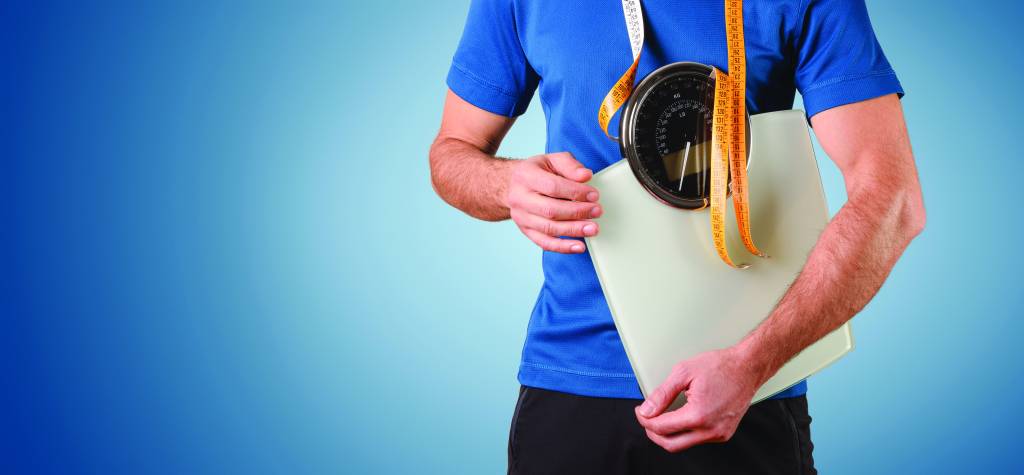
Research from 2022 revealed that lack of sleep led to a 9% increase in total abdominal fat and an 11% increase in abdominal visceral fat (the fat stored around several organs, including the stomach, intestines and liver). Why is due to a multitude of reasons, including an increase in ghrelin – hunger hormone – and a decrease in leptin – fullness hormone. Chronic sleep deprivation raises cortisol levels, which is linked to belly fat, while the less sleep you have, the worse your blood-sugar control, again resulting in more belly fat. Not great.
“Basically, sleep is the foundation on which your health and performance sit on,” says Edelsten. “If sleep isn’t optimal, nor is your training and fuelling. But it’s not simply about the physical. It’s cognitive performance, too. Your motivation to train drops. As will your attention, reaction times, vigilance, decision making, task prioritisation… All of these things are critical in shaping how you race.” And, if sleeping badly, shaping how badly you race.
- It’s time to incorporate some sporty spices into your recovery meals, says nutritionist
- Eating fish helps boost sleep and athletic performance
Strategies for sleep success
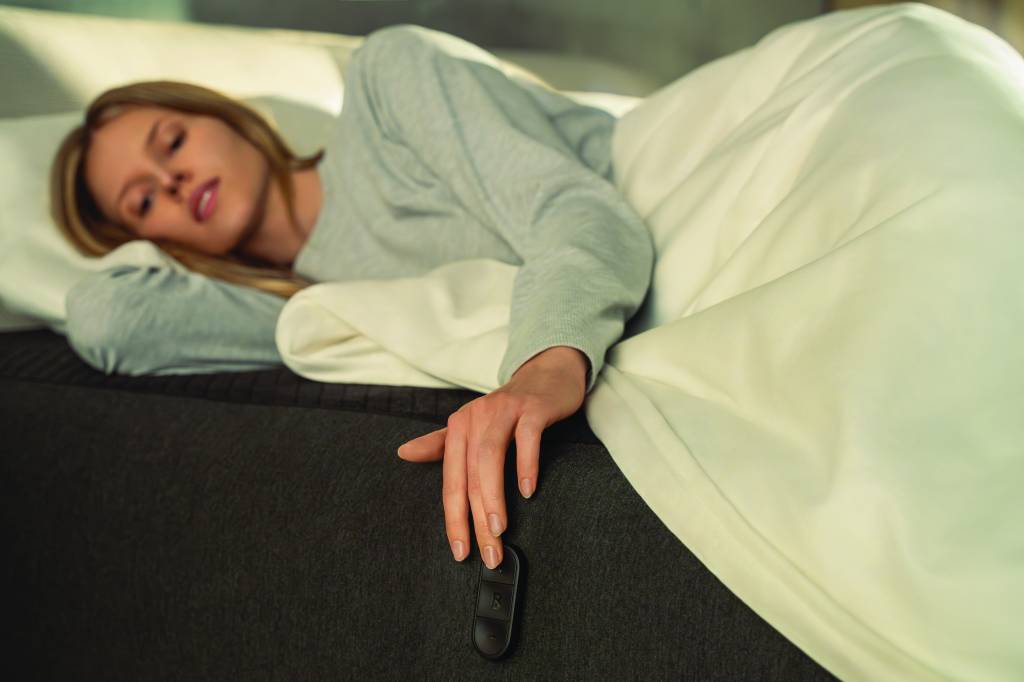
Thankfully, Edelsten’s adept at helping athletes to optimise their sleep, whether they’re seeking full-scale overhauls or, as you would a training plan, refining their sleep quantity and quality over a period of time.
“We need to look at sleep as a performance-enhancing tool because fundamentally that’s what it is. That doesn’t mean the old, I’ll look for a good night’s sleep two nights before the race and all will be fine. Sleep doesn’t work like that. If I say to you, go to bed an hour earlier tonight, you won’t fall asleep earlier – you’ll just be lying there awake for an hour. Your circadian rhythms don’t work like that.”
“It’s why I work with athletes to optimise and extend their total sleep time in the lead-up to an A race or key event. For some athletes, that means looking at every night’s sleep for 42 days. Others might be less prescriptive. Sleep is personal.” But, Edelsten adds, there are general strategies that we could all apply to improve both sleep quality and quantity…
Timing of training
“The ideal is that you don’t train in the evening, but clearly that’s unrealistic for most amateur triathletes. But, if you can, save the higher-intensity work for earlier in the day, manipulating your training plan so that your evening efforts are low-intensity, zone-two stuff. If you have a choice of when you train late, plan it for when you wake up later than normal the next day.
Plan your nutrition
Tied in with training late, don’t then head home and spend ages making a big meal. That’ll only sit in your stomach and impair sleep. “Planning is key. That means enjoying a bigger meal at lunchtime. Maybe some food at 4pm, depending on the session, but then something lighter after training. You want to plan how quickly you can sleep after training and don’t want your body to expend its efforts digesting too much (and keeping you awake).”
Keep cool
Training and eating late also throws up the issue of thermoregulation. Training raises your body temperature, your blood pressure and heart rate. Eating late raises temperature, too. Throw in the summer sun and you have a performance recipe for disaster. Here is where you can play around with rudimentary and high-tech options. Firstly, do what many of you might already and have a swift cool shower before bed?
“If you’ve just finished and Ironman raced in 30°C heat, of course, jumping into a cold shower is a great thing to do. You need to perceive that you’re cooling down quickly, and the mix of a large surface area [you] and the cold water means you’ll superficially cool. However, it’s worth remembering that we’re homeostatic creatures. If you take a very cold shower, what’s your body going to do? It’s going to try and heat you up. If you get into a warm shower, your body will look to cool you down.” It’s why a lukewarm shower might be the better option, depending on how swelteringly hot you are.
A fan is another old-school option, albeit the refreshing breeze from against your skin might feel nice but doesn’t necessarily cool you down. “My son sleeps with a fan on his face every night, but that’s more down to white noise than anything else. I’m not a huge fan because you get a bit of a blocked nose. But it helps some.”
Edelsten’s more of a fan of dialling down your mattress temperature. I beg your pardon…? “Many of the athletes I work with use a Chilipad. All of the riders for the men’s and women’s teams I work with – Soudal Quick-Step and AG Insurance-Soudal Team, respectively – use them at the Tour de France. You can control the temperature of the mattress. It’s useful as your core temperature needs to drop by 1 to 2°C to initiate and maintain sleep.”
It’s cutting-edge and costs over a grand. I elaborate on the growing field of thermoregulatory mattress toppers in the ‘High-tech sleep cooling’ box.
Enhance not enable
You are what you eat, so if you’re after top-notch sleep, that means consuming myriad supplements that purport to enhance shut-eye. Right? Maybe. “First up, there are some good options,” says Edelsten. “There’s good evidence around magnesium and tart cherry juice. Valerian’s also an option.”
Each purports to work through different mechanisms. We’ll cover Valerian here as we focus on the other two in the ‘Supplement your sleep’ box. Valerian is a plant native to Europe and Asia, but it also grows in North America. There’s evidence that it acts on what are called GABA receptors in the body. These are the main inhibitory receptors in the central nervous system and help slow down messages being sent by other neurotransmitters that allows your brain to process that information at a more relaxed pace.
It’s the pathway that sedatives work on. Hence, there’s evidence that valerian may help with sleep onset, albeit maybe talk to your doctor or pharmacist before walking down this path. Temper your expectations, too, not only with Valerian but all ‘sleep supplements’.
“Remember that these are supplements,” says Edelsten. “They’ll enhance your sleep. But if you have a sleep issue, no supplement will fix that.”
Tactical caffeine hit
When Edelsten’s working with professional athletes, she’s part of the team. That means her input impacts the nutrition team and coaches and vice versa. An example of this circular guidance is judiciously using the world’s most popular drug.
“When it comes to caffeine, it’d be the same advice for elites and amateurs. You need a strategy. When, how, and why are you taking it? And how is that then going to impact the resulting night’s sleep?
“When it comes to a race, you don’t really need to worry about the awakening effects of caffeine. But for training, how are you managing your caffeine intake? Yes, it can boost performance, but you can’t go ruining your sleep. Use it every training session, especially later on, and the negatives of lack of sleep will outweigh the potential benefits from the training session.”
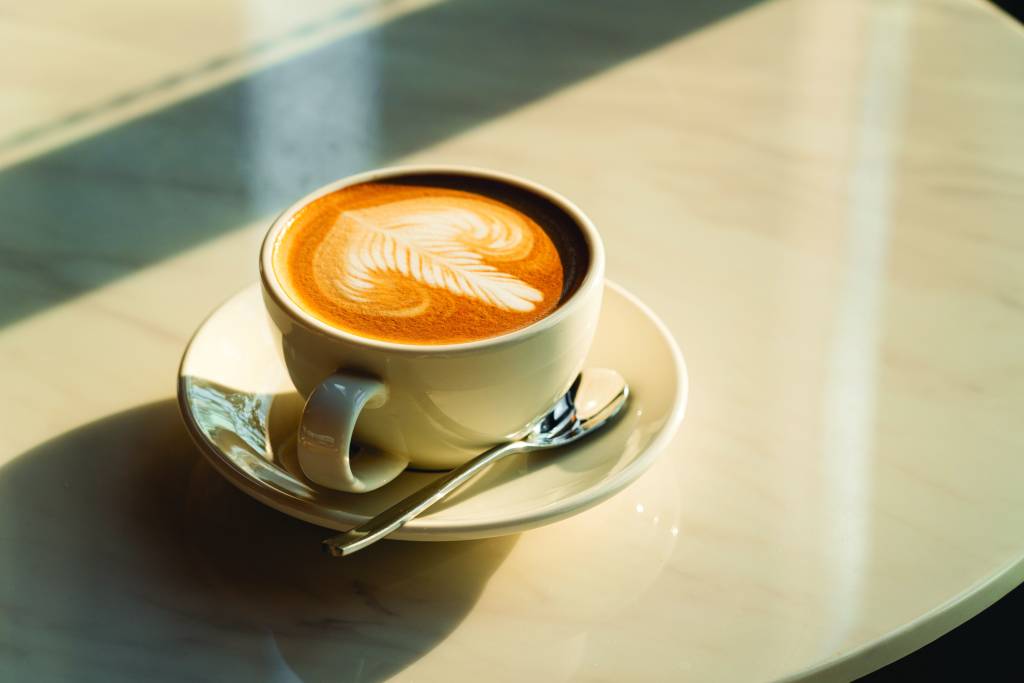
It’s down to the individual how much caffeine they consume and when. We all react differently. We all benefit differently. But note that caffeine’s half-life is five to seven hours, meaning a 3pm espresso may still be igniting your system at 10pm. Morning is obviously best, 30 to 60 minutes before training, with the ‘performance range’ between 200 and 400mg, or two to three cups of coffee.
To nap or not nap?
Years ago, I interviewed sleep expert Nick Littlehales. He worked with Team Sky and popularised the idea of napping. That a short kip in the afternoon will leave you revived and ready to go. As for what Edelsten thinks. “Napping can be useful, depending on which of the two is you. There’s the ‘snack nap’. That’s the traditional 20-minute power nap. If you wake up refreshed and, critically, it doesn’t then impact your nighttime sleep, that’s great. But it someone comes to me and says that they’re having a two-hour nap every Saturday because they’re exhausted, that tells me they’re not sleeping enough at night and could even be chronically sleep deprived.” If you’re the latter, you may want to seek out an expert like Edelsten for one-on-one advice.
Sleeping on the go
Littlehales also popularised the simple idea of taking your own pillow to races. That Team Sky riders like Bradley Wiggins would sleep better at a 21-stage race like the Tour, and the similarly lengthy roll call of hotels, by resting on the familiarity of their own pillow. It’s a tactic that all triathletes should try when racing and staying at somewhere new.
“It’s all about controlling the controllables,” says Edelsten. Pillows is one idea. Others include using an eye mask and ear plugs. “You might say, ‘I don’t like masks and ear plugs.’ That’s common but it’s like anything new. You have to learn to use them and adapt. Then they become second-nature.”
If you’re racing abroad and jetlag’s an issue, plan to arrive as early as work and budget allows. “Apps can help here. Time Shifter is a pretty good one. You just input your flight details and it tells you what to do. It doesn’t take into account performance, but it’s a good start.”
If you’re the highest of performers, you can even try and shift your circadian rhythms from weeks – if not months – out, so that you’re primed when the starting gun fires. “I work with some athletes who’ll want to be ready for the 6am or whatever time start.” That means working back from the race date and gradually adjusting the body to going to bed earlier and awakening early for that 4am alarm cry. “Some people’s sleep habits are so engrained it’s difficult,” says Edelsten. “Some find it very easy.”
All in all, sleep is often treated as secondary to training in triathlon, but it has a direct and measurable impact on performance. Poor or insufficient sleep affects recovery, fat metabolism, immune function and, crucially, the cognitive skills that underpin pacing, decision-making and resilience in racing.
The positive side is that sleep is highly trainable. Small, consistent adjustments to training timing, evening nutrition, caffeine use and sleep environment can significantly improve both sleep quality and total recovery. For age-group triathletes in particular, treating sleep as part of the training plan rather than an afterthought can deliver one of the biggest performance gains available.
High-tech sleep cooling
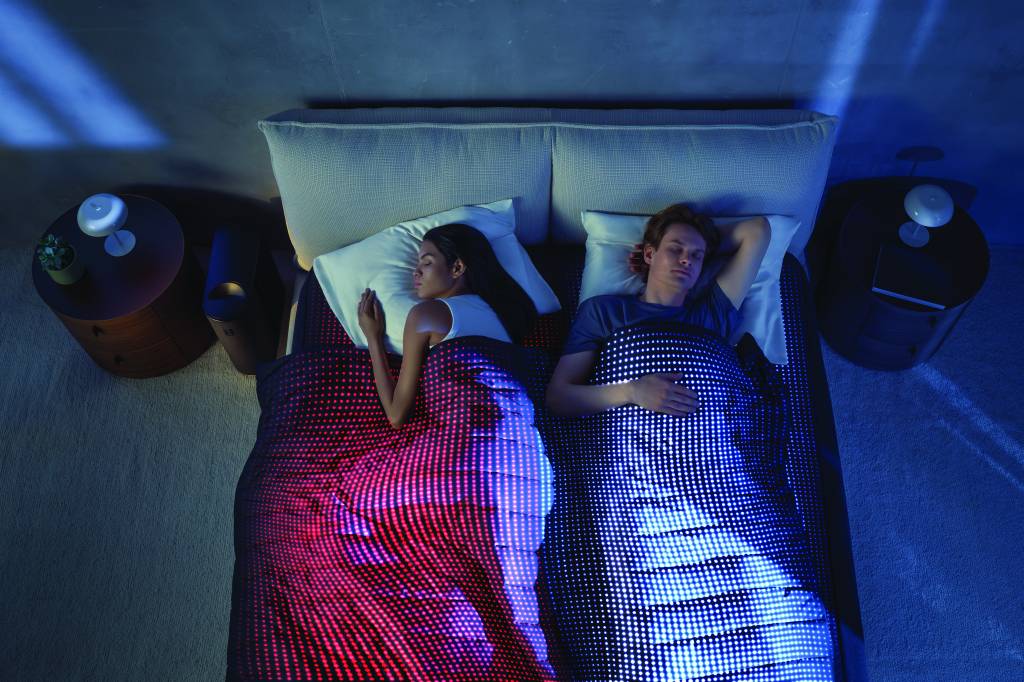
Different mattress temperature for you and your partner? Is this the triathlete’s dream?
The Eight Sleep Pod is an advanced sleep system created to enhance rest using temperature regulation and sleep tracking. It takes the form of a mattress cover linked to a hub that circulates water through built-in channels, allowing each side of the bed to be heated or cooled independently. This makes it especially useful for couples with different preferences.
It monitors data such as heart rate, breathing and sleep stages, and uses AI to automatically adjust settings. It also includes features like vibration alarms and snore detection.
I’ve just received one to try out, so am still getting to grips with it. What I can say is that set-up is extremely simple and the mattress topper very comfortable. I’m a pretty erratic ‘hot’ sleeper, while my ‘cooler’ wife sleeps like a sloth. Like any intervention, it’s clear that it’ll take a little while to acclimatise to, including an awareness of the hub beside your bed. This should dissipate over time.
Just be aware that a potential good night’s sleep comes at a cost. The Pod starts from £2,699, plus subscription to the Pod app that starts from £17 each month.
Supplement your sleep
Can a sprinkling of Night Powder really send you to dreamland?
Night Powder is a sleep and recovery supplement from ainslee + ainslee, founded by Olympic sailing legend Ben Ainslee. It contains magnesium, tart cherry extract, L-glycine and saffron – compounds linked to relaxation and sleep support.
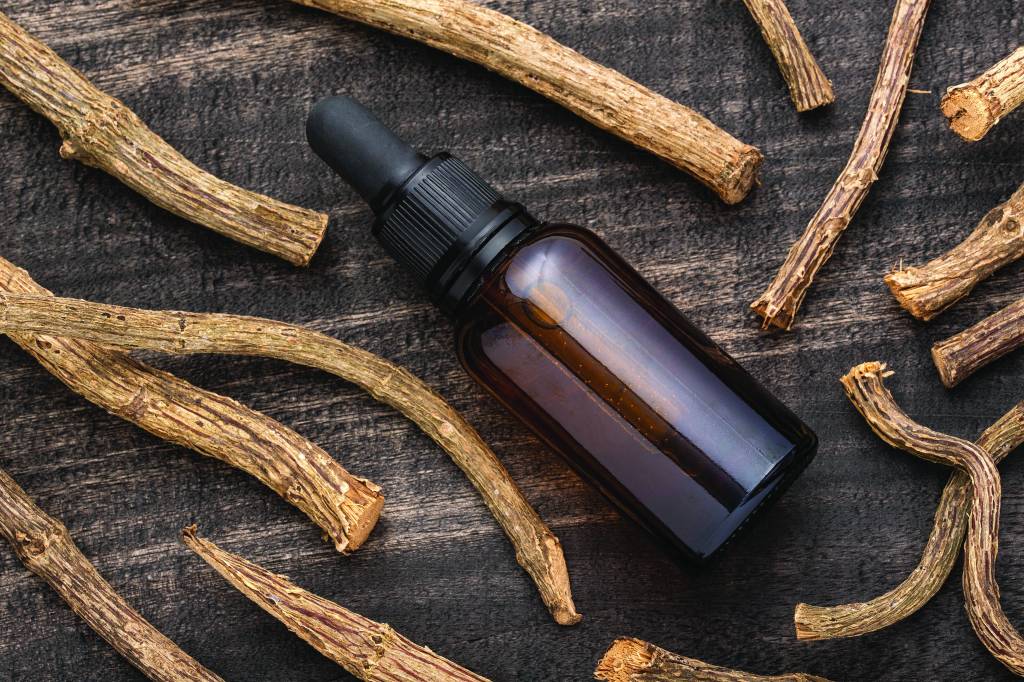
More specifically, magnesium supports relaxation by regulating the nervous system. Tart cherry (especially the Montmorency cherries seen here) are one of the few food sources of melatonin – the hormone that controls your sleep-wake cycle. L-glycine’s an amino acid that’s been linked with a lowering of core body temperature, while saffron could lower stress and so help sleep.
It comes in powdered form and you mix with water. The result? Again in a short testing period, I’d say the effects are more impressive than I’d imagined. It’s so hard to unpick whether it was the powder or a particularly busy period, but I certainly felt a sleep pick-up. It’s £75 for 28 servings that drops to £49 if you take out a subscription that you can pause or cancel at any time.
Sleep monitoring
The likes of Whoop, Oura and probably your sportswatch purport to measure – and improve – recovery. But do they?
I’ve been using Whoop for the past two months. I’ve used it before and ceased using it because I’d collated significant data but grew frustrated at a lack of next step. But I’ve given it another chance. I ask Edelsten, should I?
“They can have a place and do give a good idea of sleep trends. Sleep efficiency isn’t bad. Neither is the recovery score. Total sleep time isn’t bed, though it does tend to undercount. But you can only accurately measure sleep stages via an EEG [electroencephalogram] to measure brainwave activity. HRV [heart rate variability] is pretty useful, though.”
This measure of stress is the metric I’ve focused on and, disappointingly, it does seem to pick up when I have an alcoholic beverage or two.
“Ultimately, your subjective experience of sleep and recovery is more important than what a device tells you,” says Edelsten. “You tend to find the best sleepers in the world don’t think about sleep.”


 James Witts
Freelance sports writer and author
James Witts
Freelance sports writer and author