Can you look like a bodybuilder and race like a triathlete?
We explore what the science says about body shape and composition and triathlon performance

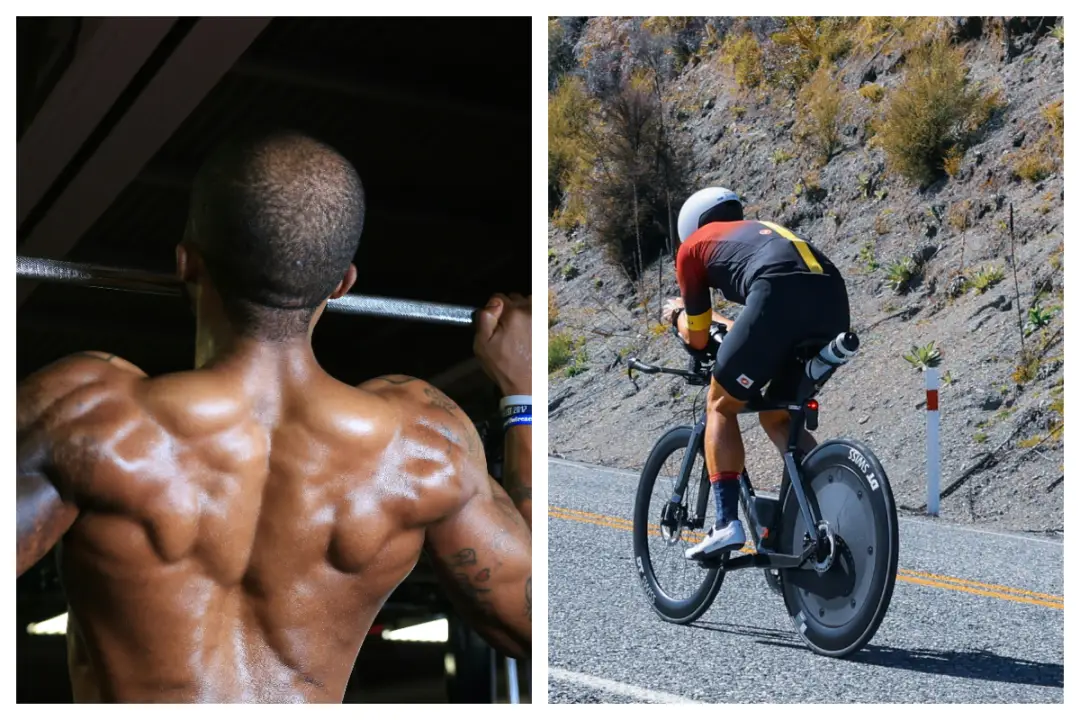
Lots of people transition to or just try triathlon, and those coming from a weight lifting background may wonder: can you look like a bodybuilder and race like a triathlete?
As an existing triathlete, you may be interested to know what would happen if you added a few kilos of muscle from a strength training plan.
In short, there’s no simple answer, as it depends on your objectives, target events, technique, body composition and fitness, to name just a few variables.
But triathlon is an endurance sport where a range of body types can excel, compete and take part.
To answer whether you can look like a bodybuilder and race like a triathlete, I’ve consulted articles, blogs and scientific studies about the relationship between body shape and triathlon success.
Horses for courses
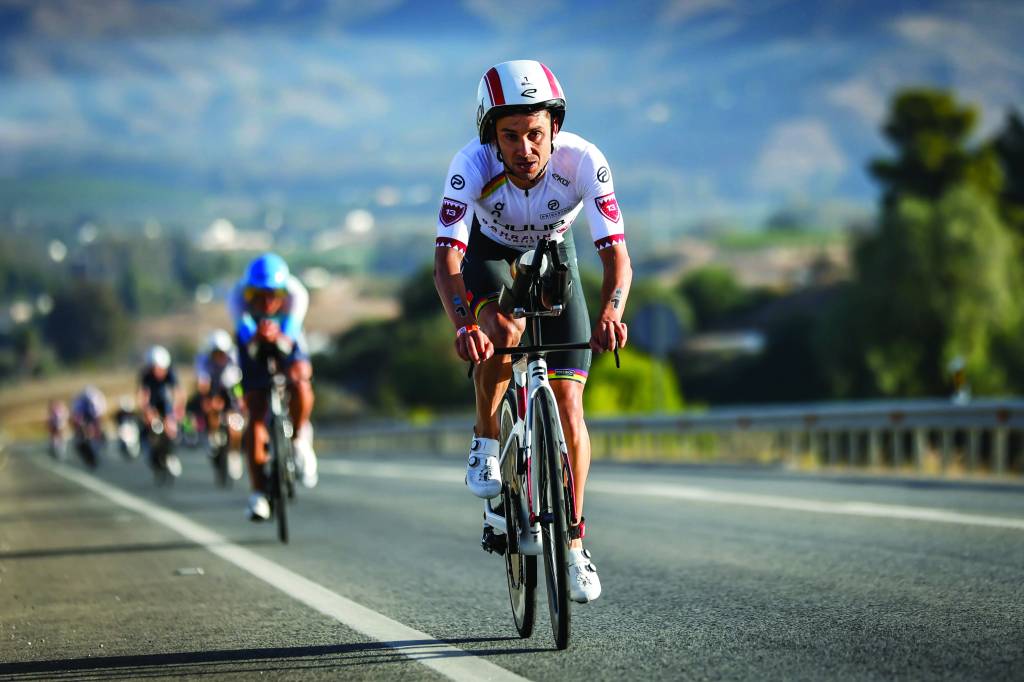
Body builders also come in all shapes and sizes and what units them is low body fat and a high muscle mass percentage. For the purposes of this article, I’ll assume that bodybuilders carry more upper body mass than the archetypal triathlete and are heavier overall.
I’ll also assume that by ‘race like a triathlete’ we mean compete as an age-grouper, not simply get round the course.
The higher weight associated with a bodybuilder is inherently problematic in an endurance sport like triathlon, according to a joint position statement by the Academy of Nutrition and Dietetics, Dietitians of Canada, and the American College of Sports Medicine published in Medicine & Science in Sports & Exercise in 2016.
The authors write: “Whereas some athletes aim to gain absolute size and strength per se, in other sports, in which the athlete must move their own body mass or compete within weight divisions, it is important to optimise power to weight ratios rather than absolute power.”
Triathletes fall into the latter category because they have to move their body weight for long distances, although buoyancy makes weight less important while swimming.
While bodybuilders may exhibit good power-to-weight ratios for whole body exercises, the weight of their upper bodies may be hard for their legs to overcome.
The academics add: “Distance runners and cyclists benefit from a low energy cost of movement and a favorable ratio of weight to surface area for heat dissipation.”
Staying cool and fresh

Therefore, being heavier requires more energy and increases your risk of overheating.
In explaining how to reach your optimal body weight for triathlon, Joe Friel gives examples of how weight can hold you back.
“A kilogramme of excess body weight requires 3-4watts of power to get it up a hill on a bike and costs about 4secs per mile when running,” he writes.
By losing 3kg, he adds: “You would ride up a hill about 5% faster. On a very hilly Ironman bike course that could save you at least 4mins, and you could take another 5mins off the marathon. That’s a significant improvement in performance.”
These numbers would certainly appear to favour a high power-to-weight ratio on climbing bike courses and any run leg.
On flatter and rolling bike courses absolute power is more influential than watts per kg. This would seem to favour a bodybuilder physique provided they have leg strength.
However, more precisely, watts per coefficient of aerodynamic drag (CdA) is what makes the likes of Lucy Charles-Barclay and Taylor Knibb so fast on their triathlon bikes.
A body builder’s broad shoulders and upper body bulk could increase their frontal area and consequently CdA. This weight would also cost them time on the run.
‘Not defined by height or weight’

Having established that triathlon is a sport where relative weight can be important, let’s look at absolute weight and height.
The scientific evidence generally suggests that this doesn’t matter much.
In a paper titled ‘Elite Triathlete Profiles in Draft-Legal Triathlons as a Basis for Talent Identification’, scientists from the University of Vigo in Spain concluded: “The anthropometric profile of elite triathletes does not seem to be defined by height or weight, mainly due to the diversity of profiles.”
Instead, they identified factors such as VO2 max, second ventilatory threshold, biomechanics and technique as being more critical.
Large variation
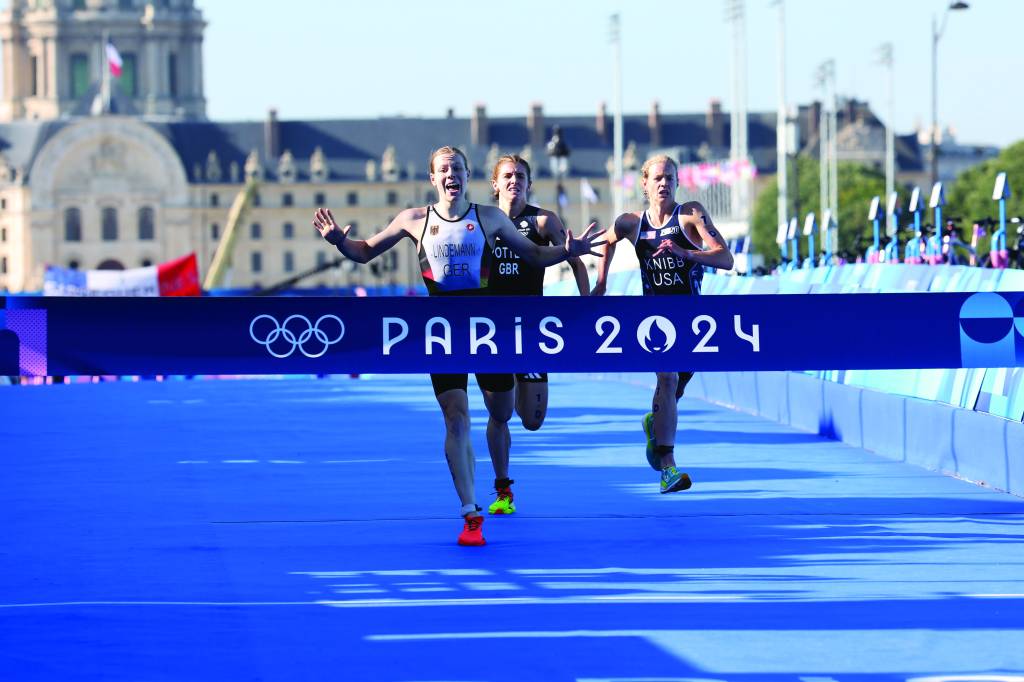
Robert Wood has also compiled data on Olympic triathletes’ height and weight in an article on “Triathlon Anthropometry” on the Topend Sports website.
At Rio 2016, he found the average height and weight of male and female triathletes was 1.86m / 80.4kg and 1.73m / 64.7kg respectively. For all triathletes, the average of 73kg was slightly higher than the 72kg average weight of all Olympians.
At London 2012, the average male triathlete measured 180.4cm / 68kg and the average female was 167.4cm / 54.3kg. This time the average weight for all triathletes (61.2kg) was much lower than the average for all Olympians (72.8kg).
It’s notable that the both genders trended higher at 2016 while the typical Olympian weighed nearly the same at both games. If we can draw any conclusion here, it’s arguably that top-level triathletes don’t have to be a specific weight.
What seems more important for them is body composition. According to studies into the performances of male Ironman and short-distance triathletes, low body fat correlates with faster finishing times. Data on elite women is unfortunately less abundant.
Correlation isn’t the same as causation, of course. So we don’t know if they’re lean because of their high training volume and good diets, or if low body fat is required to be successful.
Correlation or causation

What’s more, the correlation isn’t rock solid. A study by the University of Zurich into recreational female Ironman triathletes made contradictory findings.
Researchers concluded: “None of the anthropometric characteristics [height, weight, body fat percentage etc) and the skin-fold thicknesses were related to the total race time or the split times during the Ironman.”
Other things like marathon time, past triathlon performances and training history were found to have a bigger effect.
Whether we can make broader conclusions about female or age-group triathletes from this study is unclear, but it seems to undermine the argument that non-elite triathletes need to be very lean.
Bottom line
From what I can tell from the evidence, you probably could look like a bodybuilder and race like a triathlete.
Being a pyramid-shaped strongwoman or man might not be optimal in terms of energy cost, temperature regulation, power-to-weight ratio and aerodynamics.
But with solid training, technique and experience, it should be possible to overcome the obstacles an unorthodox body shape may throw up, unless you want to compete right at the top of the sport.
Even at this level, you’ll see a range of builds racing alongside each other, underscoring how weight doesn’t matter much in triathlon.


 Jack Evans