Six ways to solve sinky legs and improve your swim kick, according to a technique expert
Addicted to your pull buoy? Terrified of swimming without a wetsuit or buoyancy shorts? It’s likely that you need to fix your sinking legs – and in turn your kick. Here’s our expert guide.

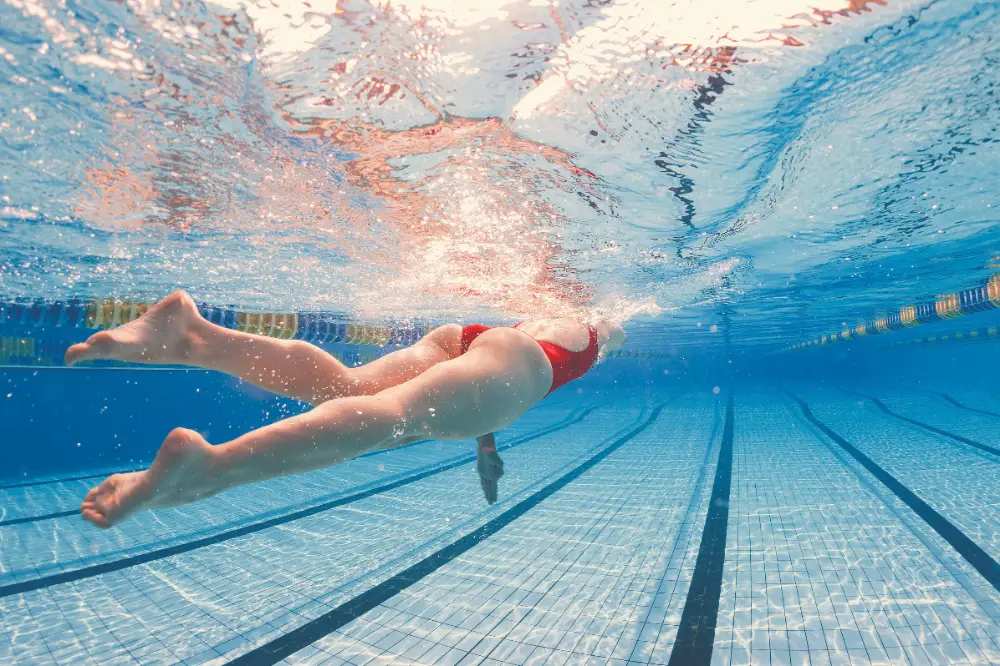
For anyone new to triathlon swimming, one of the most common problems you’ll see in novice swimmers is sinking legs, especially without the buoyancy of a triathlon wetsuit.
You’ll see individuals swim with their legs well beneath the surface. In the attempt to compensate, you’ll typically see these same individuals kicking furiously. Because it’s a lot of work to do so, this usually results in triathletes that are always out of breath.
If you’re struggling with these skills, it probably seems like a mystery as to how you can fix the problem. The only thing that makes sense is kicking hard, and that clearly doesn’t work! So to start with, give the solutions below a shot. If you’re used to working on freestyle technique to fix freestyle problems, such as your catch and pull, these might seem strange. Keep an open mind and you may be surprised at the results.
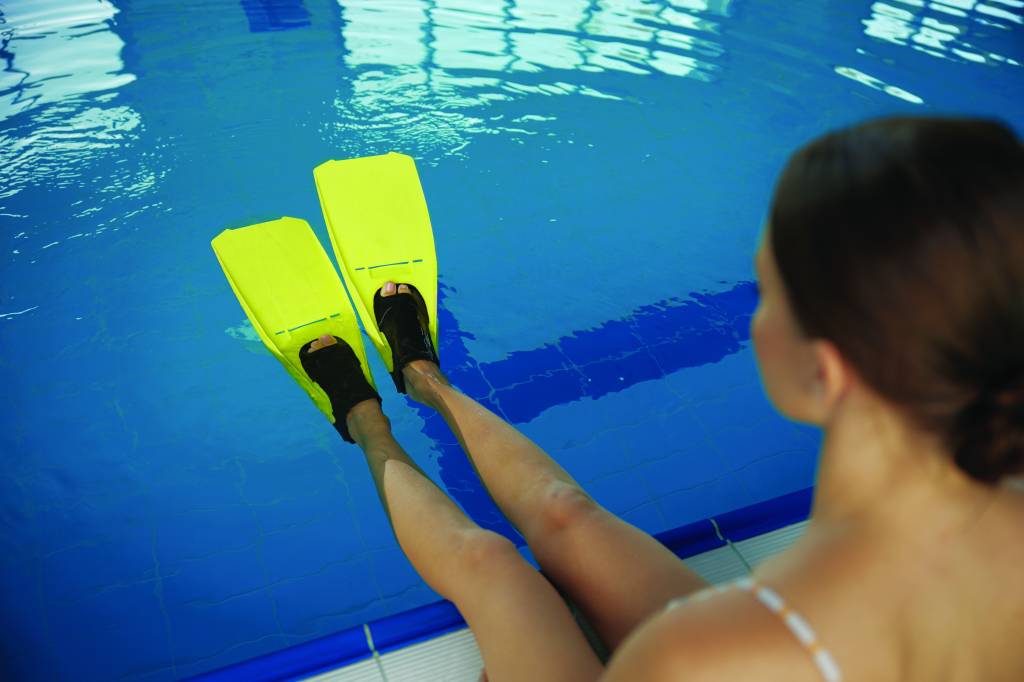
Fins and buoys can be useful tools for improving your swimming. And when appropriate, you should never hesitate to use them. The problem is when you need them to feel good and swim well. Unfortunately, you can’t use a buoy or fins in a race! And even if you can wear a wetsuit, you want to have the ability to swim well without one. If you can’t, you’re lacking in the skill department, and that’s compromising your swimming.
When do you ‘need’ fins or a buoy? If you’re swimming more than half your workout with either of these training aids, I’d say you’re over reliant on the gear, and it’s best to address the underlying issue. And that issue is that the hips, legs, and feet are sinking. Fins and buoys are great because they help you counteract that sinking, which is why so many people use them. So, if you can learn how to keep your legs up at the surface, you won’t need the gear anymore! Here’s how to do it.
How to improve your swim kick
Learning to keep your feet up on the surface is all about the lungs. If you can understand how the lungs are helping you float, and then you can leverage that flotation to keep your legs up, you’re golden. The first step is to learn to feel the support of your lungs.
Ball float
The first and most important step in improving your position in the water is learning to find your lungs and feel the flotation they provide you. My favourite exercise for doing so is the Ball Float. To perform this, simply take a deep breath (your face will be in the water), squeeze your legs up and hug your knees with your arms and just let your body settle and float in the water.
This drill does a great job of helping you feel exactly what you need to feel, and it can be done by anyone, anywhere. It’s impossible to mess it up! Just take a deep breath and let your body settle. Don’t worry about how you rest in the water, just feel the support.
The vast majority of people will float right at the surface. And if you’re more of a sinker, you’ll find that you settle a little lower in the water. Then, you’re going to swim a lap and try to feel that same support holding you up in the water. Repeat. That alone may do the trick.
Tense your back
If solution #1 doesn’t solve the problem, you’ll need my second solution, the Ball Float to X Float. It’s just like the ball float with an added twist. You’re going to extend your arms and legs, aiming to stay afloat. The key to focus on is maintaining tension in the lower back and the back of legs. This tension will serve to hold your legs up. Now, depending on your body shape, you may not float right at the surface.
No problem, just focus on the tension you’re trying to create in the back of the body, then aim to create that tension when you swim. If you get the hang of this exercise pretty quickly, you can form an ‘I’ for an added challenge and more tension. So go from ball, to X to I and back again – with control!
Float like a jellyfish
(Credit: Shutterstock)
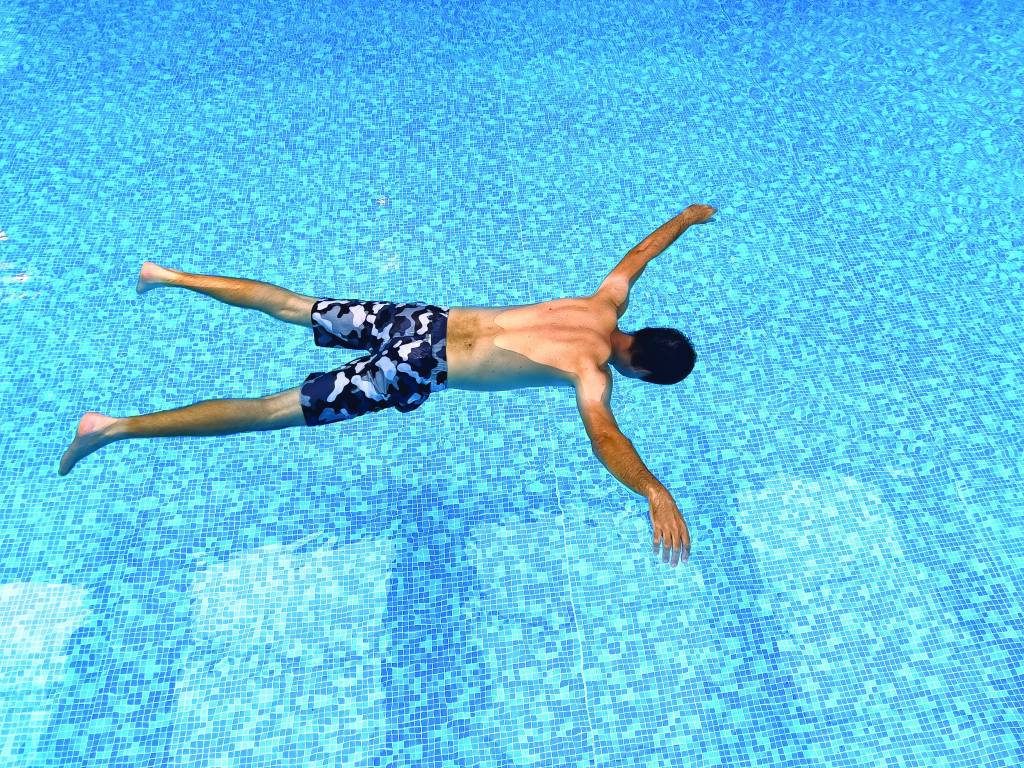
Once you’ve nailed the two above, we’re going to do our final move – the Active Jellyfish. Here you’re going to move like a (yep) jellyfish by floating face down (again, deep breath) and trying to keep your arms and legs at an even depth, with your back on the surface.
If your legs are prone to sinking they will drop and you’ll need to get used to pushing your chest down to keep them at the right depth. You’ll learn to press the chest into the water to get the hips up higher at the surface.
Be patient, explore, place your arms in different positions, and see if you can learn to adjust your position by pressing your chest. Small changes can make a big difference. See a link here: https://bit.ly/4l6JRXV
Putting this into practice is pretty simple. You’ll practice a float, then swim a lap. Keep repeating that until you can start to feel that your legs are riding higher in the water and you’re feeling compelled to kick a lot less.
How long will it take? It might happen right away, or it might take some time. If you’re worried that this is going to disrupt your scheduled training, remember that sinking legs and over-kicking make swimming slow and exhausting. You’ll get much more speed and endurance by fixing this skill. Furthermore, you’ll still be swimming a bit, just taking short breaks to work on your floating skills. It’s worth the wait and it’s worth the work!
Coordinate the kick
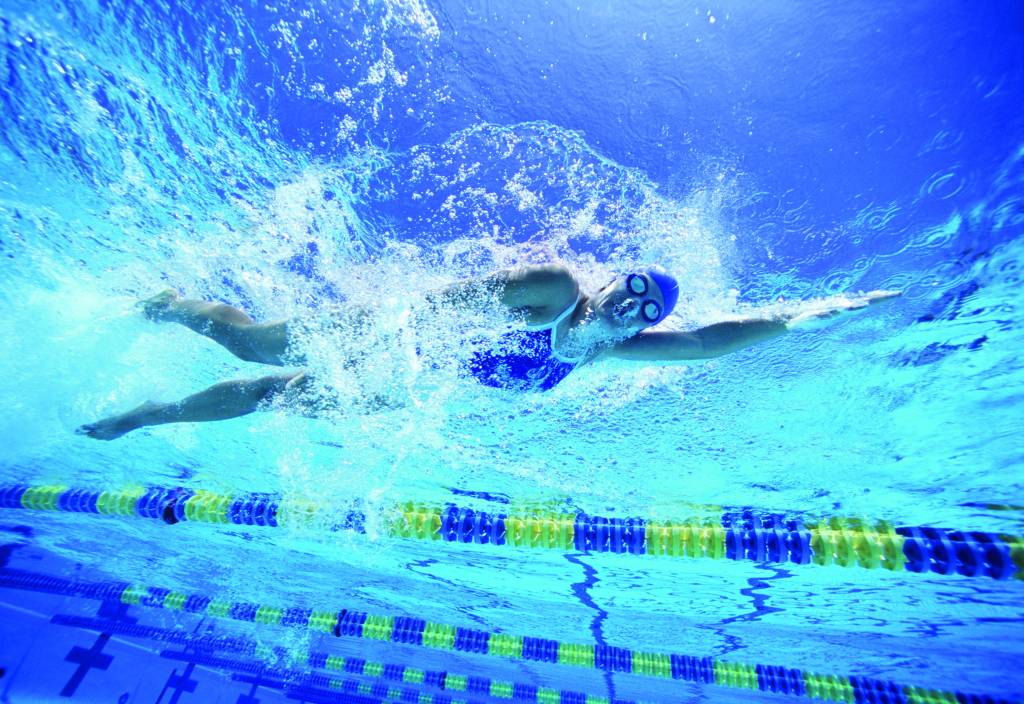
Once you’ve mastered the ability to stop your legs sinking then it’s on to stage two – improving that kick.
While it seems like it should be one of the simpler skills to learn in swimming, improving the kick can prove to be quite the challenge for many triathletes. While most of the speed and propulsion comes from the upper body in freestyle swimming, the legs can be important in assisting body position as well as creating some extra propulsion. For these reasons, developing an efficient and effective kick is well worth the effort.
One of the main reasons that many triathletes struggle with improving their kick is that they’re trying to accomplish the wrong goal with their kick. They believe that ‘kicking’ implies just that, trying to ‘kick’ the water as if they were to kick a ball. While there is some resemblance between the two movements, there are some major differences. This can lead triathletes to focus on moving the leg back and forth from the knee, rather than moving from both the hip and the knee.
To kick effectively, it’s important to learn to move the whole leg in a coordinated manner. And if you’ve been committed to using your kickboard without success, you may benefit from a different approach to learn this important skill.
Kick vertically
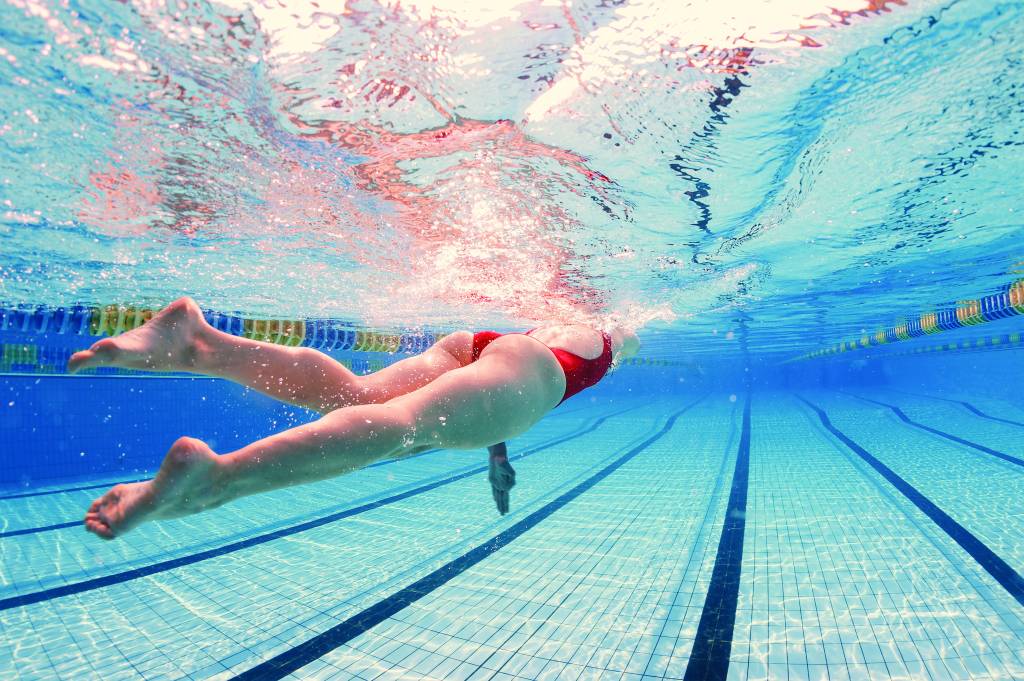
A powerful and effective way to help improve your kick is to start kicking vertically rather than horizontally. Instead of kicking down the pool, find some deeper water and start kicking to stay afloat. This simple shift can be a powerful strategy for improving your kicking because it allows you to gain a fresh perspective on how to kick. Now, you’re going to be focused on kicking effectively to keep your head out of the water, which is quite different than trying to create speed.
Rather than getting frustrated by a lack of forward progress while kicking, vertical kicking allows you to focus on how you’re getting, while still getting a great workout for the legs. If you just kick from the knees during vertical kicking, it tends to feel very awkward, and this awkwardness encourages triathletes to use a straighter kick where there is more movement from the hip.
Kicking with more hip motion is the skill that you want to try to develop. It will feel like your legs are very straight, which means that there is more movement from the hip and less movement is coming from the knees. While it feels weird, it’s exactly what you want if your goal is to improve your kick. And because you’re not focused on moving forward, but simply staying afloat, you can continue to work on this skill without the frustration of a lack of forward progress. Your kick is going to feel different, and that usually means learning is taking place, which means a stronger and faster kick in the near future.
Many triathletes struggle with their kick. While the arms are the primary driver of speed, the legs still matter, and having an efficient kick is a valuable asset to any triathlete looking to perform well during the swim. When it comes to improving the kick, most triathletes take the same approach they take when building endurance for the run or the bike. They use a low to moderate intensity level and kick for an extended period of time. It’s a logical approach. The only problem is that it usually doesn’t work! And the less skilled you are at kicking, the more likely it is that it won’t work.
As compared to cycling and running, there is a large skill component to kicking. Further, the muscles are being used in relatively novel ways. For these reasons, performing a lot of short fast kicking is actually a more effective way to improve your kicking. It allows you to develop the skill of kicking and condition the muscles to sustain a great kick in less time.
When you’re struggling with your kick, try focusing on the speed of your kick prior to working on sustained efforts. Once you make progress with shorter, faster work, then using longer distances can be more productive. Here are some basic guidelines you can use to attack your kicking.
Kicking faster is key
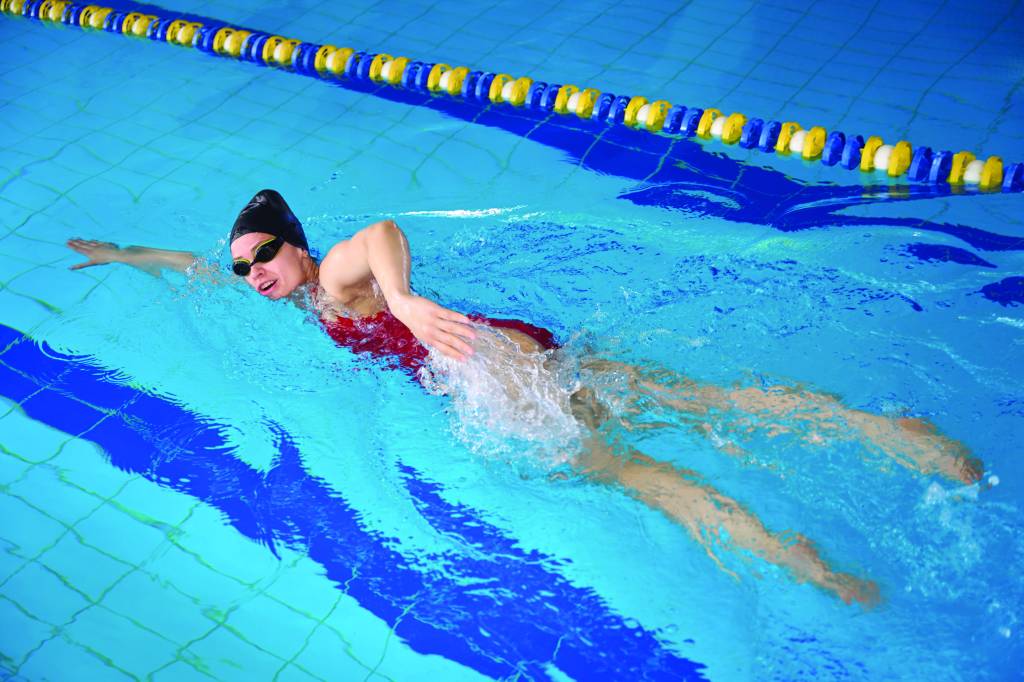
The key to improving the kick is to practise kicking fast. This is rule number one. More than anything else, you want to get a lot of practice kicking at high speed and with effort levels. The more you can achieve this objective, the faster your kicking will improve.
1. Keep It Short
To get a lot of practice kicking fast, you’ll need to keep the repetition distances short. When you’re first starting out, you’ll want to keep the distances as short as 25 meters. If you’re a particularly weak kicker, 12.5 meters is acceptable as well. You can even use time, focusing on kick fast for 10-15 seconds. What really matters is that you’re working the legs, and you feel like you’re making forward progress down the pool.
2. Take Your Rest
A key aspect of learning to kick hard and fast is ensuring that you’re getting enough rest to exert a lot of effort and move forward down the pool. Because you’re keeping the distances short, you can also keep your rest periods relatively short. However, you’ll want to take about twice as much rest as the duration of your kicking efforts. That allows you to get sufficient rest to create speed, while still allowing you to get enough repetitions in to practice your skills.
3. Build Over Time
It may take some time before you feel like you can make forward progress with a decent amount of speed. Once you do, then you can do some longer kicking work to build the endurance of the legs. Just keep in mind that kicking isn’t like running or cycling. There’s a baseline level of effort that’s required for kick training to be productive. Make sure you can maintain a solid effort throughout.
For more advice, read about 15 key front crawl swim drills to improve your technique.
Meet the expert
Andrew has been helping people improve their swimming for over 20 years. He’s worked with everyone from children learning to swim to Olympic medalists, to masters triathletes and swimmers. He specialises in helping triathletes improve their swimming skills through online coaching. He is also the author of ‘A Constraints-Led Approach to Swim Coaching’. masteringflow.info


 Andrew Sheaff
Swim coach
Andrew Sheaff
Swim coach